

A wider portrait
Habitats are just as important as the wildlife they support. As much as I like portraits with a long lens with just the subject in focus, I don’t like the idea of the habitat being reduced to a background or a blur. I believe that the only way to protect species is to protect the habitat that supports them, even if it isn’t the most beautiful landscape.
Over the years, I’ve started making portraits that highlight their homes as much as the subject in this series called ‘A wider portrait’. Some of these photos have taken years to make. So I keep going back to the same places trying to get a small (or exceptionally large) lizard to walk in front of a camera set up. And because of the effort it takes, I get to spend weeks on end with one habitat, one species, and sometimes one specimen.
\What more could I ask for?
Komodo on a pristine beach
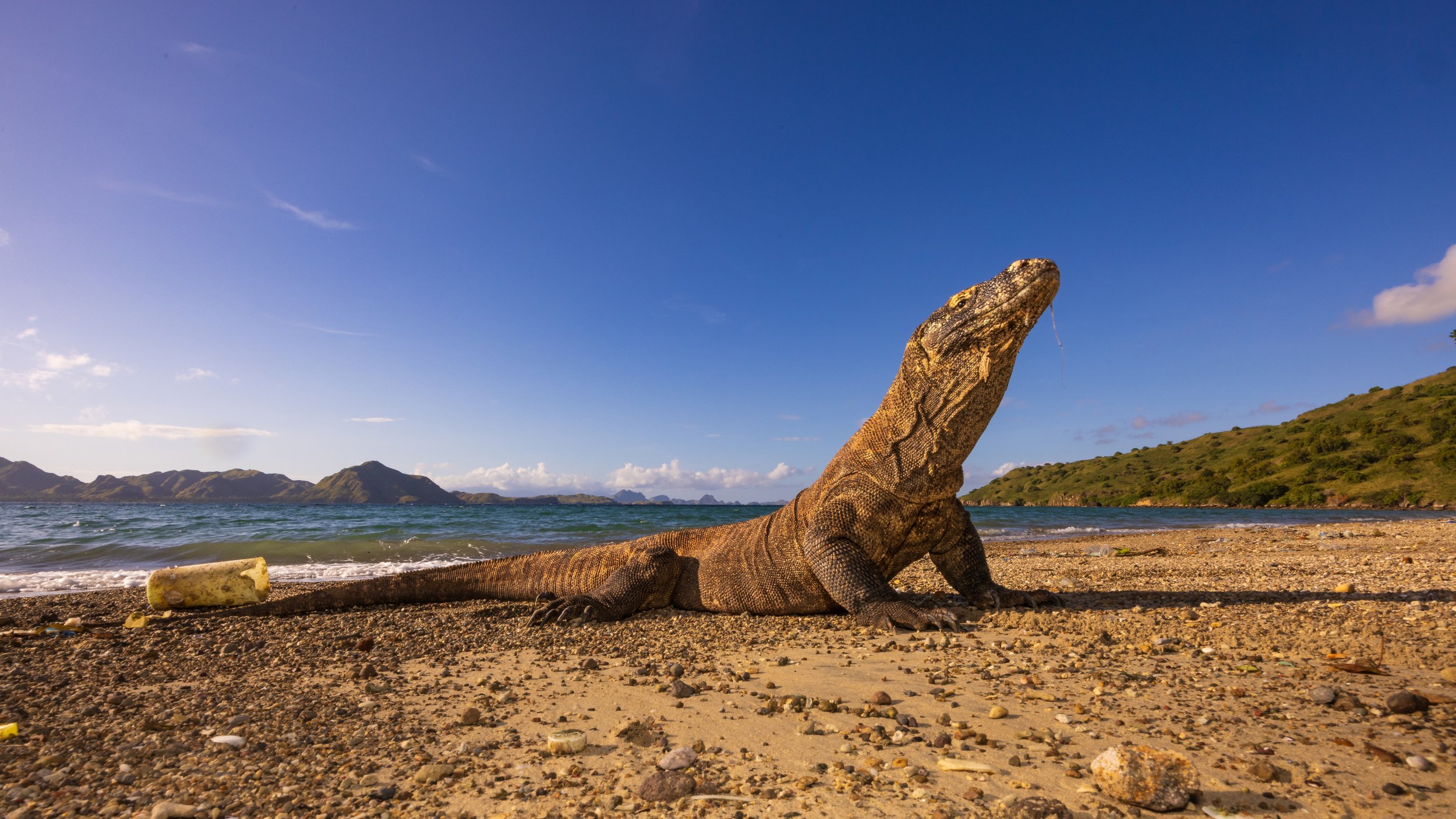
The Komodo dragon (Varanus komodoensis) is the largest living lizard and is found on a small group of islands in eastern Indonesia, including Komodo Island. This photo was early in the morning, when Komodos bask along the beach. The mountains of the Komodo Island can be seen in the background. Plastic waste was present along the beach, like the jar behind the lizard. While scouting for a frame, I walked along the shoreline to look for a section of sand without plastic but was unable to find one. I chose to keep the jar in the frame. It is now an integral part of the dragon’s habitat.
Red-fronted brown lemur
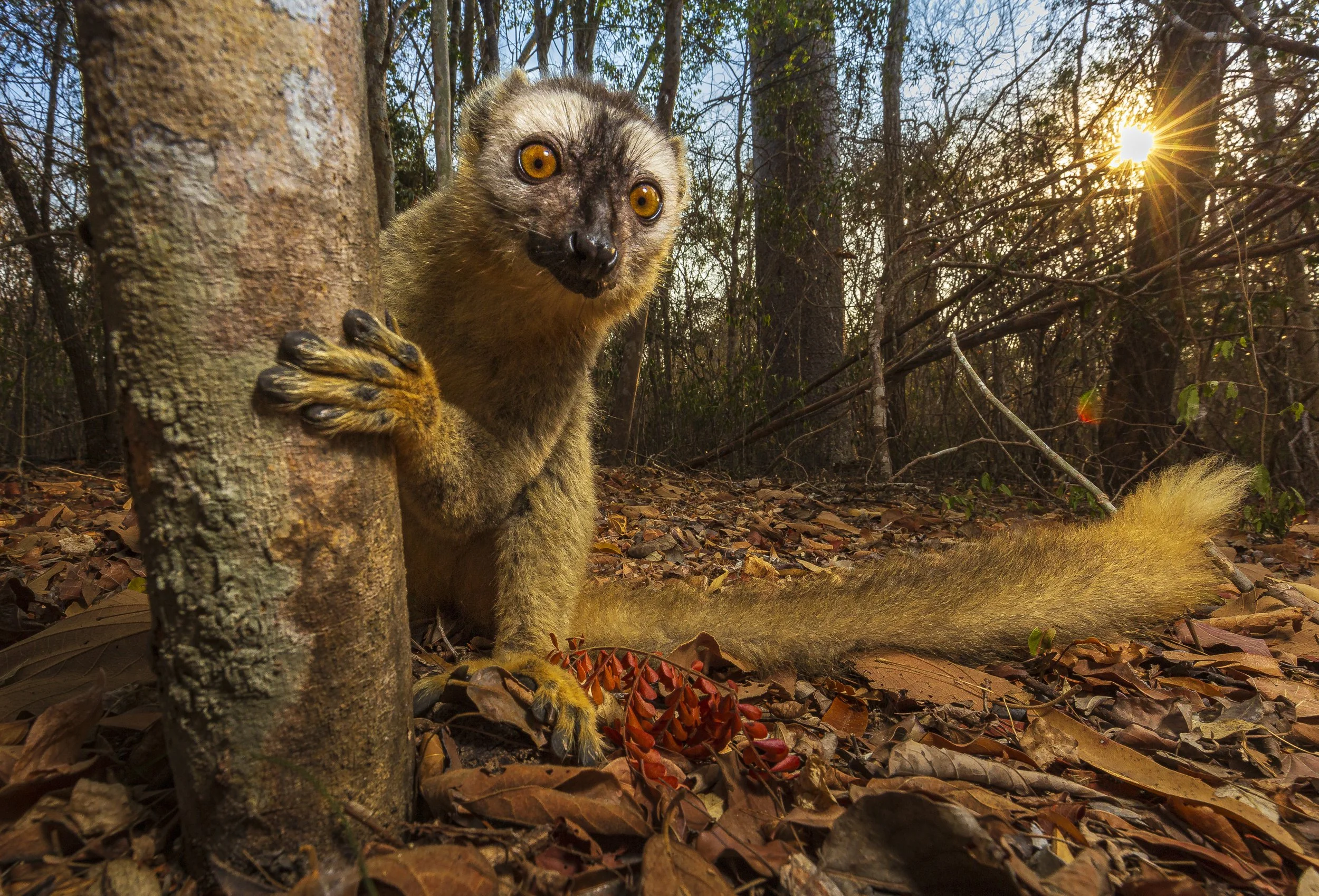
While lemurs are endemic to Madagascar, not all lemurs are widespread across the island. They exists in pockets of habitats. The red-fronted brown lemur is found in the southwestern part of Madagascar. It feeds mostly on fruits, leaves and flowers, and often comes down from the trees in search of seeds. Like all lemurs, red-fronted brown lemurs are social and live in groups that are led by a dominant female.
Fan-throated lizard
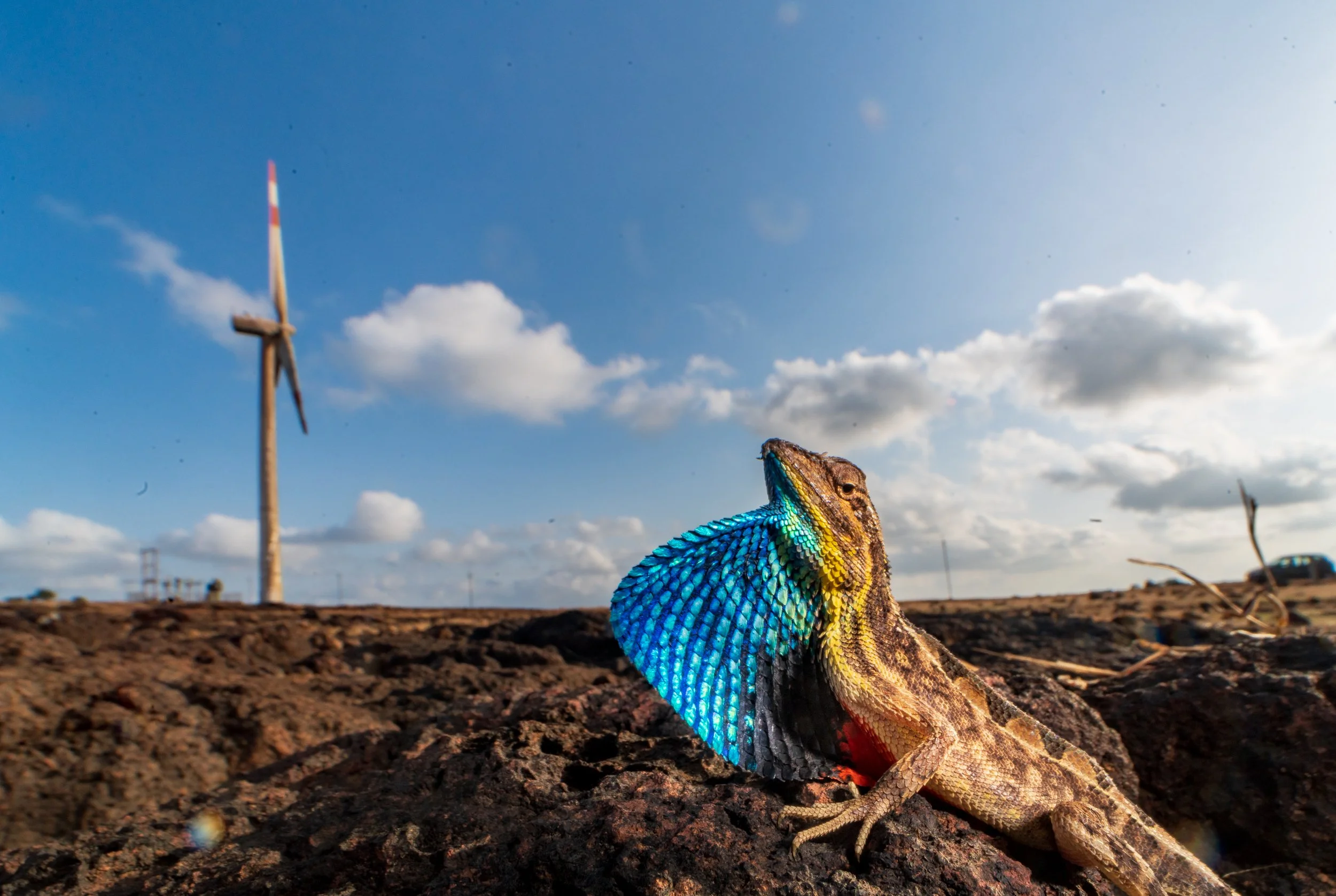
Chalkewadi is one of Asia’s largest windmill farms, with a few thousand windmill densely spread over the plateau. The windmills have been on this plateau for a few decades now. So there have been generations of fan-throated lizards that have come and gone with functioning windmills being permanent fixtures in their habitat. A recent study throws up a number of things that have changed for these lizards as compared to those on adjoining plateaus which don’t have windmills.
Windmills have reduced the presence of birds of prey. That has caused these lizards to multiply rapidly. The density of lizards on this plateau is about thrice of what it is on plateaus without windmills. However, this isn’t great news. Since they’ve grown in number, the study says that the increase in competition for food is at a level the lizards had never experienced before. Consequently, they have become skinnier, and aren’t able to find sufficient nutrition to invest in elaborate phenotypes that result in their colour.
Another thing that has happened, according to the study, is reduced fear response. They seem to be bolder, and not perceive the environment to have any threats or predators. That is possibly why this fellow allowed me this close with my camera, I was only a few inches away from him when I photographed this.
Juhu beach
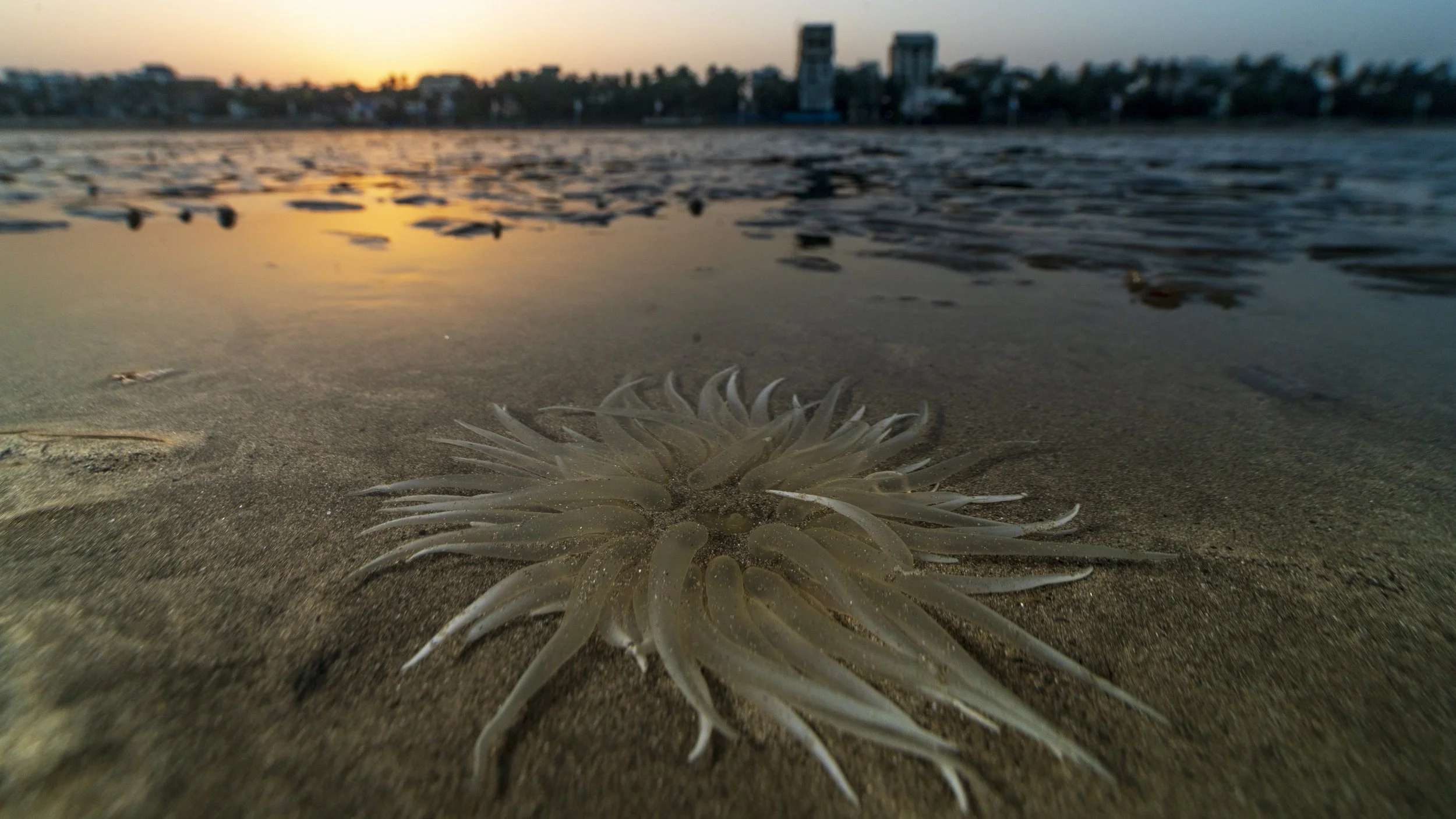
Mumbai has a population of over 20 million. Its beaches are notorious for being crowded, ill-kempt and polluted. But they also harbour an amazing diversity of wildlife, that shows up at low tide. Like this white sea anemone on Juhu Beach.
Spiny-tailed lizard
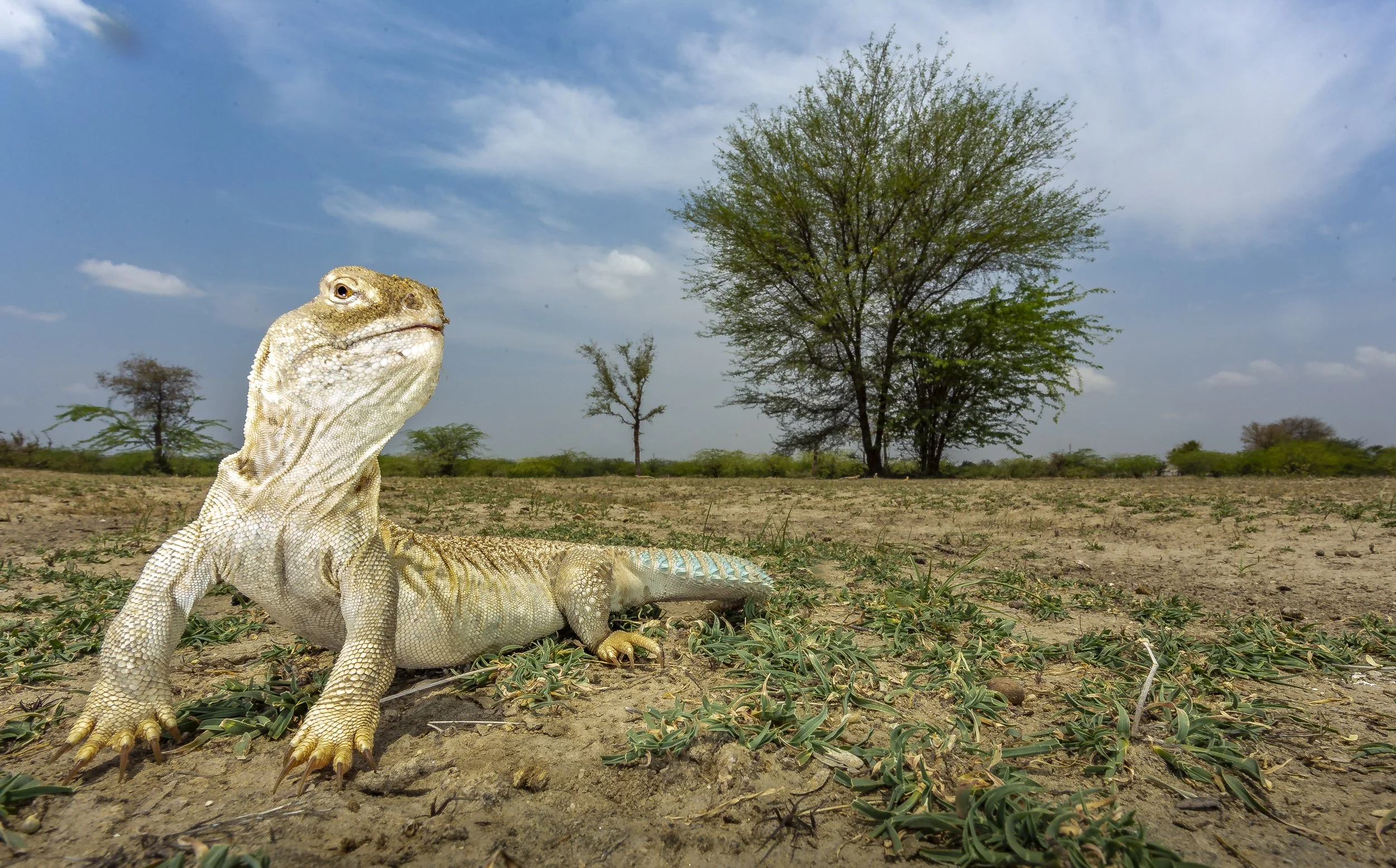
The spiny tailed lizard is my favorite lizard. And yes, I have such a thing as a favourite lizard, even though I am petrified of house geckos. The spiny-tailed lizard (Saara hardwickii) is found in the arid grasslands of western India. It lives in burrows. The burrows are also their only refuge when predators are around. So they forage in a small area just around their burrow, and scurry back at the slightest sign of danger . This image is part of a series documenting spiny-tailed lizards in a community grazing-land called Gaushala, near Tal Chhappar. I used a remotely triggered camera to make this image.
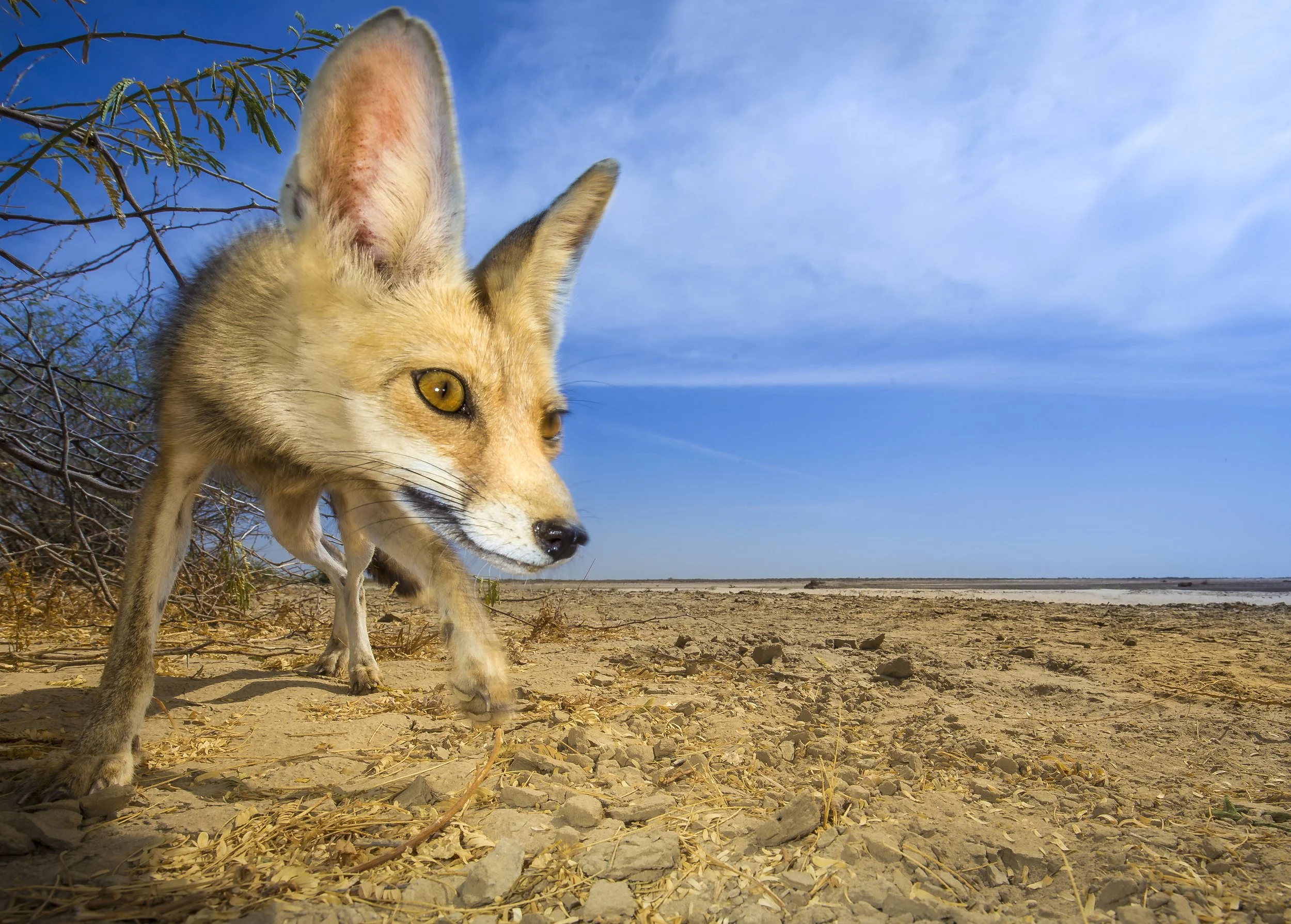
Indian desert fox
The Indian Desert Fox, Vuples vulpes pusilla, is found across the arid grasslands and deserts of northern and north-western India. This photo is from the Little Rann of Kutch, Gujarat. I set up remote cameras near the fox’s den. I wanted an image with the fox in the foreground and the vast expanse of the desert of in the background. The fox walked behind, around, and everywhere but in front of the camera for the first five days of our trip. It finally walked into the frame on the last day of my stay there.
Queen and baby Julien
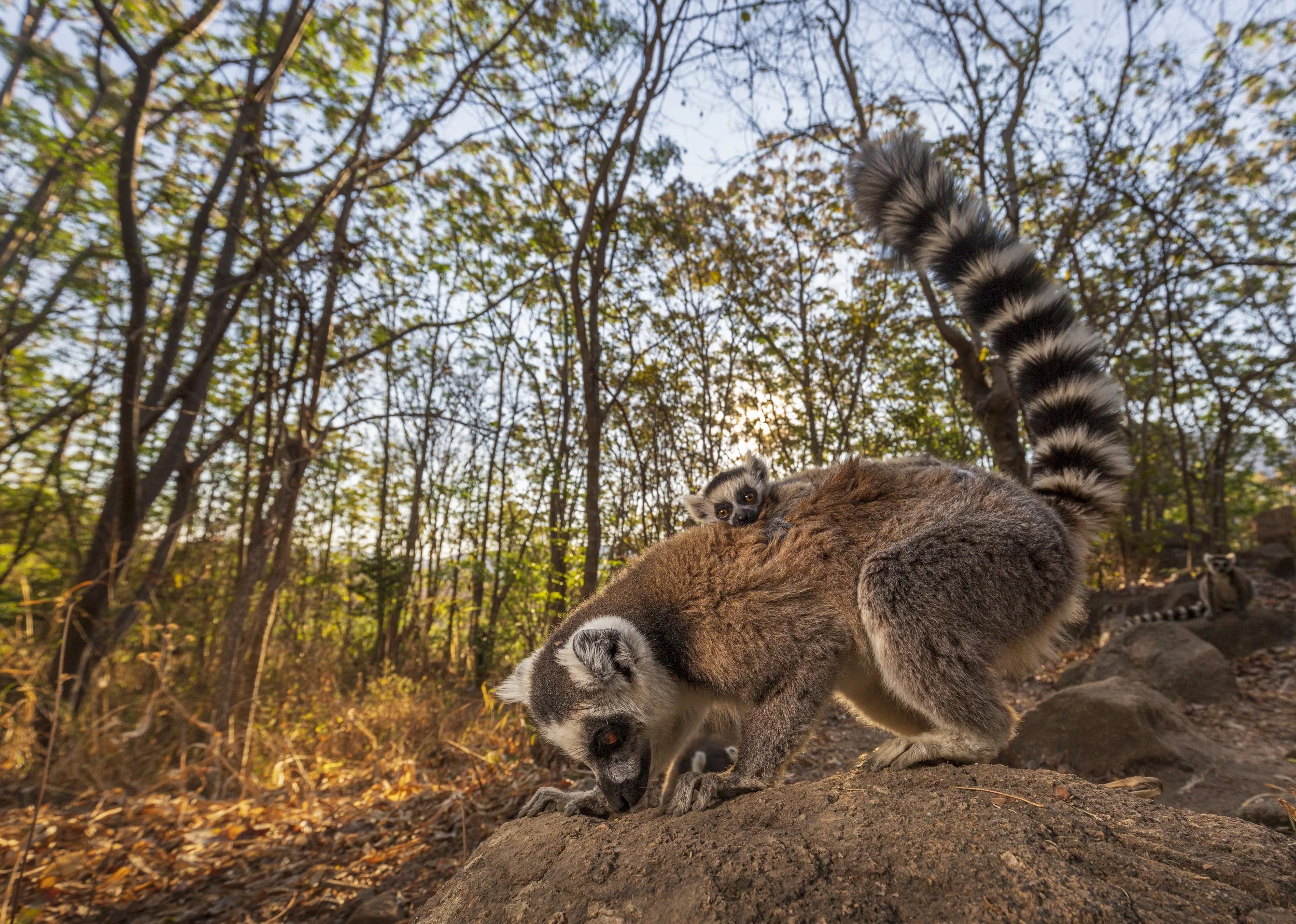
Ring-tailed lemurs, Lemur catta, are probably the most easily recognizable lemurs thanks to the movie Madagascar. They get their names from the long black and white tails. While lemurs are found only in Madagascar, the ring-tailed lemurs are found in the rocky and scrub forests of the South. This image is from the Anja Community Reserve, Madagascar. Like most lemurs, they are highly social animals, with groups as large as 30 individuals led by one or more dominant female. The young ones piggy back till they are about three months old, after which they continue staying near the mother.
Viper on a laterite plateau
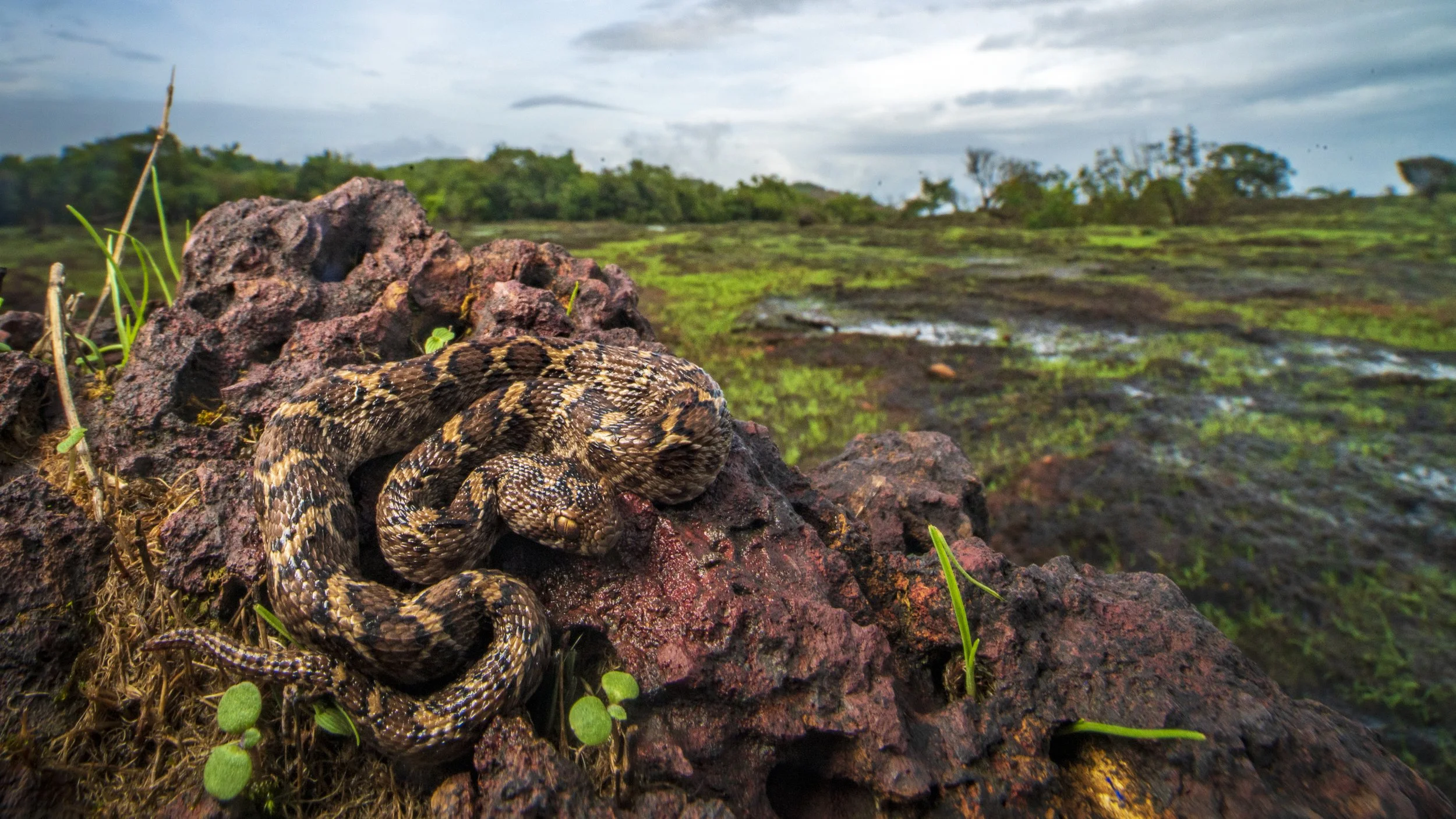
The saw-scaled viper (Chis carinatus) is one of the smaller species of vipers. This one, being a younger one, was even smaller - only about a foot long. Saw-scaled vipers are also one of the ‘big-four’, the four venomous species that cause a majority of snake bites in India, along with the Indian cobra, Russell’s Viper and the Common krait. They are also found in a wide array of habitats, be in dry grasslands, deserts, or laterite plateaus like this one in Goa, where it rains a fair bit. They get their name from a behaviour : when threatened, they make a sound, which is similar to a saw cutting, by rubbing of oblique scales together. These nocturnal snakes hunt rodents, frogs, lizards and insects. Though they are very common, I hadn’t seen one in the wild before, despite my many trips to places they have been seen often. We saw this one soon after a downpour, and super happy to have finally seen it.
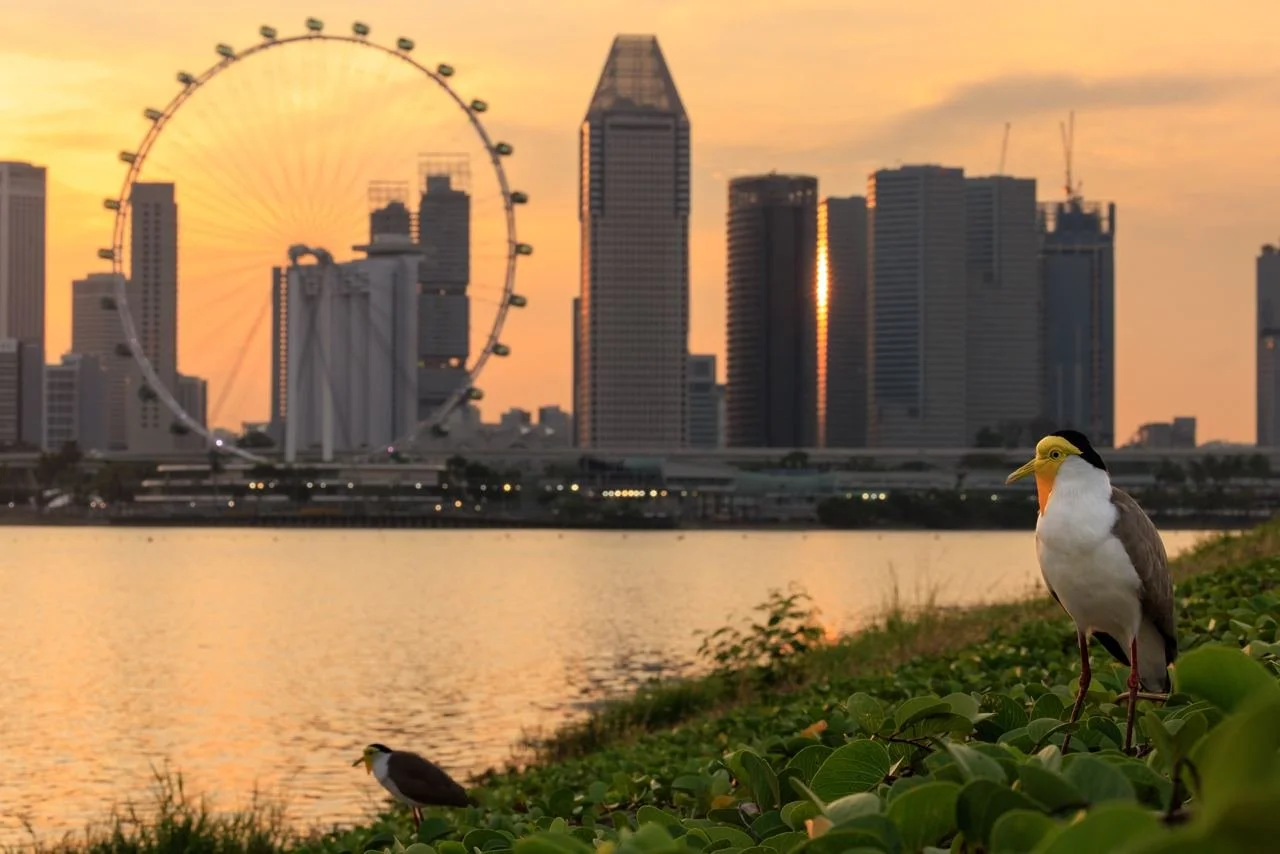
Wildlife in a city
Singapore is one of the most modern cities in the world. But it also has a over 40% of green cover. It has 17 large reservoirs and 990km of canals and drains. Thanks to the green cover and water-bodies, Singapore it also home to a number of wildlife species. Otters are the flagship and most celebrated wildlife species of Singapore. But there are a large number of other species of reptiles birds and mammals too. These masked lapwings have made a home at one of the large parks in Marina Bay.