

- All |
- Botswana |
- Spiti |
- Indian Grasslands |
- Western Ghats |
- Borneo |
-
 | 1/6/26
Photographing Meerkats at Nwetwe Pan, Botswana
The Nwetwe Pan in Botswana is a part of the Makgadigadi pans ecosystem, and is one of the best places in the world for photographing Meerkats. The video is from our evening at Nwetwe Pans with a mob of 12 meerkats, some of whom got too close for our comfort. This is one of the many stories my friends and I have from Botswana. More videos from this epic adventure on this playlist - • Botswana After navigating our way from Kubu Island to Gweta through dusty pans, we arrived at Planet Baobab. A guide from Planet Baobab drove us to a family of meerkats that habituated to the presence of people. Meerkats are very skittish animals, so it is important to find a habituated mob for photography. The process of habituation, which can take up to 18 months, has made these meerkats more accepting of human presence. This access wouldn’t be possible without the Planet Baobab team, and especially Pogiso (PD), who patiently builds trust with the mob day by day. Meerkats live in tightly knit mobs. They have a strong social structure where the alpha male and female lead the group. They are skilled foragers, always in search of insects, roots, and small prey like scorpions. While they are adept hunters, they are also prey. Watching the ‘sentry’ behaviour of meerkats, where they stand on their hind legs to scan for predators, was on my list since the first time I heard about them. and I am thrilled with the photos we made. Our evening ended with a cozy camp setup under the stars at the Ntwetwe Pans, organized by the kind folks at Planet Baobab.
-

-
 | 1/6/26
Photographing Spiti’s Wildlife | Snow Leopard, Ibex, Fox, Wolves & Blue Sheep
This film is from my first trip to the Himalayas — a winter expedition to Spiti in 2025. I went there looking for the snow leopard. But even in the coldest months, this high-altitude desert has far more life than I imagined. This winter wildlife documentary features the highlights of our trip - snow leopard, red fox, Himalayan ibex, blue sheep and Himalayan wolves. We started our days around sunrise, scanning cliffs for movement. One morning, we heard of a horse carcass near Langza and watched a red fox stash pieces of meat in the snow — behaviour that helps it survive long winters. We then saw feral dogs appear, and got a sense of the conflict between wildlife and dogs. We photographed large herds of Himalayan ibex moving across steep rocky slopes. We saw large male herds — different horn classes together — waiting for their chance to climb up. We photographed blue sheep grazing on high slopes through the day, sometimes scraping at the snow with their hooves to reach buried vegetation. And on one of the coldest afternoons of the trip, we saw two Himalayan wolves — tiny silhouettes in the wind, but enough to understand how elusive they are. We did see a snow leopard too — hidden on a cliff, perfectly camouflaged. A reminder that in these mountains, patience matters.
-
 | 1/6/26
In Search of the Dancing Frog | Amboli, Western Ghats
In this video, I travel through the rain-soaked forests of Amboli in Maharashtra — a place where the Western Ghats meet the monsoon at its strongest. I wanted to photograph one of the smallest and most fascinating amphibians of the region — Micrixalus uttaraghati, also known as the dancing frog. The male dancing frogs exhibit a behaviour known as foot-flagging — slowly lifting and waving a hind leg as a signal to other males and nearby females. This is what gives them the name - dancing frog. I was lucky enough, despite the rain, to capture this behaviour along with moments of interaction between individual frogs. The film also looks at how these frogs live close to fast-flowing streams and waterfalls, where the sound of the water often overpowers their soft calls. Their visual display — the flagging — helps them communicate even in such noisy surroundings. Later in the day, the rain made it impossible to continue filming, but as darkness set in, it opened up a chance to photograph nocturnal species that thrive in the rain. Apart from the frogs, I came across some amazing wildlife — Indian toads, pit vipers, and the remarkable waterfall crabs , a first for me. These crabs live along wet rock faces and stream edges, spending much of their time within the splash zone and feeding on algae and decaying organic matter. Across two days of near-constant rain, I worked with whatever light and time I could find, photographing these species while keeping my equipment safe from the water. The video closes with a walk into the Amboli Botanical Garden — a well-known site for macro photography — where I found more frogs and another pit viper before wrapping up the trip. A huge thanks to my guides - Yash and Manjit (who also lent his footage of the frogs) for this film.
-
 | 1/6/26
In Search of Glowing Mushrooms | Bioluminescence in Goa’s Western Ghats
In the monsoon forests of Goa, I set out in search of something that only reveals itself after dark — bioluminescent fungi and mushrooms. When we think of colour in nature, we usually think of the day: butterflies, flowers, grasses, and the shifting greens of the forest. Colour is light reflected back to our eyes. But some life forms create their own light. This natural phenomenon, known as bioluminescence, is faint, rare, and visible only in complete darkness. This film is about my search for that glow in the Western Ghats. On the edge of the Bhagwan Mahavir Wildlife Sanctuary, I spent several days in heavy rain trying to photograph glowing fungi and mushrooms. Some nights were spent waiting by tree trunks that looked ordinary by day but came alive with glowing green light at night. Other times, I focused on smaller mushrooms from the Mycena group — delicate, fragile, and glowing faintly under the canopy. Photographing bioluminescence came with challenges. The light is too dim for standard video, so I used long exposures and time-lapse sequences to capture the transition from day to night. I tried wide perspectives to show the trees that hosted these fungi, and macro close-ups to reveal their detail. Rain was constant — damaging for cameras, yet essential for bringing the fungi out. At times, unexpected elements like stray torchlight or changes in weather added their own mark on the images. The mystery remains: why do mushrooms glow? We know the chemistry — molecules inside them react with oxygen, releasing light instead of heat. But the purpose is still not clear. Some scientists suggest the glow attracts insects that help spread spores. Others think it acts as a warning to protect them from being eaten. And some believe it may simply be a byproduct of their metabolism. That uncertainty is what makes ongoing research so important. My friend Omkar is studying these mushrooms in Goa, describing species that may even be new to science. I am deeply grateful to him for his guidance and support during this trip. The has shot the timelapses of the mushrooms too. I also want to thank Kuldip and Manjit from Mrugaya, whose expertise helped me find the glowing trees in these rainforests. This journey has been about more than photographs. It has been about chasing a rare light in the dark, and about the questions that still surround it. The Western Ghats are full of such stories — some familiar, some waiting to be told.
-
 | 1/6/26
Exploring Goa’s Hidden Plateaus: Snakes, Frogs and Monsoon Magic
Discover the beauty of Goa’s lesser-known laterite plateaus on the outskirts of the Bhagwan Mahavir Wildlife Sanctuary, where the Western Ghats’ southern and northern ecologies blend in spectacular fashion. Join me on a trail on this unique landscape - a plateau that transitions to a forest, home to exclusive species like the reddish burrowing frog, the elusive saw-scaled viper, and stunning bioluminescent mushrooms that light up the monsoon nights. I also chat with Parag Rangnekar, a veteran naturalist and conservationist from Goa, on how these misunderstood plateaus harbour rich biodiversity rivaling even rainforests at times, from rare herpetofauna to ground-nesting lapwings and nightjars. We speak of sustainable tourism, including a heartwarming story of a women-run homestay in the remote village of Tarde. You'll see what field herping for snakes and frogs under monsoon skies entails, some responsible wildlife photography tips, and a rare glimpse of glowing fungi under the rainforest canopy. Whether you’re a nature lover, adventure seeker, or curious about Western Ghats ecology, this video promises a unique Goan adventure away from the usual beaches.
-
 | 1/6/26
Okavango’s Wilderness, Khwai’s Golden Light: Our Botswana Safari Adventure’s Last Chapter
Our month-long overlanding adventure in Botswana reaches the end as we explore the rich wildlife at the Khwai COmmunity Concession—one of the Delta’s corners.In this video, I’ll take you on immersive game drives along the Khwai’s slow, winding channels, from sun-drenched afternoons watching elephant herds, to magical camp evenings spent beside hippo-filled waters. We set up camp at the Khwai Magotho, which is also a favourite hangout spot for Khwai’s wild elephants. Highlights include:
Epic encounters with elephants and hippos, both at water and wandering through camp
River crossings and learning hard-won lessons about self-driving in Botswana
Special moments with antelope, raptors, storks, crocodiles, and the elusive sable
Rare behaviour encounters of hippos and elephants
Magical sunsets and intimate mornings—moments that turn the daily grind of packing, camp chores, and long drives into an unforgettable experience
Camp reviews, tips for picking the perfect Khwai site, and real talk about safari routines, backups, and the rhythms of wildlife photographers in the field
Be it tricky water crossings or quiet mokoro rides through lily-choked channels, every day in Khwai brought us new sightlines, surprises, and reminders of just how much this wild land gives. Whether you’re planning your own African safari, looking for Botswana travel inspiration, or chasing the magic light with your camera, I hope this story brings you as close as possible to the Okavango’s wild heart.
-
 | 1/6/26
Chobe River Cruise – Botswana’s Elephant Kingdom (Wildlife Documentary)
Experience Botswana’s wilderness like never before, as we leave the bush for a boat and journey down the Chobe River—where Namibia lies on one bank and Botswana on the other. This story captures our final day in Botswana, after a month-long adventure traversing deltas, pans, and woodlands. Epic Wildlife Encounters: We spend our last day photographing elephants, hippos, buffalo, and a number of birds from the unique vantage of a specially-designed photo boat on the Chobe River. Birding Rush Hour: Witness the morning come alive as we spot Malachite Kingfishers, African fish eagles, grey and Goliath herons, and more, capturing dramatic scenes as nature’s best hunters strike. Close-Up with Giants: Watch as we drift next to herds of cape buffalo and stumble upon the world’s largest heron. Later, we catch elephants arriving to drink, bathe, and socialize at Elephant Bay—a scene like no other. Extraordinary Animal Behavior: See wild elephants swim across the river, mothers guiding adorable calves, and fascinating moments like baboons digging through elephant dung for seeds. Discover how every herd, bird, and baboon has its own ritual along these floodplains. Photography Insights: Go behind the scenes on our specialized photography boat, designed for stability and flexibility with full-swivel gimbal chairs, making it possible to use heavy lenses and capture unique perspectives from the water. Elephant Bay: Every evening, multiple herds descend for water, sand baths, and playful meets. The scene is orderly yet social—herds taking turns, calves learning from elders, and the occasional matriarch guiding a lone family. The Unexpected: Not just elephants—impalas, guinea fowl, waders, and baboons gather for their own reasons. Baboon troops capitalize on the wealth of undigested seeds in elephant dung, while roots and shoots in the soft riverbank become lifelines during the dry season.
-
 | 1/6/26
Snow Leopards | Spiti | Wildlife Documentary
This video features one of the rarest wildlife sightings I've come across - snow leopards in courtship, mating, fights and their struggle for survival, all caught on camera at Kibber, Spiti. In March 2025, I visited Spiti Valley, a high-altitude cold desert in Himachal Pradesh, India, with a single goal: to see the rare and endangered snow leopard in its natural habitat. The Spiti Valley, carved by the Spiti river and bordered by Tibet, is a place of stark beauty and ancient geology. Its deep gorges, sedimentary rocks, and snow-covered peaks are home not only to snow leopards but also to blue sheep (bharal), ibex, red foxes, Tibetan wolves, lammergeiers, and golden eagles. These species have evolved remarkable adaptations to survive at altitudes above 4,000 meters, where temperatures can plunge to minus 20°C and oxygen is scarce. Our journey began in Shimla, climbing steadily through Kalpa, Kaza, and finally to Kibber, our base camp perched at 4,200 meters. Acclimatization was a challenge-every step at this altitude was a reminder of the thin air and the physical demands of high-altitude wildlife tracking. Even before reaching our hotel in Kaza, we received word of a snow leopard sighting at Shego. Instead of checking in, we made a detour straight to the site. Most wildlife enthusiasts spend days or even weeks in the mountains without a single glimpse of a snow leopard, but our luck was extraordinary. The snow leopard, perfectly camouflaged against the snowy cliffs, appeared briefly-a living phantom-before vanishing into the rocks. This first sighting set the tone for what would become an unforgettable expedition. The next morning, our plans for a leisurely breakfast were interrupted by another sighting, this time in the village of Langza. In Spiti, a snow leopard sighting is a community event. Villagers, spotters, wildlife photographers, and tourists gather in the biting cold, setting up tripods, spotting scopes, and even chairs to peer into the distant rock faces. Hot beverages and packed lunches are shared as everyone waits for a glimpse of the elusive cat Spotting a snow leopard is never easy. Their grey coats, patterned with black rosettes, blend seamlessly into the rocky landscape. Even with a powerful telephoto lens, it took the expert guidance of our local spotter, Sonam, to finally bring a mating pair into focus. The male, his face bloodied from a recent fight, stood over the female. On a distant ledge, a third snow leopard-an older male, presumably defeated in the territorial battle-licked his wounds. To see three snow leopards in one frame is a privilege few ever experience Once they were up, we saw some rare courtship behaviour, with the female gently nudging the male and adopting the classic mammalian lordosis posture. Their mating, repeated multiple times in the same rocky alcove, was both intimate and intense-a rare wildlife moment rarely captured on camera. Meanwhile, the injured older male kept his distance, retreating to a cave after a brief standoff with the younger rival. After the adrenaline of our first two days, the pace of wildlife watching slowed. On day three, the snow leopards did little more than sleep on distant ledges, blending into the rocks as we waited for hours in the cold. In these quiet moments, the valley revealed its other treasures: herds of blue sheep navigating impossible slopes, lammergeiers soaring overhead, and calls of Himalayan birds echoing through the gorges. Wildlife photography in Spiti is as much about patience and observation as it is about action. The slow rhythm allows for reflection-on the interconnectedness of species, the fragility of this ecosystem, and the privilege of witnessing life at the edge of survival. The story is also about the people-the spotters, guides, porters, and villagers-who make such encounters possible. Their knowledge, hospitality, and commitment to conservation are as inspiring as the wildlife itself.
-
 | 1/6/26
Rhino Spotting: Khama Rhino Sanctuary
The Khama Rhino Sanctuary is a 8,585 hectare reserve located in central Botswana, created to protect rhinos while providing an ideal environment for other wildlife to thrive. It is a 5 hour drive from Maun. Established in 1992, it has become a haven for both black and white rhinos.The sanctuary's setting—rolling bush with interspersed pans and grasslands—offers a perfect habitat for not just rhinos, but also common game such as zebras, impala, springbok, steenbok, duikers and wildebeest. During our visit, we stayed at the Mokongwa Campsite within the sanctuary, a comfortable and well-equipped space. Each of the 18 campsites are well shaded and provide essential amenities, including clean ablution blocks (common to 3-4 campsites), braai stands, a fire pit and running water at each camp. It offered the perfect blend of comfort and closeness to nature, allowing us to relax after each drive while still feeling immersed in the wild. We had some brilliant rhino sightings during our came drives during which we saw over a dozen white rhinos. Each of the sightings lasted a while, allowing us the time to photograph and observe animals. The standout moment for me was walking with our ranger, Lebopo. to track rhinos on foot. We were in thick bush with rhinos only a few meters away. While we didn't make any great photos during the walk, the experience was exhilarating - because when we're on foot, we see how large the rhinos really are.
-
 | 1/6/26
Leopards and Lions : an epic stand-off at Khwai, Botswana
e had a front-row seat for one of the wildest encounters in Botswana’s Khwai Community Concession—where a leopard and two lions engaged in an epic standoff that redefined my perspective of the African bush. Warning : this video has footage of a leopard feeding on a warthog . I recently spent nearly a month exploring the deserts, deltas, and forests of Botswana, chasing stories, light, and unforgettable wildlife moments. The second half of our adventure brought us to Khwai, a region that sits at the threshold between the pans and the Okavango Delta, renowned for its thriving big cat populations and managed by the local community through the Khwai Development Trust. Our days at Khwai began with anticipation and ended with awe. The Khwai River, with its endless herds of elephants and antelope, set the stage for predators to thrive. Yet, despite five game drives filled with elephants, hippos, and the promise of big cats, the leopards and lions remained elusive. On our fourth day, armed with optimism (and a lucky hat), we set out before dawn, determined to be the first at a rumored leopard sighting. After a series of twists, turns, and unexpected lifers (hello, sable antelope!), we finally found our prize: a leopard high in a camel thorn tree, guarding her kill with the poise only a true queen of the wild can muster. What followed was a masterclass in predator strategy and resilience. The leopard, framed by golden light, navigated the delicate balance between feasting and vigilance. Her kill, stashed high on a slender branch, was safe from all but the most determined rivals. The day unfolded in waves—photographing her from every angle, marveling at her strength, and soaking in the serenity of the Khwai marshes. But the real drama began when two lionesses entered the scene. Drawn by the scent of the kill, they circled the tree, testing its branches and the leopard’s resolve. In a moment that felt straight out of a nature documentary, the leopard refused to flee. Instead, she perched higher, then descended to the base of the tree, holding her ground as the lions lounged nearby. The standoff was tense, silent, and utterly mesmerizing—a testament to the quiet power plays that shape life in the wild. Between these intense moments, Khwai continued to surprise: a rare white frog (the grey foam nest tree frog) clung to an anthill, giraffes watched the drama unfold, and the landscape shifted from golden hour to deep dusk. As the lions eventually lost interest and wandered off, the leopard reclaimed her kill, and we were left with memory cards full and hearts fuller. This day was a reminder that not every encounter in the wild ends in chaos—sometimes, it’s about patience.
-
 | 1/6/26
African Wildlife Safari : Nxai Pan, Botswana
We spent six days at Nxai Pan, Botswana in September 2024, and enjoyed the quintessential Southern African wildlife safari and overlanding experience. This video has our itinerary by day, and some amazing wildlife sightings. The Nxai Pan National Park, located in the heart of Botswana, is a haven for wildlife enthusiasts and photographers alike. During the dry season, the park's waterhole becomes the lifeline for the animals, attracting a diverse array of species that come to quench their thirst. The waterhole is a hub of activity, with the constant ebb and flow of animals creating an atmosphere that is both tranquil and tumultuous. As the only source of water in the area, the waterhole is a magnet for wildlife. This video helps uncover what self-driving and camping in Nxai Pan really entails. One huge advantage of self-driving is the freedom - we can explore the areas we want, spend as much time at the sightings we like, and return back to camp whenever we feel : the schedule is entirely on us. We made the most of it, and almost all days, we were the first car in, and the last car out. We also stayed with a lioness for 14 hours on the day she made the kill. But with great power comes great responsibility - though we can be anywhere we want, we can only be at only one place - so as we learnt, choosing the right place, and staying put, is the right way to go about wildlife exploration. A downside to self-driving is that we have to come back to camp for housekeeping, such as laundry or image back-up, and this video has examples optimizing our time for each. We stayed at South Camp, which is the best positioned camp to access the waterhole. There’s a detailed review of the camp facilities. We also had some amazing wildlife sightings : I saw elephants dig out ground water in the middle of a desert, this is the closest I’d been to bat-eared foxes in all my trips to Africa, and we saw an aardwolf - the first time ever for me.
-
 | 1/6/26
Waterhole Wildlife Watching in the Kalahari Desert: Nxai Pan, Botswana
This video is about wildlife watching at a waterhole in Nxai Pan, Botswana, where the harsh yet majestic landscape of the Kalahari desert serves as a backdrop for the most incredible gatherings of wildlife. This has been shot over our five day stay at Nxai Pan in October 2024. The Nxai Pan National Park, located in the heart of Botswana, is a haven for wildlife enthusiasts and photographers alike. During the dry season, the park's waterhole becomes the lifeline for the animals, attracting a diverse array of species that come to quench their thirst. The waterhole is a hub of activity, with the constant ebb and flow of animals creating an atmosphere that is both tranquil and tumultuous. As the only source of water in the area, the waterhole is a magnet for wildlife. Among the many species of antelope that visit the waterhole are the impala, kudu, and springbok, all of which are well adapted to the harsh conditions of Nxai Pan. The impala are often the first to arrive at the waterhole, cautiously approaching the water's edge as they scan their surroundings for potential threats. The kudu, one of the largest antelopes in Africa, typically arrive in small harems, led by a dominant male, and are known to be skittish and alert, always on the lookout for predators. The springboks are perhaps the most iconic of the three, and their large herds can be a sight to behold. The springbok bucks often broke into a spar, adding to chaos at the waterhole. Dust storms, which can be a regular occurrence in the area, bring with them a unique set of challenges and opportunities. Ostriches are well equipped to handle the dust and wind, and they can often be seen roaming the landscape in search of food and water. They dust bathe, a behavior that helps them to regulate their body temperature and remove parasites from their feathers. As the day wears on, the waterhole continues to be a hub of activity, with zebras and wildebeest arriving in large numbers to drink and socialize.The zebra migration in Botswana is a fascinating phenomenon. Every year, thousands of zebras migrate from the Chobi River to Nxai Pan, a journey of over 250 kilometers, in search of food and water. The wildebeest also arrived in large herds. As they gather at the waterhole, they seem to be at ease, drinking inside the waterhole. The zebra migration in Botswana is the record for the longest migration of zebras. One of the most imposing species to visit the waterhole, however, is the Cape buffalo. These large and powerful animals are a force to be reckoned with, and their arrival at the waterhole is a dramatic affair. We saw a herd of over 300 buffaloes at the water hole once. The large bulls are the first to enter the water, followed by the cows and calves, and they seem to take their time, drinking and wallowing in water, without a care in the world. Finally, the elephants are the true stars of the show at this waterhole. They seem to live for water. As they approach the waterhole, their purposeful strides pick up pace, and they seem to cherish their arrival to the water hole. Whether they are drinking, bathing, or simply socializing, the elephants are a constant source of entertainment. As the sun sets over the Kalahari desert, we made some beautiful silhouettes of elephants against the setting sun.
-
1/6/26
Photographing Meerkats at Nwetwe Pan, Botswana
The Nwetwe Pan in Botswana is a part of the Makgadigadi pans ecosystem, and is one of the best places in the world for photographing Meerkats. The video is from our evening at Nwetwe Pans with a mob of 12 meerkats, some of whom got too close for our comfort. This is one of the many stories my friends and I have from Botswana. More videos from this epic adventure on this playlist - • Botswana After navigating our way from Kubu Island to Gweta through dusty pans, we arrived at Planet Baobab. A guide from Planet Baobab drove us to a family of meerkats that habituated to the presence of people. Meerkats are very skittish animals, so it is important to find a habituated mob for photography. The process of habituation, which can take up to 18 months, has made these meerkats more accepting of human presence. This access wouldn’t be possible without the Planet Baobab team, and especially Pogiso (PD), who patiently builds trust with the mob day by day. Meerkats live in tightly knit mobs. They have a strong social structure where the alpha male and female lead the group. They are skilled foragers, always in search of insects, roots, and small prey like scorpions. While they are adept hunters, they are also prey. Watching the ‘sentry’ behaviour of meerkats, where they stand on their hind legs to scan for predators, was on my list since the first time I heard about them. and I am thrilled with the photos we made. Our evening ended with a cozy camp setup under the stars at the Ntwetwe Pans, organized by the kind folks at Planet Baobab.
-
 | 1/6/26
Photography at Kubu Island - Landscapes and Astrophotography
The Kubu Island, situated in Botswana’s vast Makgadikgadi Pans, is an extraordinary destination for landscape and astrophotography. This remote area, surrounded by the sprawling Sowa Pan, offers a unique combination of ancient baobab trees and breathtaking night skies, making it a dream location for astrophotography and surreal landscapes. In this video, I take you on a journey through our two-day adventure at Kubu Island. The trip begins with a long drive from the Khama Rhino Sanctuary, navigating through sand and gravel roads. What seemed like a straightforward route soon turned into an unexpected challenge as we got lost in the wilderness near Orapa and Letlhakane. How not to get lost enroute Kubu : While traveling to Kubu from Khama (or from the A20), look for a town called Mmatshumo - from Mmatshumo, there is a marked gravel road leading to Kubu. We had Track4Africa and maps.me -both of which had incorrect routes that kept us going in loops in the wilderness around Orapa. We arrived at Kubu just around sunset, and started scouting for shots we could make at night. The island is not an island in the traditional sense but a granite rock formation in the middle of what was once an ancient lake, now a vast salt pan. The island has some of the largest baobab trees I’ve seen, some of which are over 2000 years old. The remote location offered some of the darkest skies we’ve ever experienced, perfect for creating star trails and nightscapes. Planning these shots was an intense process. We used apps ( sunsurveoyor and sunseeker) and to locate the Milky Way's position during the night and scheduled photos. We worked together to compose, light, and shoot the scenes. Tiring as the day was, it was rewarding and we were happy with the images we made The next morning, we returned to the spots we scouted the previous night to capture the soft morning hues and sunrise compositions. One of the highlights was photographing a lone baobab framed against the rising sun, with warm orange light bathing the surrounding granite rocks. As the sun climbed higher and the light grew harsh, we wrapped up the morning session and retreated to camp. We camped at the Gaing O community trust campsite (link : http://www.kubuisland.com/ ). The campsites are basic - this camp does not have ablutions or running water, so fill your water tanks up before heading towards Kubu.
-
 | 1/6/26
Botswana Stories : A Helicopter Ride Over the Okavango Delta
My first stop in an epic journey across Botswana is an open-doors helicopter ride over the iconic Okavango Delta. The Delta is legendary—an oasis in the heart of the Kalahari Desert created by seasonal rains flowing from the Angolan Highlands over a thousand kilometers away. This unique river ecosystem is one of the few in the world that doesn’t reach the ocean, instead nourishing the earth and bringing life to the desert. In just 45 minutes of flight, my friends and I saw some spectacular scapes of the of the Delta in golden light, spotting hippos, crocodiles, elephants, giraffes, and an enormous buffalo herd of over 500. This experience connected back to my childhood memories of watching my first wildlife documentary on the Delta, sparking a lifelong interest for wildlife.
-
 | 1/6/26
Incredible Wolf Sightings in Kadbanwadi
In this video, I take you along on a journey into the grasslands of Karbanwadi where we had some incredible wolf sightings. Kadbanwadi is a protected grassland near Bhigwan in Maharasthra. It is about a three hour drive from Pune. This trip was a warm-up before an upcoming adventure to Botswana, but little did I know that it would turn into one of the most incredible wolf sightings I’ve ever had. We arrived at Kadbanwadi just as the sun was rising, and even before I could unpack my camera, we got a call from our guide that a pack of wolves had been spotted nearby. We rushed to the location, hoping for a glimpse of these elusive creatures. The pack slowly emerged from a cornfield and crossed the valley right in front of us. These were wolves I had seen before—pups from a previous trip—but now they were all grown up. We spent over two hours with them, driving alongside as they went about their day. To my amazement, they seemed completely at ease with our presence, and ended up resting as close as 40 feet from our vehicle. Kadbanwadi is a unique place, a mosaic of habitats that includes rocky terrain, grasslands, scrub jungles, and agricultural fields. The last time I was here, the landscape was a dry shade of brown, but this time, thanks to the monsoon rains, everything was lush and green. It was the perfect backdrop for watching wildlife. And although I was here primarily to see wolves, the area offered much more—raptors, chinkaras, and a rich diversity birdlife. As the day wore on, the wolves retreated into the fields, and we didn't find them that afternoon. Wildlife photography isn’t always predictable, and after such a lucky morning, the afternoon drive was quieter. Still, the beauty of Kadbanwadi in the monsoon more than made up for the lack of sightings. The next morning, however, our patience was rewarded. After hearing distant howling, we found two wolves in the open. As we waited for better light, more wolves appeared, and eventually, we saw a total of six wolves playing in an agricultural field. The wolves were full of energy, running around as if there were no tomorrow, while the adults relaxed nearby. This was one of my best wolf sightings, and I hope this video brings you as close as possible to the magic of seeing these incredible animals in the wild. Note : The shots from a drone are far away from the protected area of Kadbanwadi, over private property. They are representative of the habitat. None of the shots of the wolves are with drones : they are all with a long lens when the wolves were in a valley below.
-
 | 1/6/26
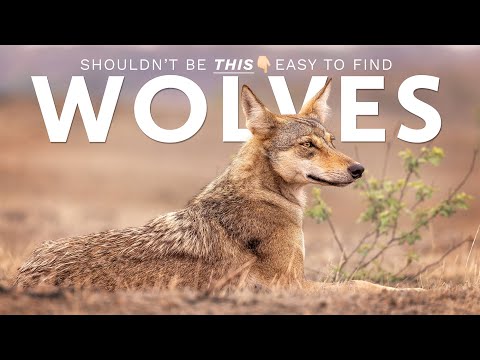
Wolves at Kadbanwadi, near Pune
Join me on an early morning trip from Pune to Kadbanwadi to look for the elusive Indian wolf. Waking up at 2 a.m. and driving for three hours was just the beginning of this journey. Kadbanwadi, a semi-arid grassland typical of the Deccan Plateau, may seem barren at first glance, but it teems with life when we look closely. Despite my tempered expectations, having not seen a wolf since 2012, this trip surprised me. Amid the scrub jungle, we spotted a wolf easily, soon joined by the rest of its pack. This rare encounter was a dream come true, bringing me within five feet of these magnificent creatures. Throughout the day, we observed these social animals, part of a larger pack in this unique habitat. Indian wolves, a subspecies of the grey wolf, are the apex predators of India's grasslands but face significant threats from habitat loss and human-wildlife conflict.
-

-
 | 1/6/26
Spiny-tailed lizards : a falcon’s favourite meal
In this video, I'll take you to a place that will never make it onto any travel, wildlife or nature photography list, but it's still my favourite place in the world - the Gaushala. The reason I love coming here - the abundance of spiny tailed lizards. So large is its number, that the entire landscape, when observed from above, appears to be dotted with white spots – the sand that this animal has freshly burrowed out. Since 2012, I’ve been trying to make a wide-angled scape shot of the spiny-tailed. Something with a spiny tailed lizard in the foreground, and the large scape of the Ghaushala behind it. Since these lizards are skittish, I need to place a camera and wait for them to walk into the frame. In the last 12 years, I haven’t found a frame to my liking. What makes this more challenging is the number of predatory birds, especially laggar falcons, that hunt these lizards persistently. In Gaushala, it is quite common to see a laggar falcon feeding on a spiny tailed lizard. This video has footage of a falcon feeding on a lizard, as well as falcons nesting in the Gaushala. I take you along on what a day at Gaushala is - where the slowness that comes by surrendering to a lizard’s well gets abruptly, and frequently, interrupted by falcons hunting them. My story on Gaushala that was published on Nature in Focus - https://www.natureinfocus.in/animals/...
-
 | 1/6/26
Monsoon Macro Photography in Goa’s Rainforests
Join me as I explore the hidden, lush rainforests of the Western Ghats, discovering a different side of Goa that comes alive during the monsoon. From Chorla Ghats in the Mhadei Wildlife Sanctuary, we dive into the world of herping, searching for amphibians, reptiles, and anything else I can capture with my macro lens. One memorable experience on this trip was witnessing the bioluminescent fungi of the Mycena genus. In complete darkness, the forest glowed in patches, with twigs and leaves emitting a soft, fluorescent light - an incredibly rare natural phenomenon. I also photographed the Malabar pit viper, a snake endemic to the Western Ghats. The highlight of the trip was capturing rare footage of Malabar gliding frogs during their mating ritual. I watched three males trying to mate with one female and the creation of a foam nest. This unique behaviour was fascinating to observe and document - a first for me.
-
 | 1/1/25
Orangutans of Borneo
Join me on a wildlife photography expedition to Tanjung Puting National Park, Indonesia, to photograph Bornean Orangutans. I spent time with orangutans at rewilding camps in Tanjung Puting. Outside the camps, I captured intimate moments with Chantek and her baby, Canada, who is less than a year old. This trip was one of the best wildlife photography experiences I've had, even though it was very different from what I expected. Watch the video for beautiful, up-close footage of these incredible apes in the wild.
-
