

Wild Botswana
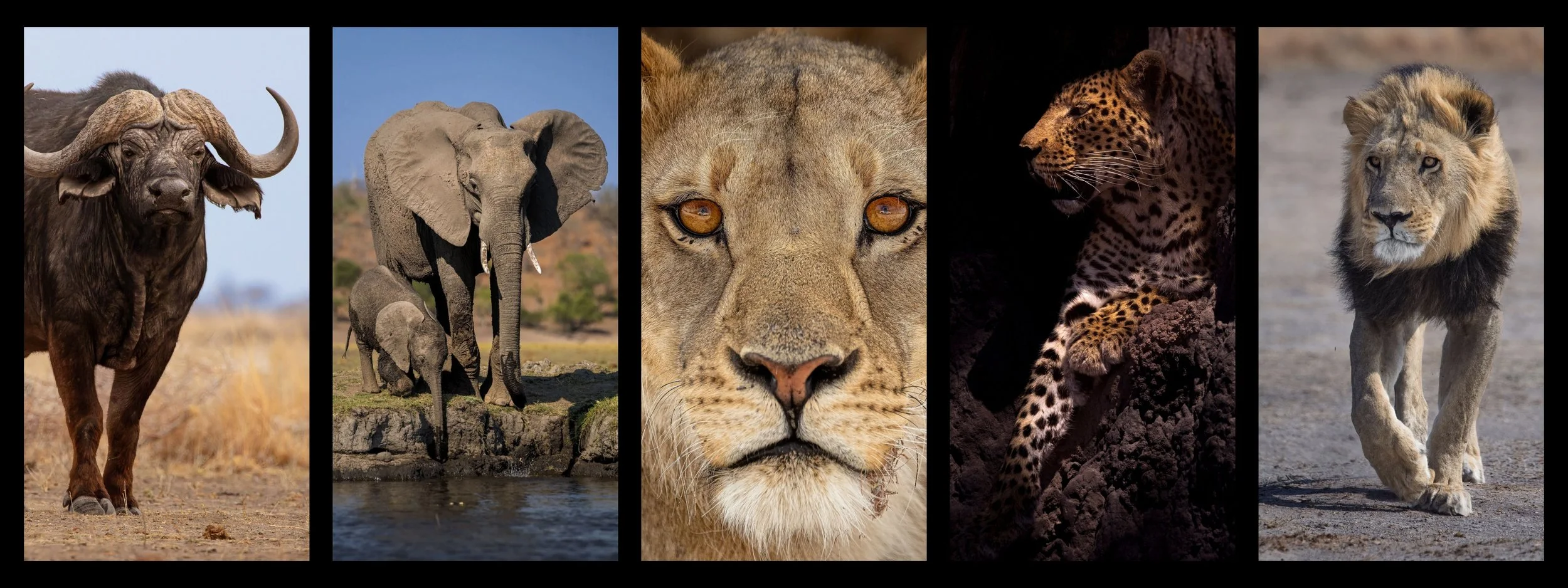
A guided photography expedition
25 Oct ‘27- 4 Nov ‘27
Maximum 6
USD 7150 / person
Khwai | Savuti | Chobe
16 game drives.
9 nights in the bush.
0 fences.
A roar wakes you up. Not a faint, far away sound. You feel it in your chest. Like it was right behind you.
And then another one, louder. Now you are up and alert, and can hear it breathe. Rhythmic. Like an old man wheezing. You are suddenly very aware of the thin canvas your tent is made of. You wonder why Botswana’s camps are unfenced. And why they are snap bang in the middle of the bush.
There’s another roar, farther off. It’s probably the lions you saw this afternoon. They seem to be walking away from the tent.
It’s 4 am, only an hour before the wake up call. So you try to get back sleep. A long day awaits, like every day so far.
When you finally step out of your tent at 5:15 am for coffee, you see a couple of headlamps bobbing in your direction.
And a familiar, reassuring voice yells, “Did you hear the lions last night? They haven’t gone very far. We’ll be tracking them first thing this morning!”
Rise and repeat for 9 nights.
Why Botswana’s driest season?
2027 is predicted to be one the harshest drought in living memory. This is unfortunate and as trying as the conditions are going to be, this also presents a once in a lifetime opportunity. The drought at the end of the dry season depletes food and water sources to a point of desperation, and El Nino even more so. Most of the game, and the predators which follow, will be around the few remaining ponds, streams and rivers.
We’ll be visiting three different habitats in the expedition, including the delta, to witness the rare, cruel and testing natural history phenomenon - one of the harshest droughts in Botswana.
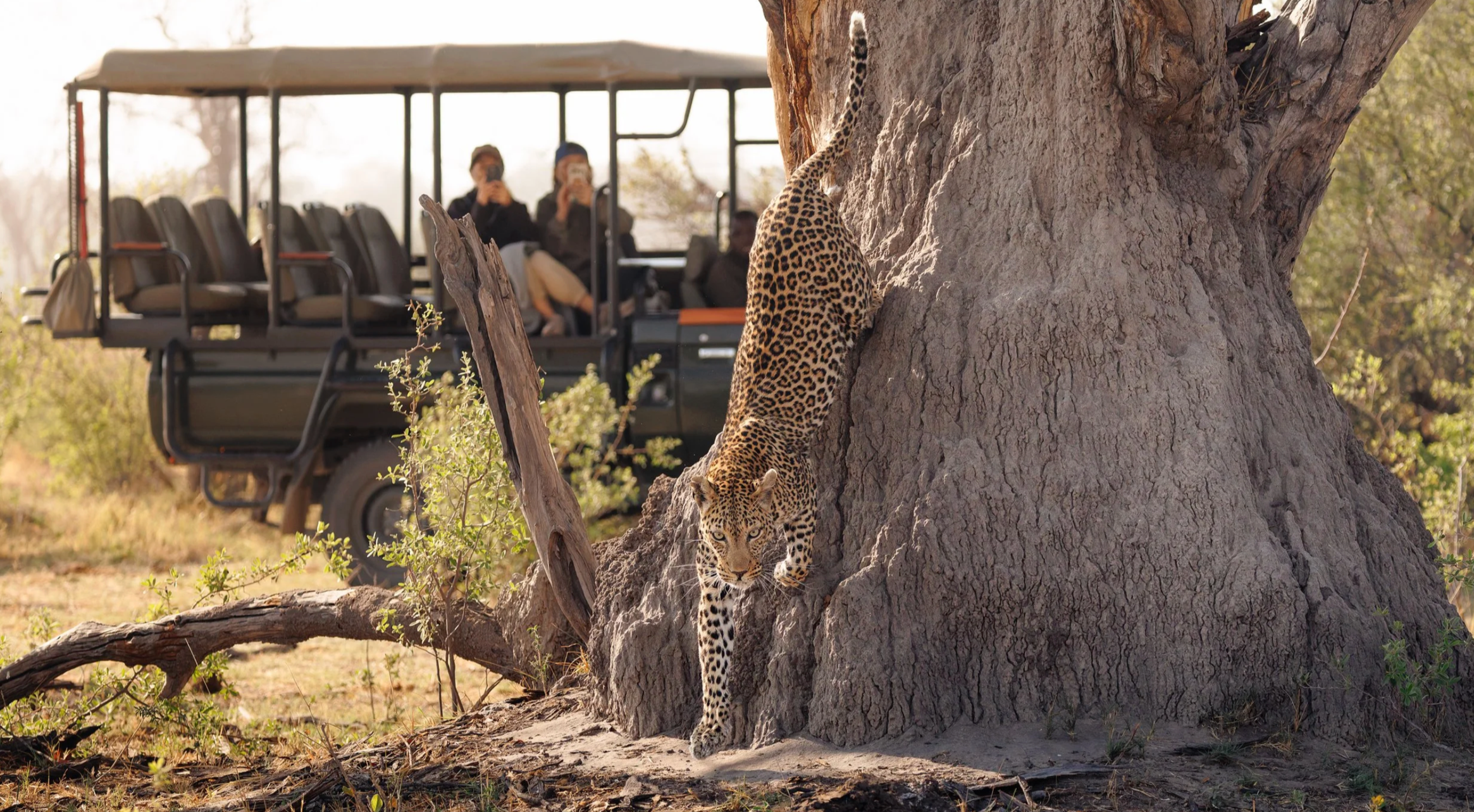
Khwai: The Khwai, a perennial river, receives water from the Okavango delta. Around the end of the dry season, the Khwai is all but a stream. The adjoining flood plains would have also shrunk, with just a few patches of wet marsh. Since Khwai is a community concession, it has easier rules on off-roading and staying out late. So we can stay back at a good sighting or drive behind a pack of wild dogs for as long as the terrain and light allow us. Khwai is also well known for its lions and leopards, and we will be there at the best time of year to photograph them.
Savuti: This is the driest habitat we’ll be in and probably the most rewarding. The marsh would be reduced to dry grass and dust. Water will be limited to a few pumped water holes, with elephants and other game in close proximity. Savuti is well known for its large lion prides. Some of these lions have been documented to take down elephants too. This is the part of the trip I am most excited about - open pans, dust, backlight, the Gubatsa Hills and higher drama.
Chobe: The Chobe is a large river that separates Namibia and Botswana. Botswana is the elephant capital of the world, and Chobe is Botswana’s elephant capital. With water sources drying up all around, we expect enormous herds of elephants and buffalo along the river bank, along with large numbers of antelope and the predators that follow them. Apart from game drives in the park, we also have a boat ride in the Chobe river that gives us the opportunity to photograph wildlife in water at eye-level.
-
![]()
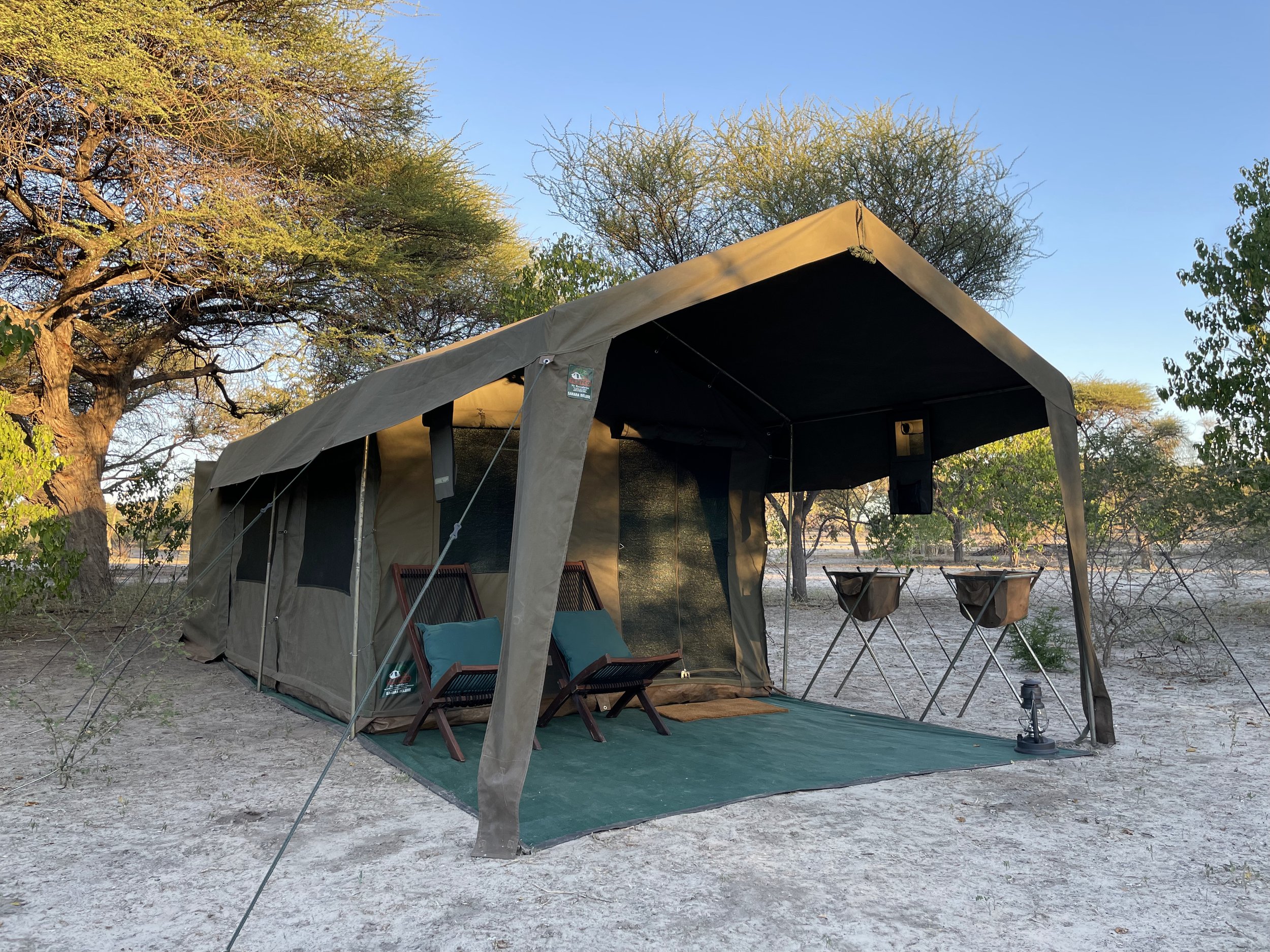
Spacious canvas tent
-
![]()
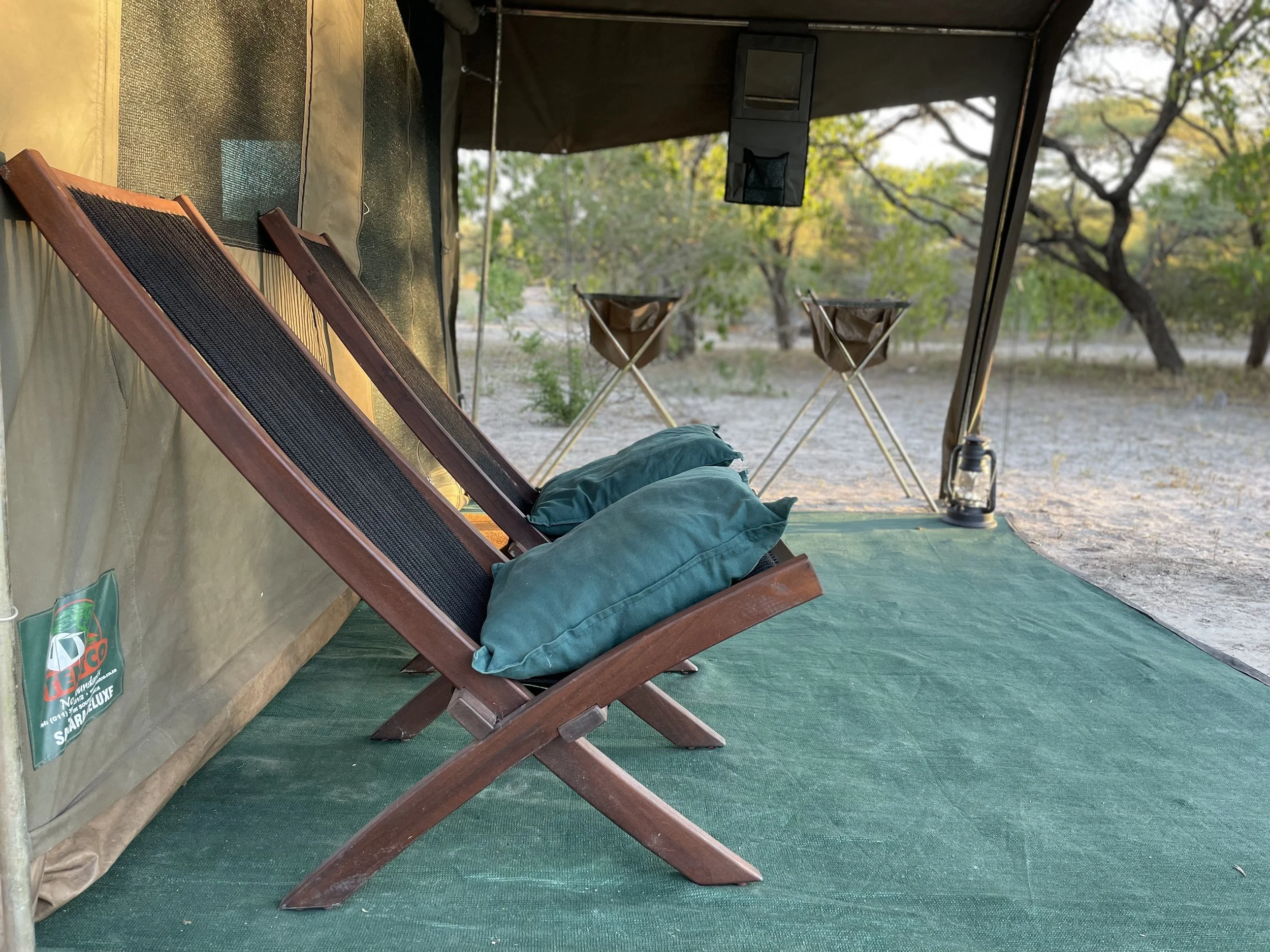
A sitting space outside the tent
-
![]()
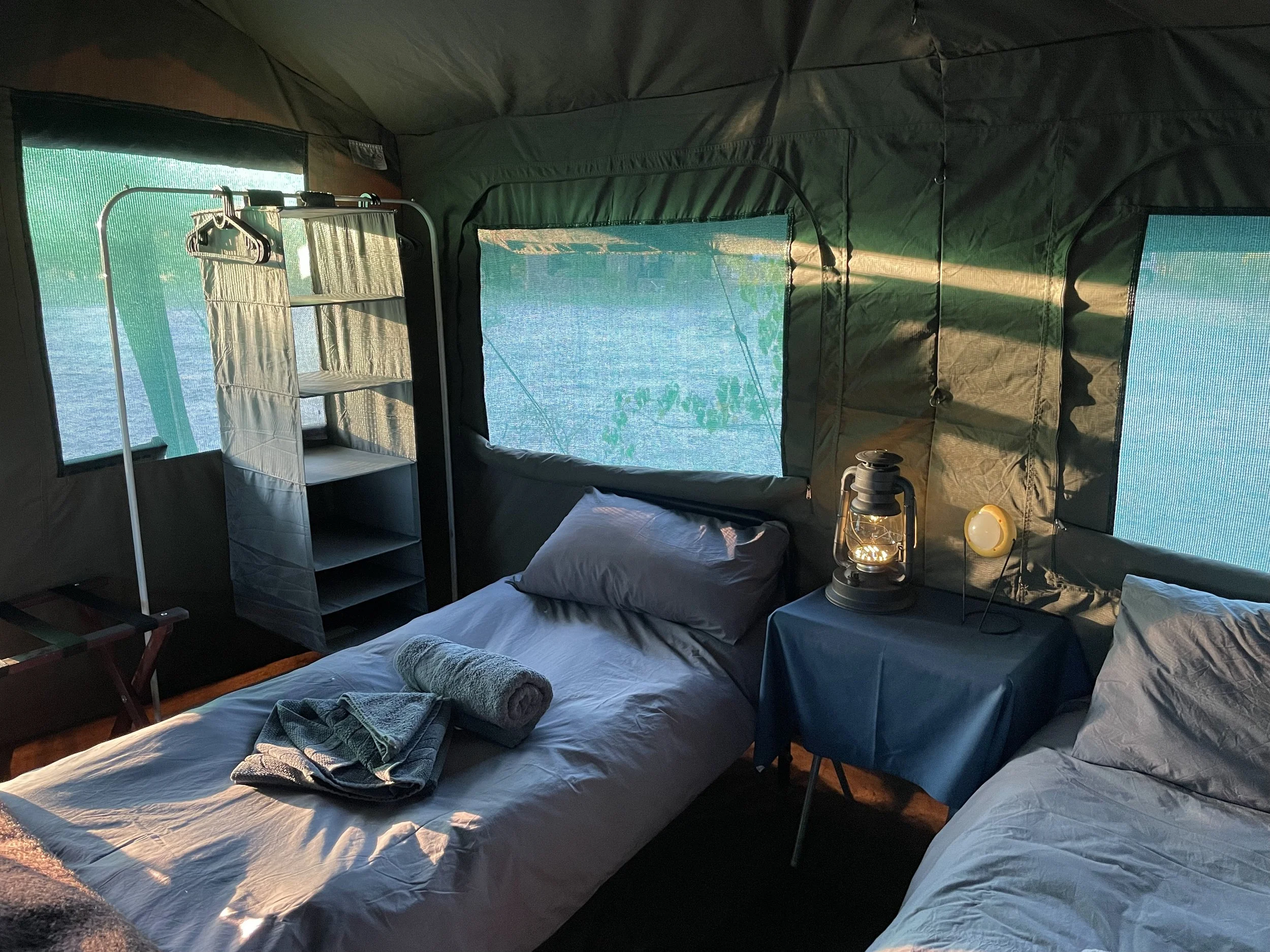
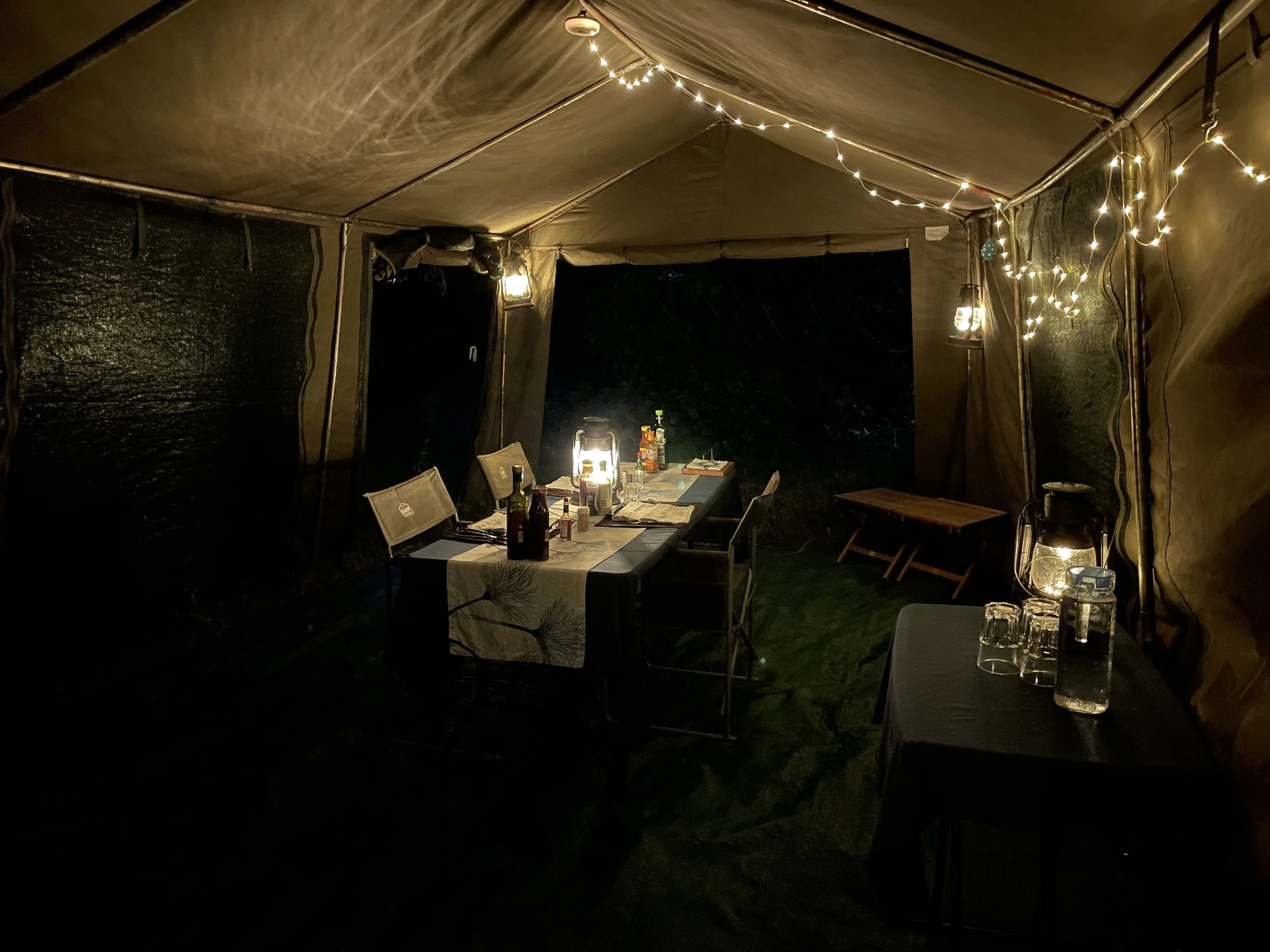
Tent from the inside
-
![]()
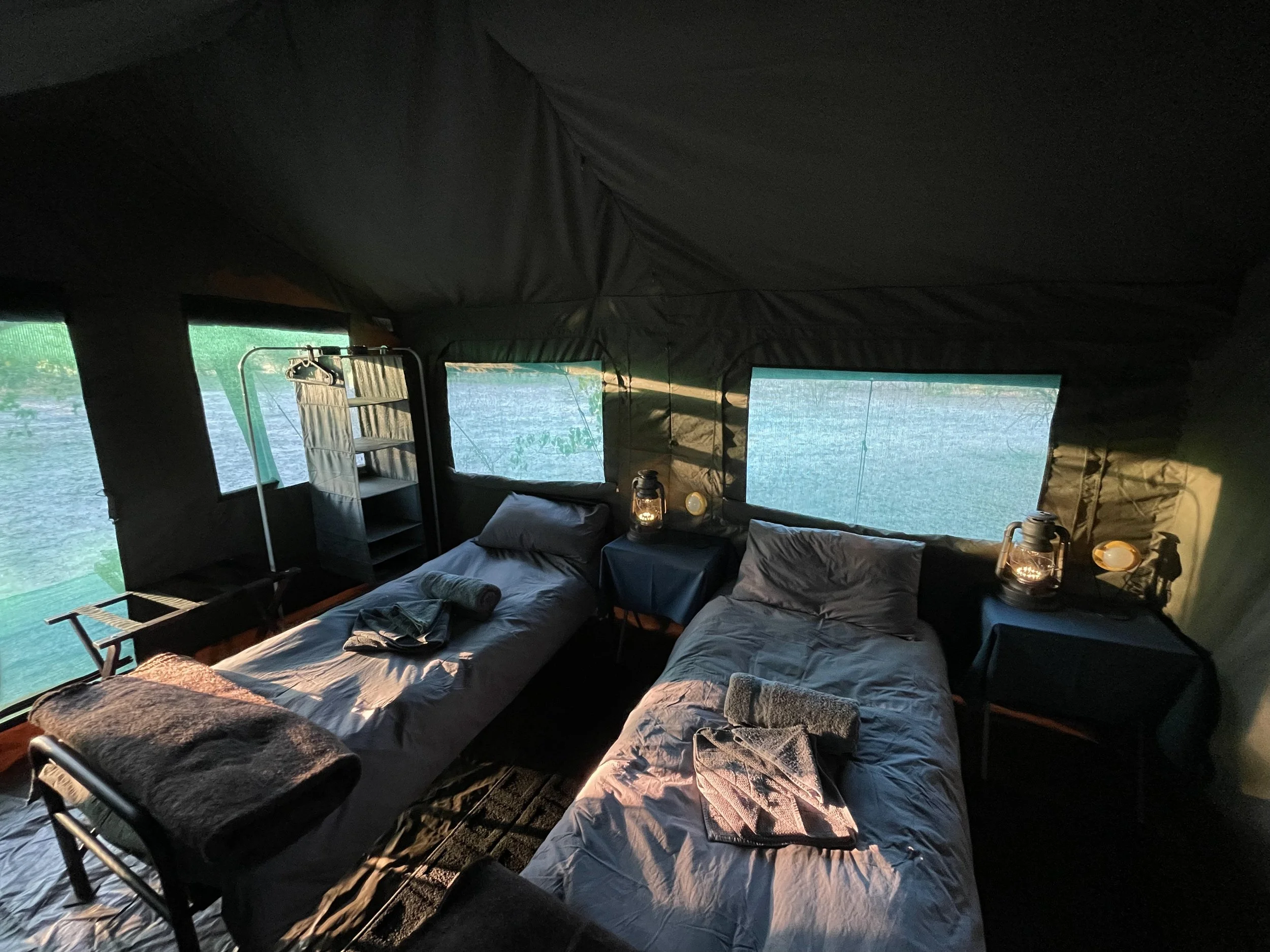
Tent from the inside
-
![]()
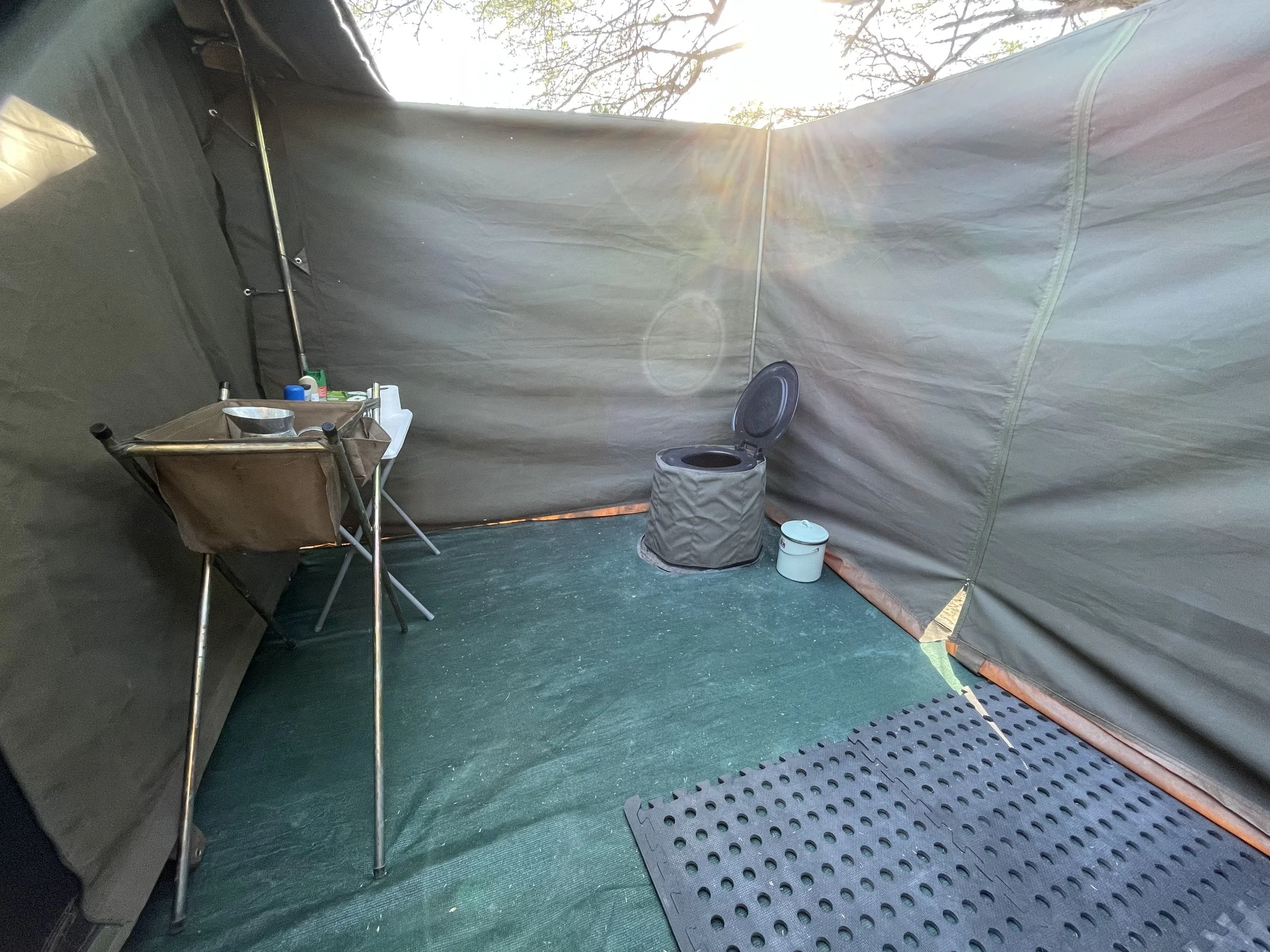
An attached bathroom and shower area with every tent
-
![]()
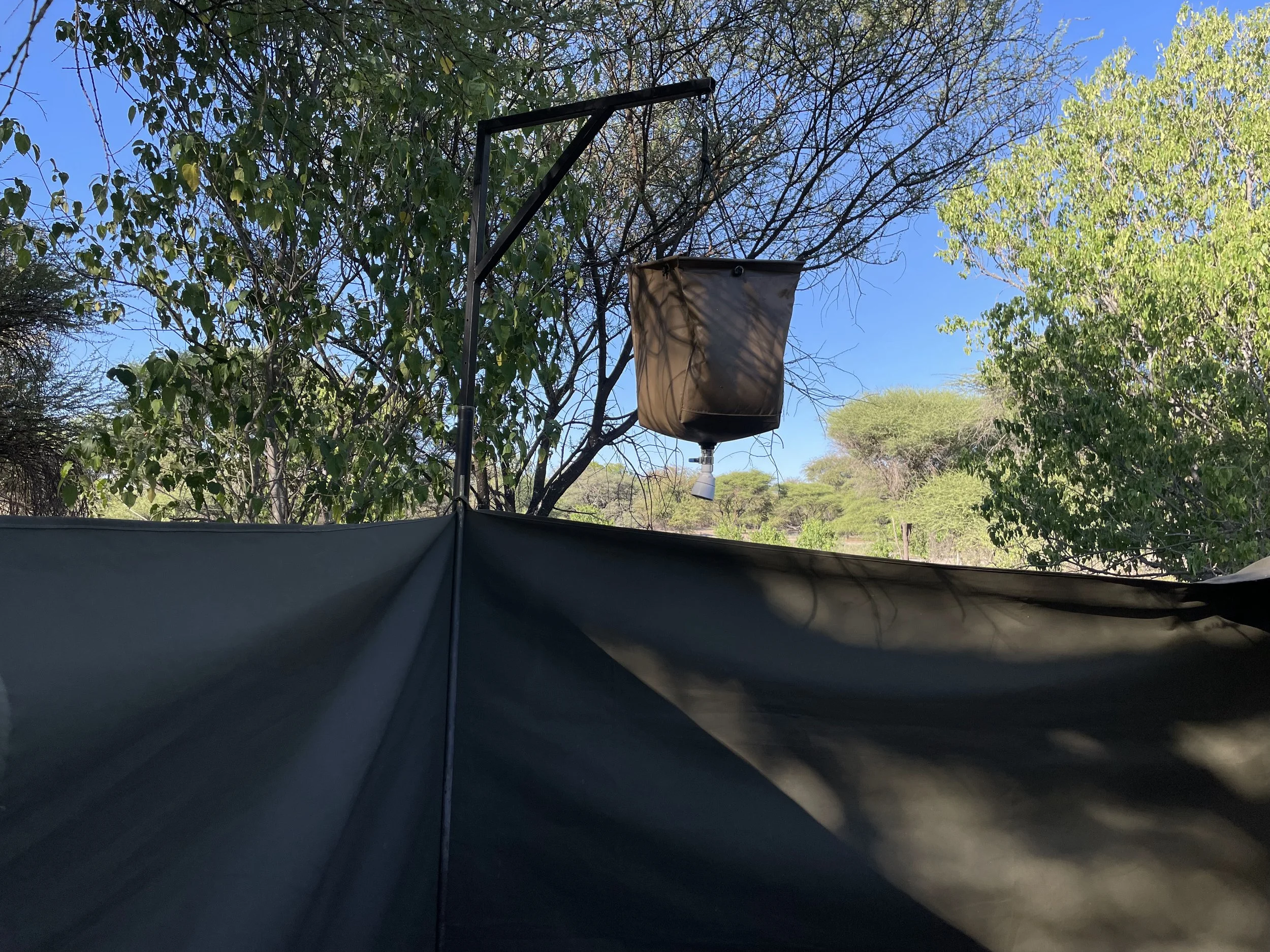
A shower in the tent’s bathroom
-
![]()
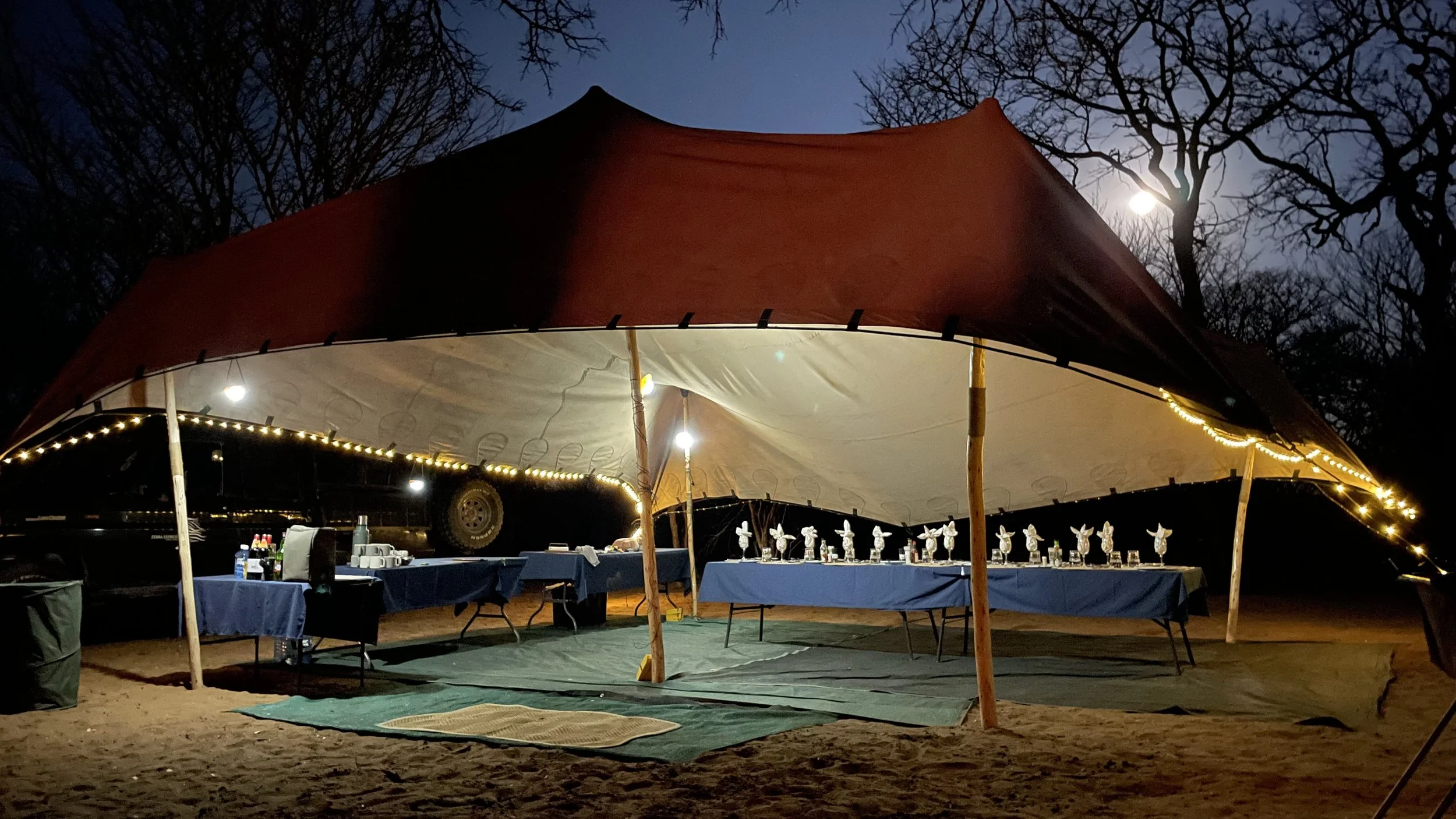
A dinner set-up
-
![]()
Dinner set up
-
![]()
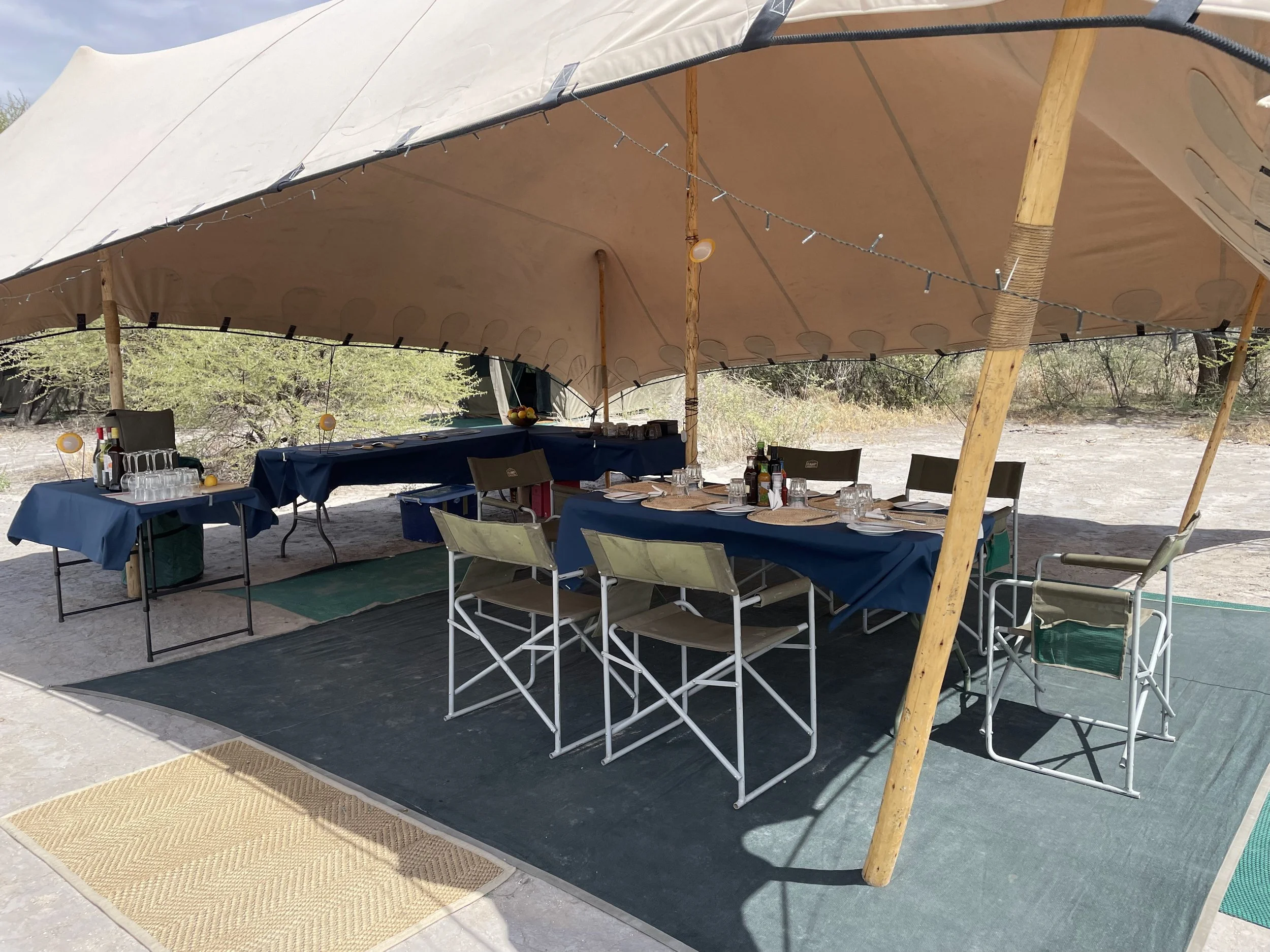
Lunch
-
![]()
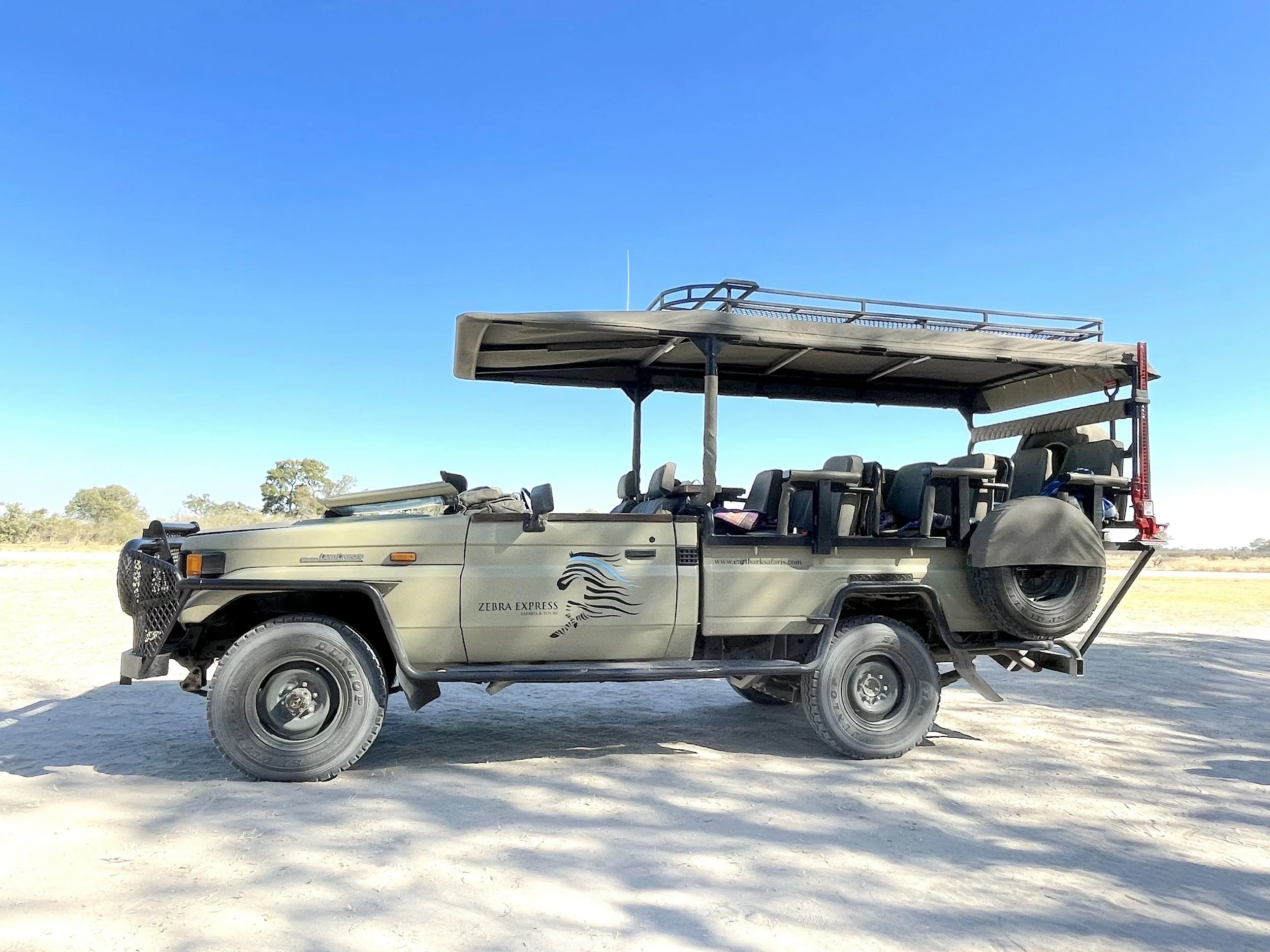
Our game drive vehicle
-
![]()
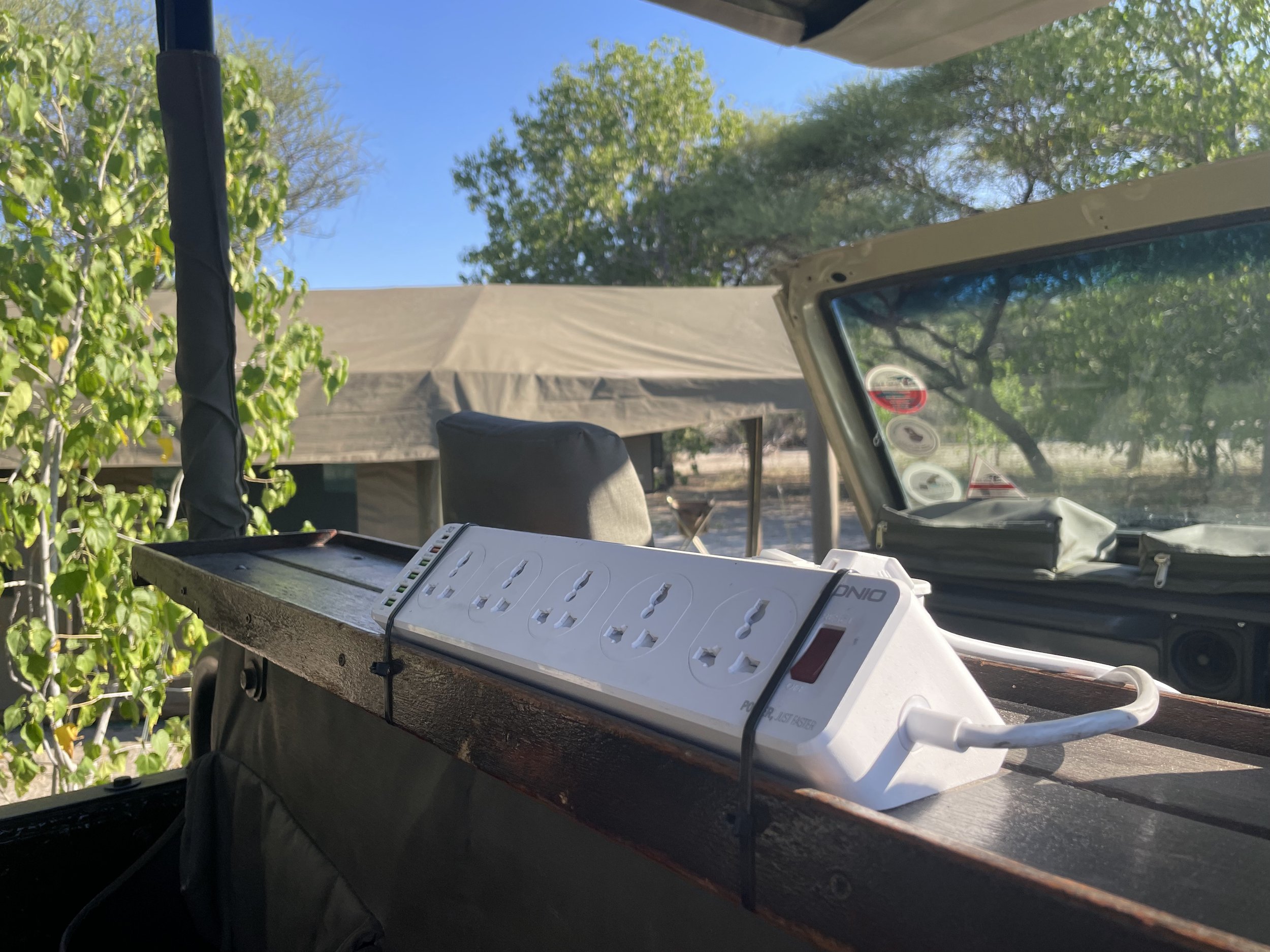
Charging points on the game drive vehicle
Ensuite camping
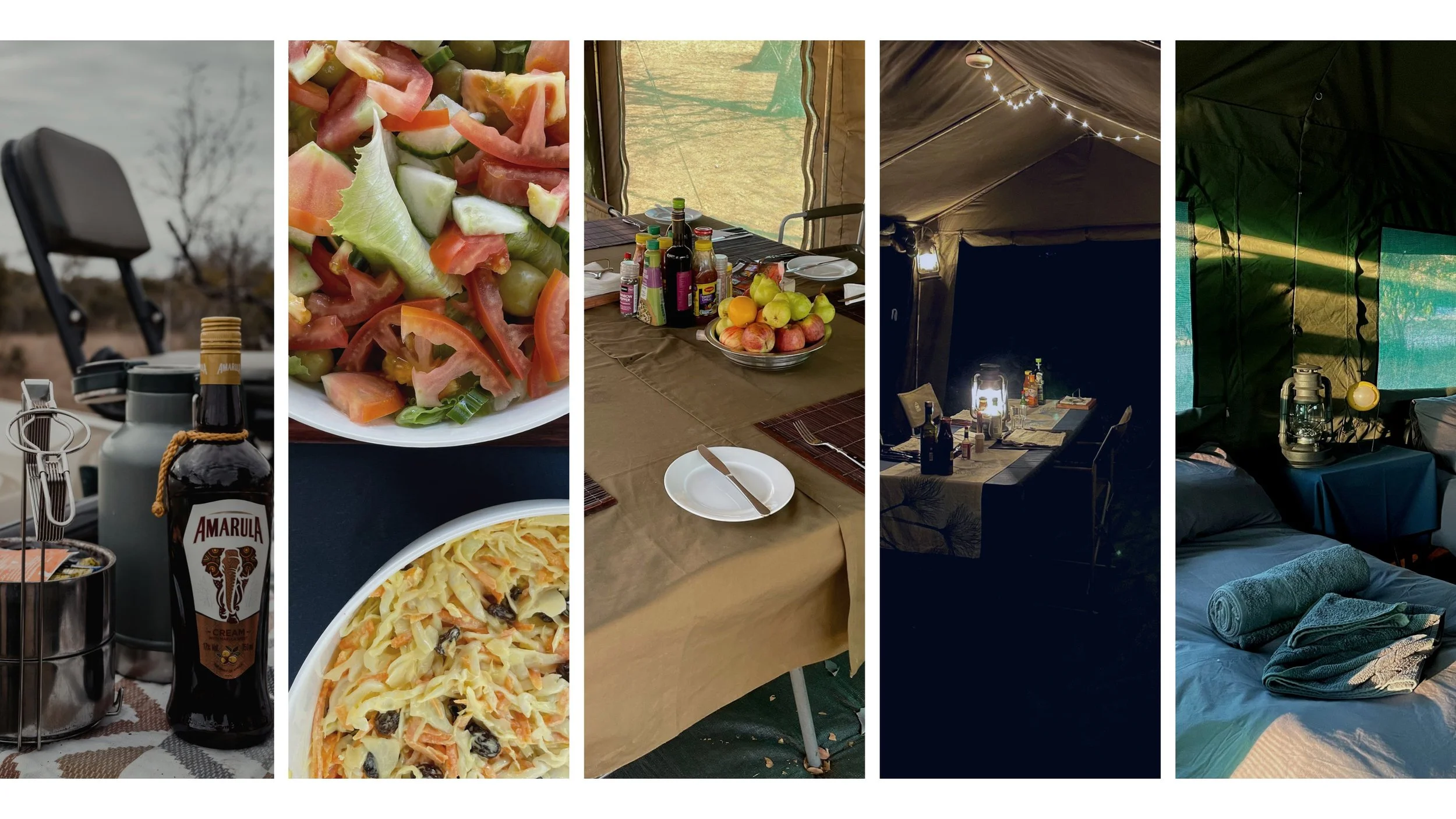
A majority of camps in Botswana are basic by design. A campsite is essentially a clearing with a fire pit and a shared ablution block. The campsites in Khwai, Savuti and Chobe don’t have shops, electricity or fuel stations. Camps are also left unfenced. Elephants, jackals and hyenas freely walked through camps I’ve stayed in. So even when we are at camp, we are still ‘out here’.
But our camps are as comfortable as camping in the bush is going to be. We’ll have an expert team that sets up an ensuite camp. We stay in a secluded area, away from other campsites. We carry our comfort. Our team brings along every piece of linen, litre of water, and everything else that we may need for our comfort. And when we pack up, we leave nothing but our tracks.
Ensuite camping: Our ensuite campsite has spacious two-person tents, each with two beds with full linen, a small table, battery operated lamps and soft storage space. Every tent comes with an pit-toilet and shower area. Our team will set the tents up - so all you need to do is show up and be game drive ready.
Game Drives: We’ll have a 4x4 open game drive vehicle that seats 8 people. Everyone will have a large open space on one side to shoot from. We’ll have a dedicated expert guide who has led over 240 expedition style safaris in Southern Africa. The game drive vehicle is also equipped with charging points for phones, cameras and laptops, which we can use both on the game drive as well as in our down time.
Food and drinks: We’ll have chef-prepared fresh meals served under the stars, or a canopy, depending on whether it's lunch or dinner. And since we will take a chef with us, dietary preferences / restrictions will be accommodated to a large extent. We’ll be served 3 meals a day, including hot beverages and a prior-selection of alcoholic beverages.
Why travel with me?
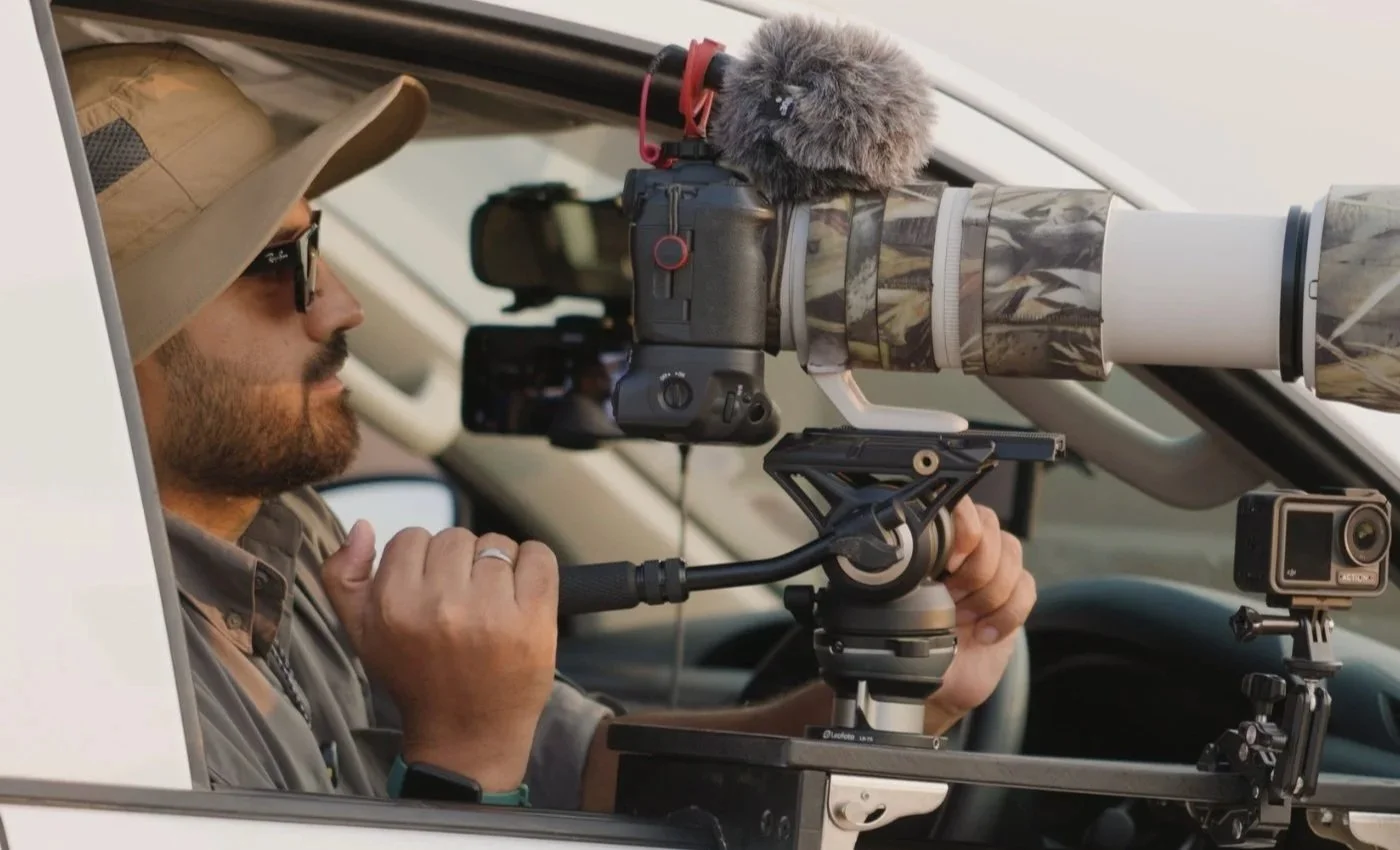
Local knowledge: I spent a month in Botswana in 2024 and will heading back there for a month in 2027. In these overlanding trips, I’ve driven through the wilderness areas by myself, tracked big cats and followed large elephant herds. I’ve learnt the terrain first hand, and am in love it with. My YouTube channel has 14 long-format videos from my trips, an I’ve shared some of them below. Along with me, we’ll also have an expert guide driving us around, someone with over 240 safaris in the Southern African region.
Tour-leading experience: I’ve led tours and workshops in the past for Toehold Photography (2018) and Darter Photography (2013 - 2017), and based on my learnings from those tours, I’ve built an itinerary that maximizes value for photographers. If there’s an opportunity for a rare natural history encounter or an interesting image, legality and ethics permitting, I’ll find a way to make it happen. I’ve also included the Khwai Community Concession in Botswana for this reason - since it is flexible on entry and exit timing, we can linger around a sighting for as long as we want. I’ll also have 1:1 sessions before the trip to ensure that we are comfortable with our equipment and ‘run-and-gun’ set-ups. There’ll be structured workshops between game drives are going to focus on the images made in the field and bring them to life.
Photography credentials: Over two decades, my work has been published and awarded widely. I’ve won the Smithsonian Award in the Nature Category in 2018 along with a number of other Indian awards. My photos have been widely published, such as on the international online editions of NatGeo, including the French, German and global editions. My photo-stories have also been published widely in India, and I’ll be able to help you with craft a story about the trip through images along with stellar photos of the marquee species.
This trip is going to be all about your photos, and ensuring that you make the most of every sighting. I’ll also take photos of you in the field, so that you have enough to share back with your family and friends, and on your socials.
What to expect
A series of 1-1 video-calls to understand your goals for the trip, guidance on gear, settings and custom modes on the camera based on your current understanding of photography and your equipment.
Guidance on equipment rentals if you don’t have the right gear.
Before
On the trip
16 game drives across 3 different wilderness areas,
1 boat-ride along the Chobe river
Sessions on editing, composition and story-telling.
Live guidance on game drives, customised to your level of photography, your goals from the trip and your equipment
Selfies and BTS imagery from the trip for you to share with your family and friends.
An ensuite luxury camping set-up with a dedicated crew and chef
After
Feedback on a select portfolio from the trip .
Continued mentorship after the trip ends.
Access to a Telegram community of wildlife photographers - a closed and safe space for discussions on everything wildlife photography related.
Exclusive early bird access and discount to upcoming wildlife tours / workshops.
Itinerary
This trip starts at Maun and ends at Kasane. Both Maun and Kasane are international airports, and have the same connectivity. The advantage of ending at Kasane is that you plan a trip to Victoria falls from Kasane.
All our drives, including the transit between wilderness areas will be in the game drive vehicle on gravel roads or mixed sand-gravel roads.
Day 1 | Oct 25th | Monday
Arrive at Maun, check into hotel.
Briefing on upcoming trip to Khwai and a camera settings refresher.
Day 2 | Oct 26th | Tuesday
Leave for Khwai early in the morning, and check into camp.
Afternoon game drive at Khwai
Day 3 | Oct 27th | Wednesday
Morning and afternoon game drives at Khwai.
Afternoon workshop : image reviews and post processing discussion
Day 4 | Oct 28th | Thursday
Morning and afternoon game drives at Khwai.
Afternoon workshop : image reviews and post processing discussion
Day 5 | Oct 29th | Friday
Morning: Drive through Chobe National Park and check into Savuti
Afternoon game drive at Savuti
Day 6 | Oct 30th | Saturday
Morning and afternoon game drives at Savuti.
Afternoon workshop : image reviews and post processing discussion
Day 7 | Oct 31st | Sunday
Morning and afternoon game drives at Savuti.
Afternoon workshop : image reviews and post processing discussion
Day 8 | Nov 1st | Monday
Morning: Drive to Chobe river and check into camp
Afternoon: Game drive at Chobe river
Day 9 | Nov 2nd | Tuesday
Morning and afternoon: Game drive at Chobe river
Afternoon: image reviews and post processing discussion
Day 10 | Nov 3rd | Wednesday
Morning: Game drive at Chobe river
Afternoon: Chobe river boat ride
Day 11 | Nov 4th | Thurssday
Morning: Drop off at Kasane
Cost
USD 7150 / person (sharing)
Single supplement available at an additional cost.
Inclusions:
All transport and transfers to/from Maun airport
Accommodation and boarding at Maun
Transportation from Maun to all the wilderness areas, and a drop to the Kasane airport at the end of the trip.
All meals (breakfast, lunch, dinner) and snacks
All beverages, and a pre-selection
10 photo sessions in the hides
Naturalist & Guide fees
Park entry, camping and any other fees
Exclusions:
Flight to Maun
Tips
Personal expenses
Equipment rental if any
Health insurance (recommended)
Helicopter evacuations in case of medical emergencies (recommended)
Frequently Asked Questions
-
This trip is for all levels of nature or wildlife photographers. If you are a beginner, I’ll have a few sessions with your before the trip to understand your goals, the equipment you are carrying and help you have the right settings in place before the first session.
If you are an experienced wildlife photographer, while I’ll always be there for any technical guidance, we’ll work together on the more creative aspects - going beyond safe portraits, the different compositions, scapes and bringing the story of your trip to life.
-
Yes, absolutely. This isn’t a trip just for photographers. The dry season at the Okavango Delta is an amazing natural history phenomenon. We will be visiting some incredible wilderness areas and be observing wildlife from really upclose
-
No.
While we will keep an eye out for big cats and the African wild-dogs, we’ll spend a lot of time with elephants, hippos and other other herbivores. These wilderness areas have some incredibly rare, and equally beautiful, antelopes, such as the sable that we hope to find.
Birds are also high on our list, especially along the Khwai river.
-
In certain parts, such as Khwai, we are allowed to off-road while keeping in mind the safety of the wildlife, habitat and our own safety. We will defer to our guide’s judgement on this.
-
Alcohol is included in the package. We will understand your preferences before the trip, and have options onboard.
-
Very. I’ve slept in them with elephants a few feet away. Stay zipped in after dark and keep food out. You’ll be fine, and you’ll hear things you’ll never forget, and that is a feature.
-
Hot, dry and unpleasant. Which works well from a wildlife sighting POV, but we’ll need to stay hydrated. Savuti will be the harshed, with afternoon temperatures peaking at 42. Nights are comfortable at 18-22. Chobe, while it isn’t as hot as Savuti, is humid.
-
A zoom lens that gives you a flexibility between 200mm to 500mm would be ideal across all the habitats we’ll be visiting. The lower end of the zoom is important not just for beautiful scapes, but because we do expect wildlife, especially elephants, to be up close. In case you own a prime, I recommend getting a smaller wide angle lens on another camera. I would not recommend carrying a wide angle lens with the intention of changing lenses while on a game drive - we are in some of the dustiest habitats.
Both a full-frame and a crop camera work well, but I am biased towards the full frame because of the dynamic range. There’ll be some stellar sunsets and a lot of backlight shooting, which full frame cameras handle better.
A tripod will not be necessary during the game drive, but if you want to experiment with some nightscapes or astrophotography at camp, do bring it along. A monopod might be used in a gamedrive, conditions permitting, to get low-level angle photos of some animals.
Laptop, hard-disks, memory cards and some more memory cards: I’ve always underestimated how much memory I’ll need on each trip. In the dry season, waterholes will have a continuous coming and going of animals. And no two days at a waterhole are the same. So carry your HDs and your laptops, and there will be sufficient downtime to transfer images.
-
Yes, I’ve specifically made for that request, but since we are going to be carrying everything we need to camp, our choices are going to be limited to what we are carrying.
On the meat front, pork and beef are going to be more prevalent than chicken or seafood.
-
Yes, the single room supplement costs extra, please write to me separately for it.
-
Medical insurance is not included as a part of the cost, bit is highly recommended.
The last time I went to Botswana, I had also signed up for a helicopter evacuation in case of emergencies, and and that is also highly recommended
-
Last few times we traveled, Botswana did not need a specific vaccination, like Yellow Fever, but my GP had suggested a bunch of precautionary medication against malaria. I’ll keep you posted on this closer to the date of travel, but a sign-off from a GP is a must.