Are you watching closely?
You may not see it at first. Or worse, not see it at all.
And you know why it hurts? It’s right there.
It’s right there is probably the most annoying phrase in wildlife. You’ve heard it often, probably uttered it too.
You look for it through your binocs. Then you look away to check where everyone else is looking, and look through your binocs again. You squint into every crevice, creek and shadow. You even believed that you saw it before you did. Only after much more squinting did you really find it. But the second you actually see it, you forget the effort it took to find it, and tell the next person who hasn’t that, ‘it’s right there!’.
Moss on a bark?
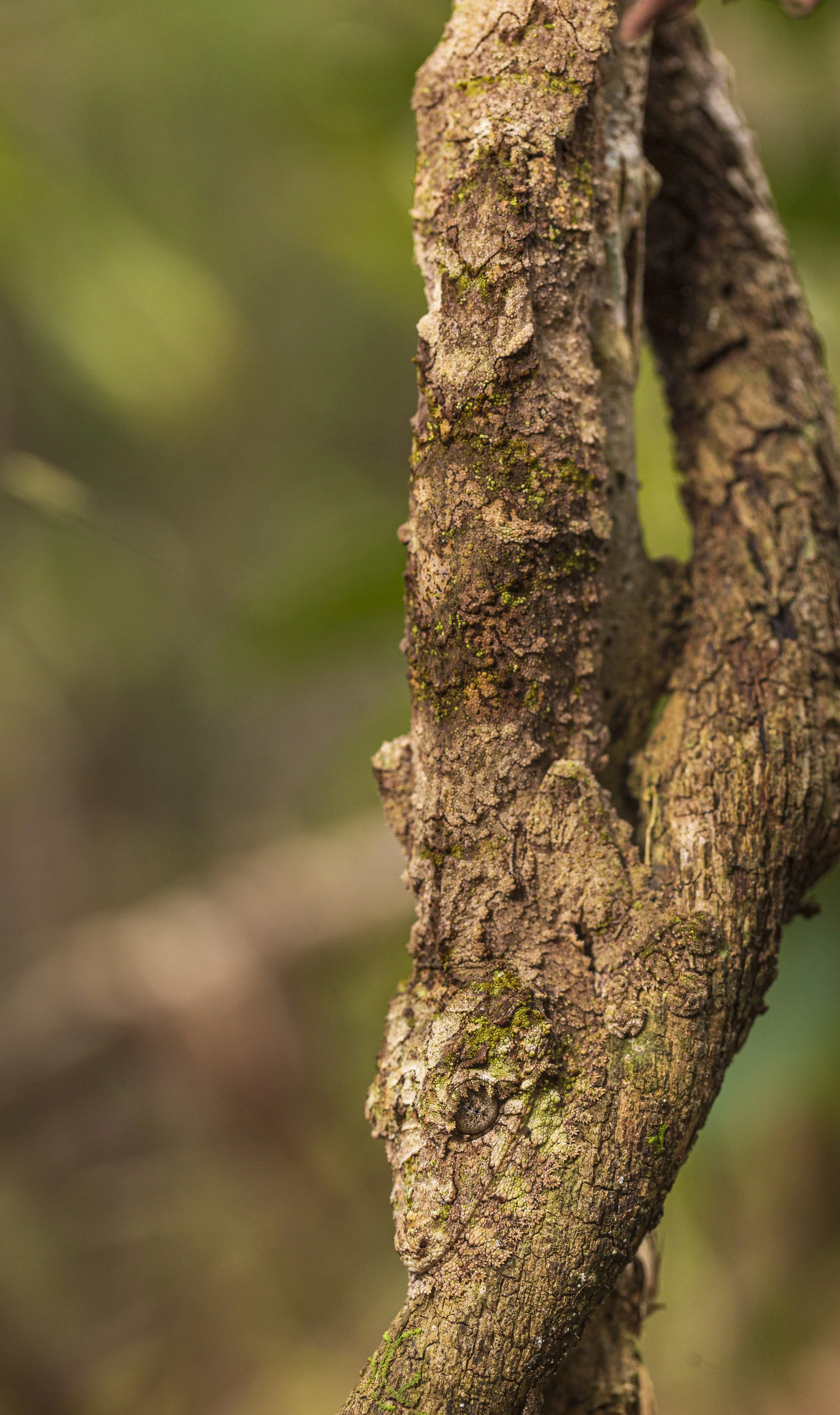
A mossy leaf-tailed gecko, Andasibe, Madagascar
The eye on the twig belongs to the mossy leaf-tailed gecko, Uroplatus sikorae. Though we can’t see the entire body in this image, this is a large gecko, about 6 inches long. It has large eyes but it doesn’t have eyelids. It has evolved for the night. During the day, it hides in plain sight by appearing like a tree bark; down to the lichens and moss found on the bark. That is how it gets its common name. It also has flaps of skin, running the length of its body, head and limbs, known as the dermal flap, with which it can lay against the tree during the day, scattering shadows, and making its outline practically invisible.
It took us about ten minutes to find the gecko after the guide pointed us to the tree it was on.
In the image below, of another gecko, I waited for it to lift its head a bit to create the separation from the bark. But when the gecko chooses, it becomes impossible to separate the texture of the gecko from the bark.
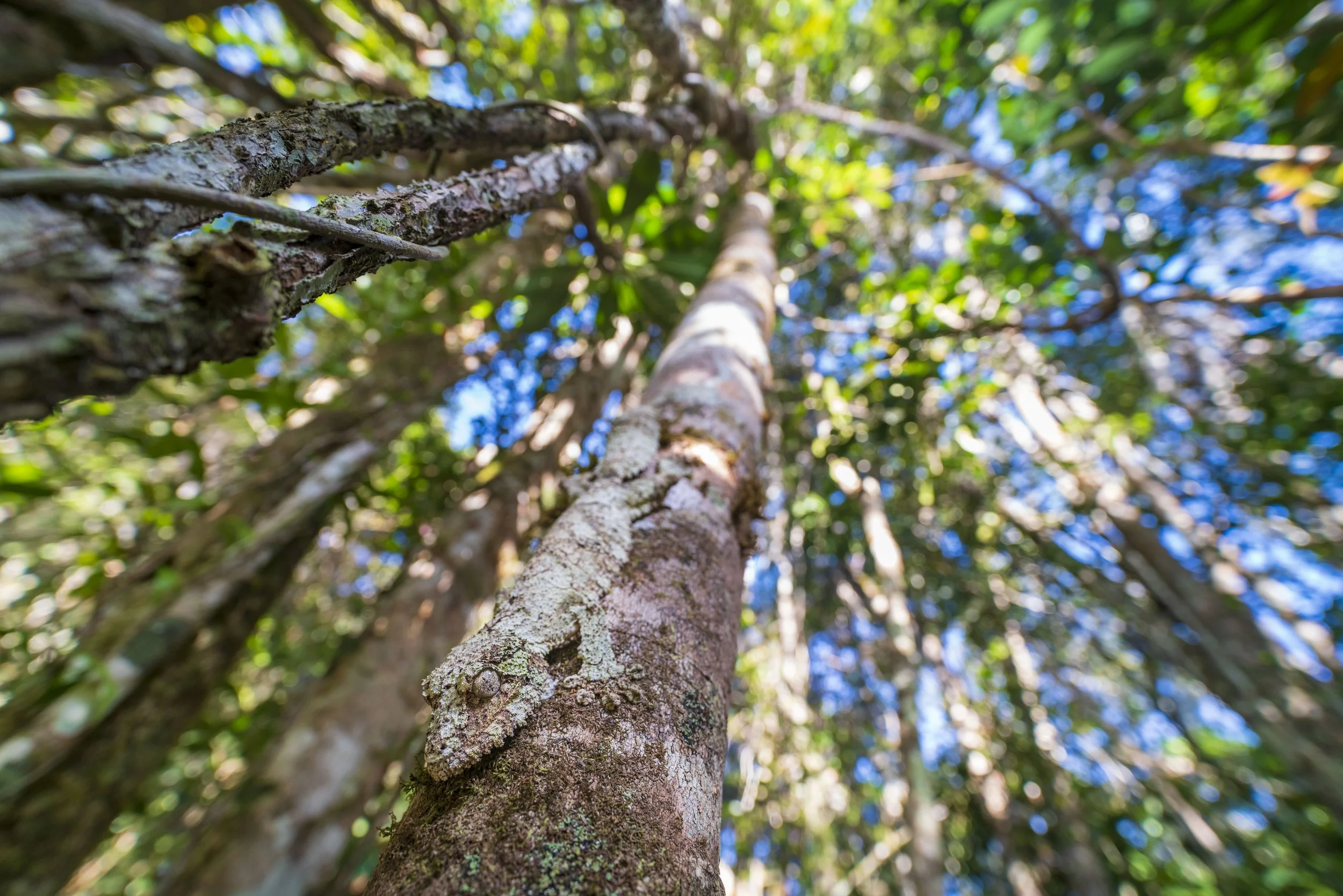
A mossy leaf-tailed gecko, Andasibe, Madagascar
Spots that are hard to spot
I am sure you can see the langurs on top of the hill, but is there anything else worth noticing?
It was a cold morning at Bera, near Udaipur, Rajasthan. So cold that photographers wouldn’t take their hands out of their warm jacket pockets for commoners like langurs. The stakes had to be higher for the hands to come out and grip the a cold camera body and a colder, metal lens.
This leopard had three cubs hidden in these rocks. She came out to bask in the early morning sun for a few minutes, and disappeared back into her den. The second image is from the same day and time with a longer lens, after I told my wife who hadn’t yet seen it yet that ‘she’s right there!’.
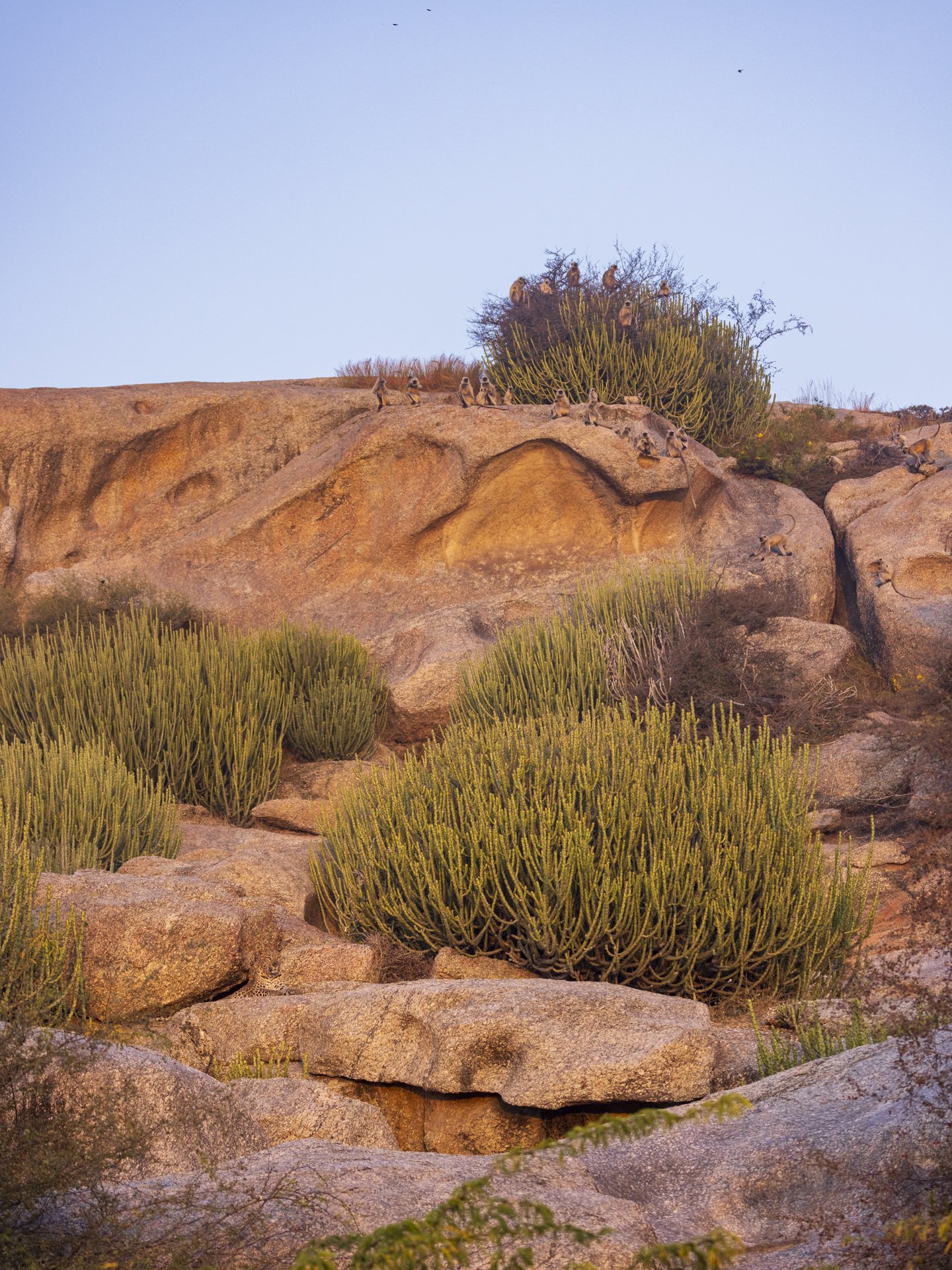
A leopard outside its lair, Bera, Rajasthan, India
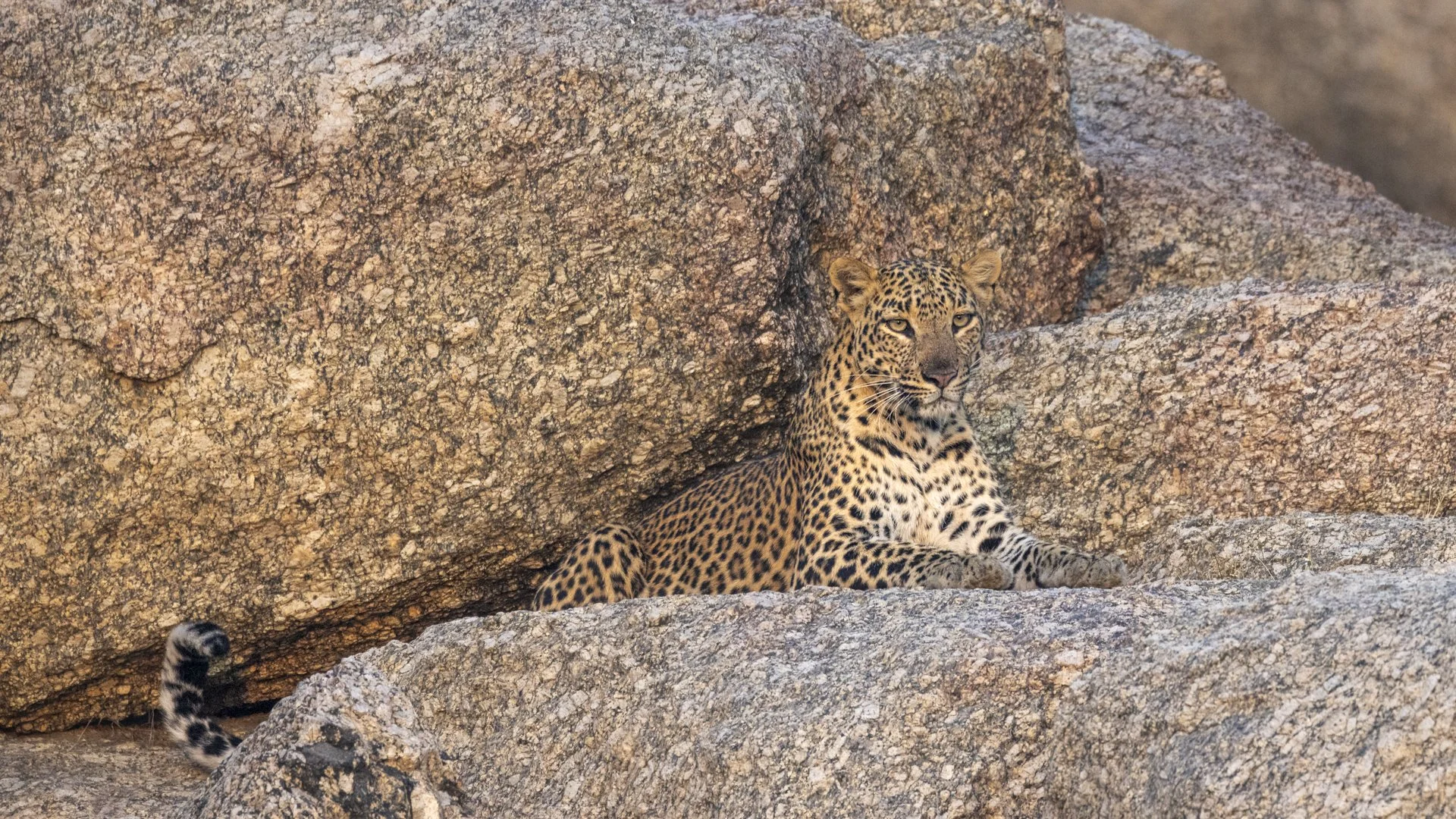
A leopard, Bera, Rajasthan, India
Bull frog
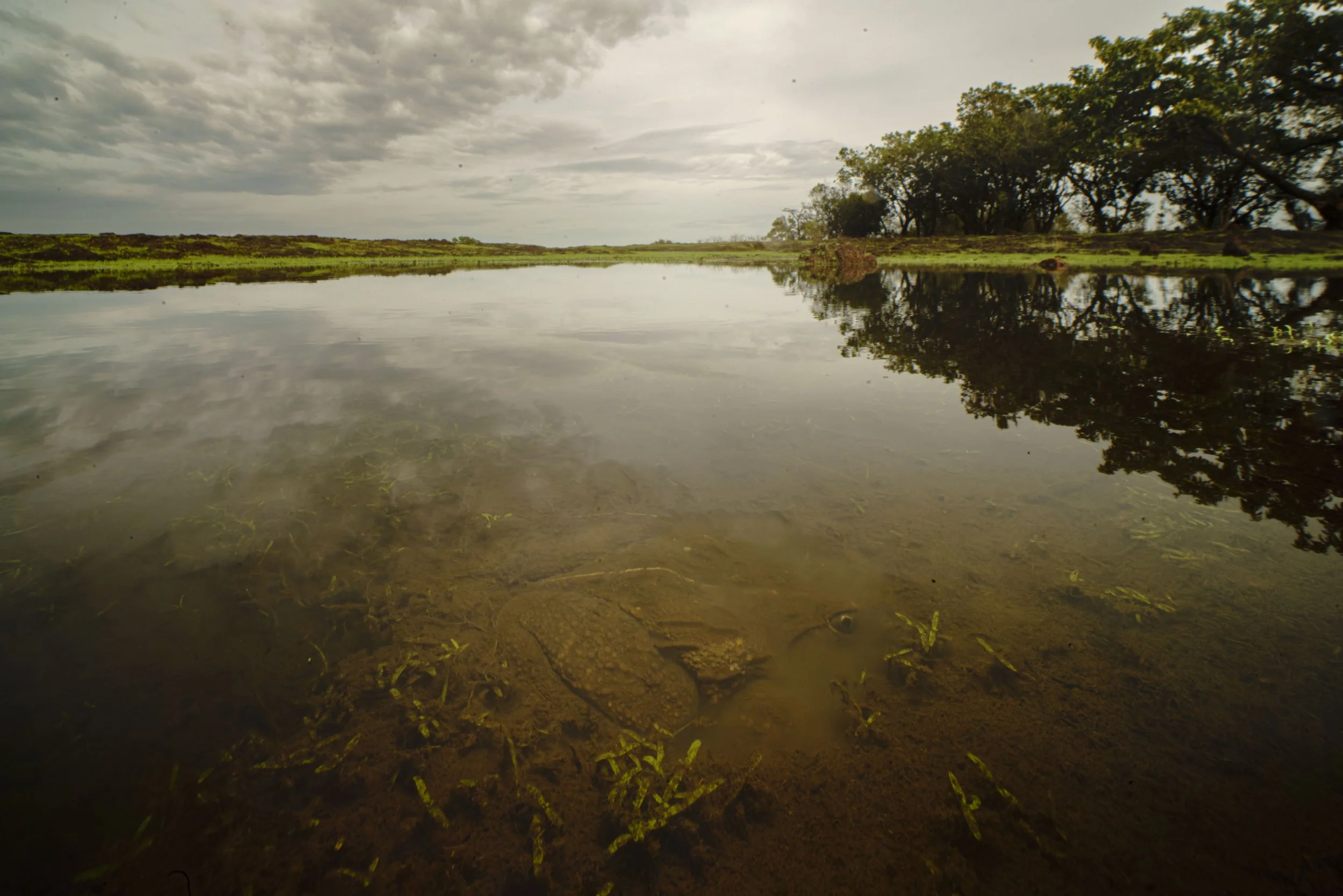
A bull frog in a pond, Goa
Goa has a number of laterite plateaus that are abundant with life, especially in the monsoon. The heavy rains result in many shallow poods all over the plateau. A large bullfrog is hiding in plain sight in one of these ponds. I hope it stays hidden long enough, given how popular bullfrog meat (known as jumping chicken) is in Goa. The population of bullfrogs in Goa, and Karnataka, is reducing because of hunting in the monsoon.
Dry twigs?
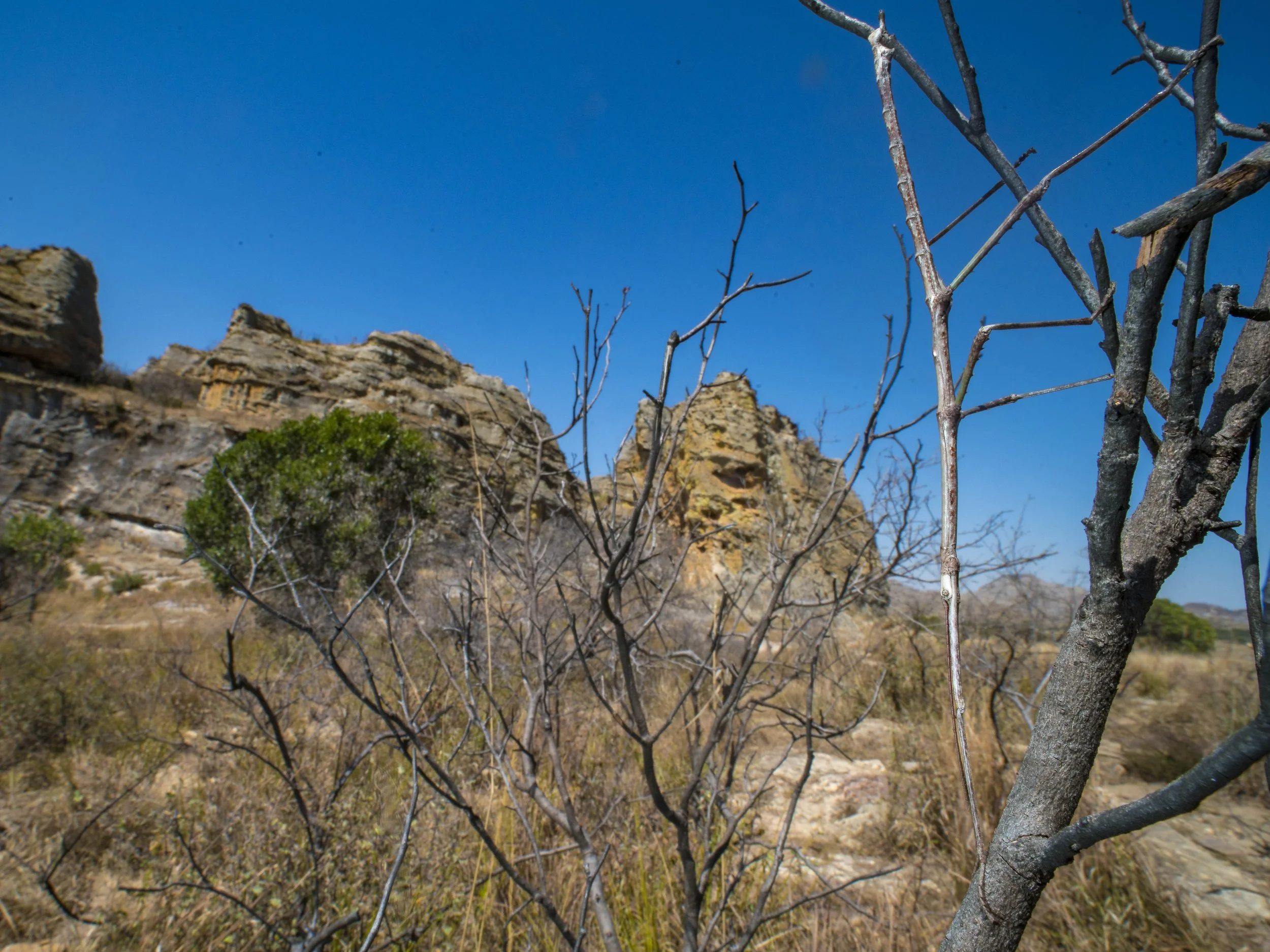
Stick insect, Isalo, Madagascar.
This one isn’t easy to spot, so I’ll tell you what it is—a stick insect.
Look for its eye, almost at the middle of the lightly coloured twig that runs from the top to the bottom of the frame. Follow that twig, and you’ll begin to see its legs, and how it sits among the others.
This was on our trek in Isalo National Park, Madagascar. The background holds the sandstone formations typical of the area.
Laterite rocks
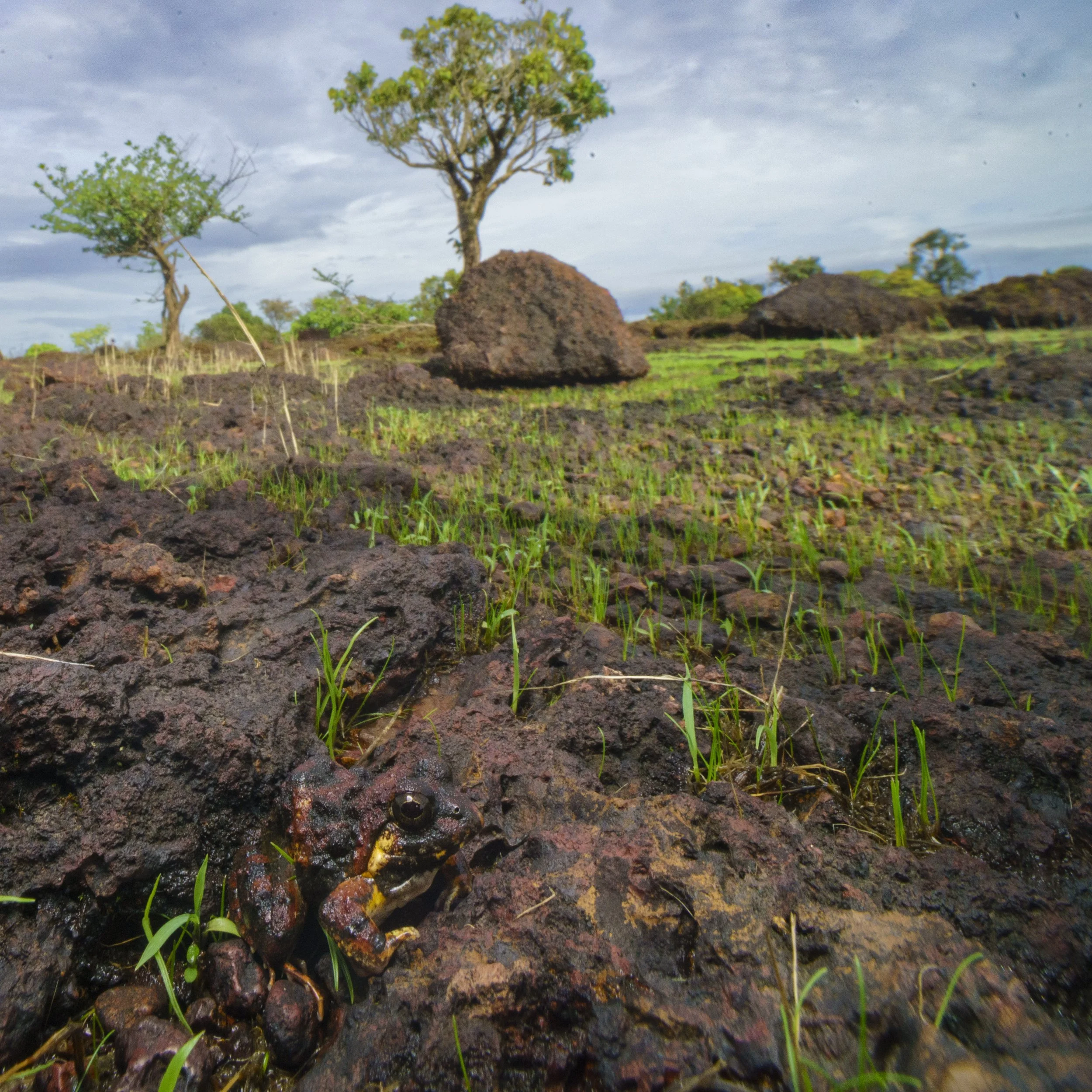
Burrowing frog, Goa
This is one of the burrowing frog species found on the laterite plateaus of Goa. It blends into both the colour and texture of the rock it sits on.
Every time I come across an animal blending into its habitat, I think of the ones I may have missed. How often do we walk past a rock, a tree, or a shrub, while what we’re looking for is looking right back at us?
Sinking into sand
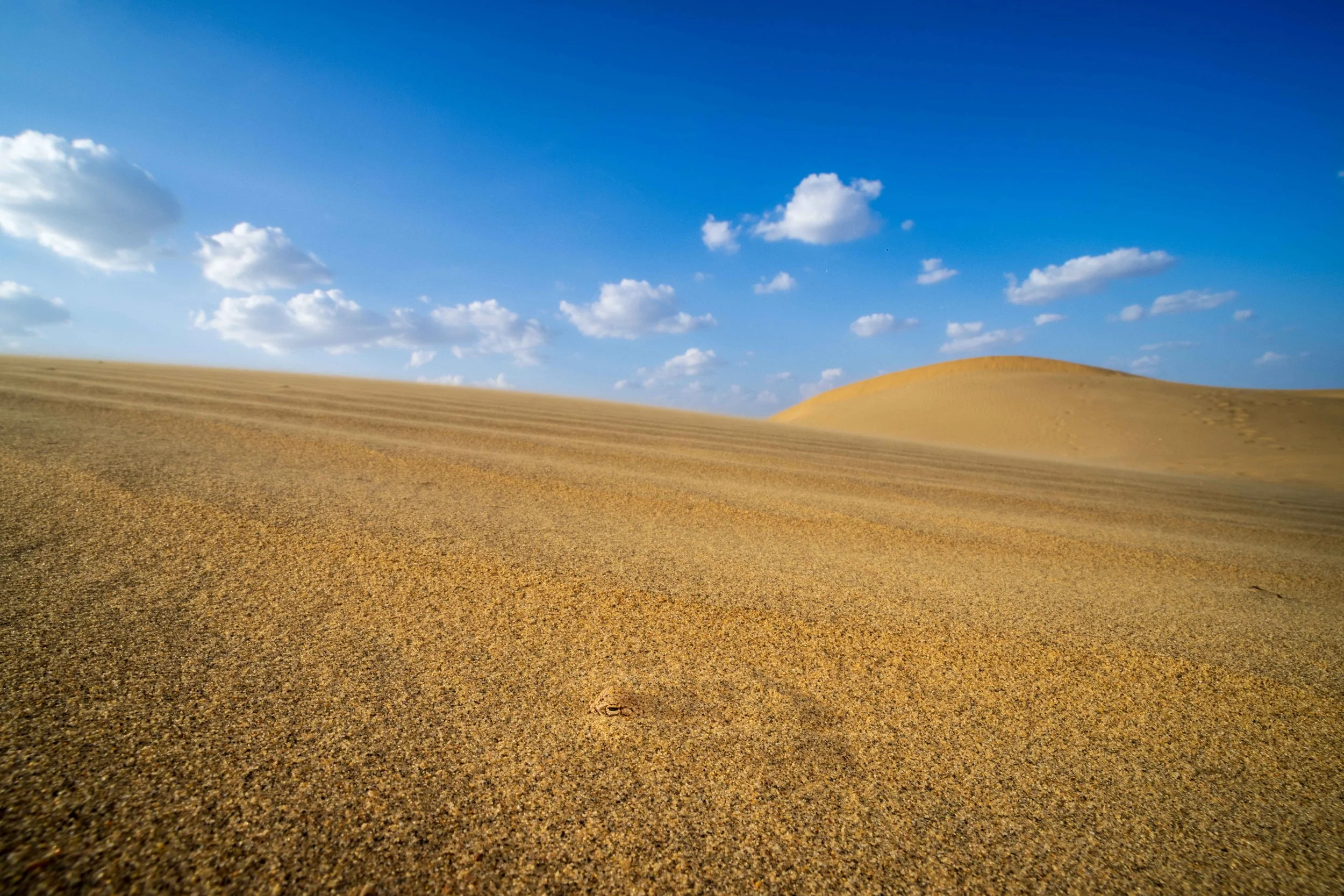
Toad-headed Agama, Jaisalmer, Rajasthan
Right in the middle of the frame is a lizard, almost entirely buried in sand, with only its head showing.
This is the Laungwala toad-headed lizard (Bufoniceps laungwalaensis), from the dunes of the Thar Desert near Jaisalmer, Rajasthan. It uses its fringe-toes to shovel loose sand and sink into the dunes, leaving only its nostrils above the surface. Once buried, the sand shows almost no sign of where it is.
Down below is another image. Its skin looks like grains of sand.
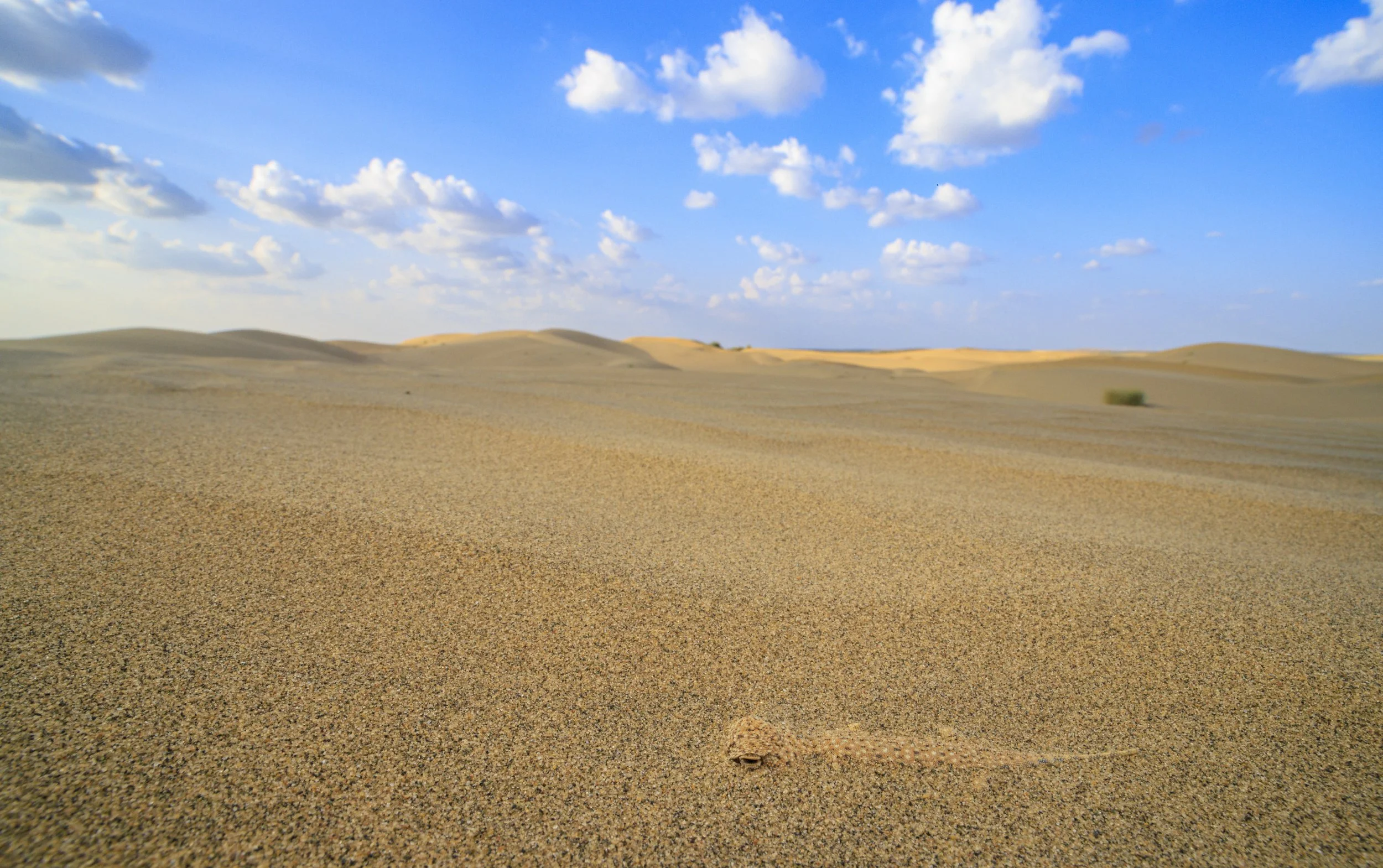
Toad-headed Agama, Jaisalmer, Rajasthan
Much room on a mushroom
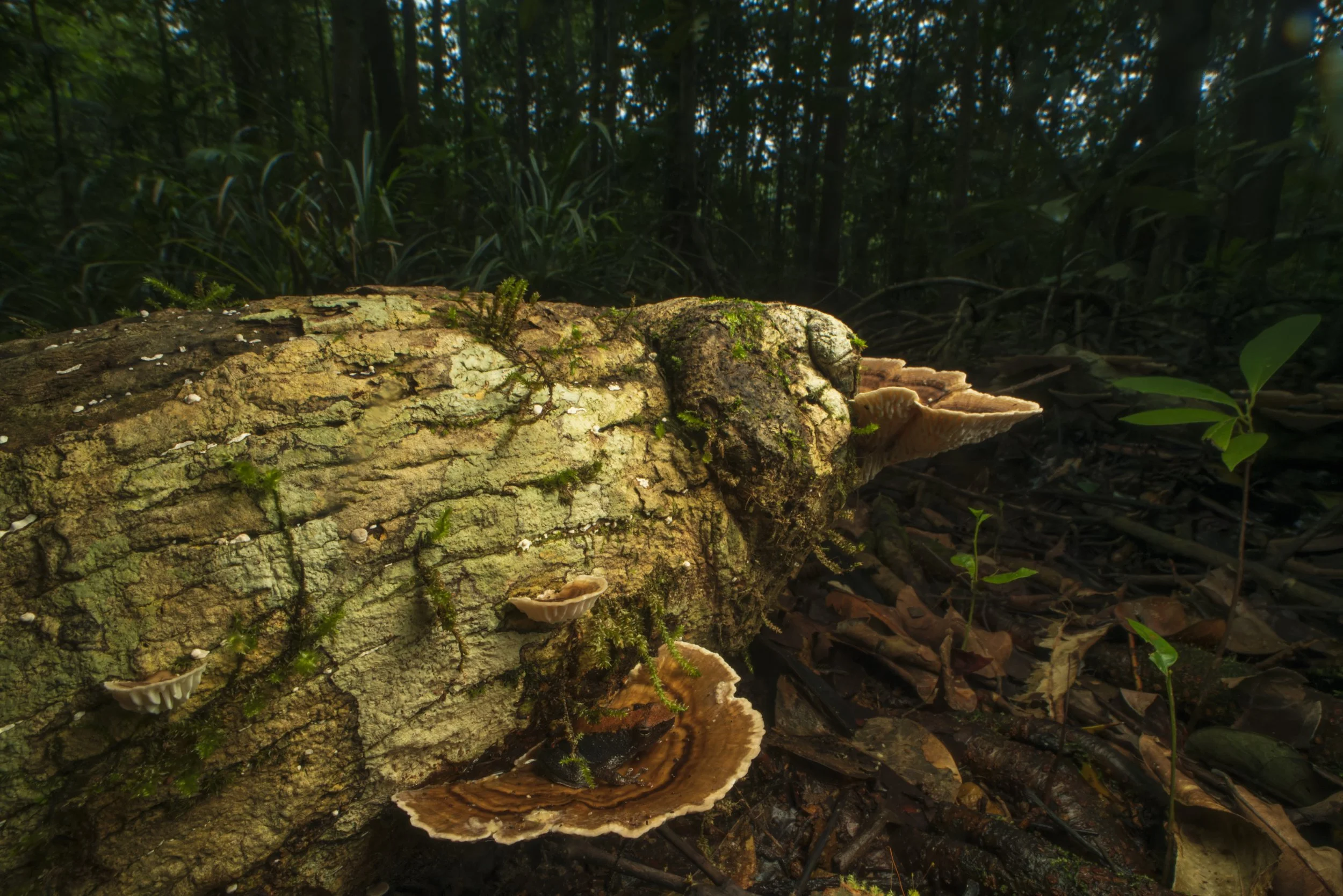
A dancing frog on a bracket fungi
This is from a forest called Kattalekaan, in Karnataka, India. In Kannada, the local language, Kattalekaan means “dark forest”. The canopy is thick enough that sunlight barely reaches the forest floor, even at midday.
The frog, once you find it sitting inside the bracket fungus, is a dancing frog from the Micrixalus genus—one of many found in the Western Ghats.