Lizards of the windmill plateau
This was published in NatureinFocus, below is a slightly edited version.
As our needs, and wants, continue to grow, more and more natural spaces are being cleared to make way for our demands. Grasslands are on top of this list. And as civilisation expands at a relentless pace, wildlife is forced to adapt to entirely altered habitats.
The Fan-throated Lizards of Chalkewadi, in Maharashtra, are an example of a species that thrives in a habitat entirely transformed by humans. The transformation on this plateau habitat comes in the form of windmills, a relatively clean source of energy. But how clean this source really is, and what impact it has on an ecosystem it has irrevocably changed, is yet to be seen.
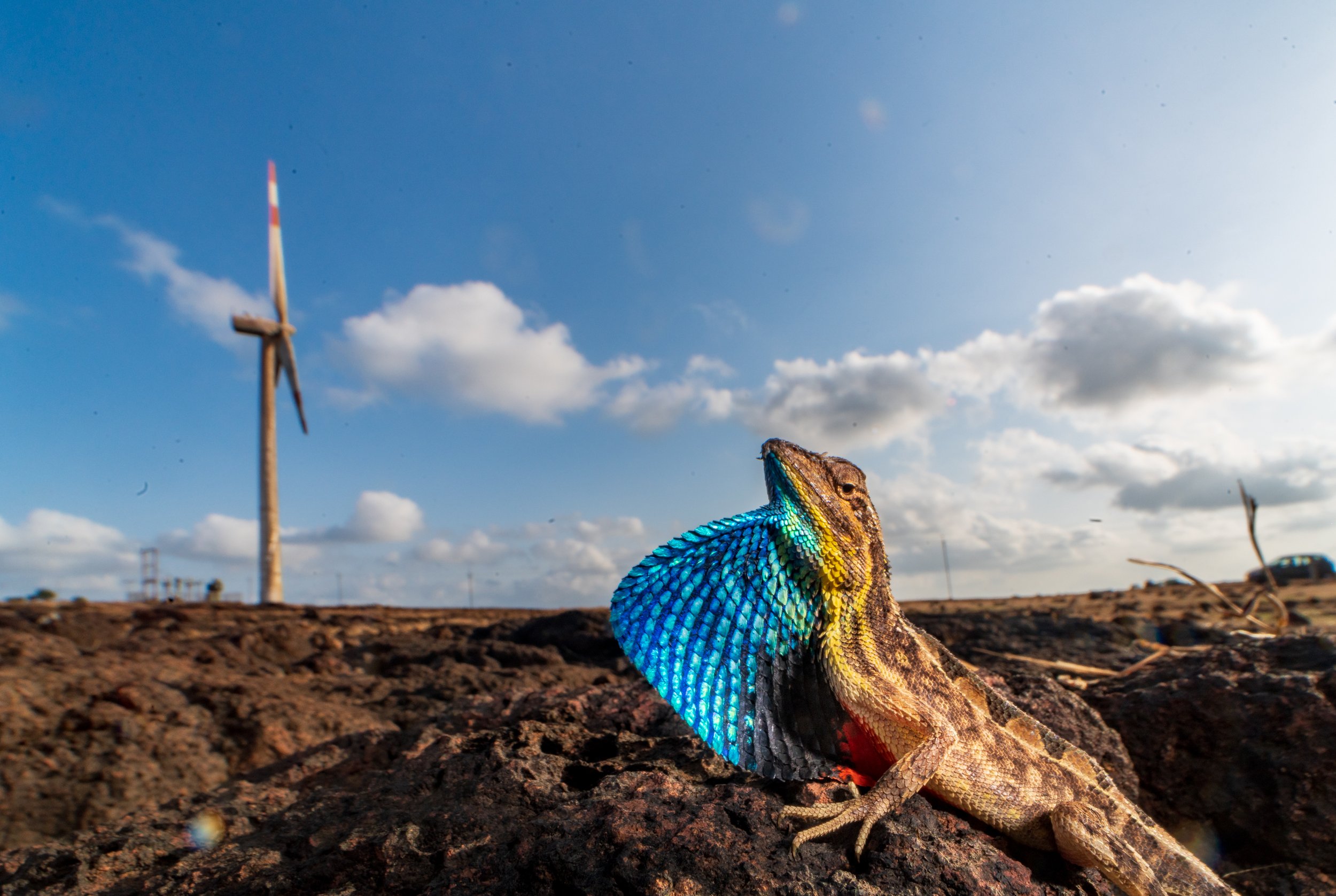
A fan-throated lizard at Chalkewadi
Maharashtra is home to some of the most beautiful ecosystems in India. It has rainforests, grasslands, scrub jungles and even deciduous forests. My favourite habitat is that of the hills and plateaus of the Sayhadris in the southern part of the state, in the district of Satara. The lush green forests of the valley give way to the flat, dry laterite plains at the top of the plateau – one of the most striking transitions one can come across in nature. This picturesque habitat also has the Koyna Tiger Reserve and the Koyna dam within its midst.
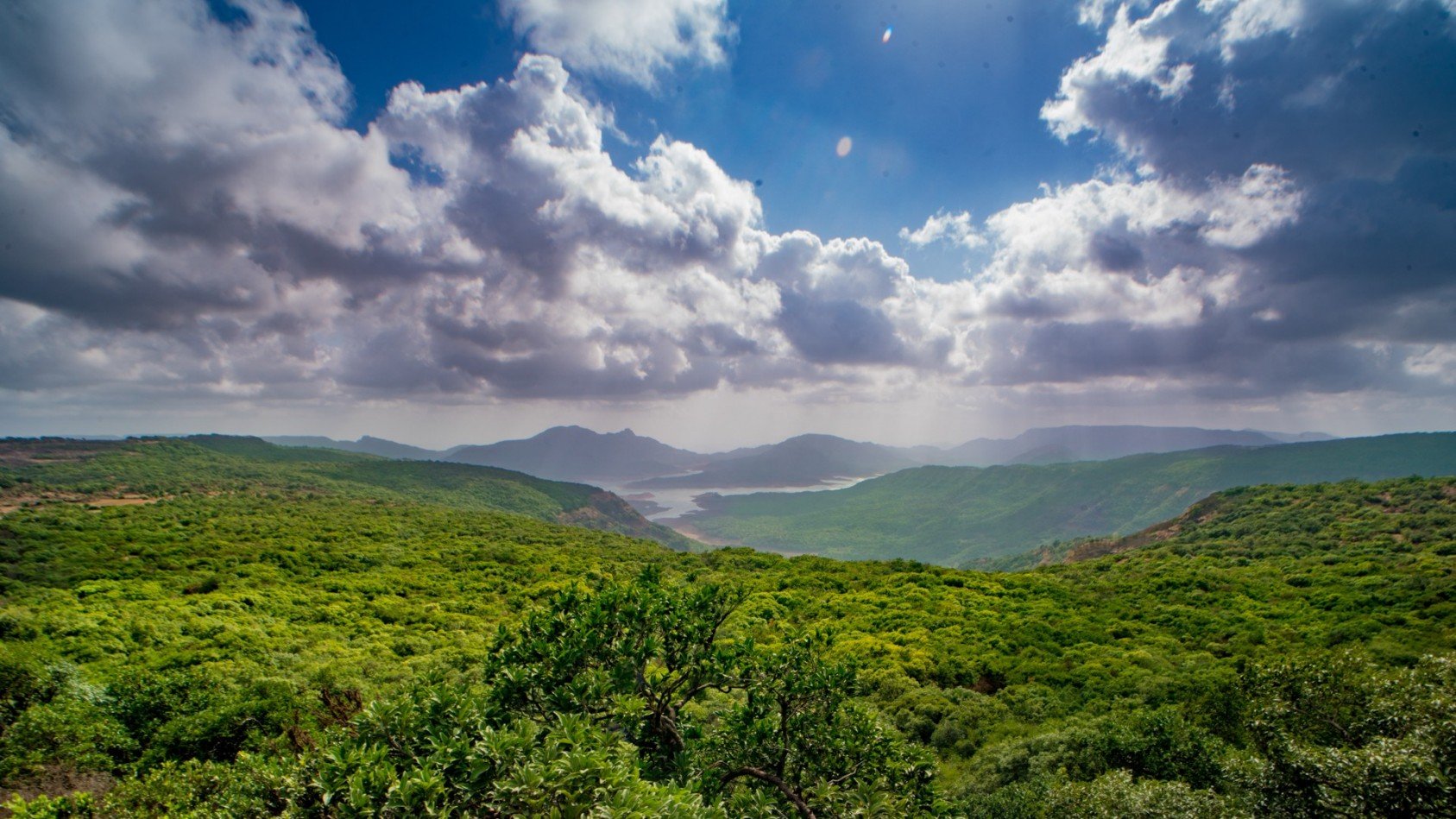
Koyna Wildlife Sanctuary
As we move higher up the hillside, the greens give way to all shades of brown, as the hard rock of the laterite plateaus becomes visible. These flat plateau tops are believed to have been formed during ancient volcanic activity, and are rich in iron and aluminium.
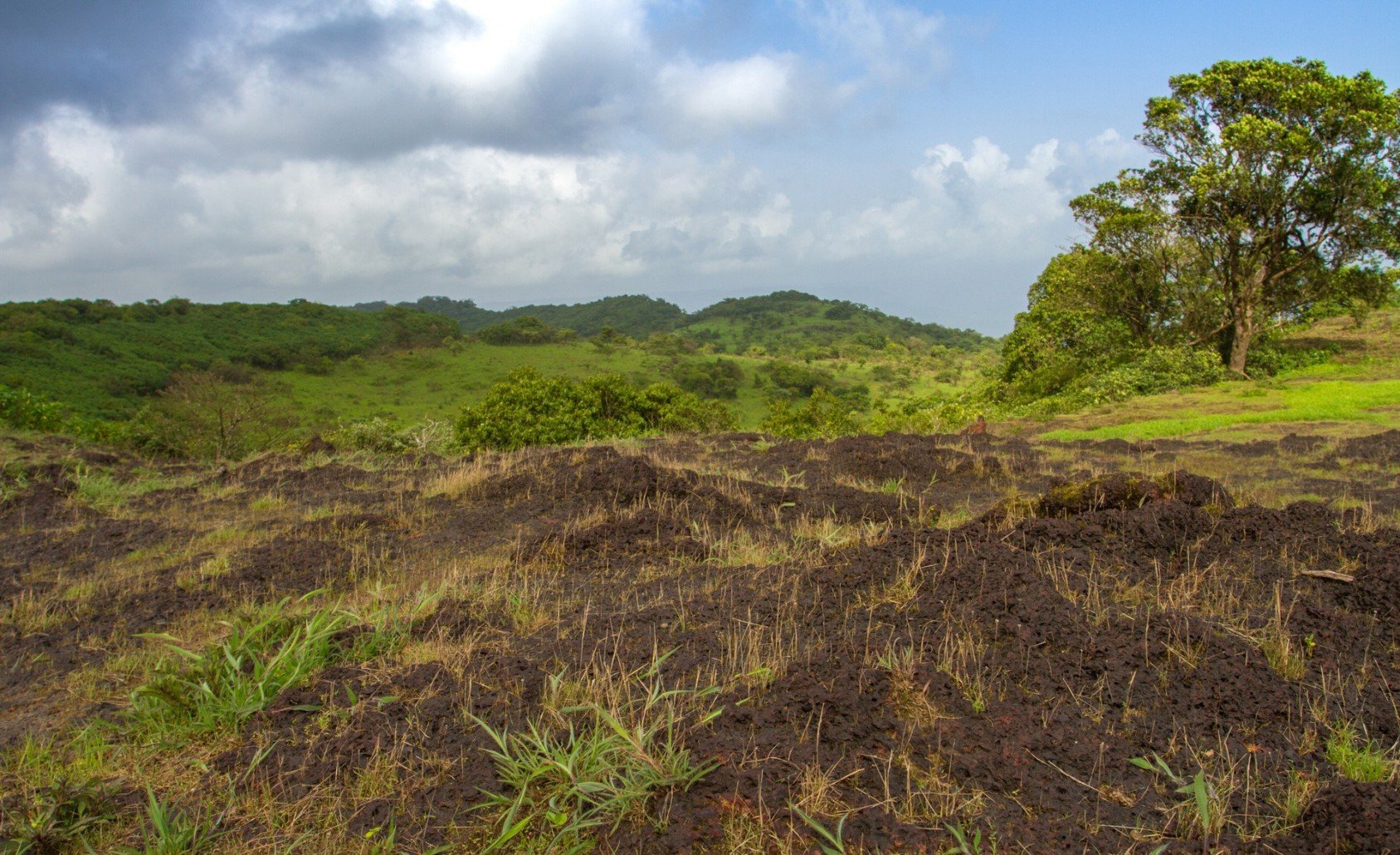
A laterite plateau
Overlooking the Koyna Tiger reserve, Chalkewadi is one of the most popular laterite plateaus in this region. As the forests recede, the type of wildlife transitions accordingly too. As dry as the plateaus are at the top, they host a rich density of reptilian life such as snakes, geckos, monitor lizards and agamids (a family of over 300 species of iguanian lizards). The very colourful Fan-throated Lizard is one of them.
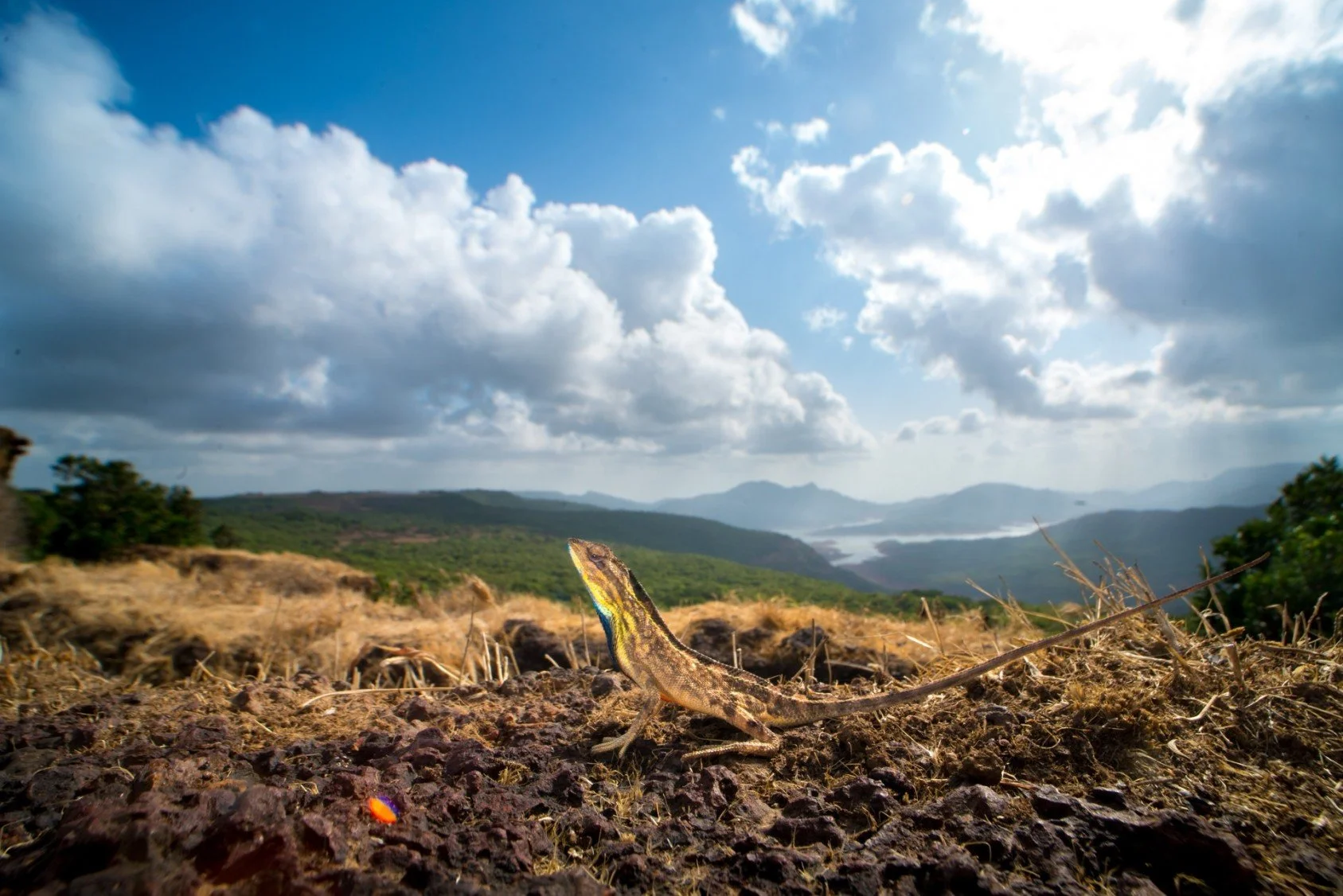
The plateau overlooking the Koyna Wildlife Sanctuary
This species of lizard gets its name from its vibrant dewlap that it proudly displays during the mating season to attract females and to ward off other males. While this characteristic feature distinguishes it from other reptiles, it is also something that sets it apart from the rest of its own kind. Dewlaps occur in a range of different colours and variations, and their patterns are one of the differentiating features within the species.
Only last year, the Fan-throated Lizard was described as not one, but six different species belonging to the genus Sitana and Sarada. It’s too soon to know much about their lives or behaviour. Seen here is the Sarada superba, a commonly found species of Sarada on the Chalkewadi plateau.
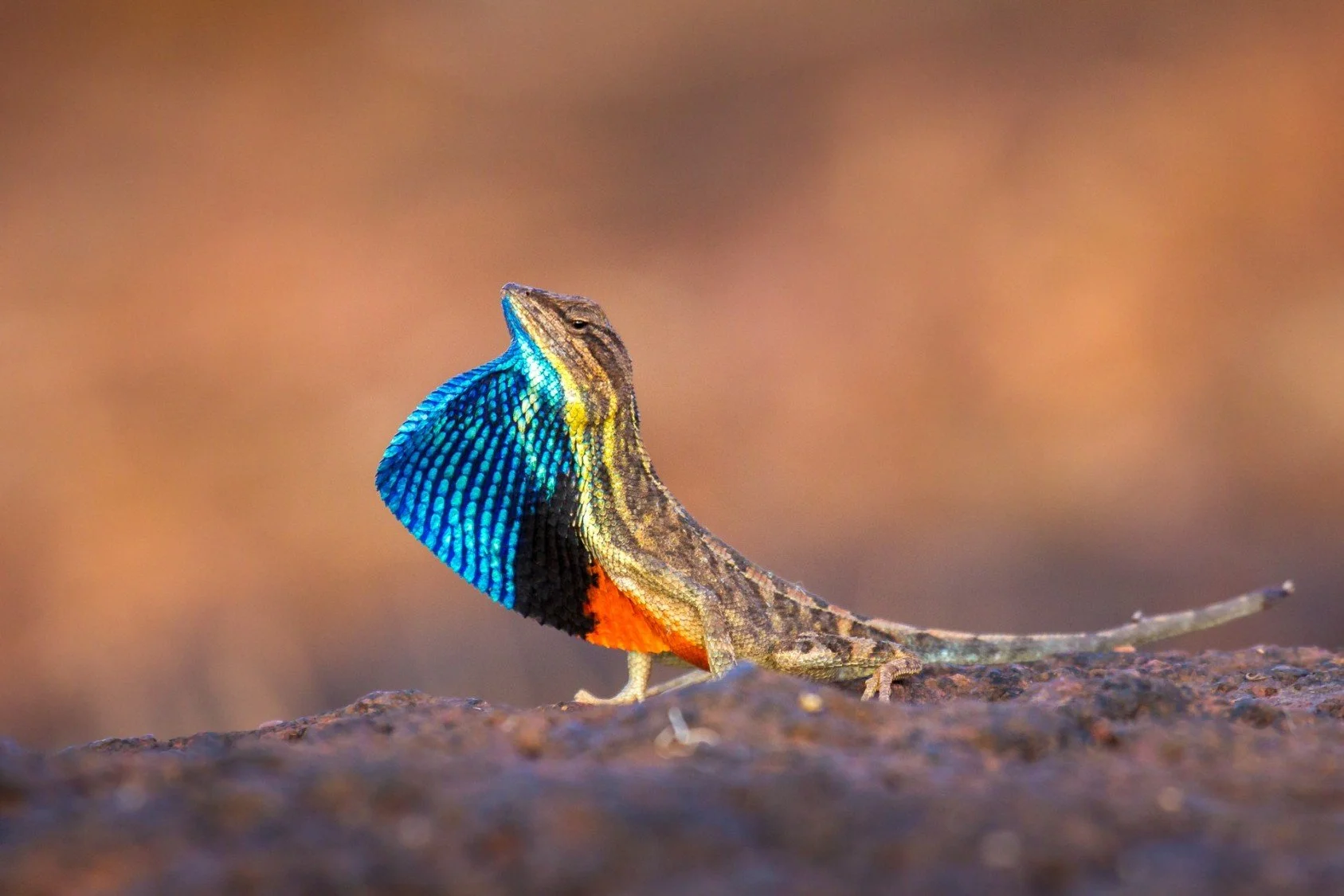
A fan-throated lizard showing off its dewlap
The Fan-throated Lizards are busiest in summer months. In fact, they start appearing on the plateau towards the end of the winter. Being ectothermic, these insectivorous lizards come out when the sun is out. Male lizards, measuring six to eight inches in length, are territorial. After basking in the early morning sun and foraging for insects, a large part of the day is spent covering the boundaries of their territory and warding off other males.
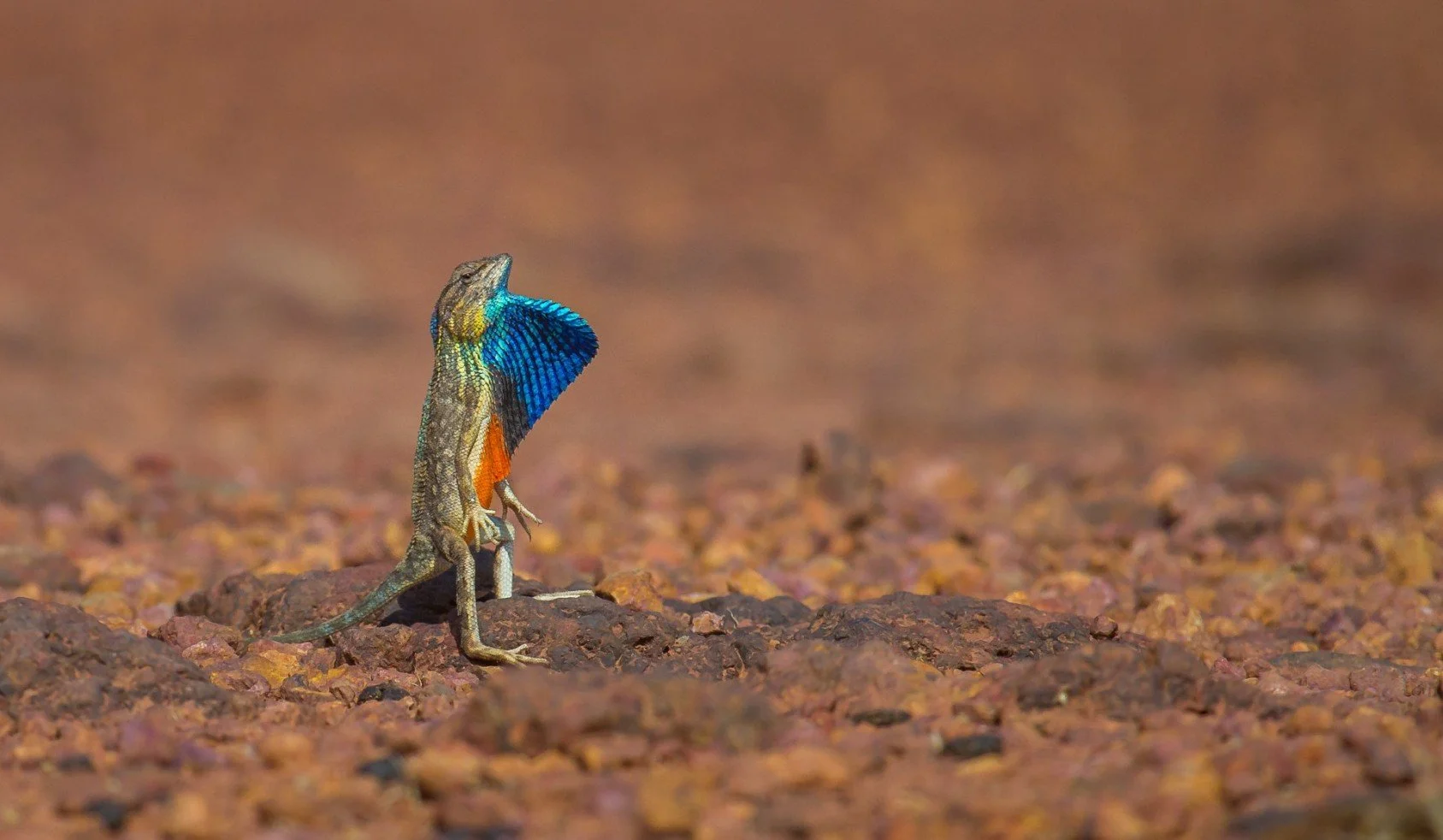
A fan-throated lizard showing off its dewlap
The females, slightly smaller than the males, do not have the colourful dewlap, which helps them blend in better with their background. When the mating season comes to an end towards the end of summer, just as the monsoon clouds begin to gather, females start looking for the best sites to lay their eggs. They burrow with their forelimbs to lay clutches of 9 to sixteen eggs, after which they cover the nests with soil and leaf litter, when available. There has been no study yet on when their eggs hatch, however, it is fair to assume that the male isn't involved.
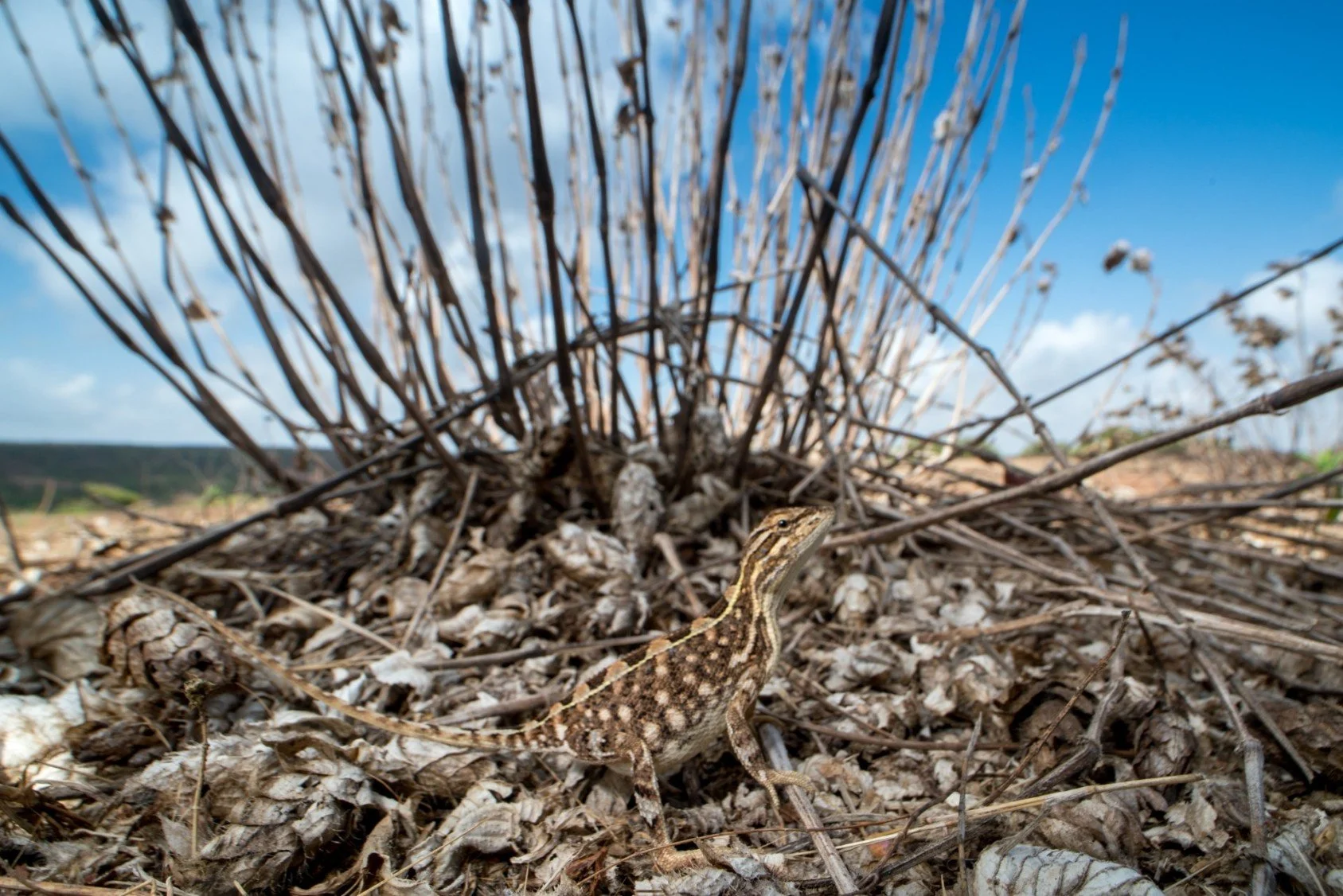
Fan-throated lizard female
However, Chalkewadi is known for more than just its reptilian life. The flatness and the altitude of the plateaus ensure strong winds through the day, and stronger winds during the night, making it an ideal spot for windmills. Over the years, Chalkewadi has become Asia's largest windmill farm. The state has leased out the plateau for private enterprises such as Suzlon to have windmills in the area. However, the amount of power that is generated from here, or an estimation on the number of windmills would be difficult to make.
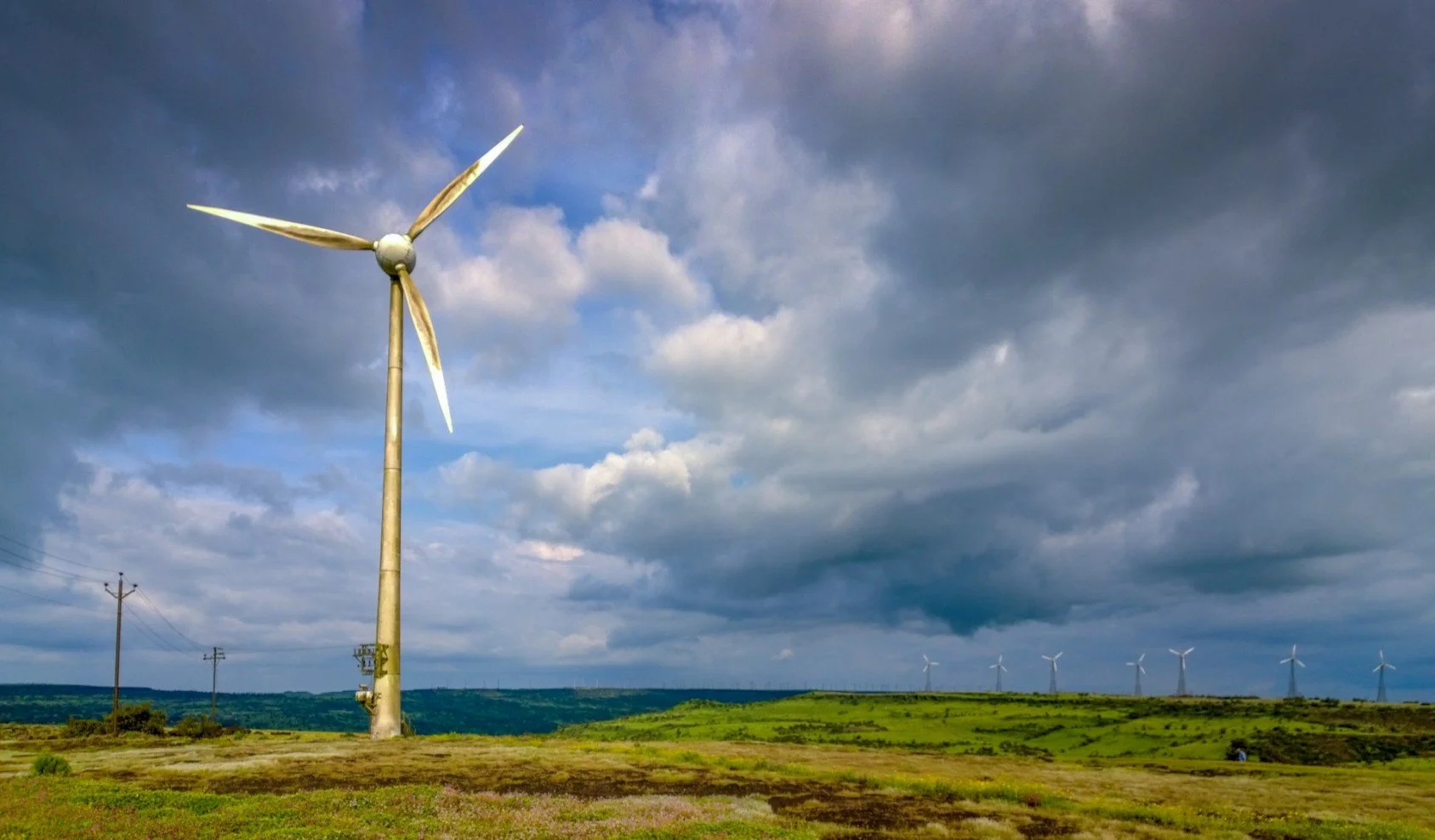
Chalkewadi, one of Asia’s largest windmill farms
The wildlife that has been around on the plateau since before the windmills came about, and probably even before the ones who invented the windmills came about, continue to exist alongside the windmills. There have been some studies that have shown that bird populations are affected by windmills, however the direct impact of these windmills is being studied still, by researchers like Harshal Bhosale and his team.
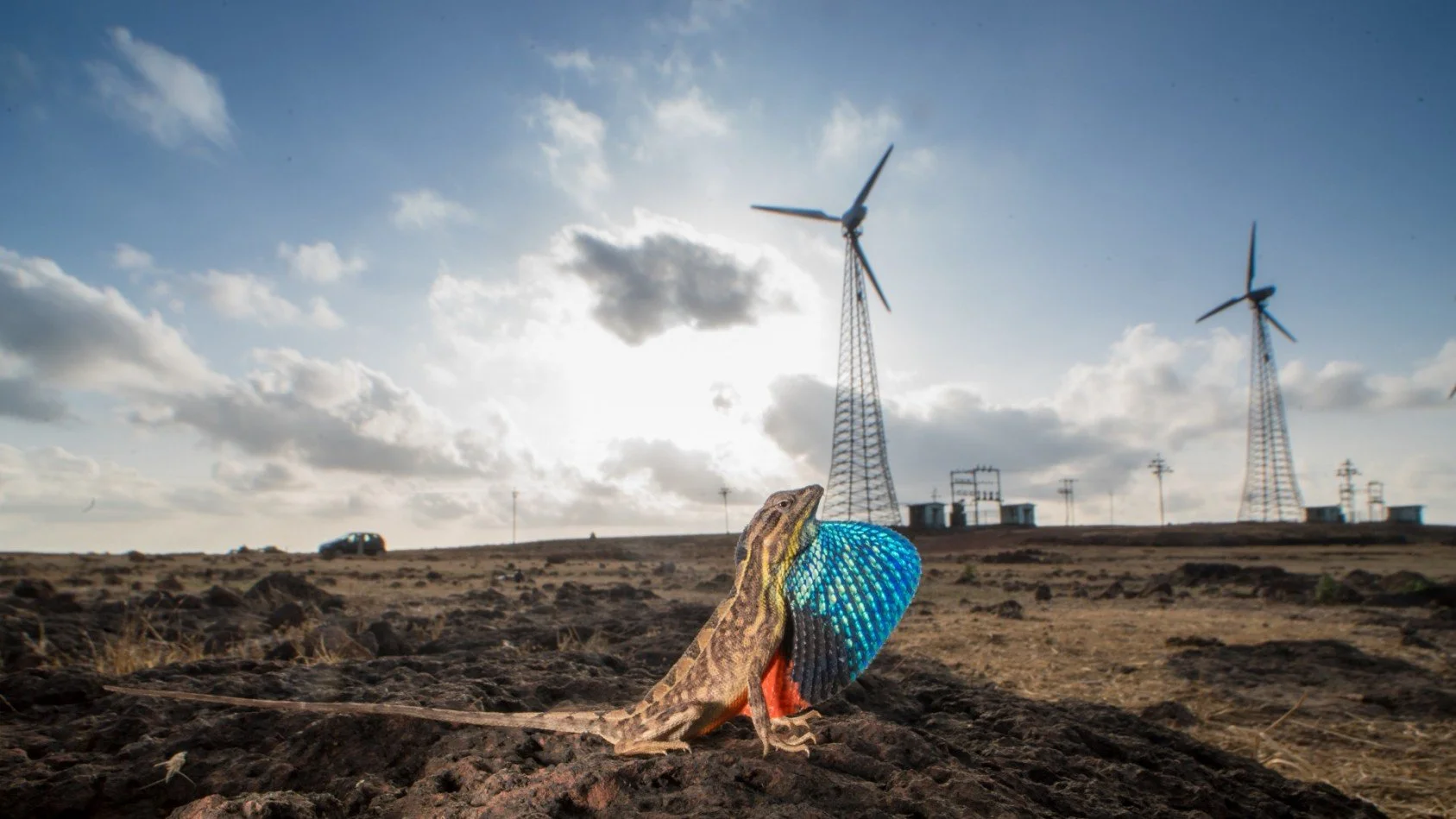
Windmills in the background
There are thousands of windmills on Chalkewadi now, so many that it is almost impossible to find a frame on the plateau without a windmill in sight. The only place where I could capture an entirely natural habitat image of the Fan-throated Lizard was at the far end of the plateau that borders the Koyna Tiger Reserve. There have been generations of Fan-throated Lizards that have lived and died with windmills being a permanent fixture in their world, making me wonder what the ‘natural habitat’ of these Fan-throated Lizards really is anymore.
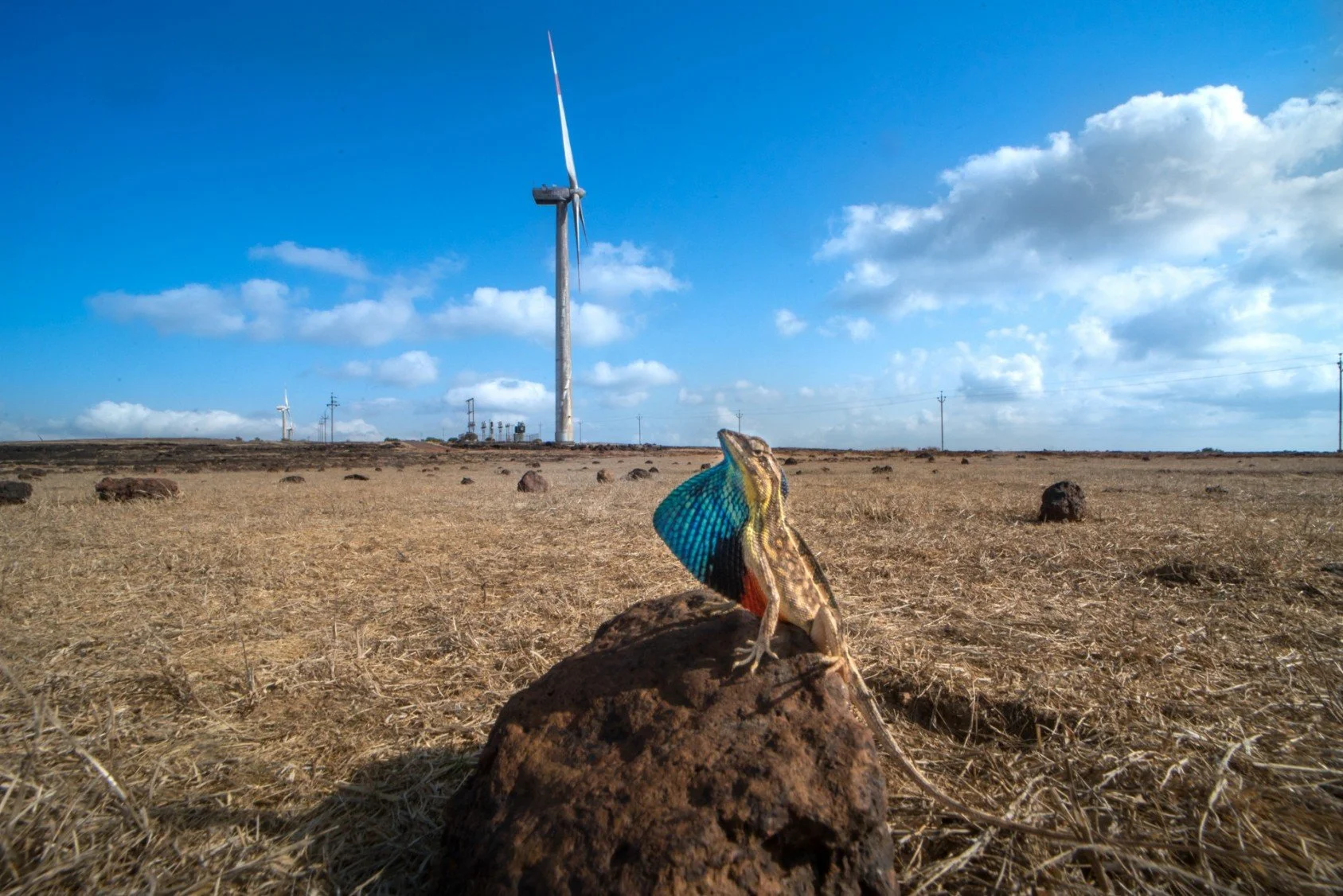
Windmills in the background
It isn’t just the lizards that have adapted to the intrusion of windmills. A number of snakes, such as this Saw-scaled Viper thrive in this habitat too.
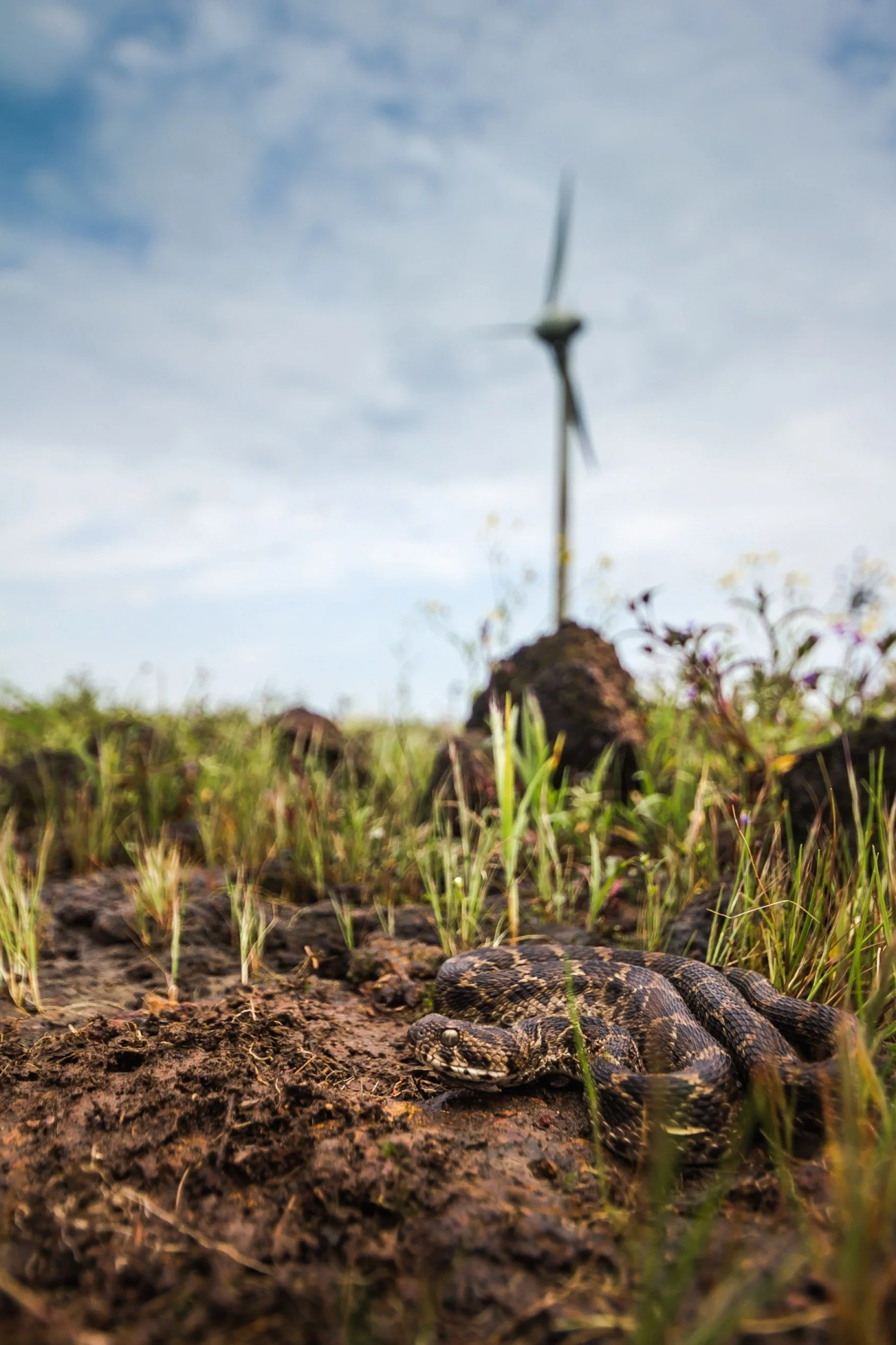
A saw-scaled viper | Photograph: Sumeet Moghe.
The Hemidactulys satarensis, a species of gecko that is endemic to the plateaus of Satara, can also be found in good numbers here. To my eye, it seems to thrive in this modified habitat, under the shadows of the windmills. But windmills have had some impact on the diversity of life here.
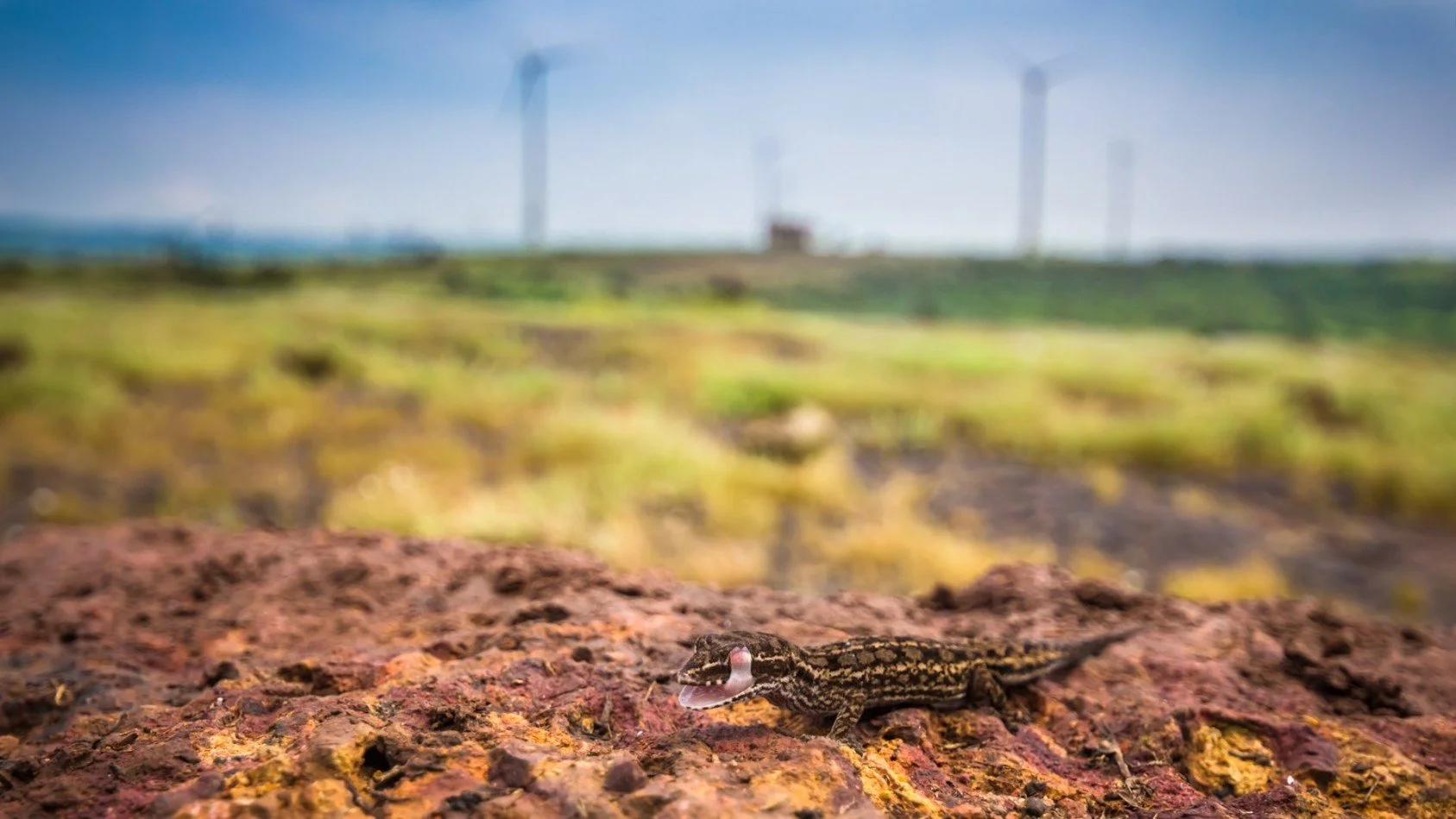
Hemidactulys satarensis | Photograph: Sumeet Moghe.
While reptiles seem to thrive in the shadow of the windmills, avians perish at their blades. As clean an energy source as the wind is, the presence of windmills does harm birds, such as this unfortunate Indian Pitta. Studies have shown that raptor densities do decline in areas with windmills. Raptors are one of the main predators of fan-throated lizards. So how, then, do their reduced numbers impact these reptiles? Harshal Bhosale, an independent researcher who was also involved in the research that led to the classification of this species, is currently studying the impact of windmills on these reptile populations. “I do believe that the density of fan-throated lizards in Chalkewadi is higher than any other plateau in Satara. The lizards on plateaus with the windmills seem to be less wary of predation than on the plateaus that do not have windmills,” he told me. While his research continues, I can’t help but worry about the long-term impact of these changes.
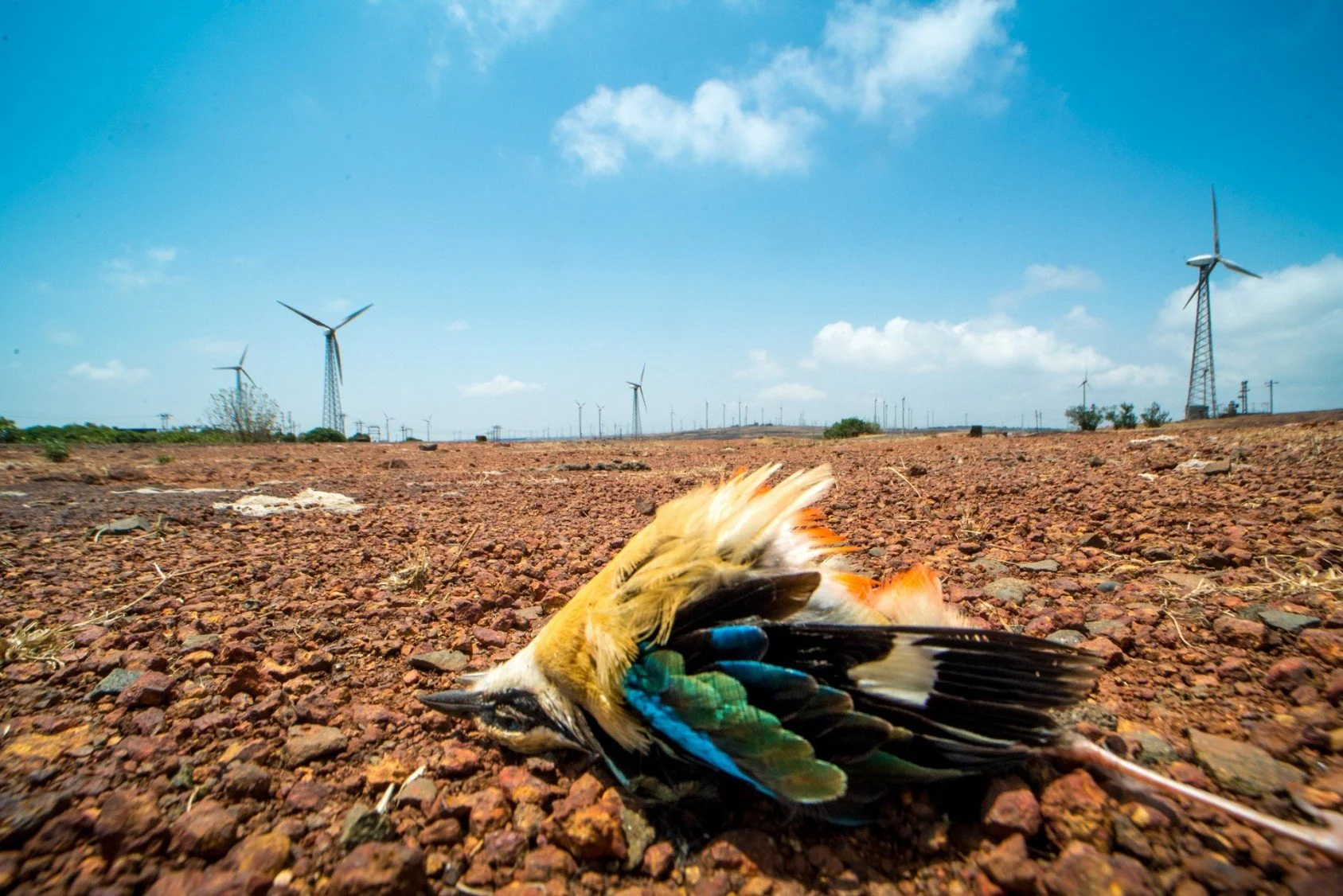
A dead Indian Pitta
The dark monsoon clouds looming in the distance signal the end of the mating season for this Fan-throated Lizard; it’s unlikely he will see more than one summer. I wondered, as I looked upon this lizard through my viewfinder, what ‘long term’ really means for a creature whose lifespan is probably less than a year. I say ‘probably’ because we don’t know enough about them to say for sure. And I can’t help but think: when we know so little about some of the life forms that we share our planet with, how can we fully comprehend the consequences of our actions on them?
Even if this lizard isn’t going to be around much longer, I know his genes are safe somewhere in a clutch of eggs that will hopefully be protected from the weather, seasons, and predators till the end of this monsoon, until it is time for the plateau to be overrun by thousands of Fan-throated Lizards once again.
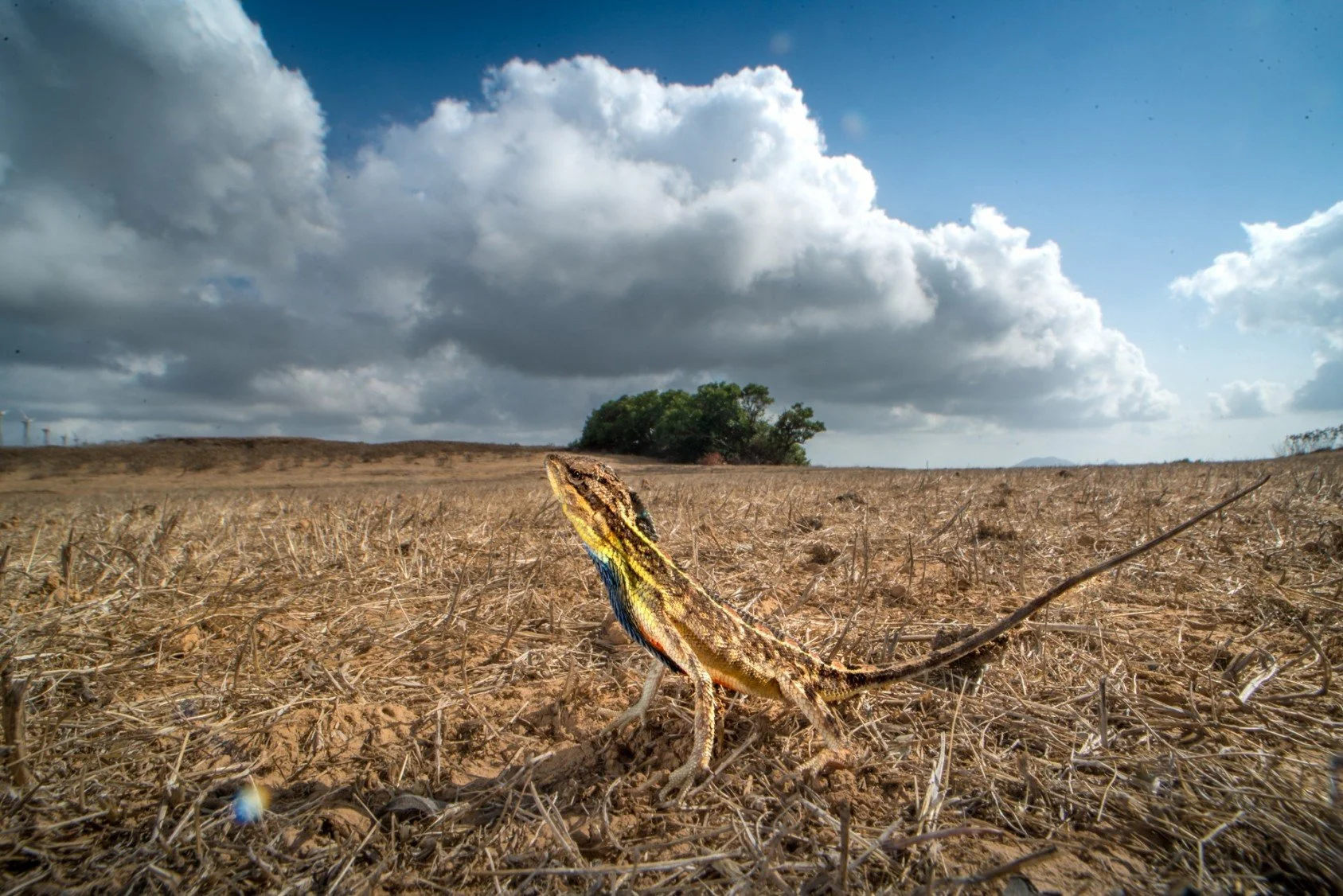
A fan-throated lizard, Chalkewadi