Barren wastelands. Grasslands
Names matter. Would we care about grasslands in India more if they weren’t labelled as barred or wastelands?
Growing up, my summer holidays involved long bus-rides from Bangalore to assorted temple towns around. A temple that we frequented often was in the town of Mantralaya, in Andhra Pradesh . And in order to get there, I remember a fair bit of the route being through a whole lot of nothingness. Barren, as they call it. Not suitable for agriculture. Maybe land that is wasted, and awaiting ‘development’.
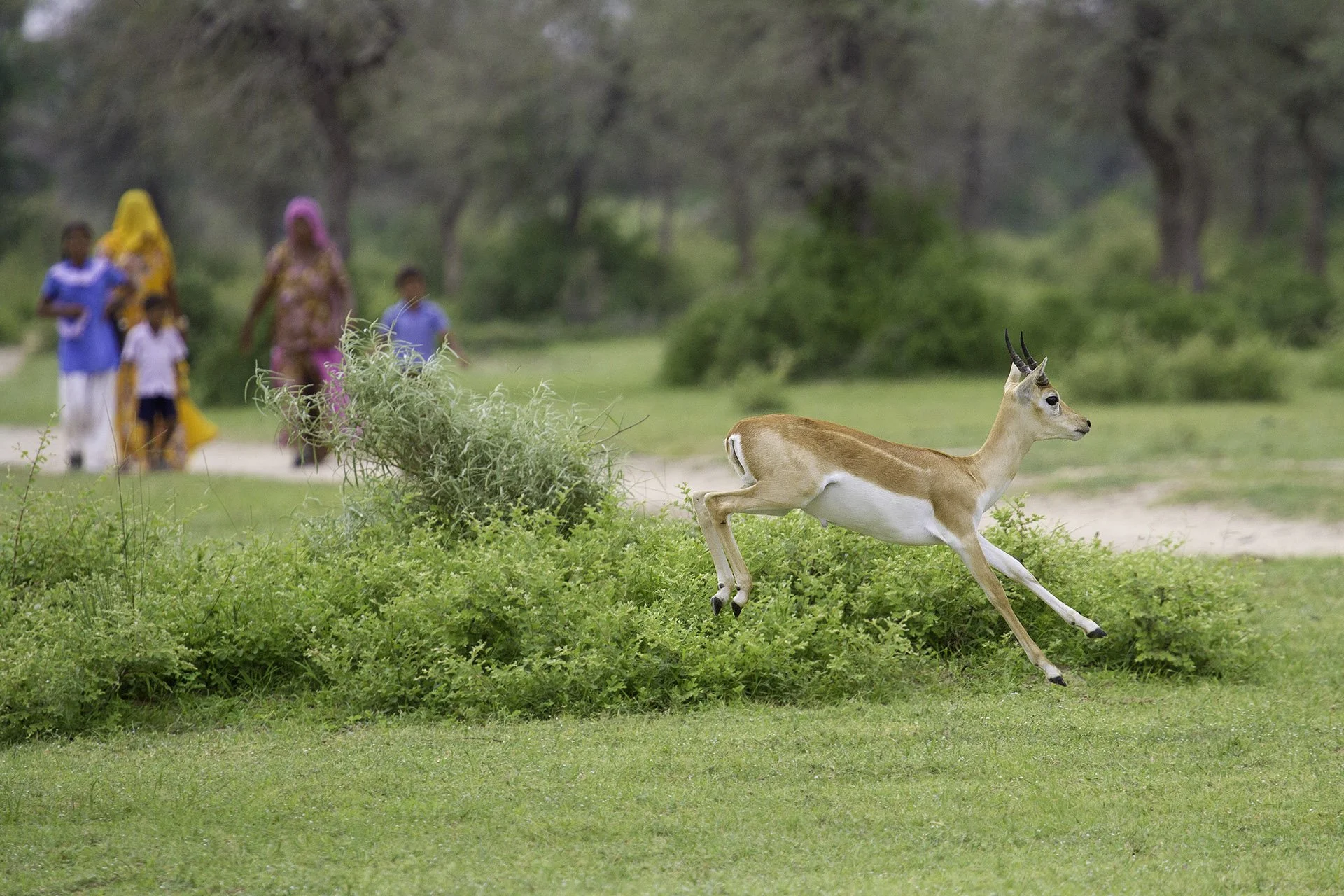
Till I saw, what I am now sure, was the first blackbuck I’ve ever seen on one of these rides. I learnt that these flatlands were actually grasslands that are rich in wildlife. Antelopes, foxes, wolves and a number of rodents and reptiles that need this very habitat. While we aren’t great at protecting forests, forests at least have a seat at the table. Grasslands don’t even receive the invite.
Two sides of the same coin
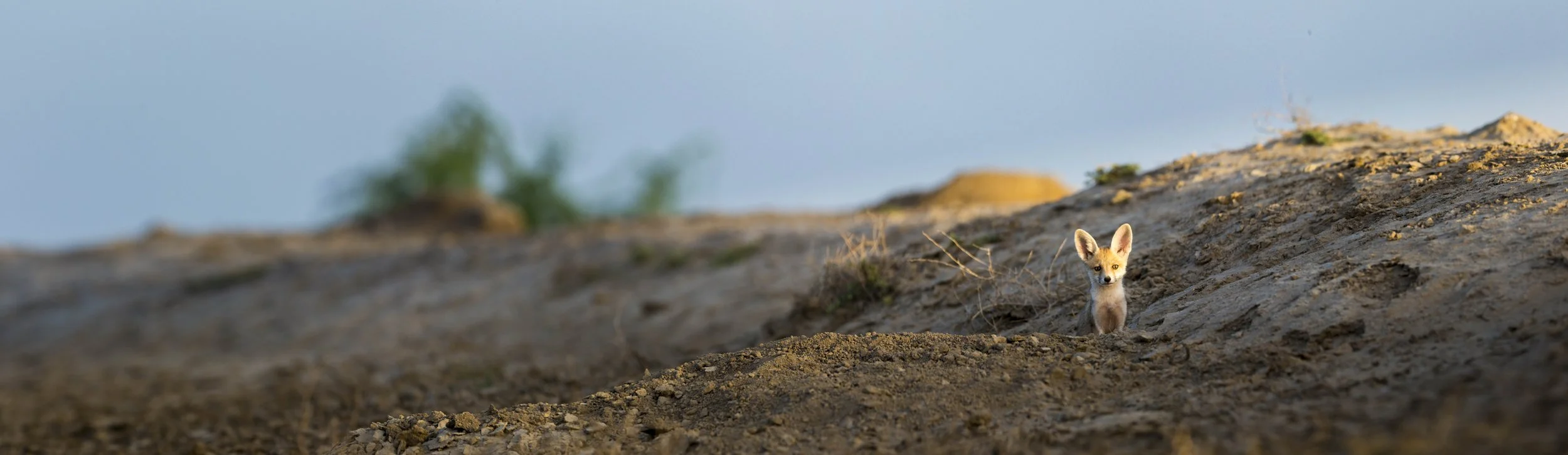
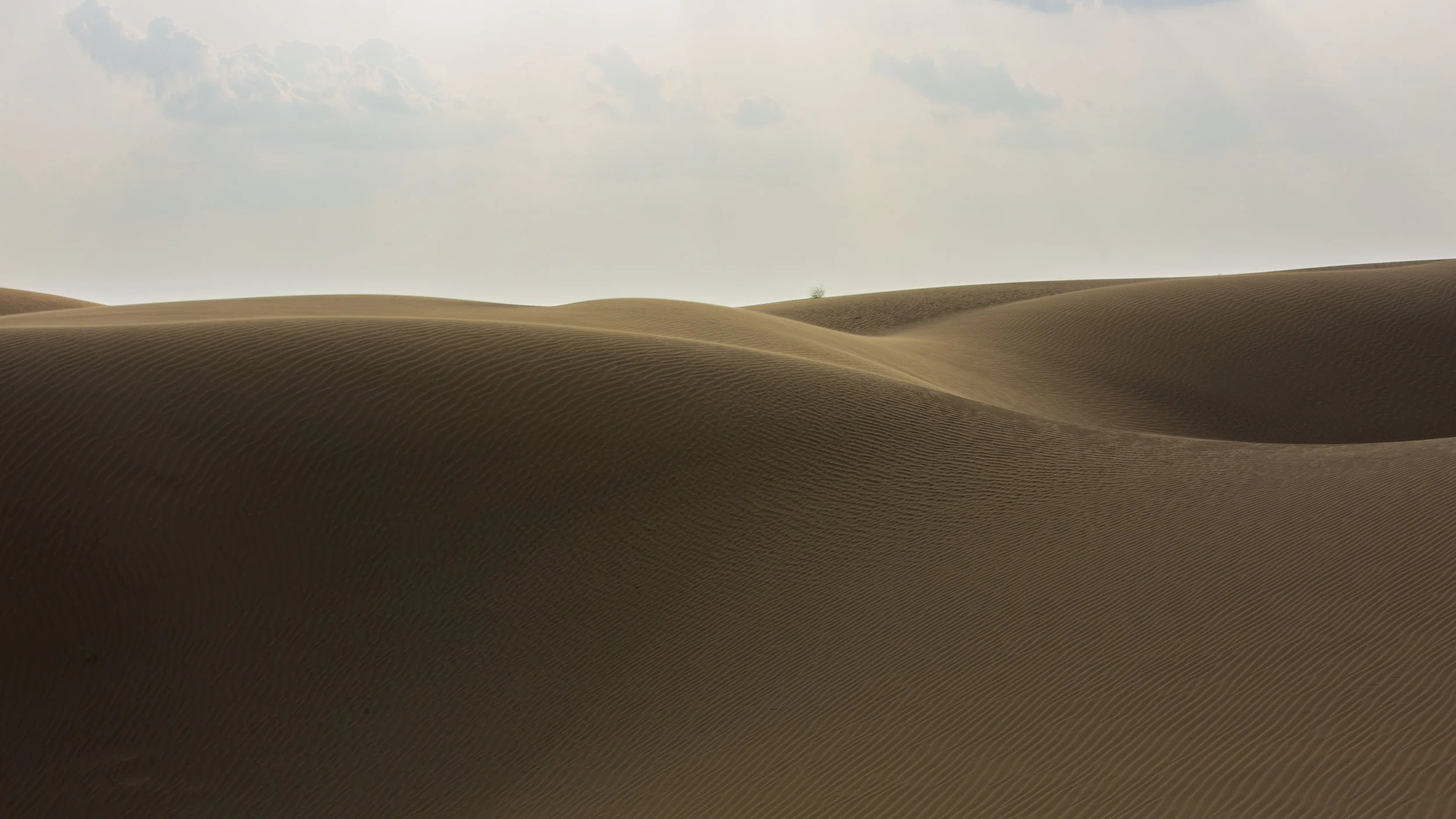
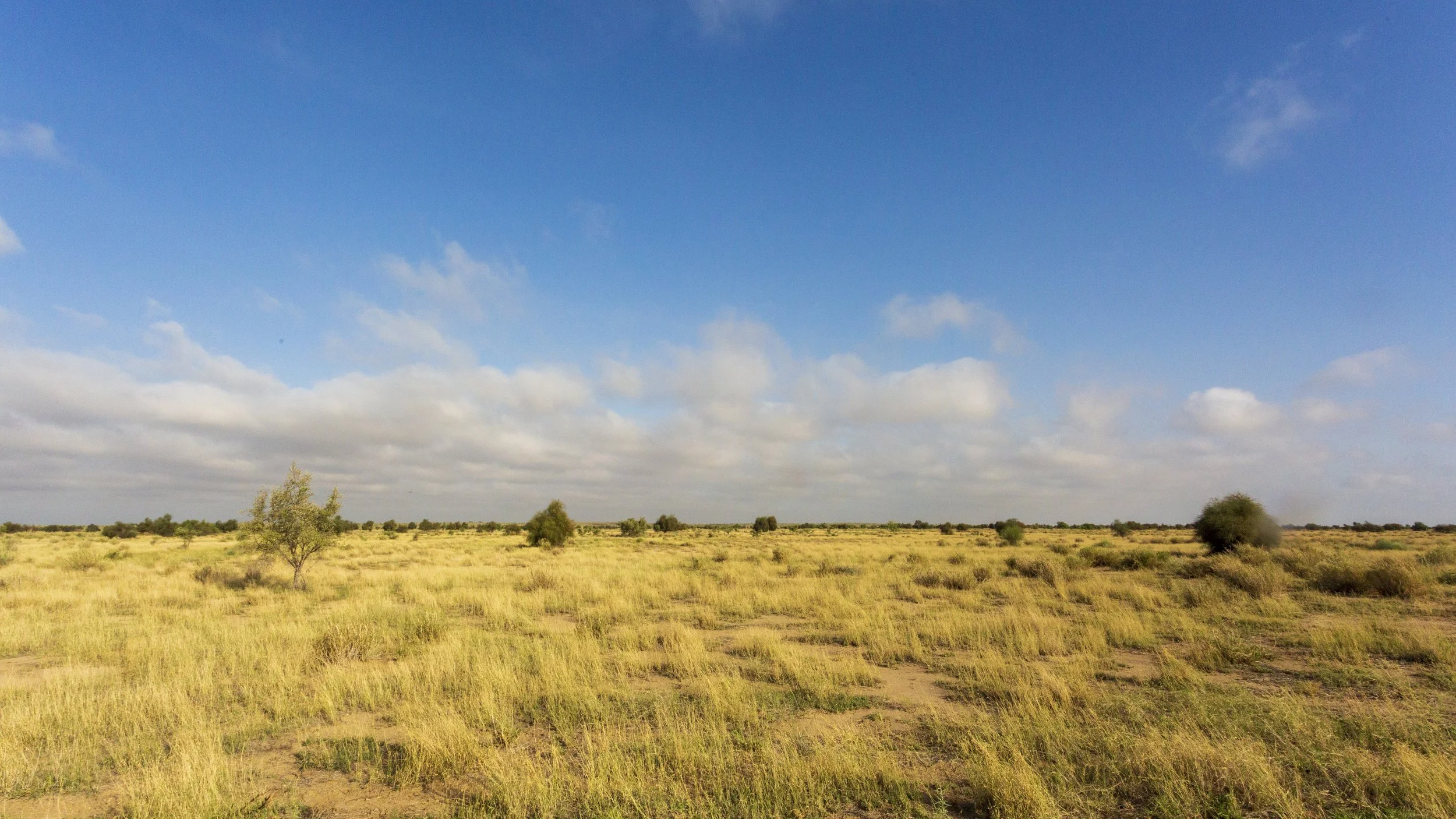
These images are from the same place, at almost the same time. On one side of the road were dunes. On the other, a grassland. We think of these as entirely different ecosystems, but in all these places, I’ve seen one flow into the other. Both are rich wildlife habitats
Ground denizens
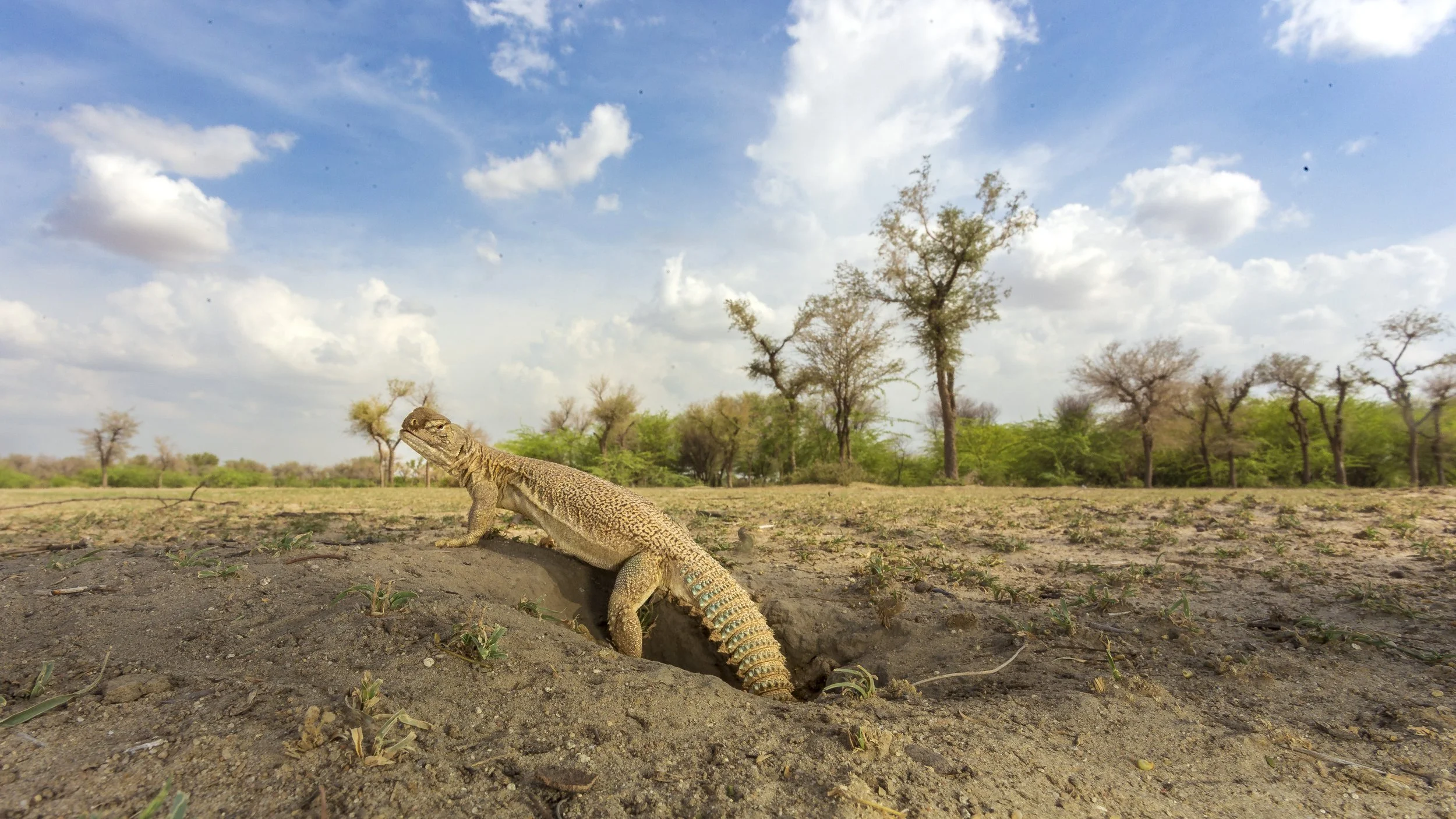
The hard ground is home. It provides food. It hides eggs and their young ones. It is safety when there are predators in the sky. Barren is it appears to be, there is a whole world under it that shows up when you look closely. Lizards, rodents, birds, spiders, and a number of others.
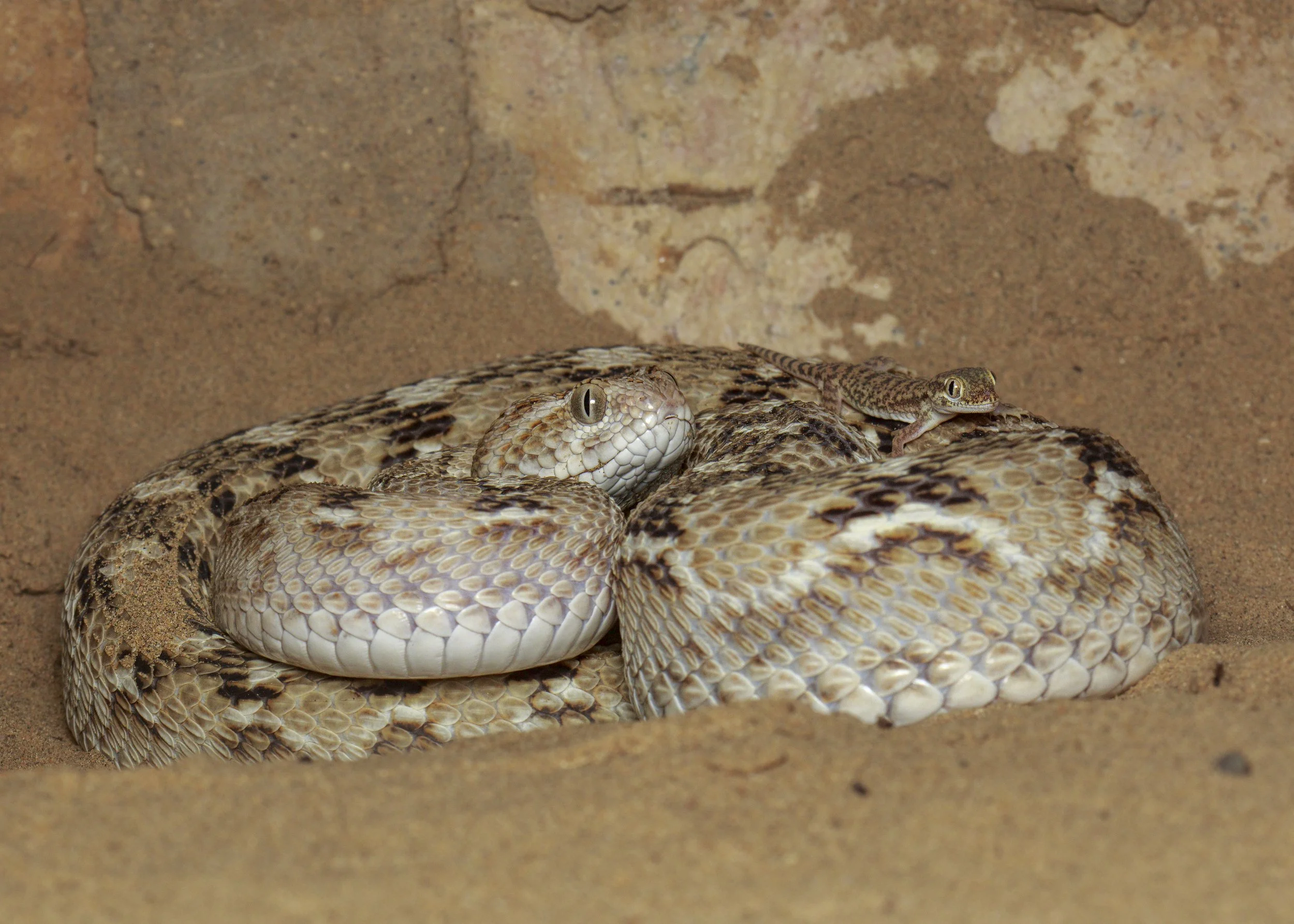
A Sidh sand-gecko on a saw-scaled viper
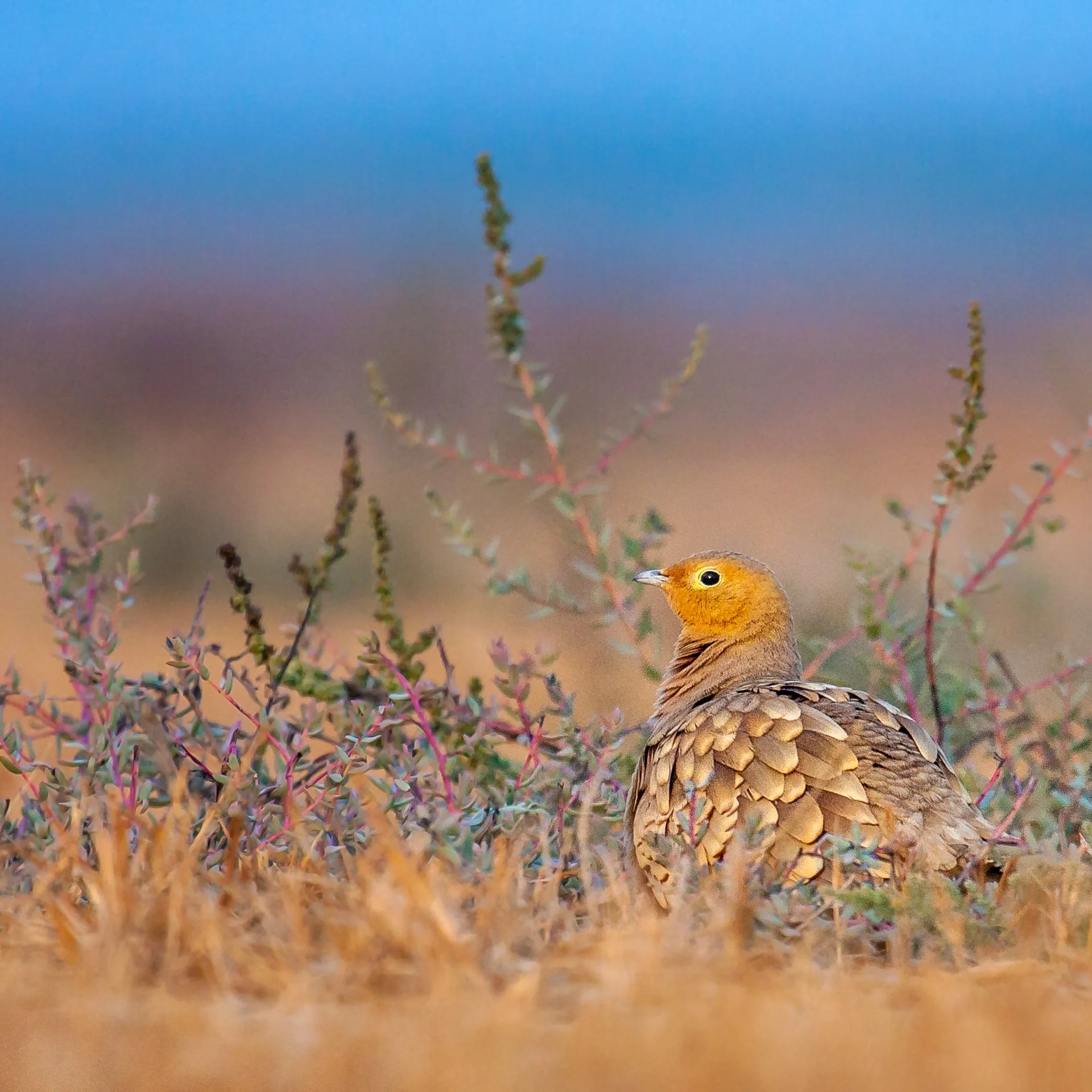
Chestnut-bellied sandgrouse
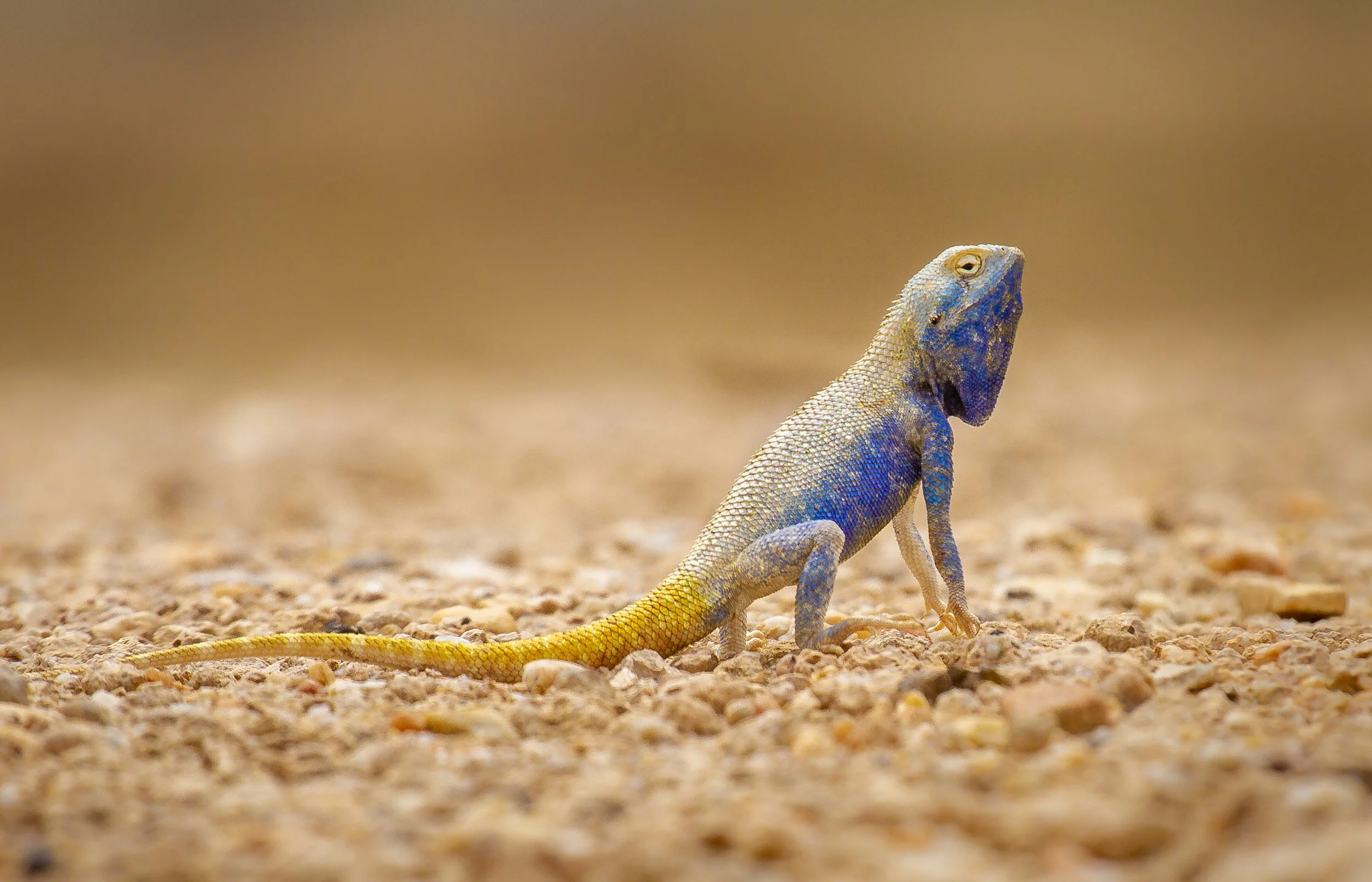
Brilliant agama
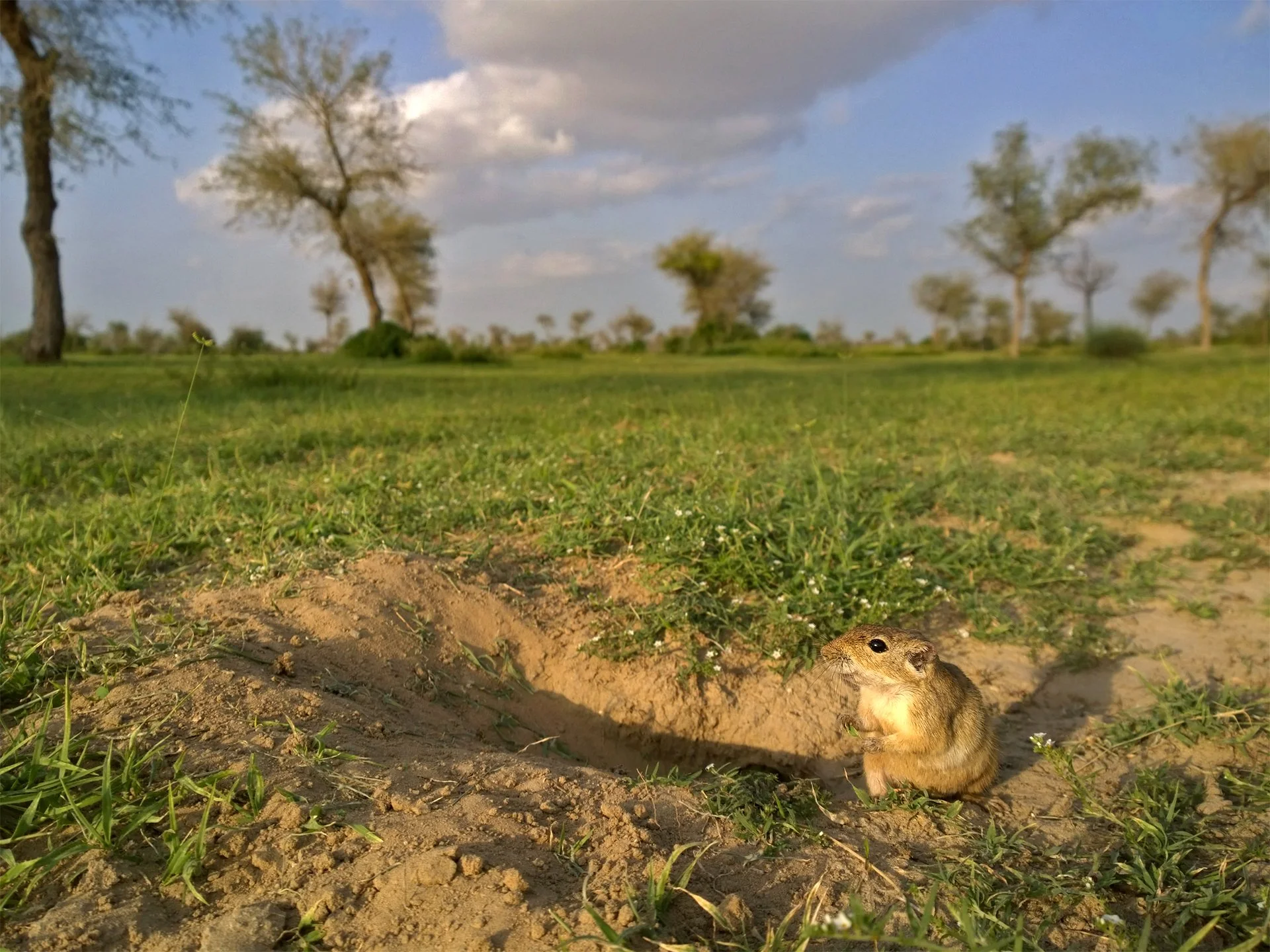
Desert jird
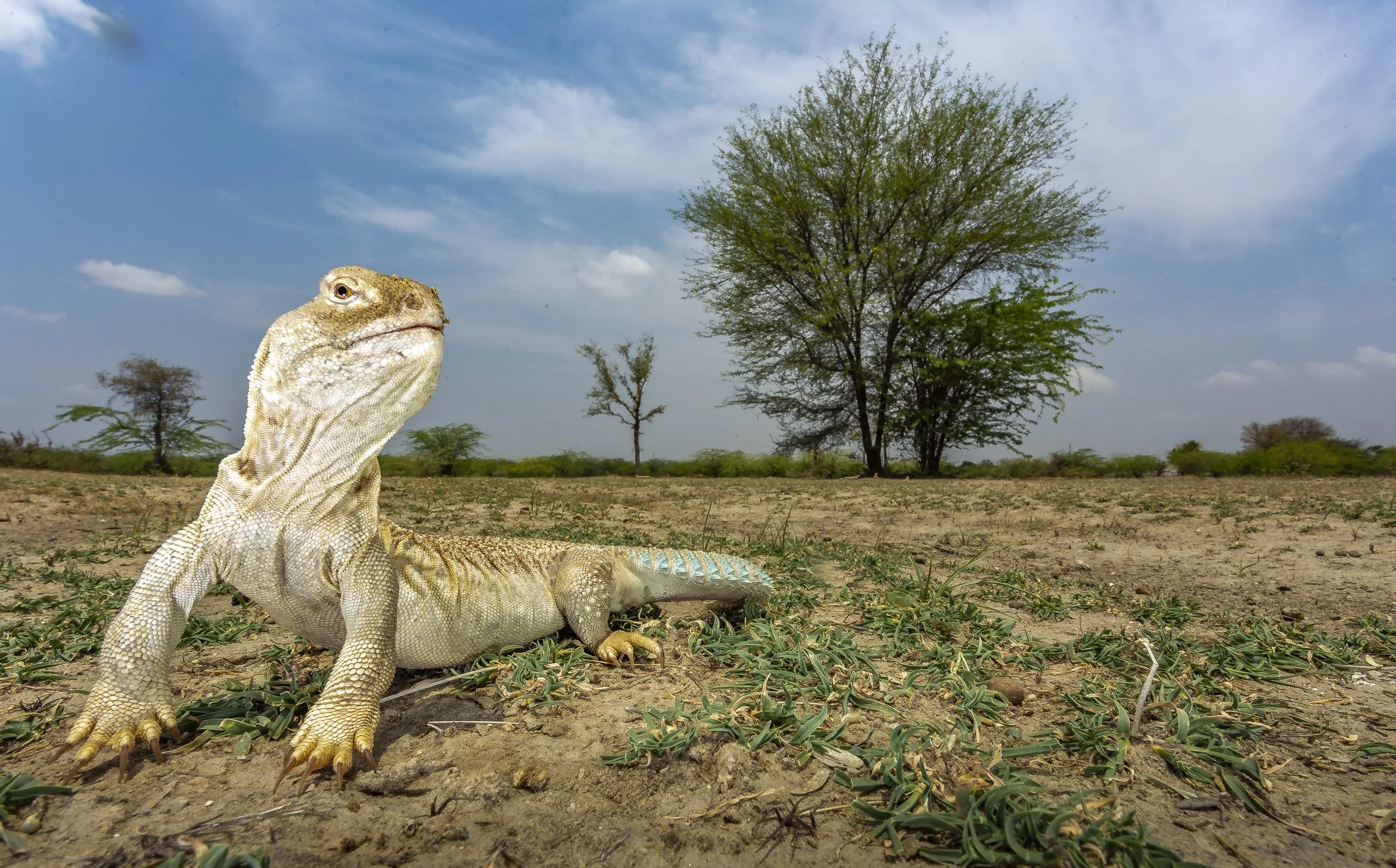
Spiny-tailed lizard
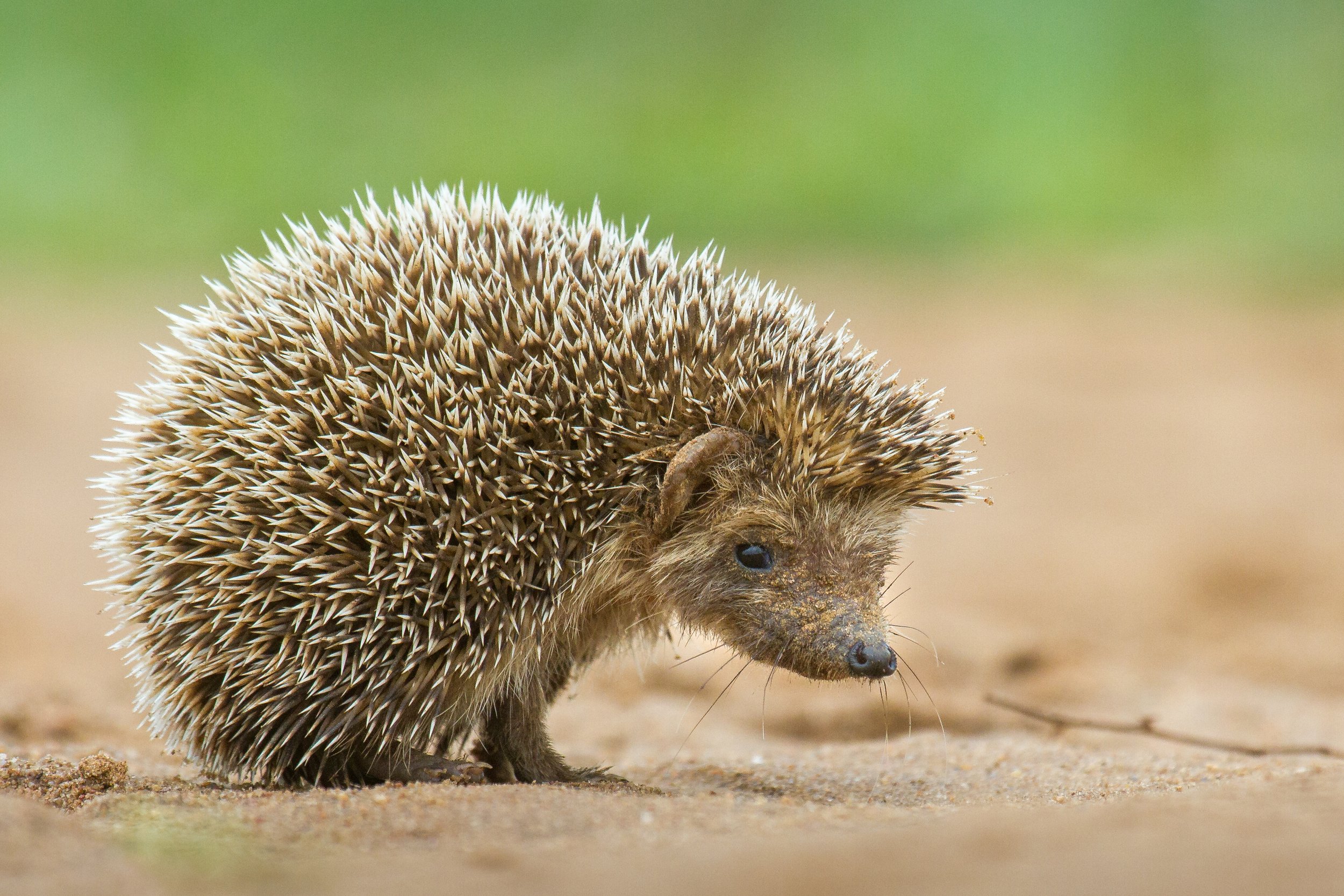
Indian hedgehog
A home in the dunes
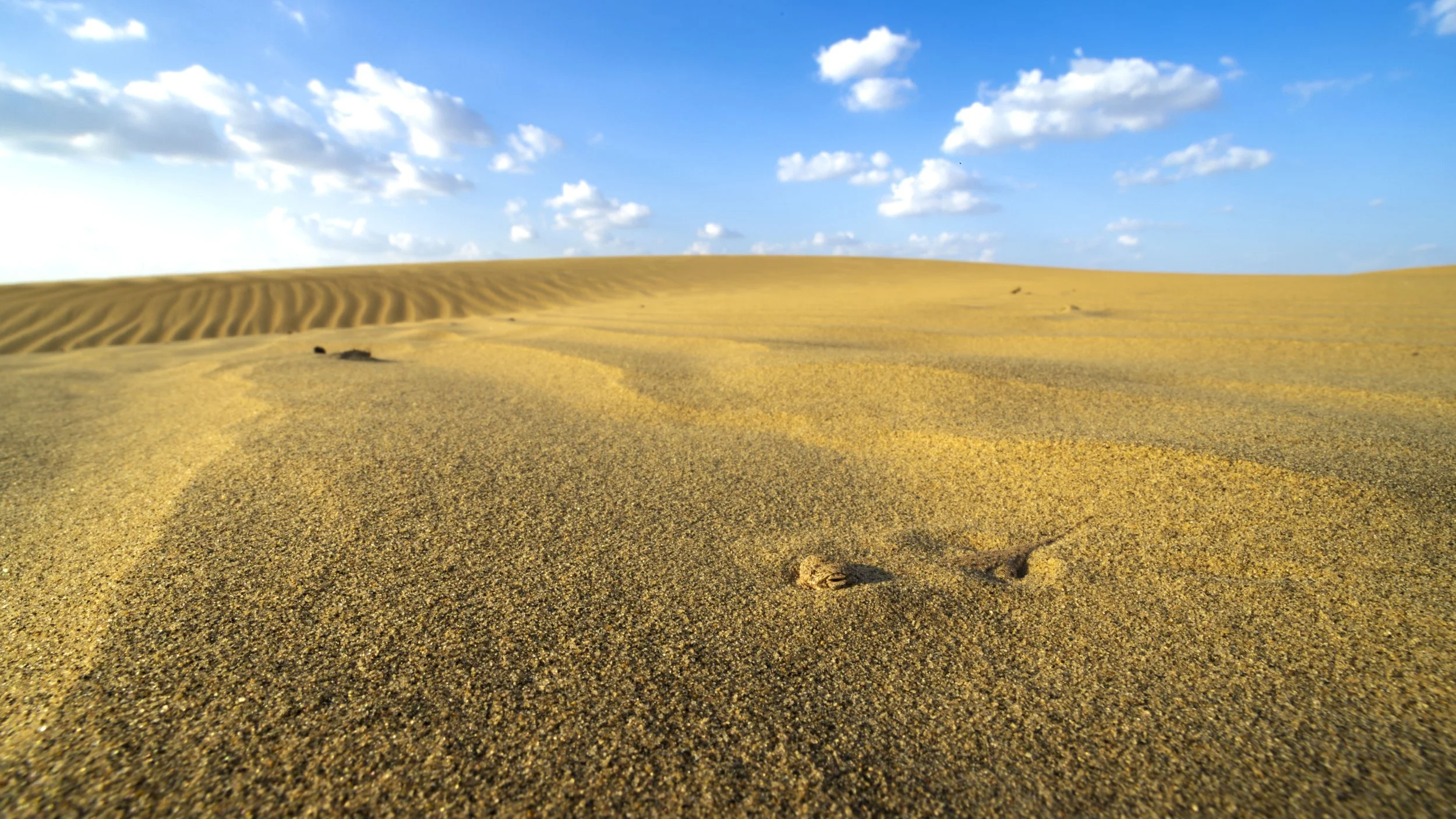
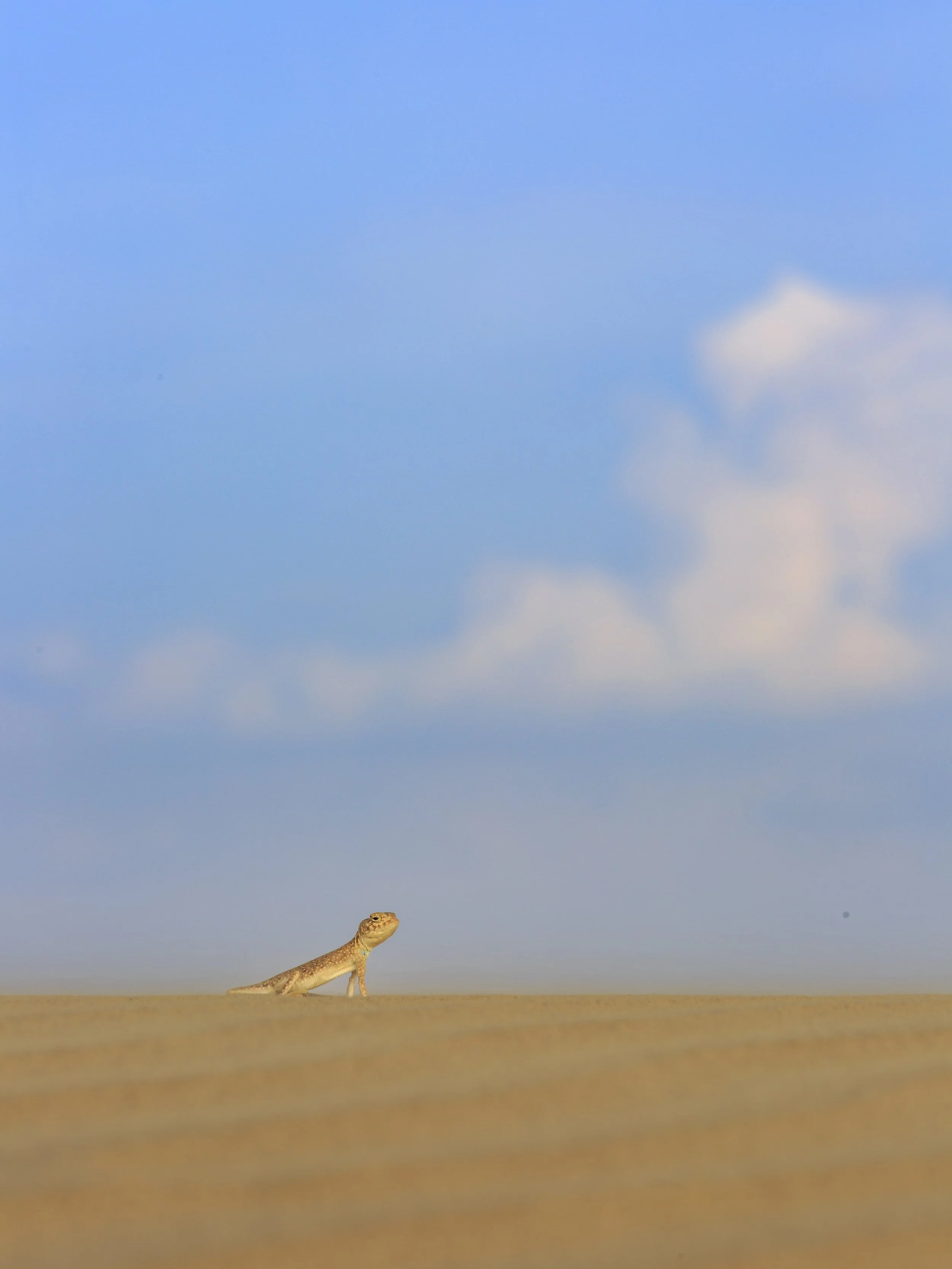
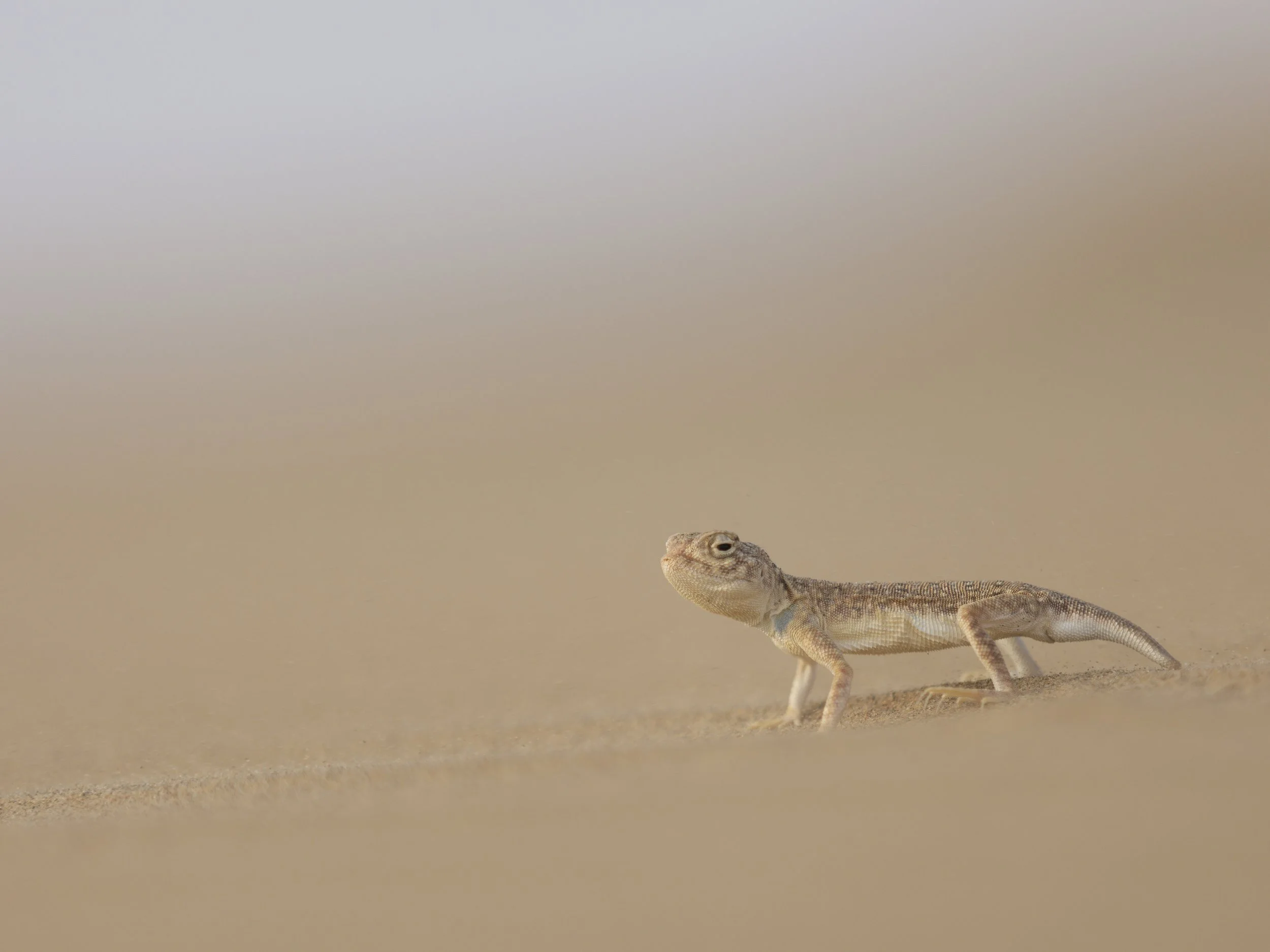
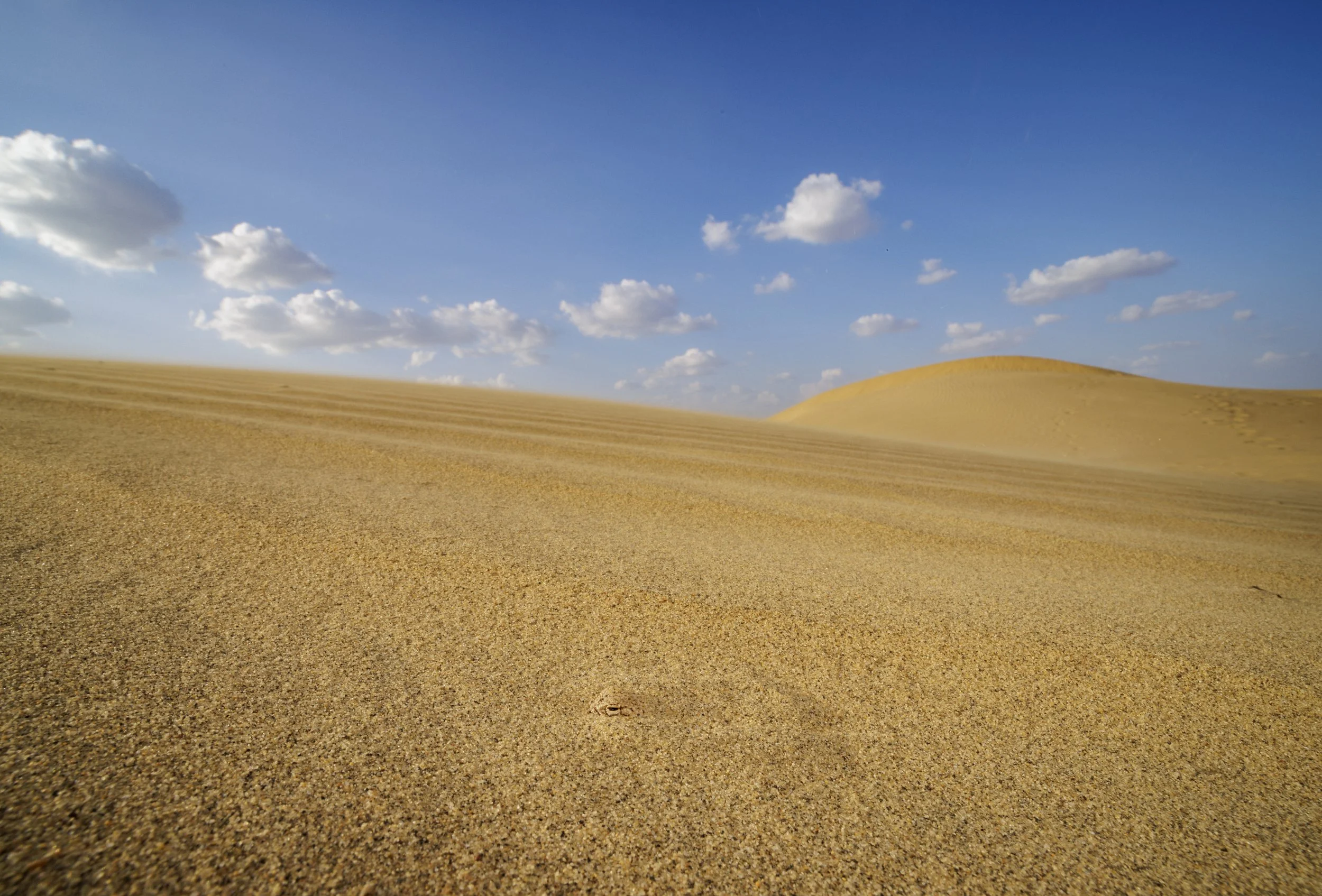
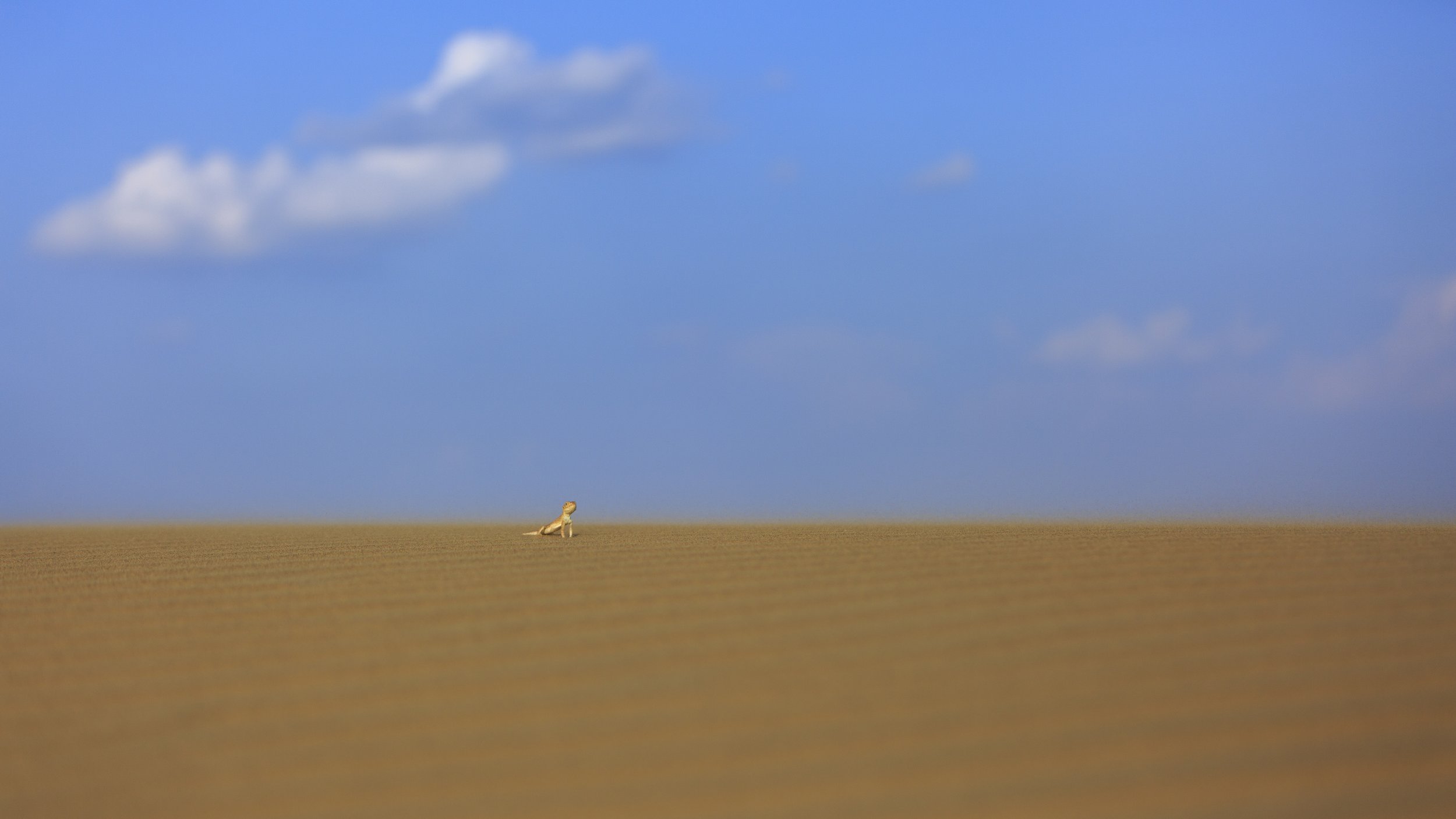
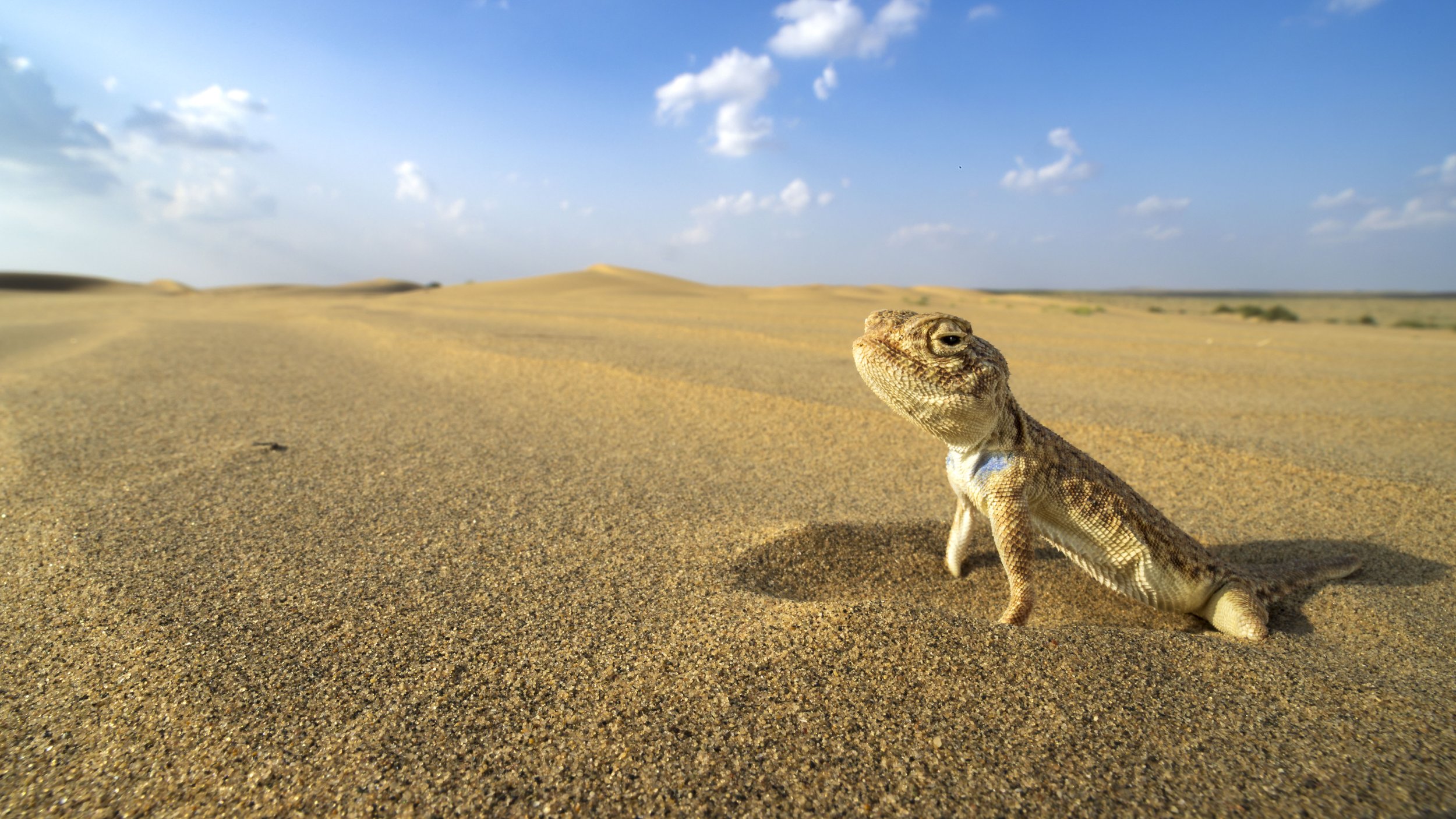
The dunes can be hostile. Temperatures soar to over 50 in summer, sandstorms are aplenty, and shelter is rare. This lizard has a evolved a great coping mechanism - it buries itself in the sand. This also useful when there predators, like the birds of prey, snakes and larger larger lizards are around. The Thar desert supports an ecosystem that has adapted to the the harsh temperatures, shifting sand and almost absent rain. Many reptiles such as the geckos, agamas, skinks and snakes thrive here, and have adapted to the habitat. The toad-headed agama (Bufoniceps laungwalaensis), endemic to this region. It has fringe-toes that it uses to shovel the top layer to sink into the soil and have just its nostrils on the outside. Sometimes, it can bury itself as deep as 30 cm. It also has thick eyes-lid that can shut tight, preventing any sand particles from entering during a sandstorm. Moments after it sinks into the sand, there is barely any trace of the lizard being there. It is one of my favourite animals.
Food, wonderful food, marvelous food, glorious food!
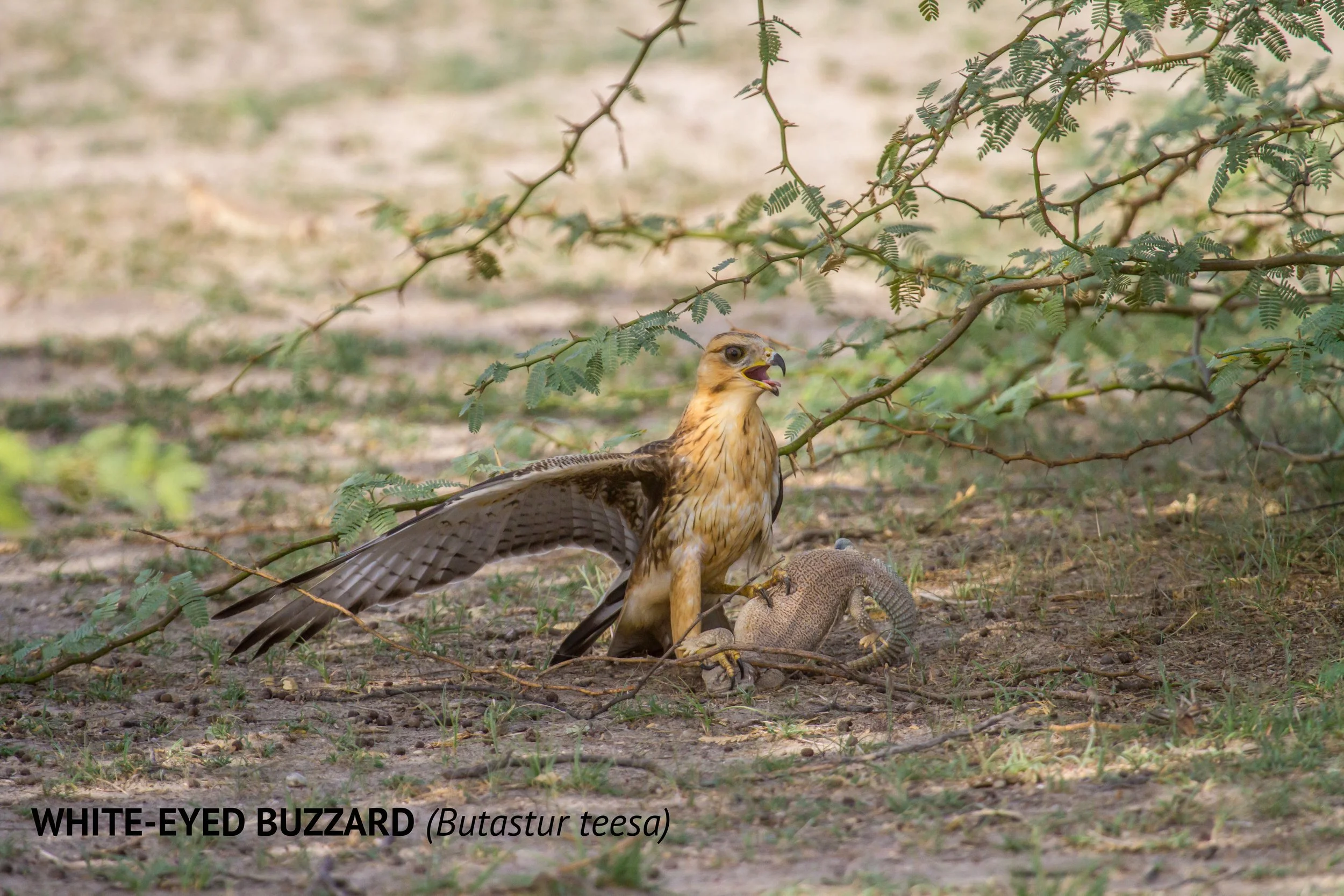
With so much food on the ground, birds of prey follow. Grasslands in India are home to a large number of raptors, and even more so in winters, when eagles and vultures from the Northern and Central Asia migrate to relatively warm grasslands here.
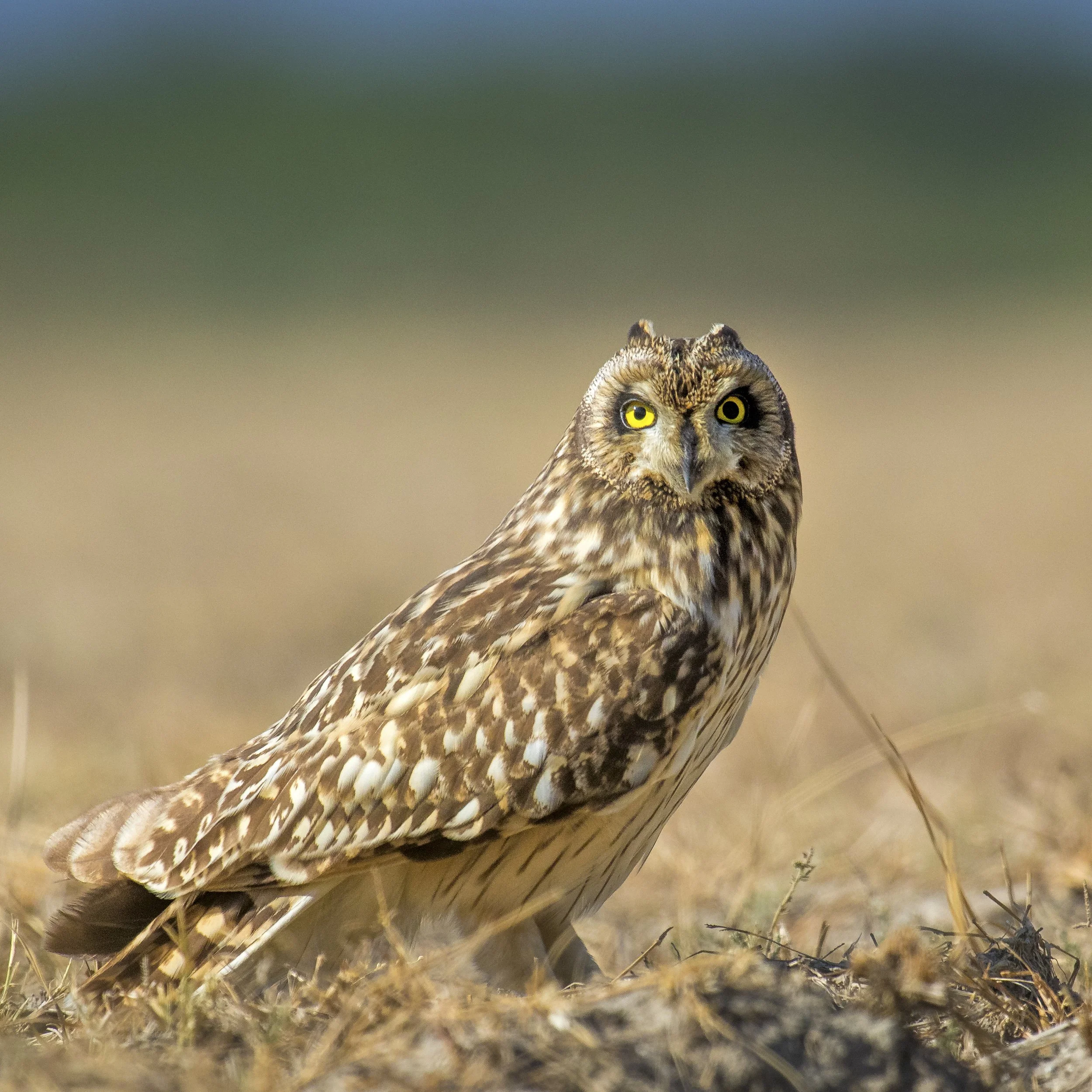
Short-eared owl
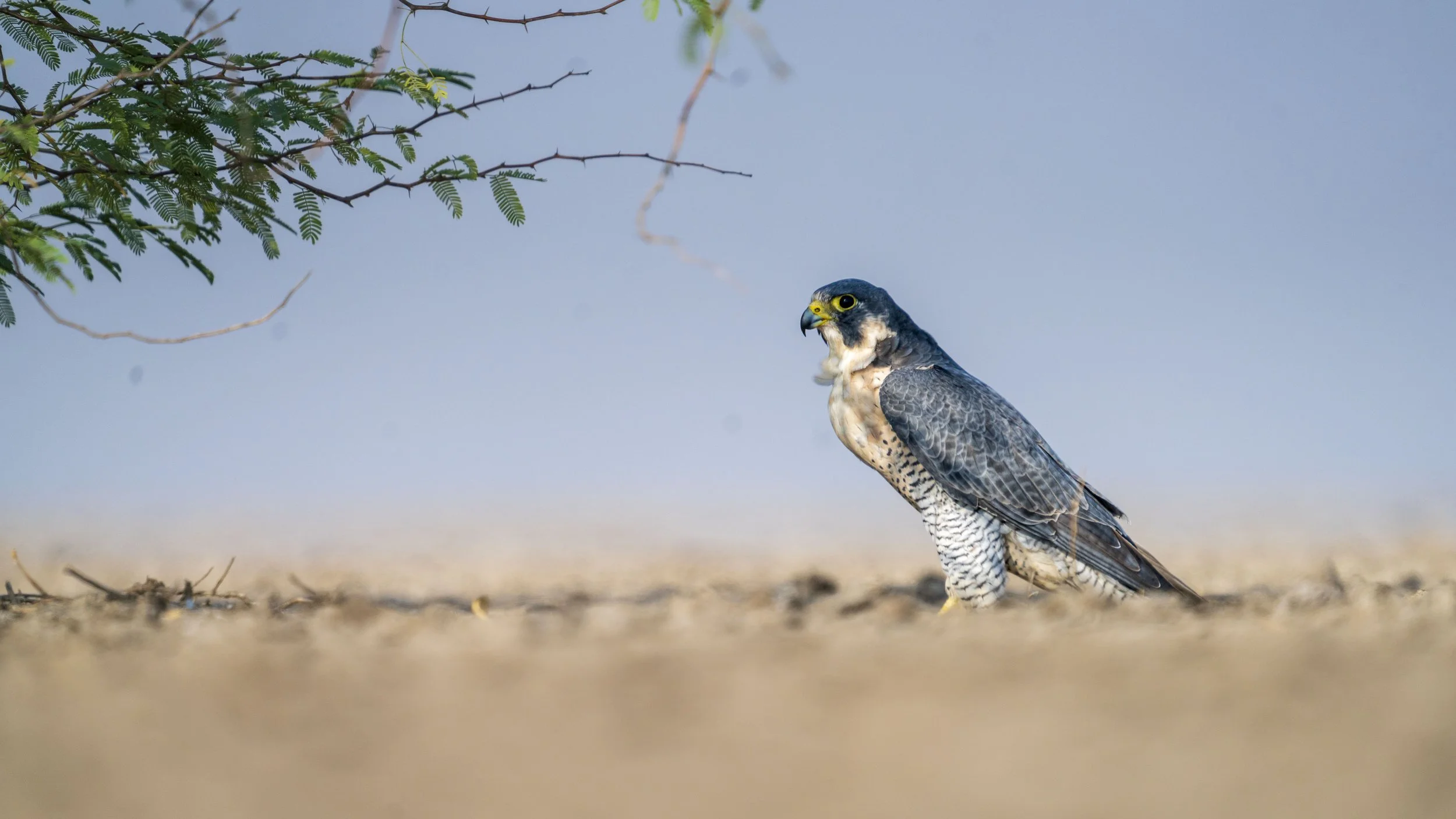
Peregrine falcon
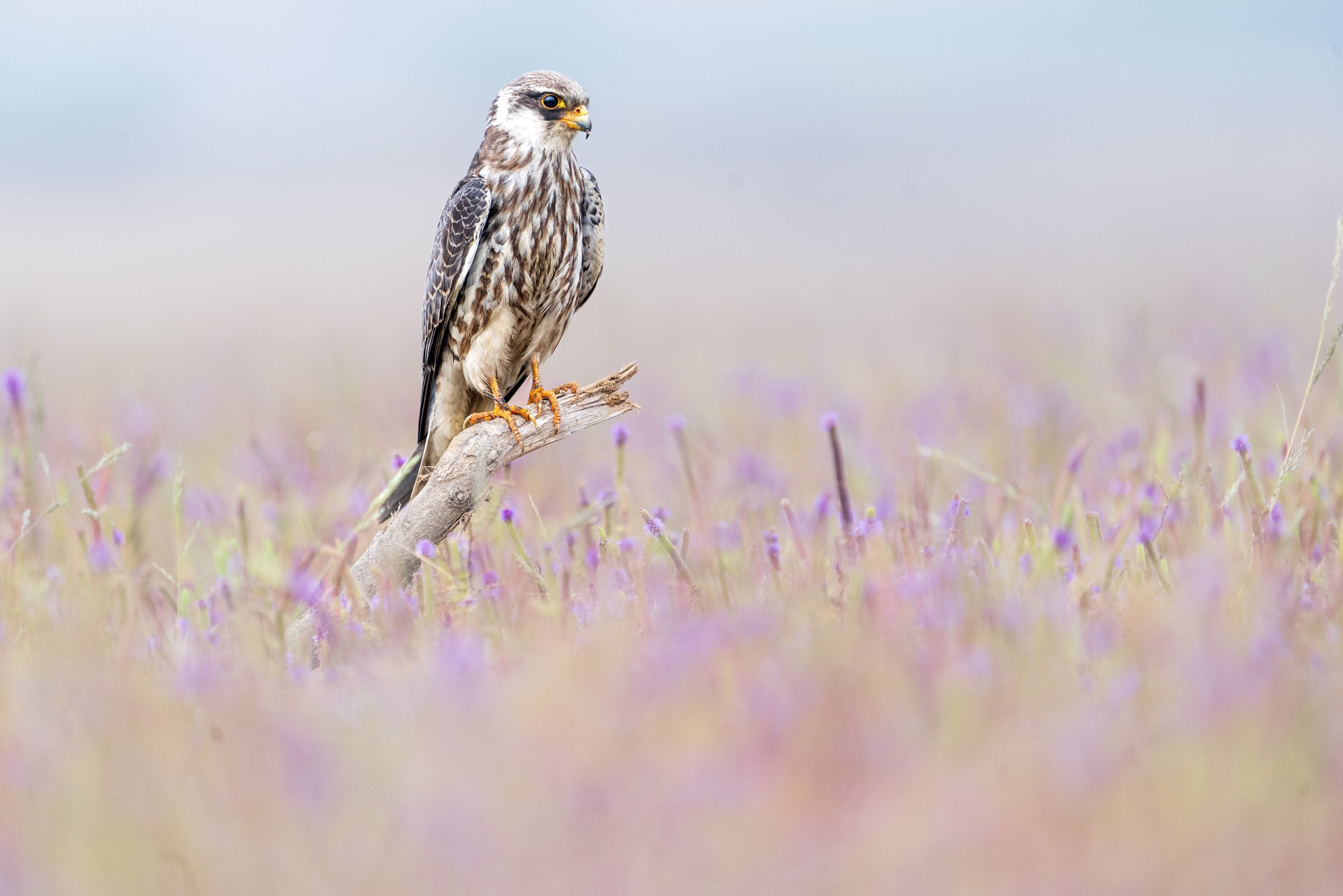
Amur falcon
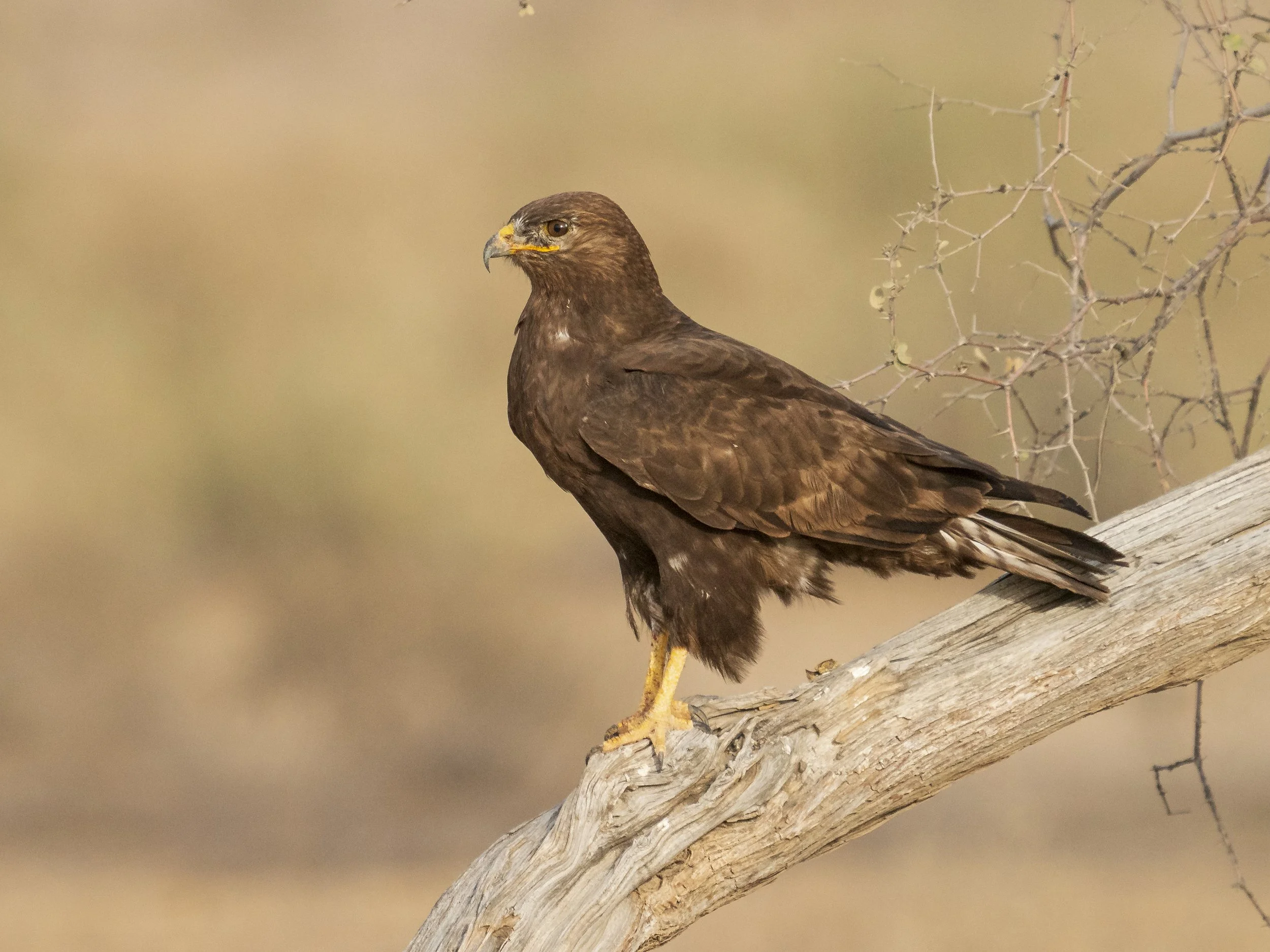
Long-legged buzzard
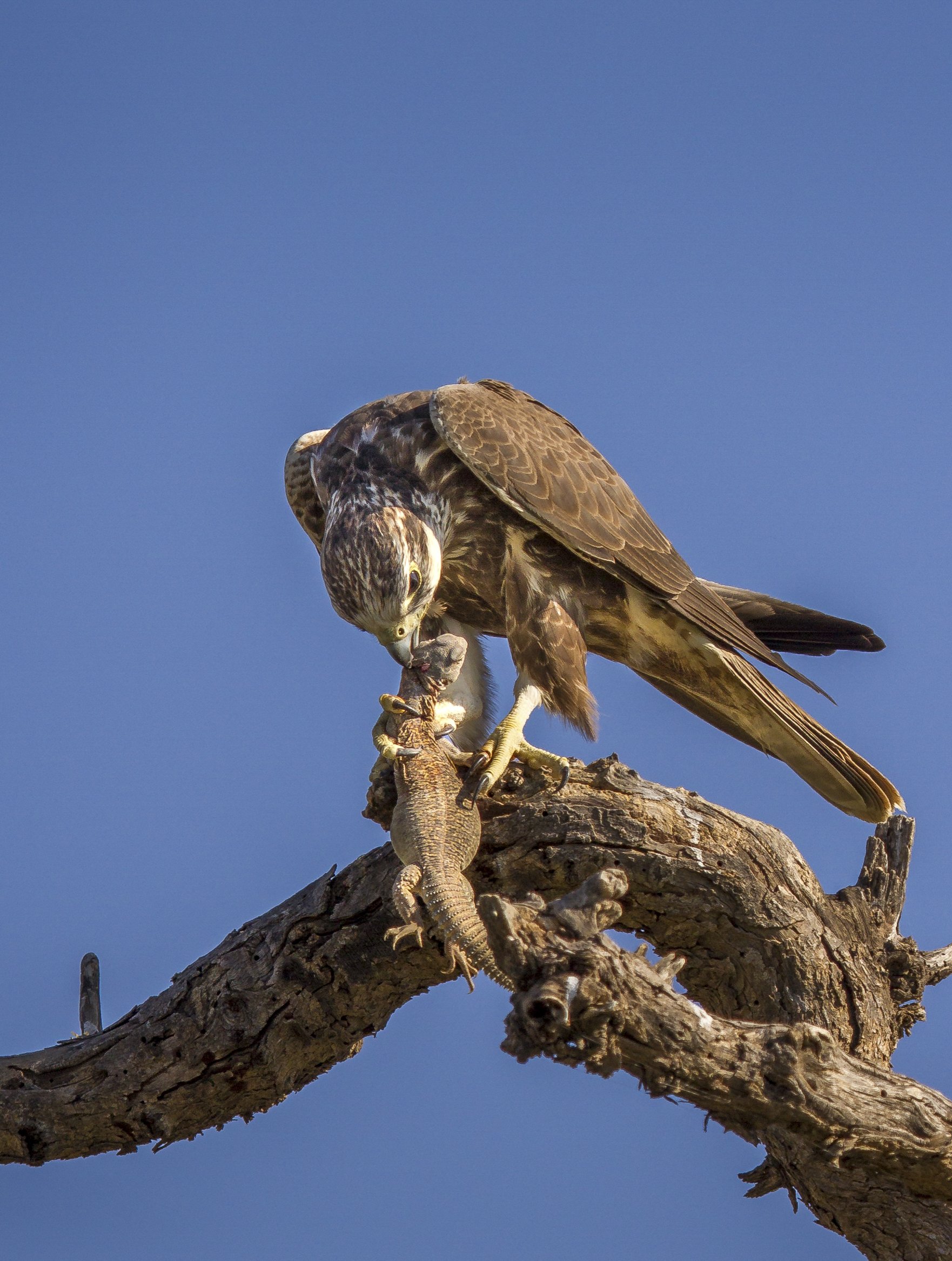
Laggar falcon feeding on a spiny-tailed lizard
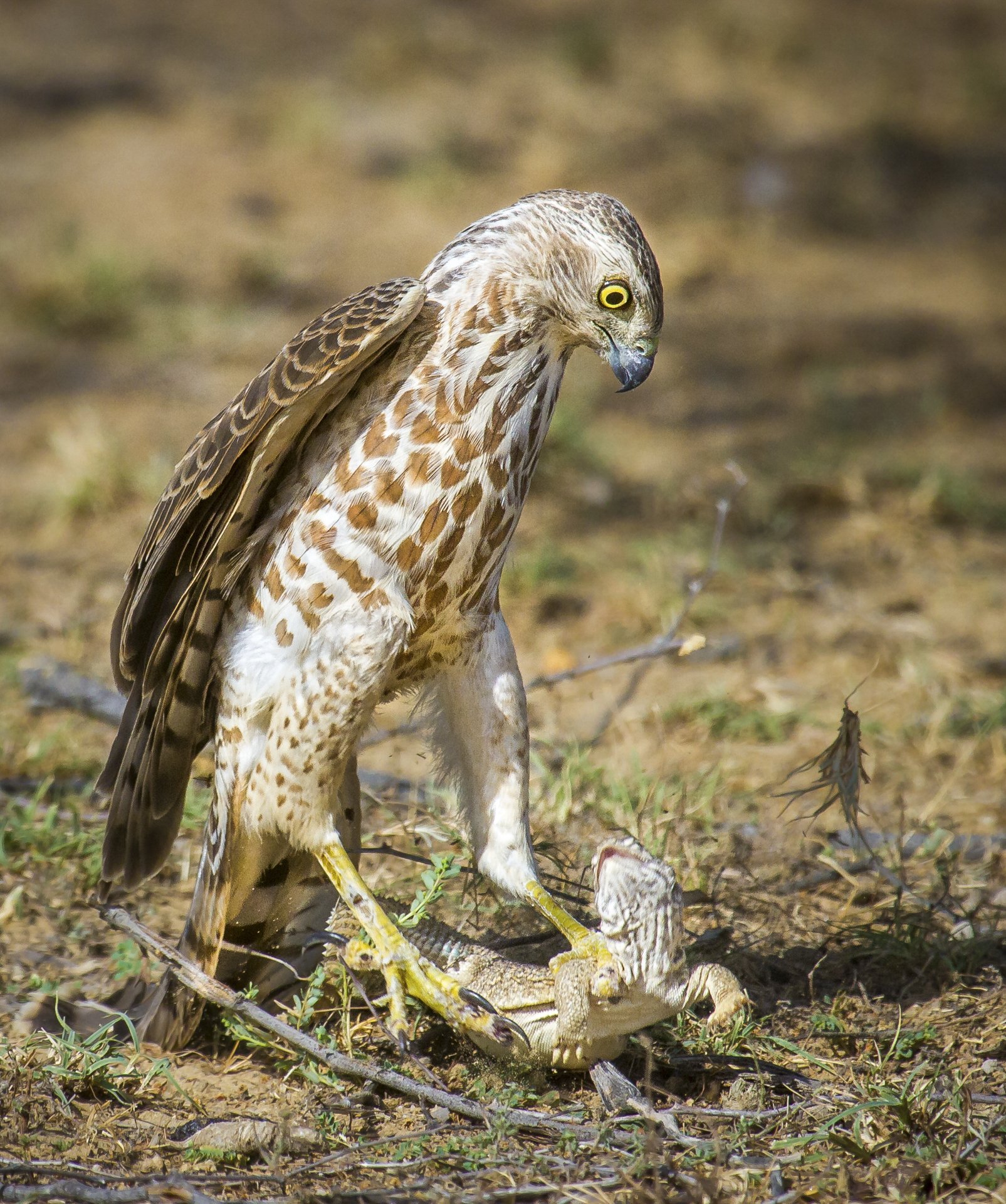
Shikra with a spiny-tailed lizard
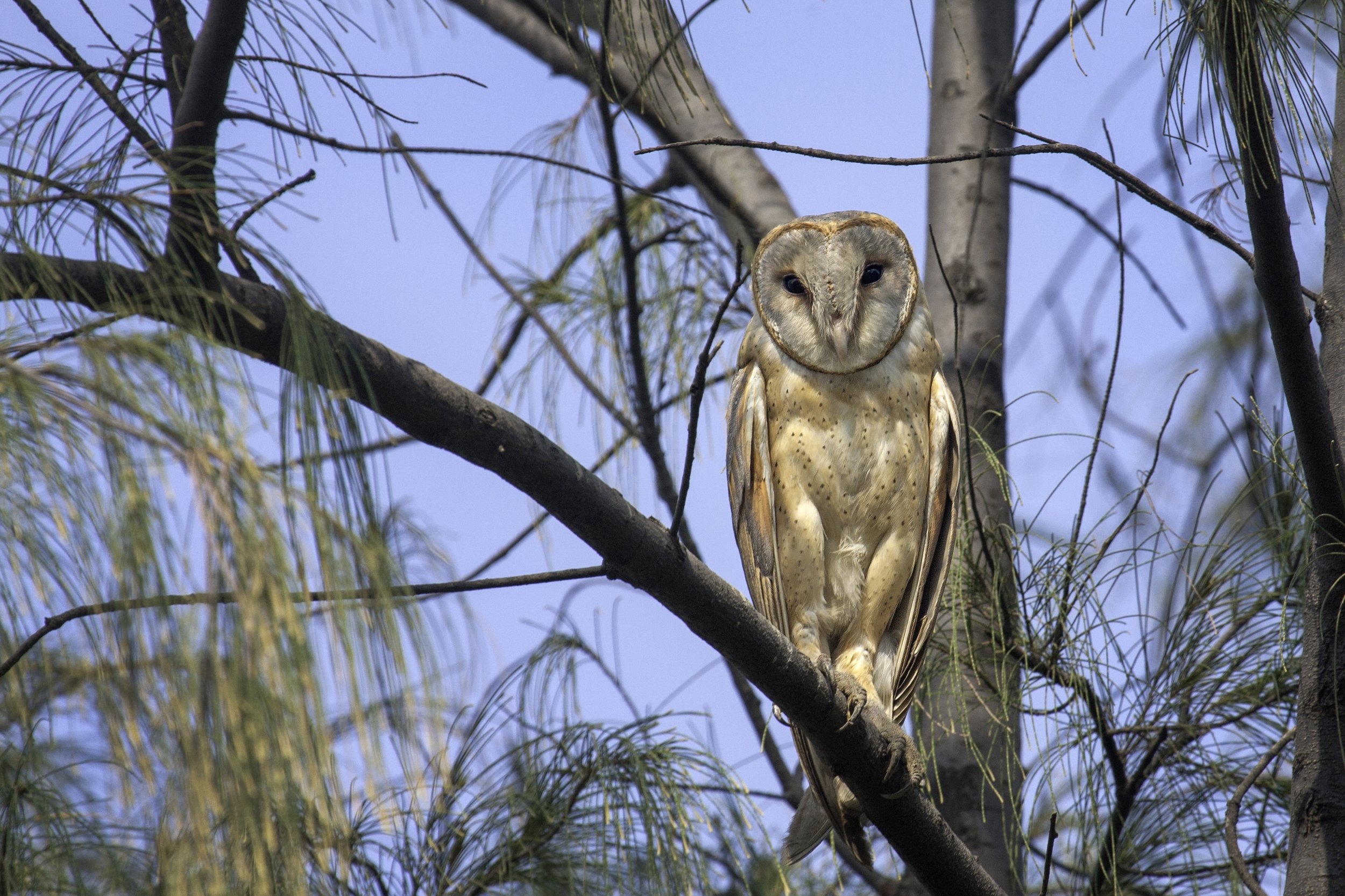
Barn owl
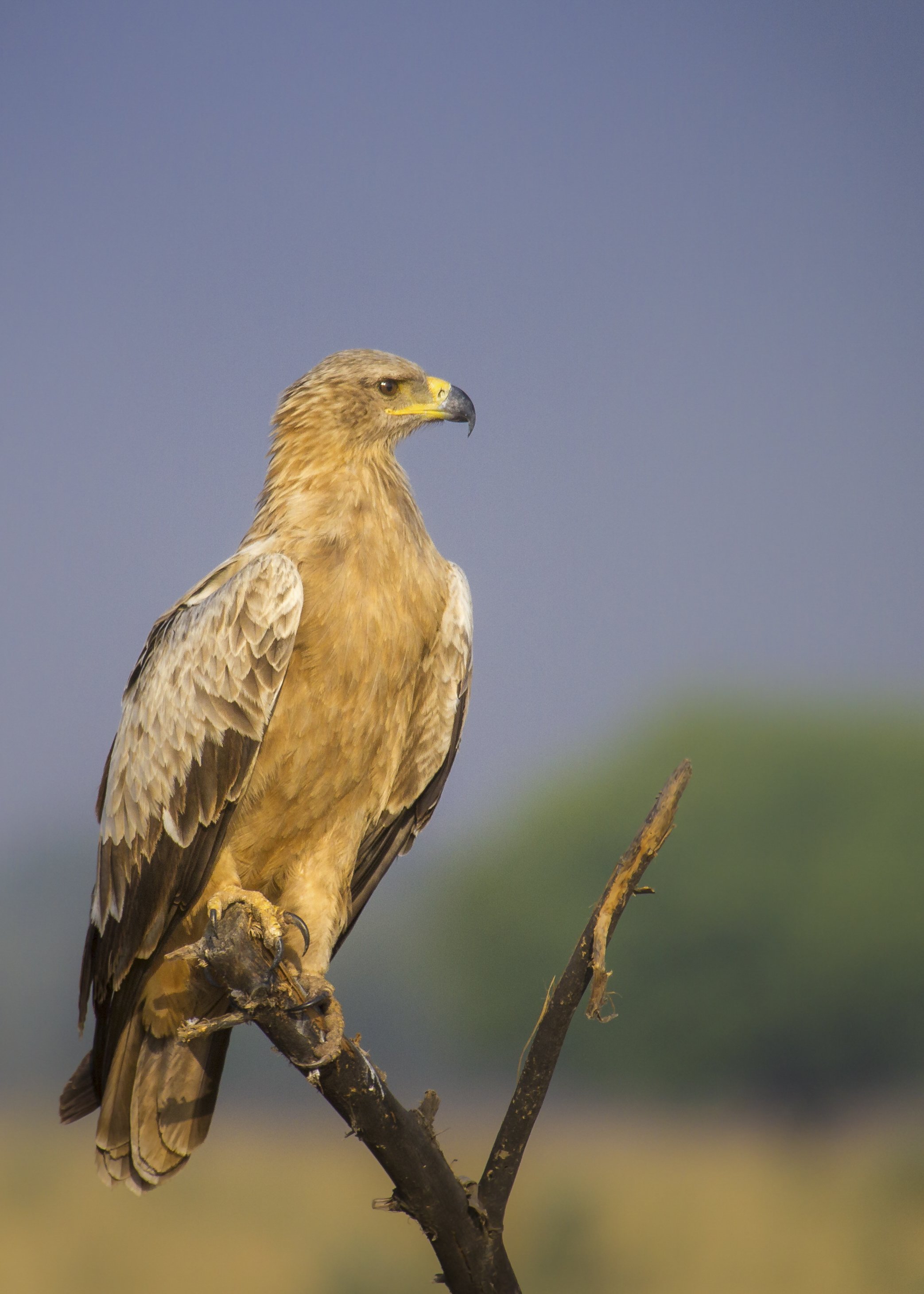
Tawny eagle
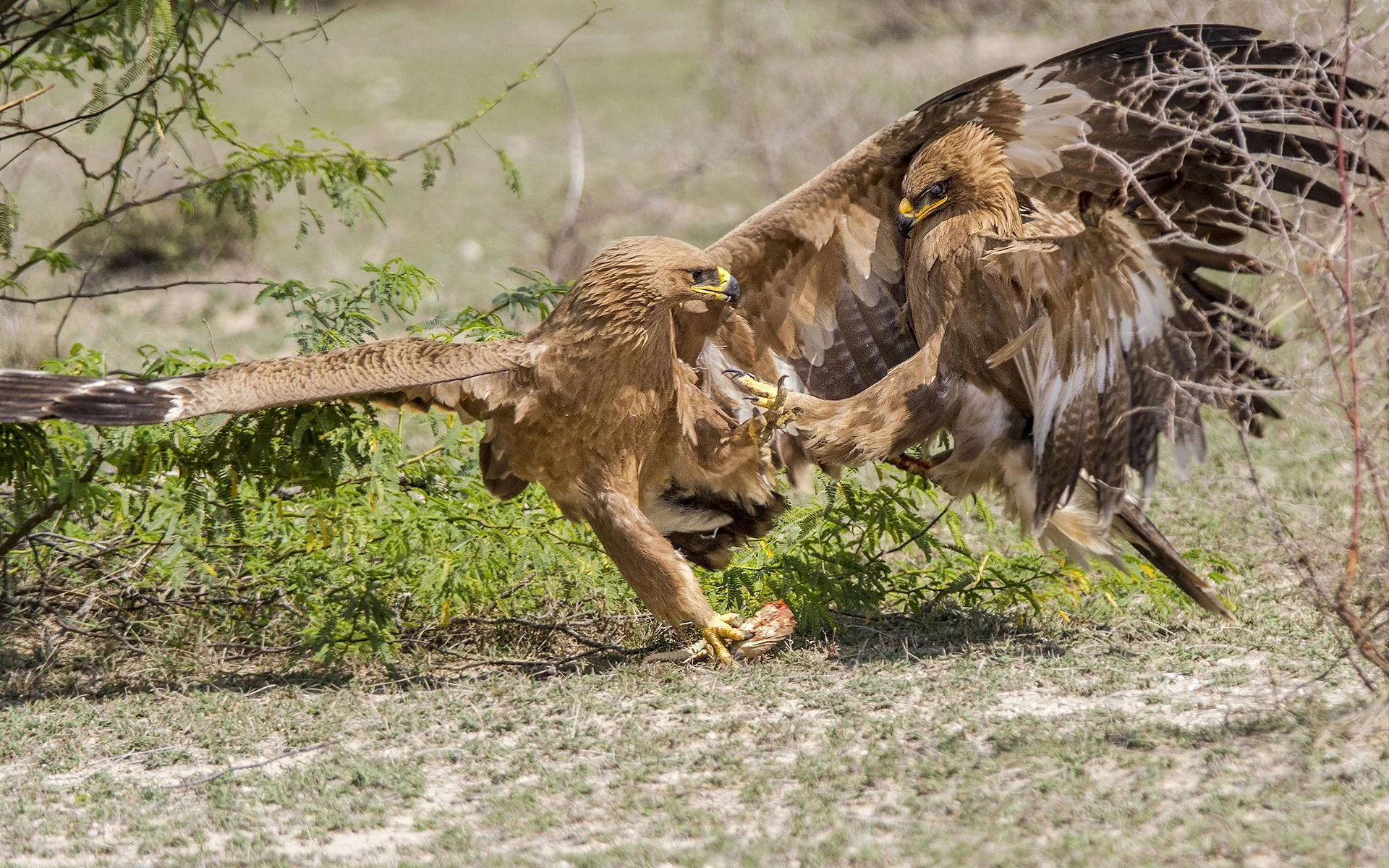
Steppe eagles
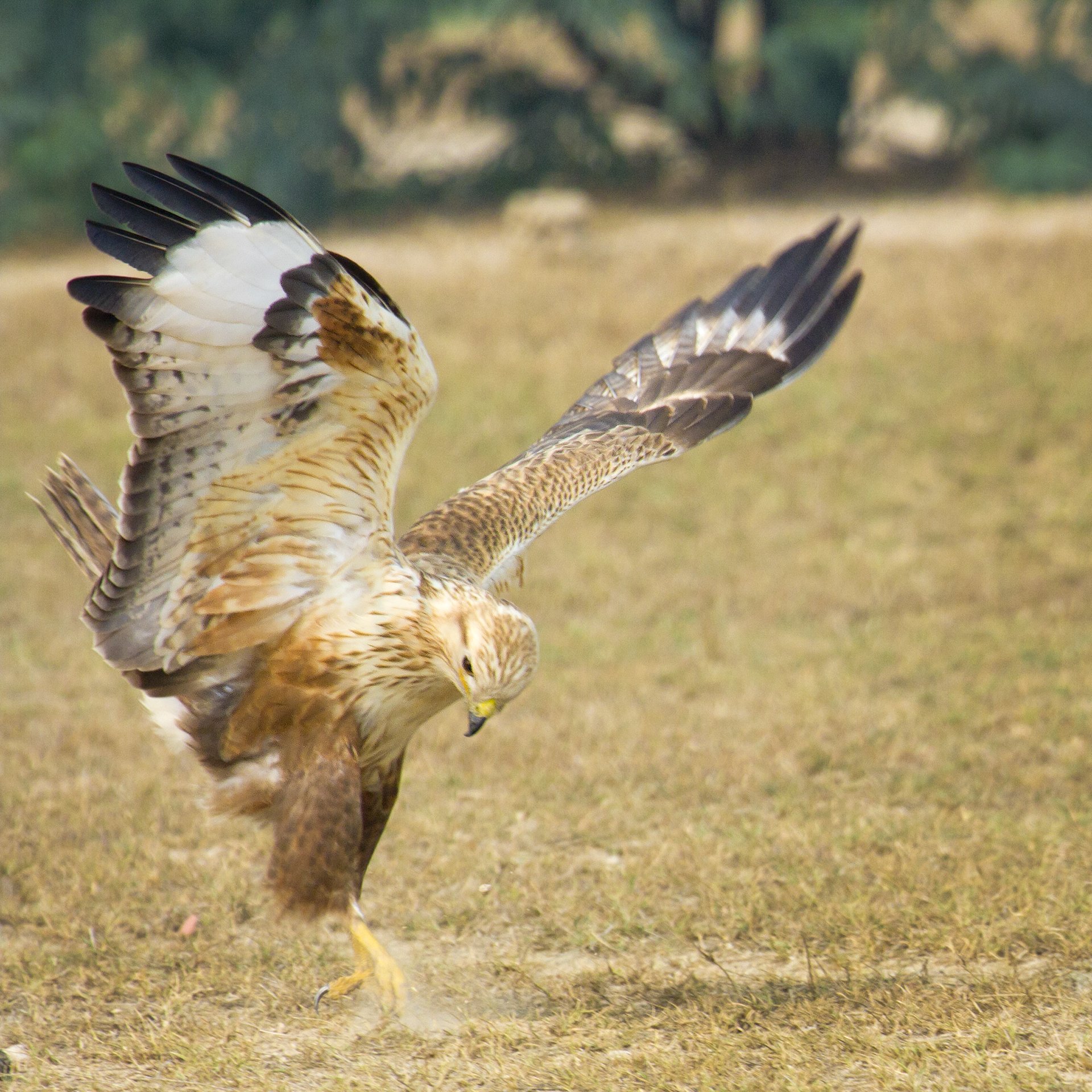
Long-legged buzzard
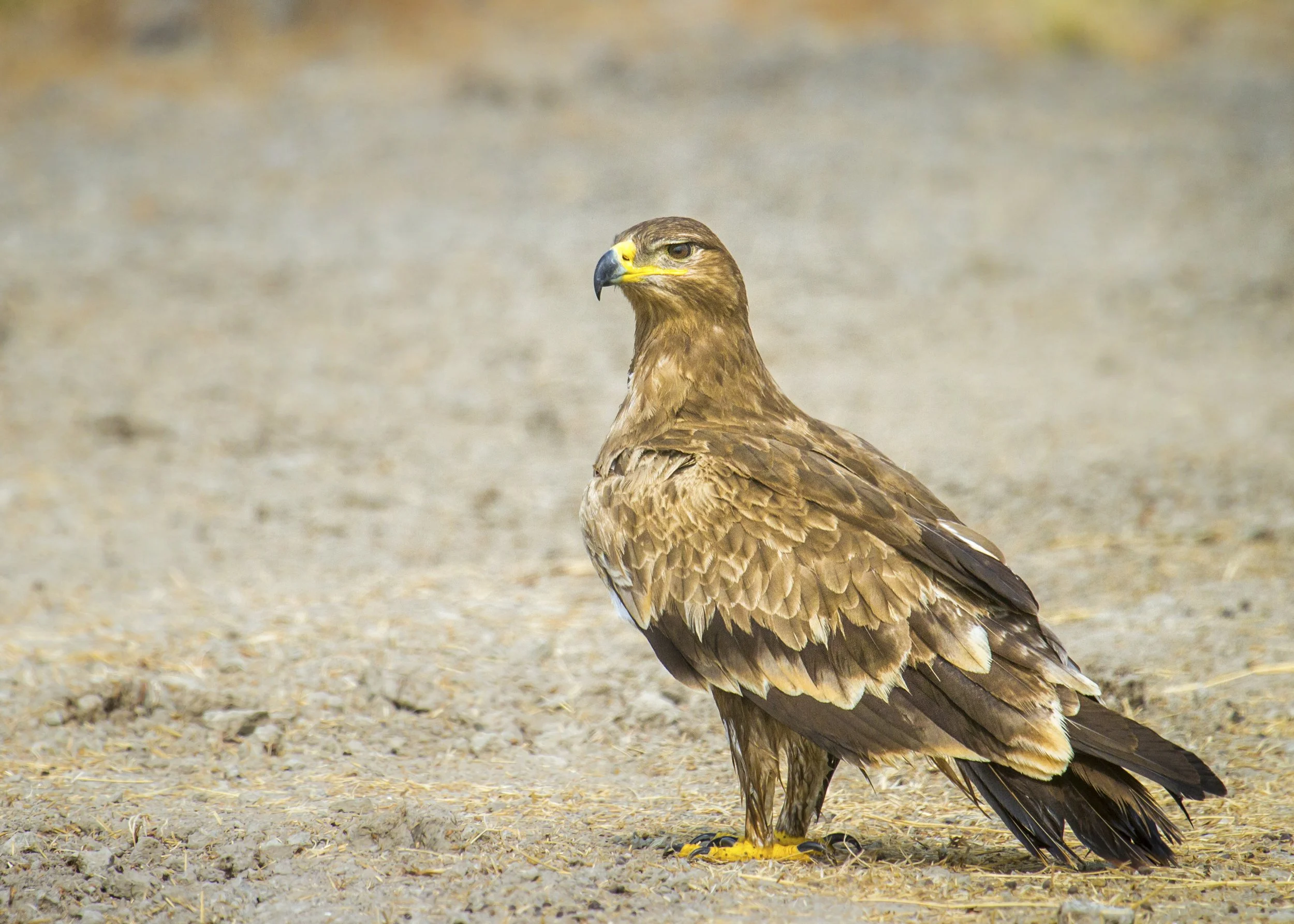
Steppe eagle
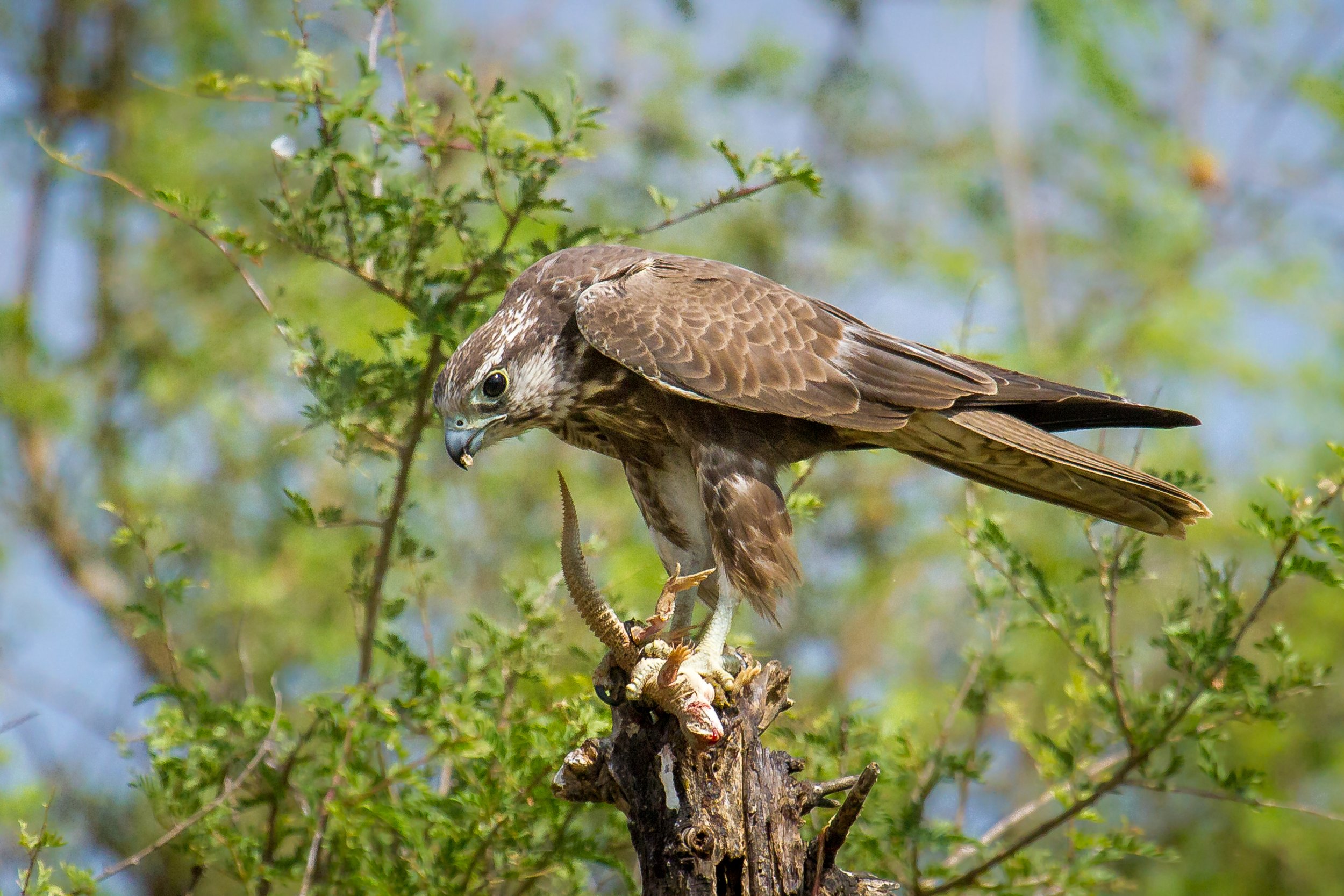
Laggar falcon with a spiny-tailed lizard
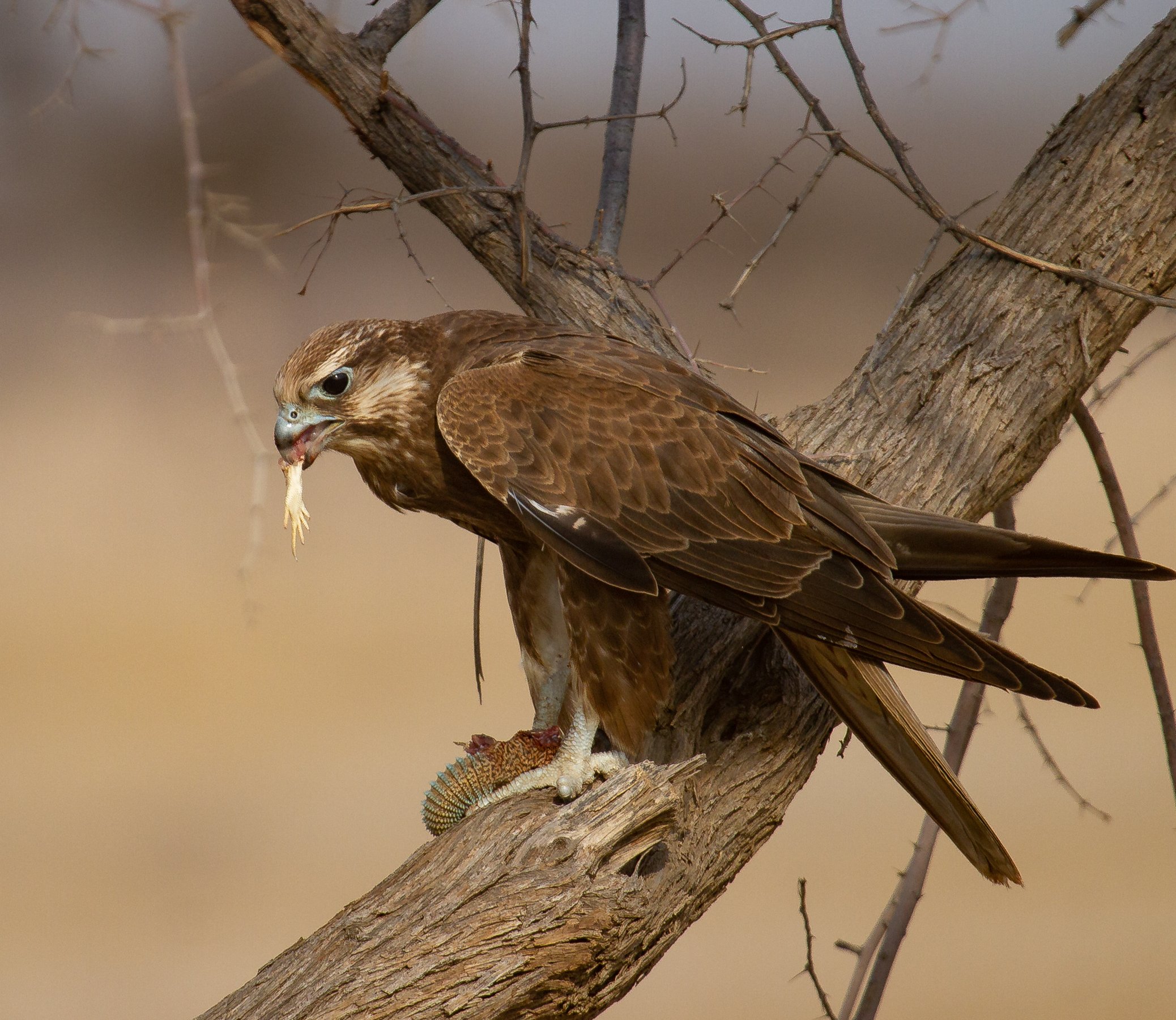
Laggar falcon with a spiny-tailed lizard
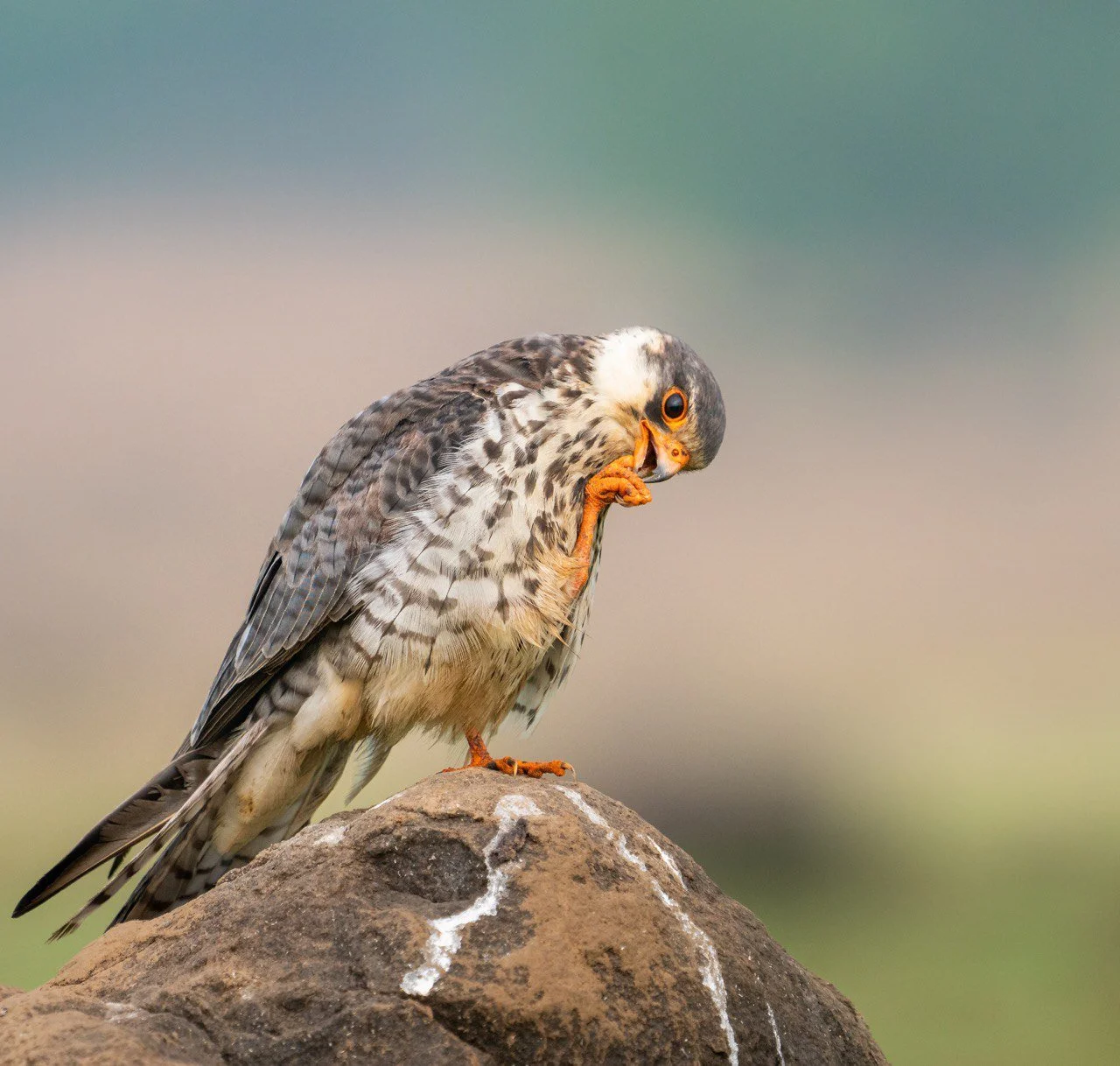
Amur falcon
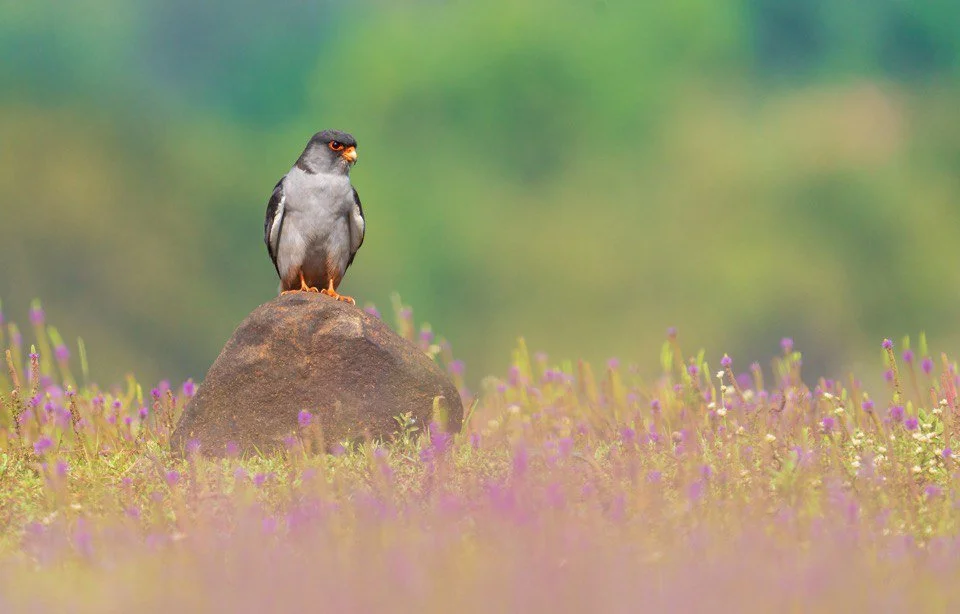
Amur falcon
Cats, canids and other carnivores
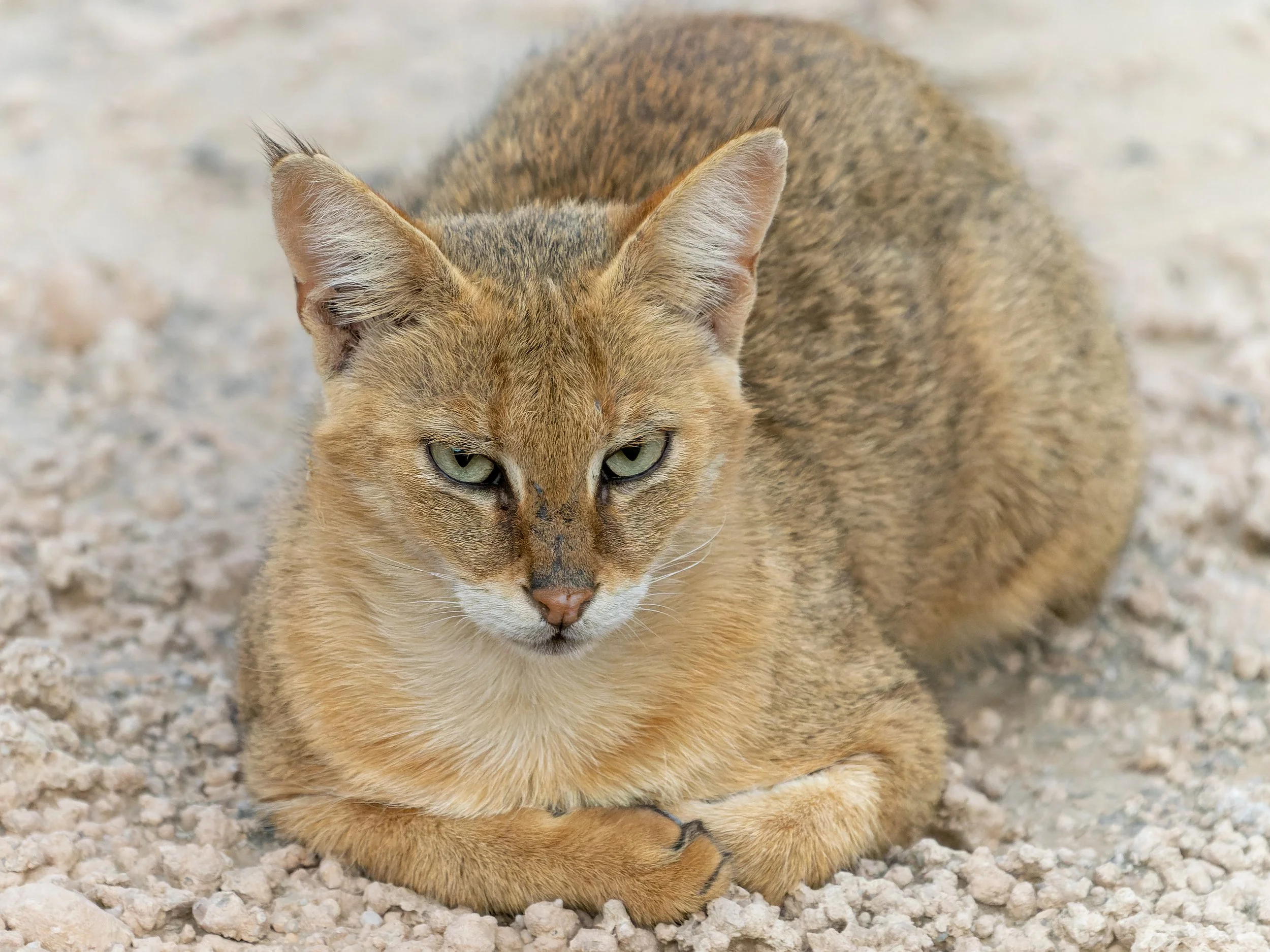
The abundance of prey also attracts jungle cats, desert cats, foxes, wolves, jackals and hyenas.
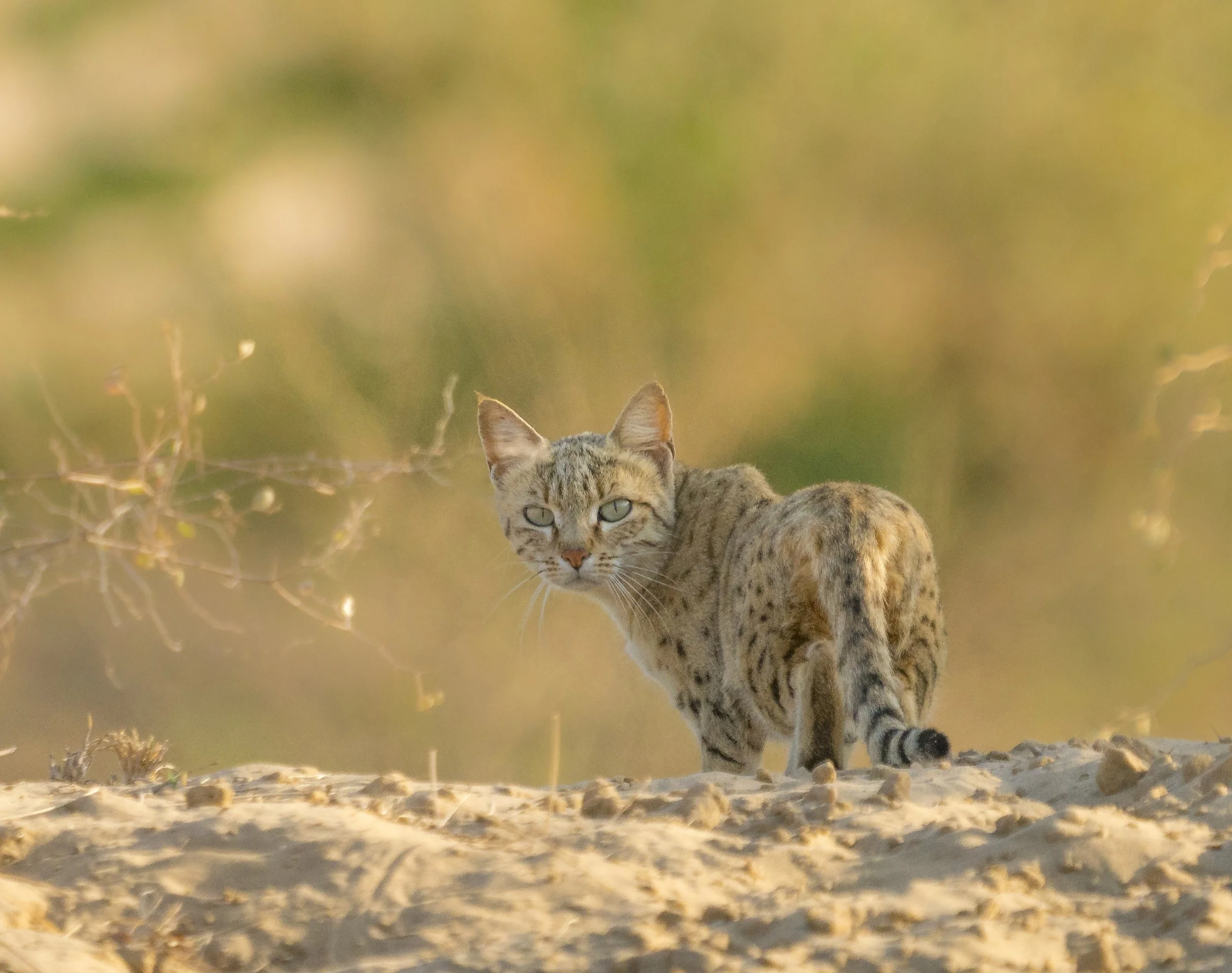
Desert cat
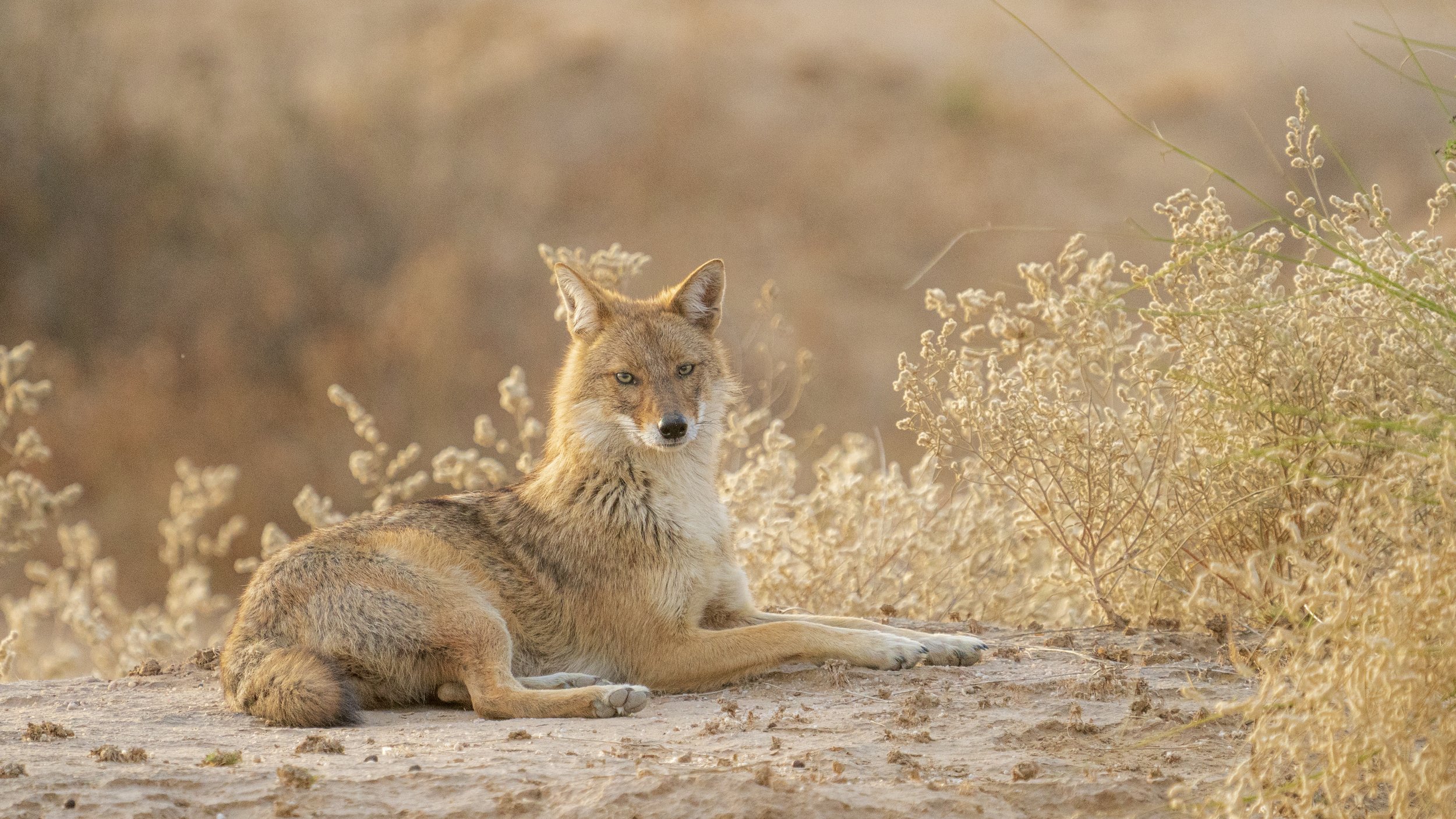
Indian jackal
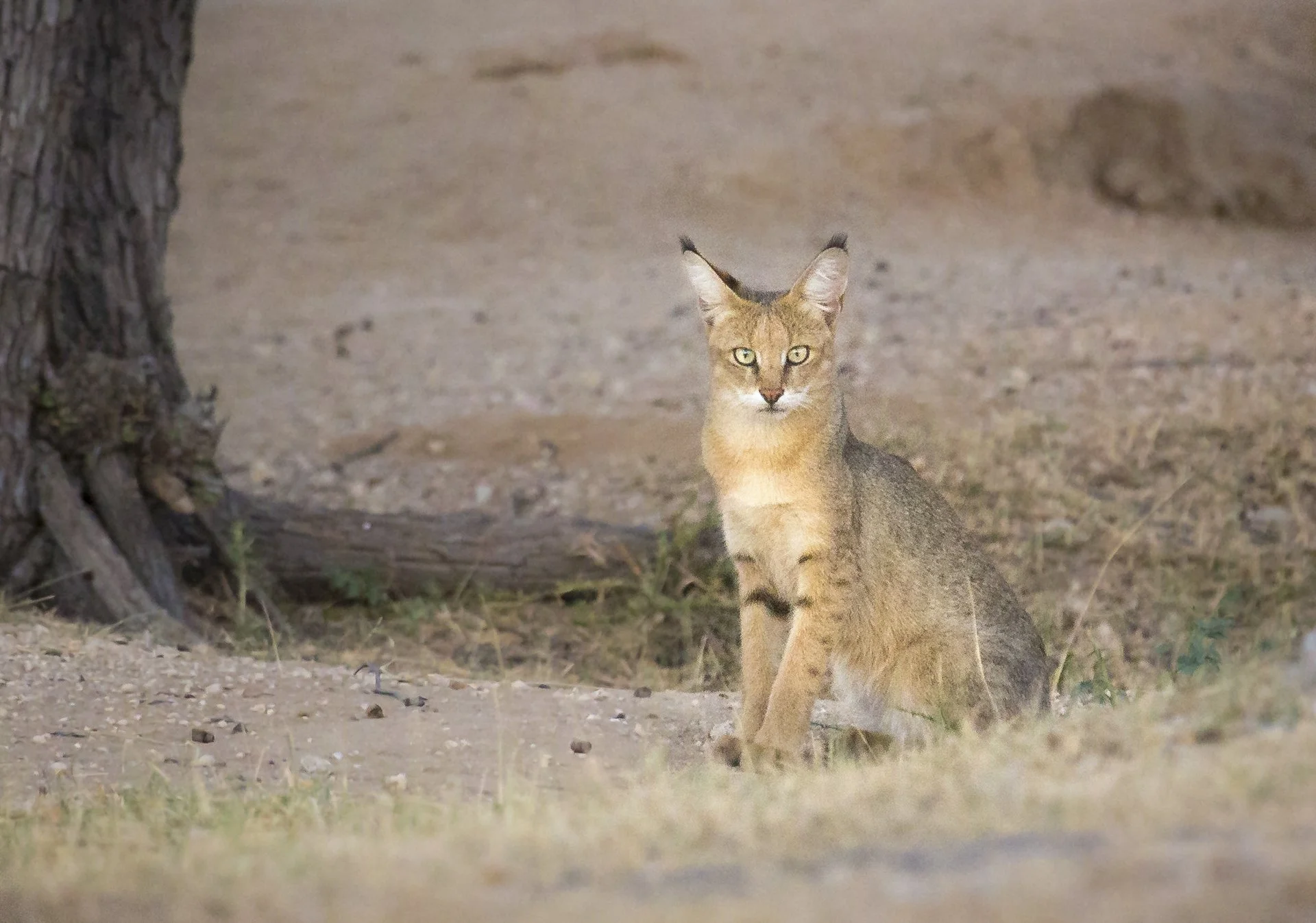
Jungle cat
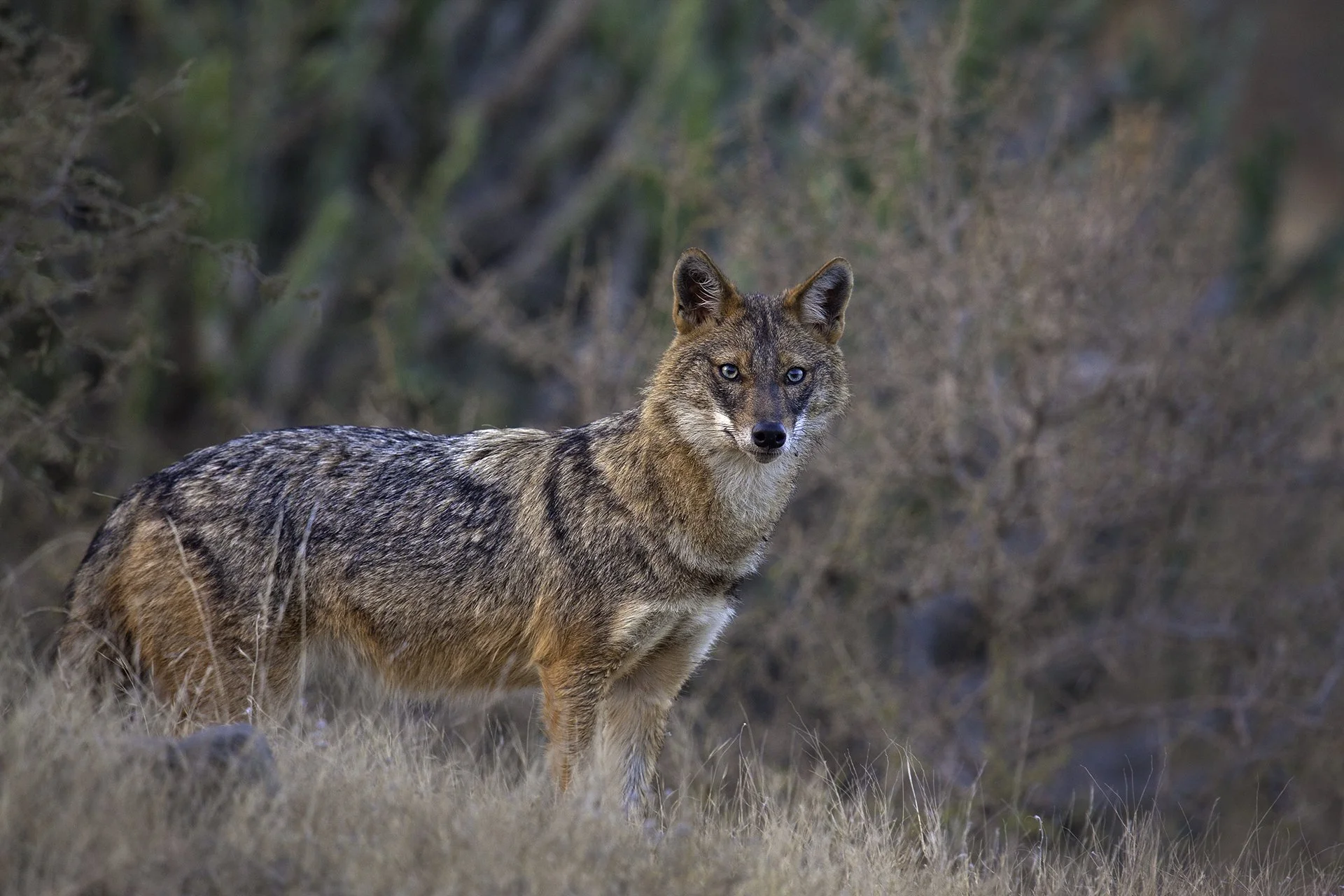
Indian jackal
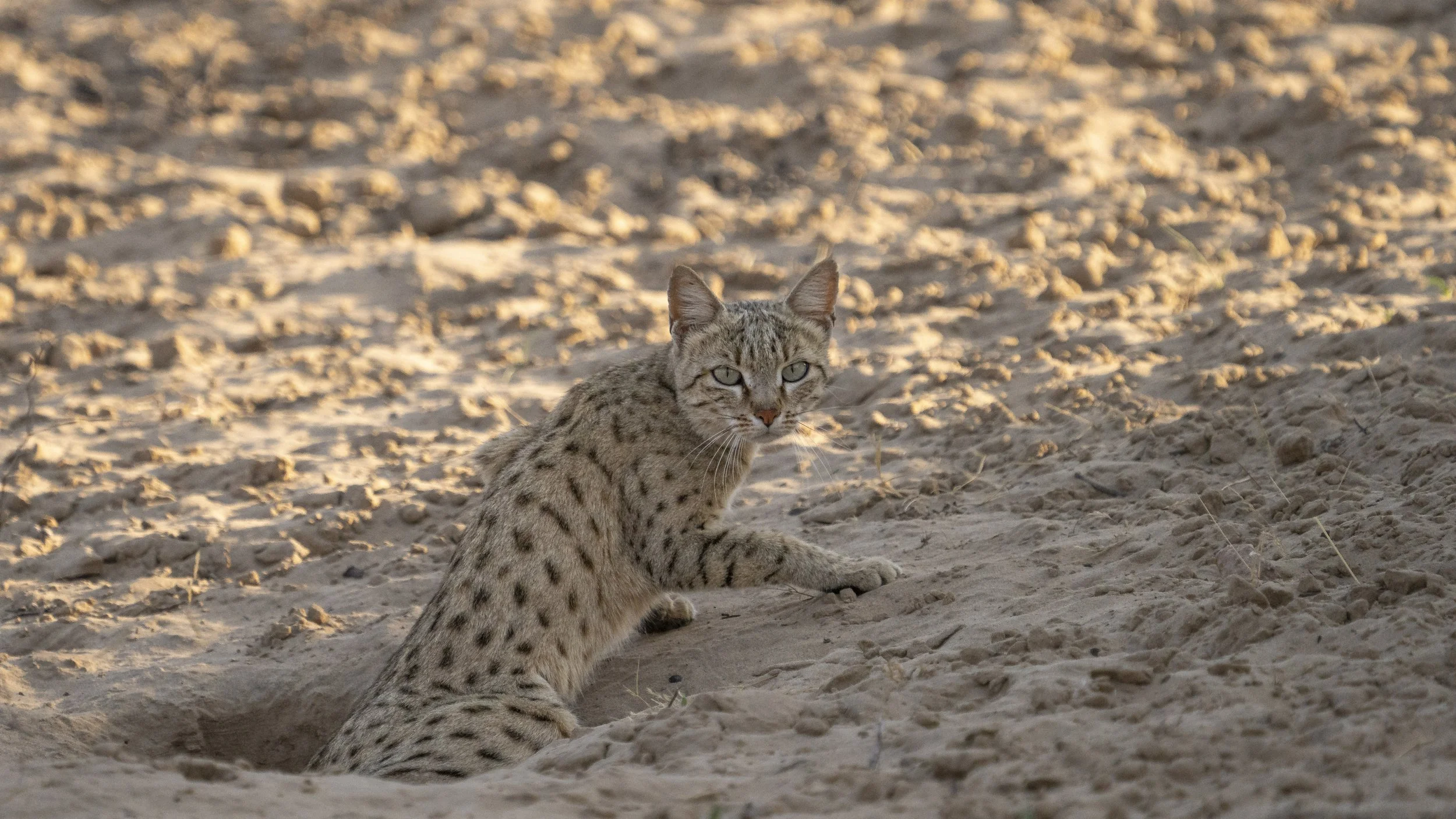
Desert cat
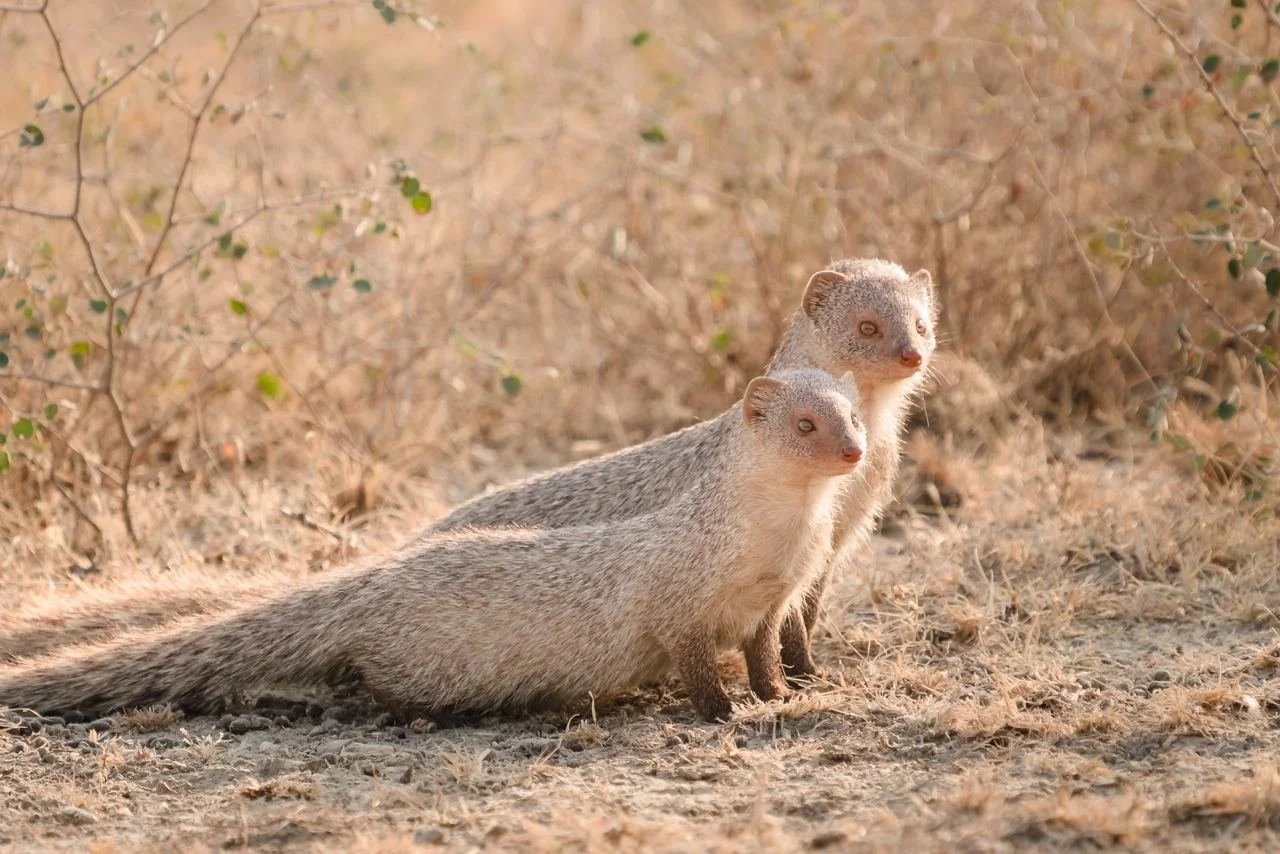
Grey mongoose
Hiding in plain sight
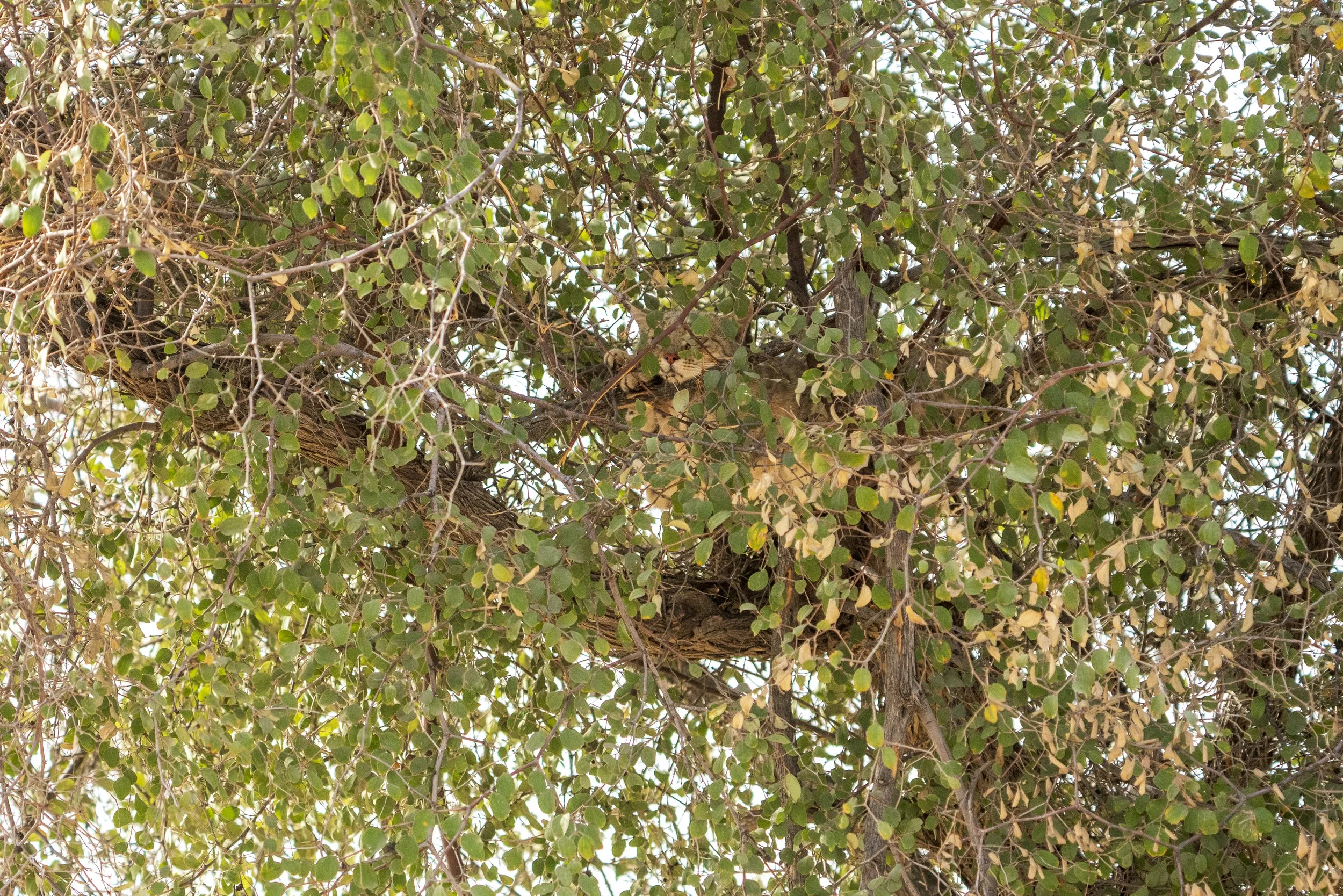
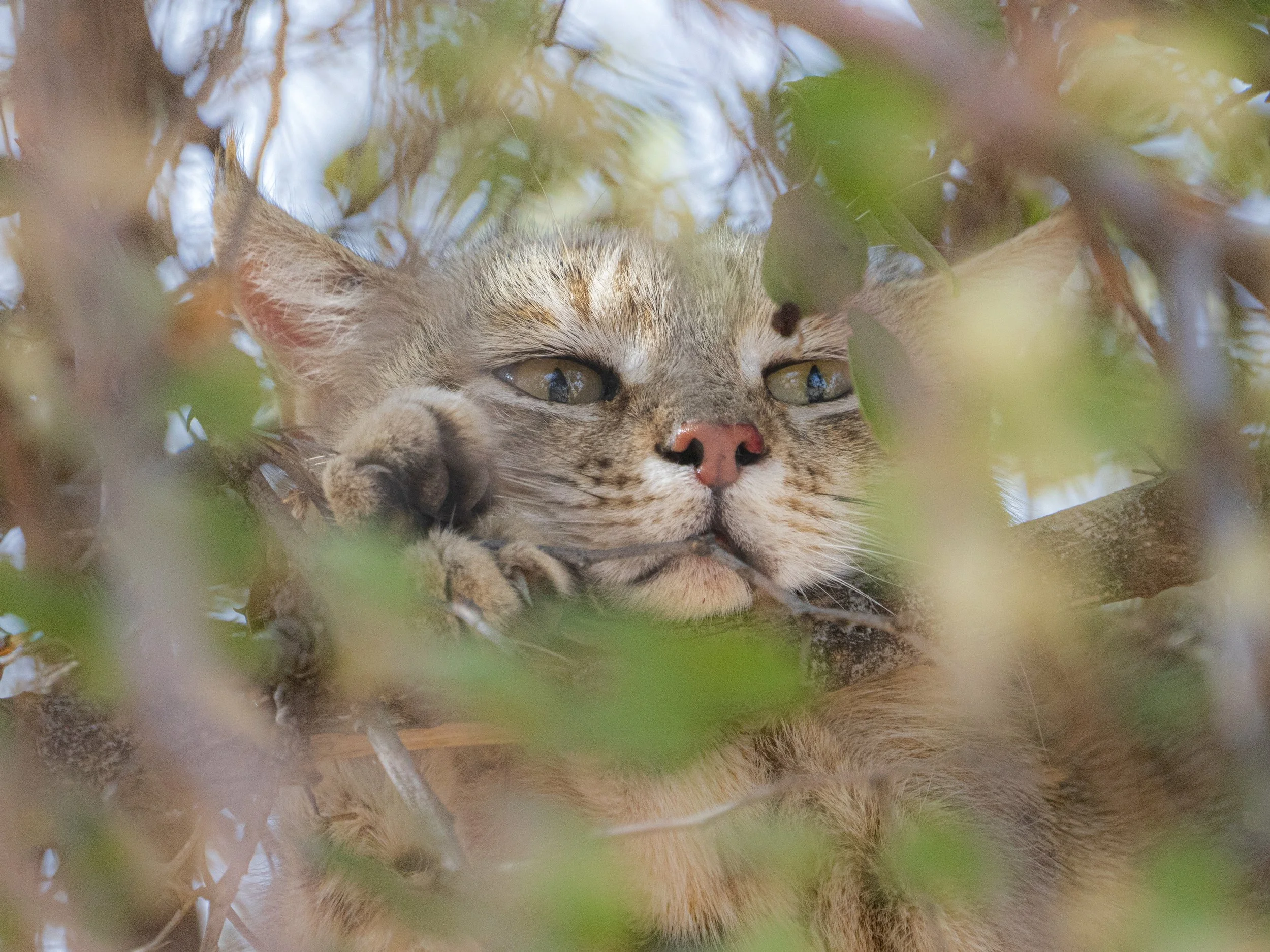
Though grasslands are flat and sparsely vegetated, it doesn’t necessarily make spotting animals easier. The animals, especially predators, have adapted really well to not be seen. I drove around this tree in a grassland near Bikaner all through the morning, and only around noon saw the desert cat that was chilling on it all along. Of course, once you see it, it’s right there. But it makes me wonder how often I’ve driven by a bush or tree which hid an animal that did not want to show up.
The apex predator
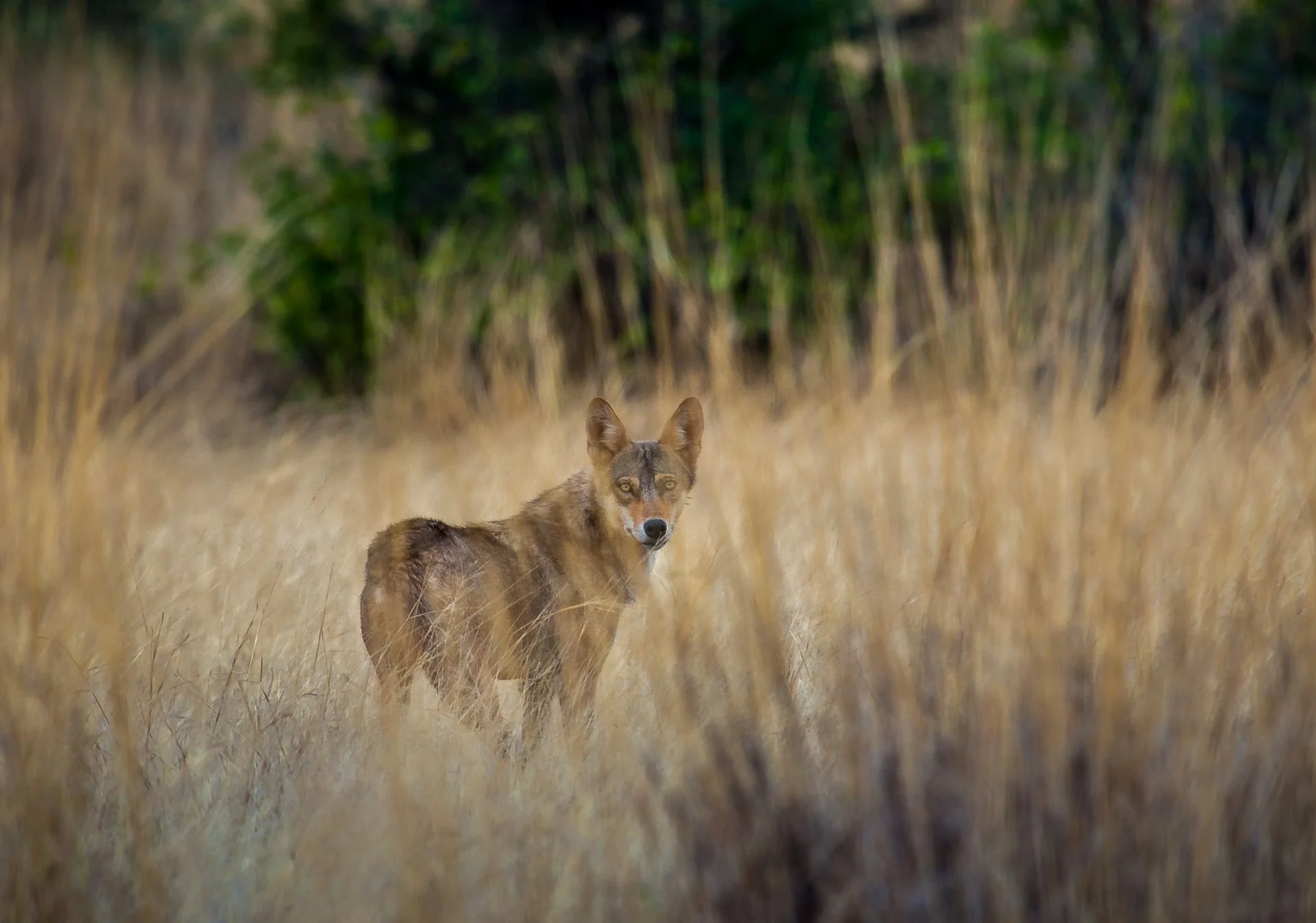
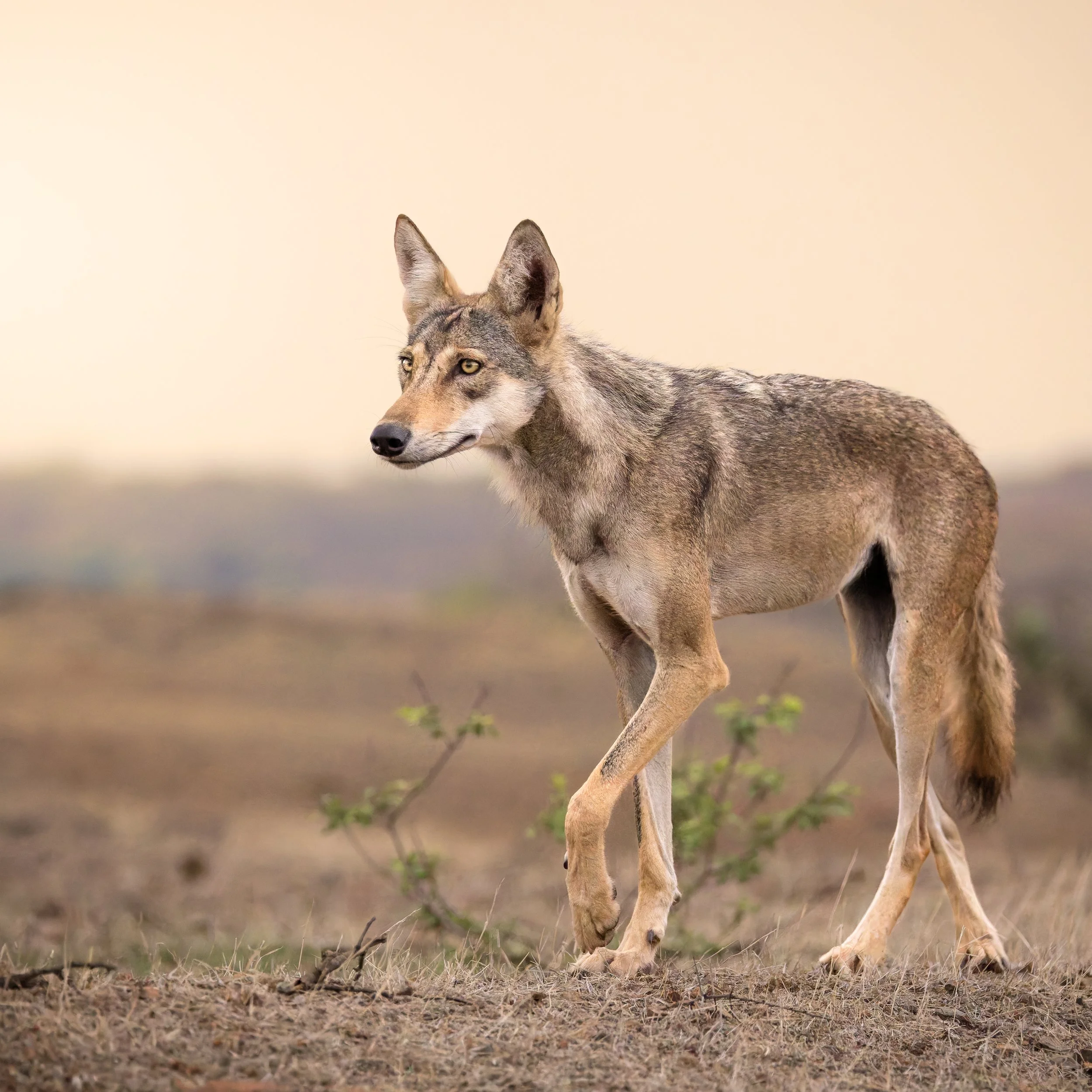
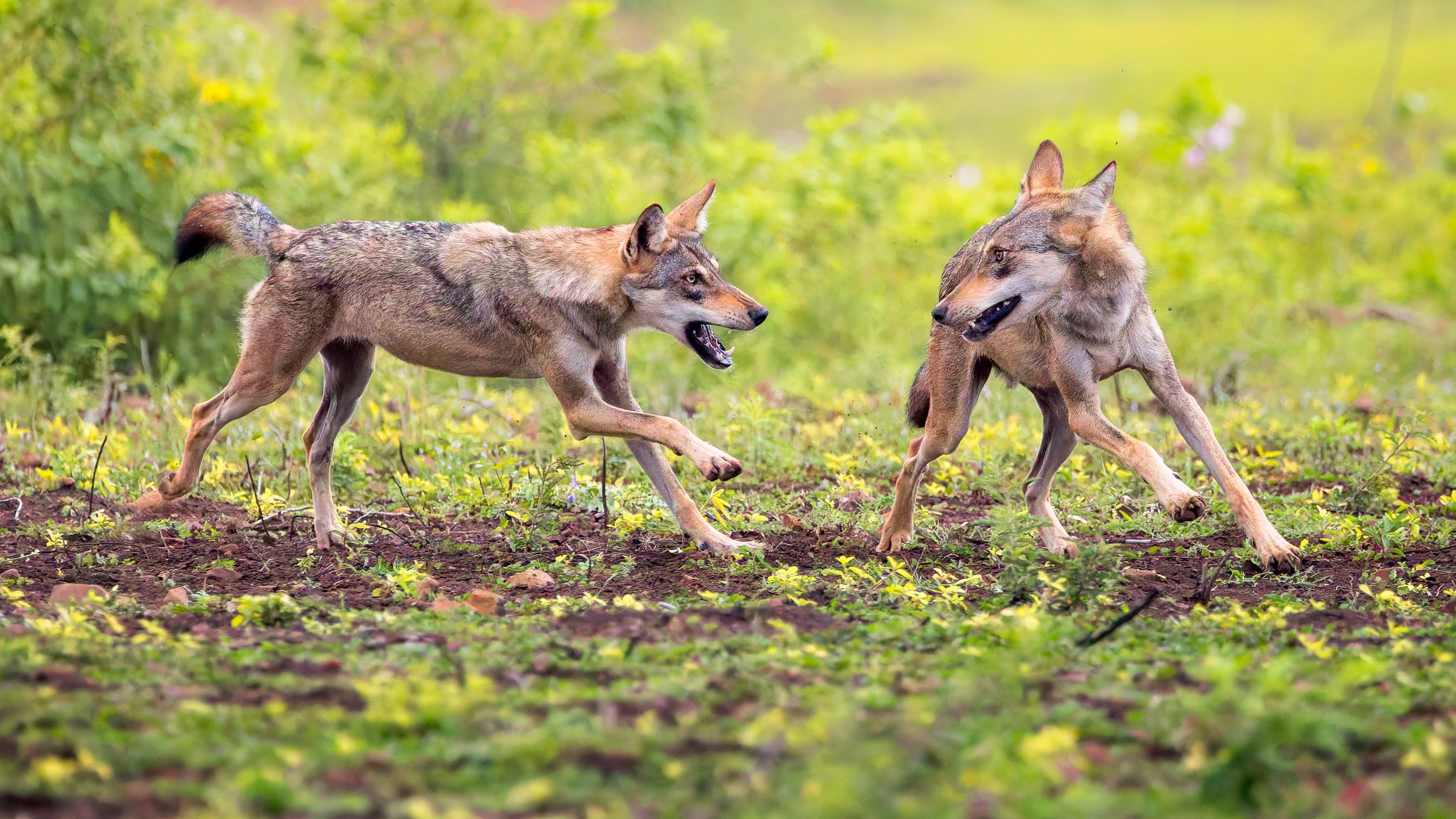
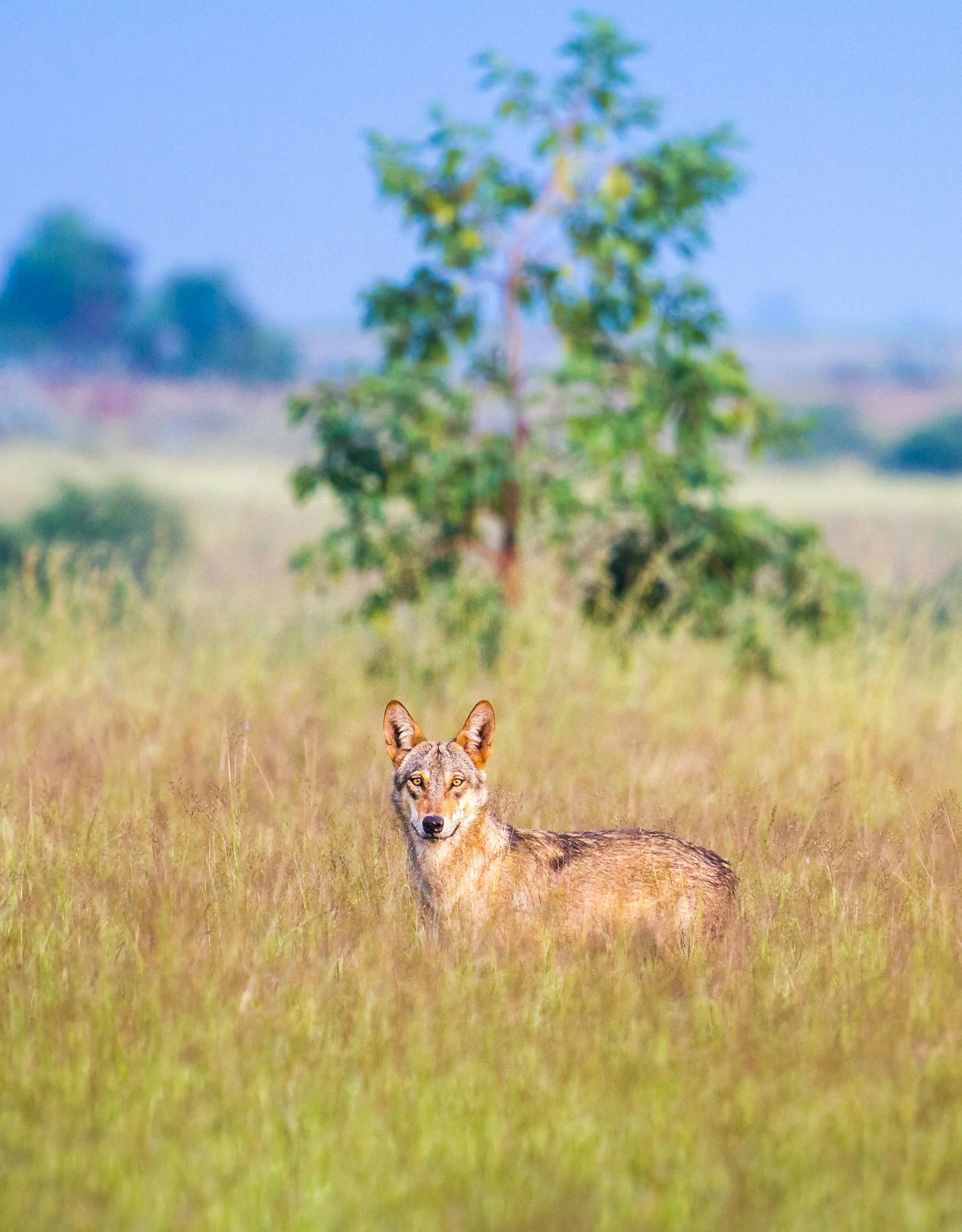
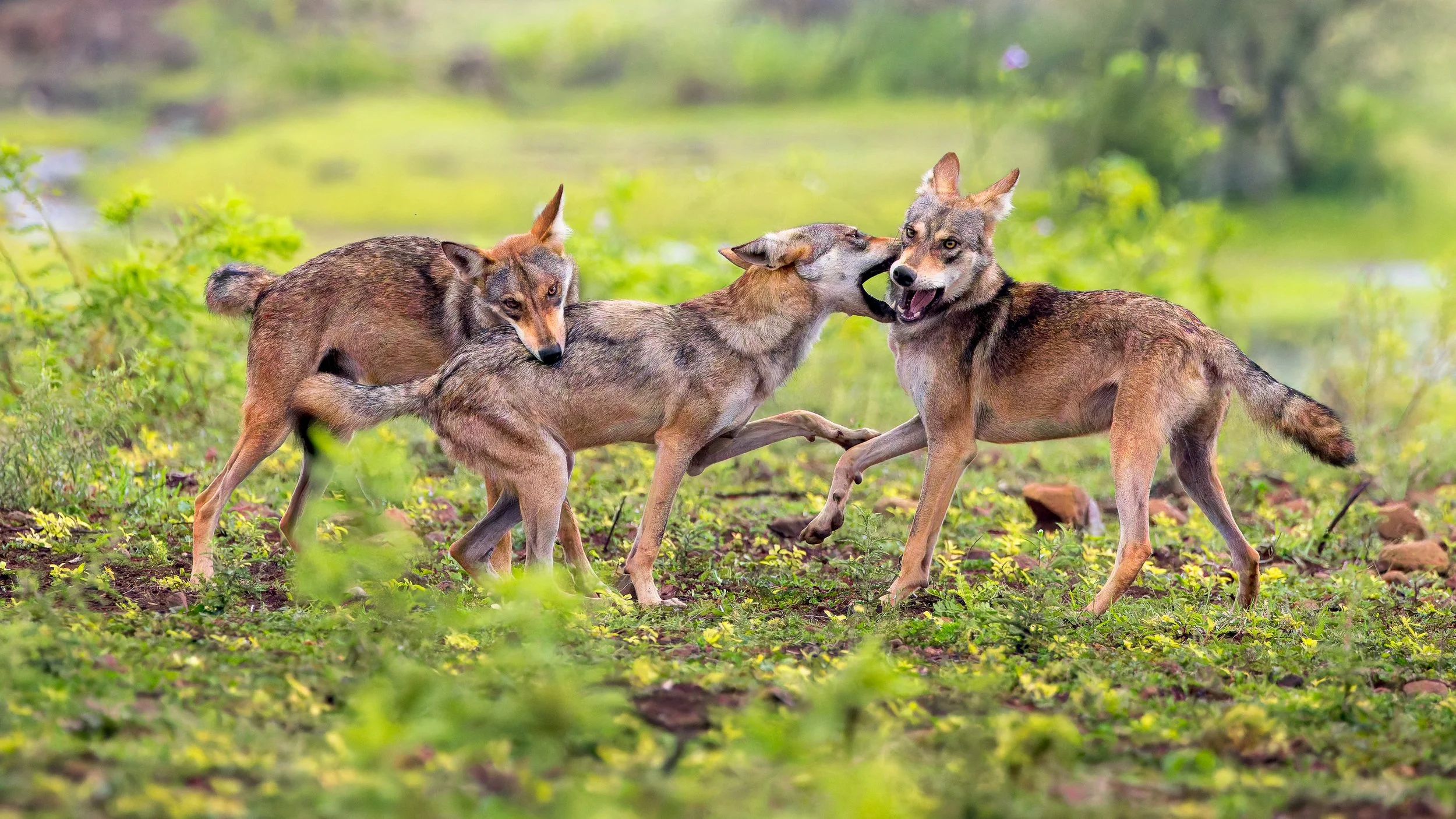
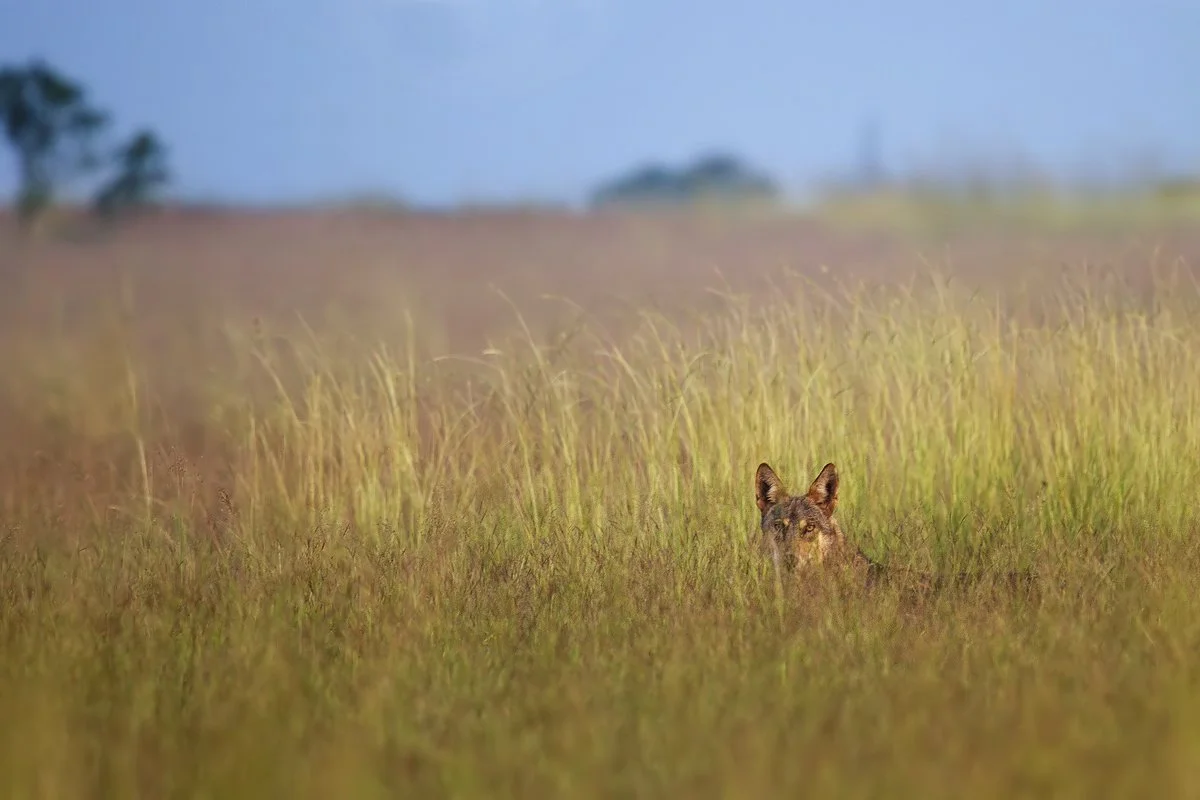
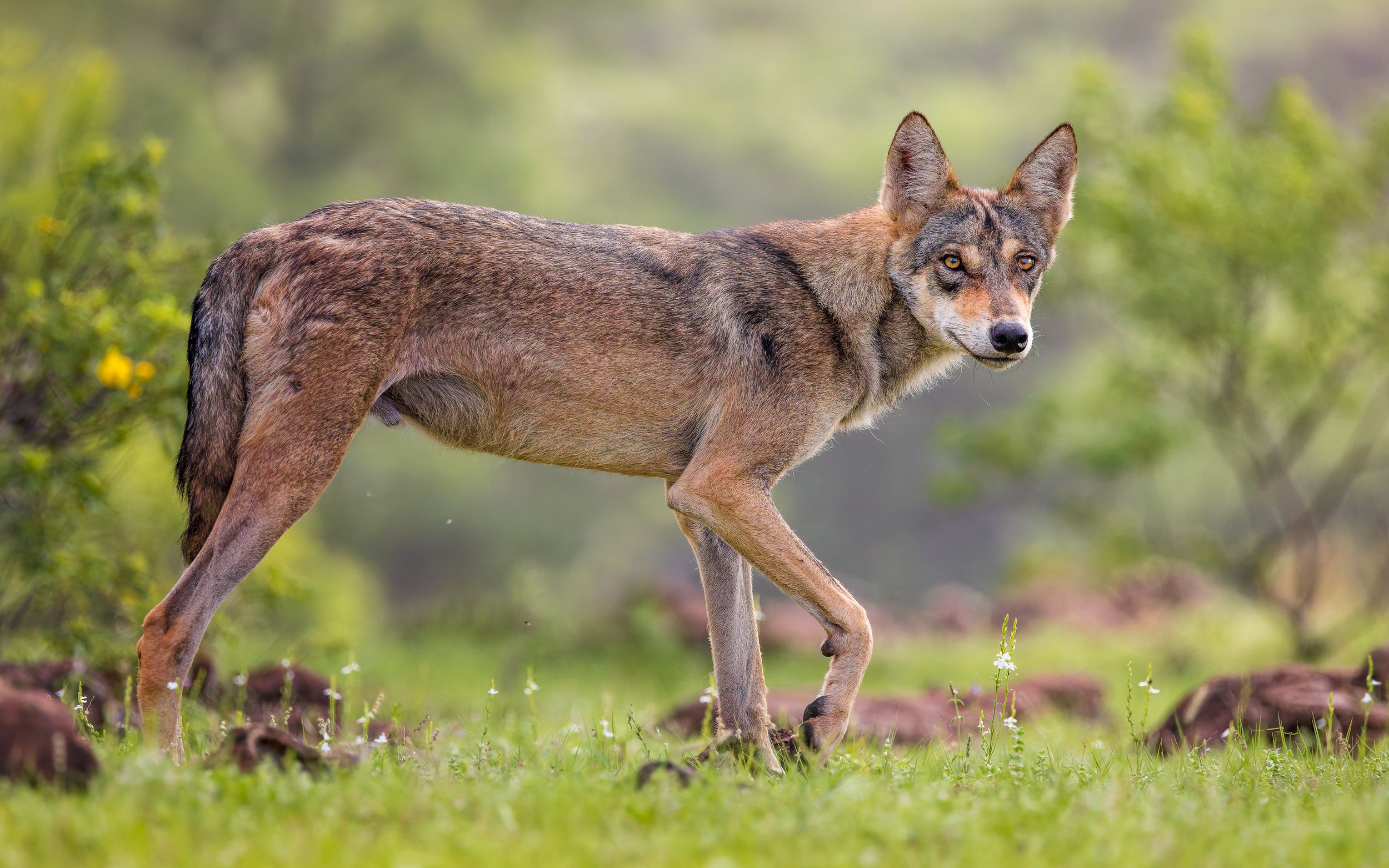
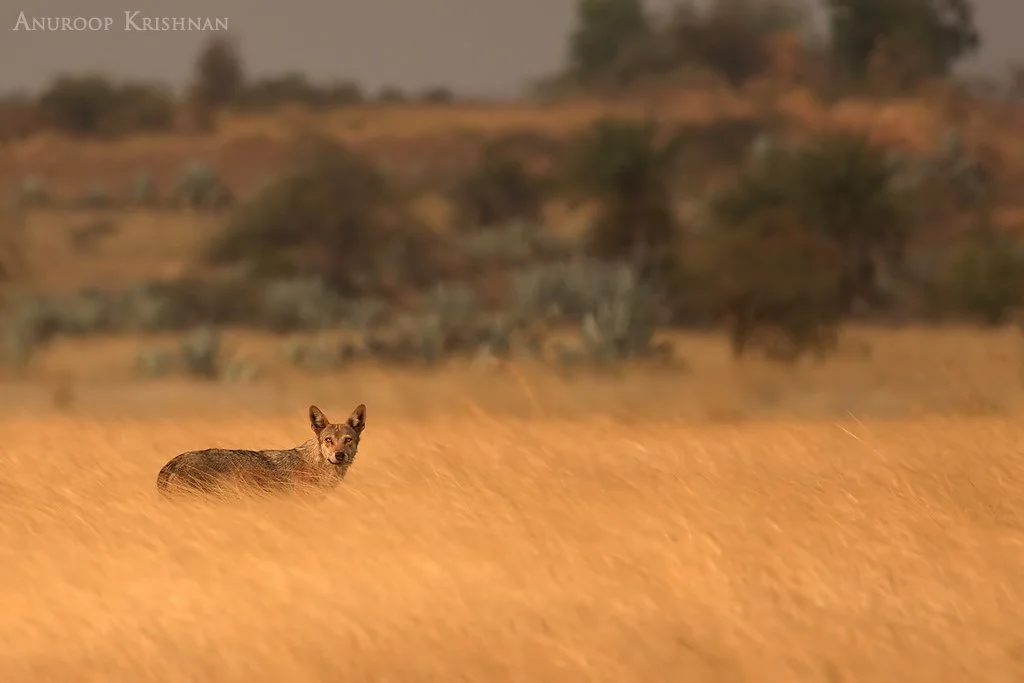
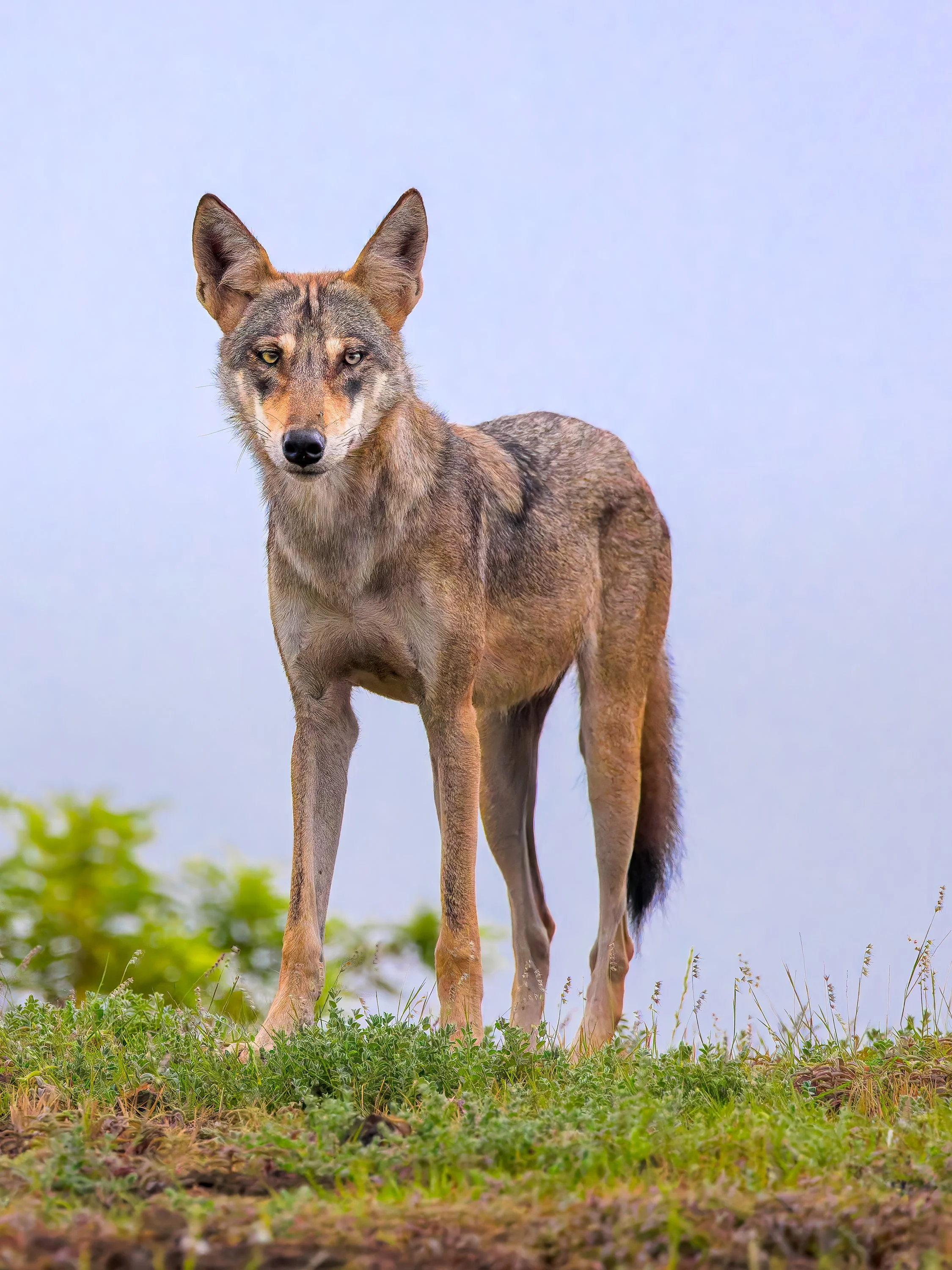
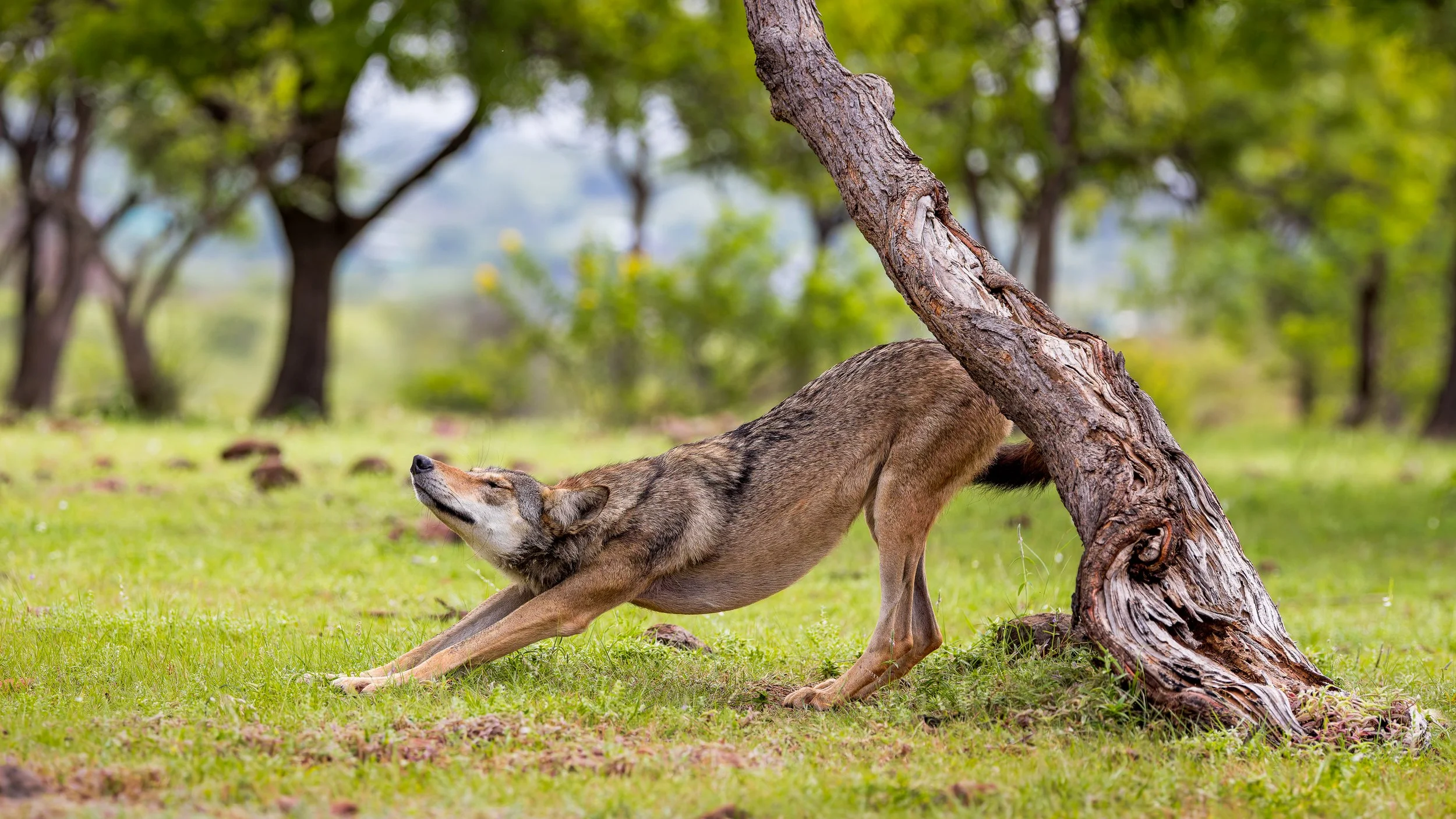
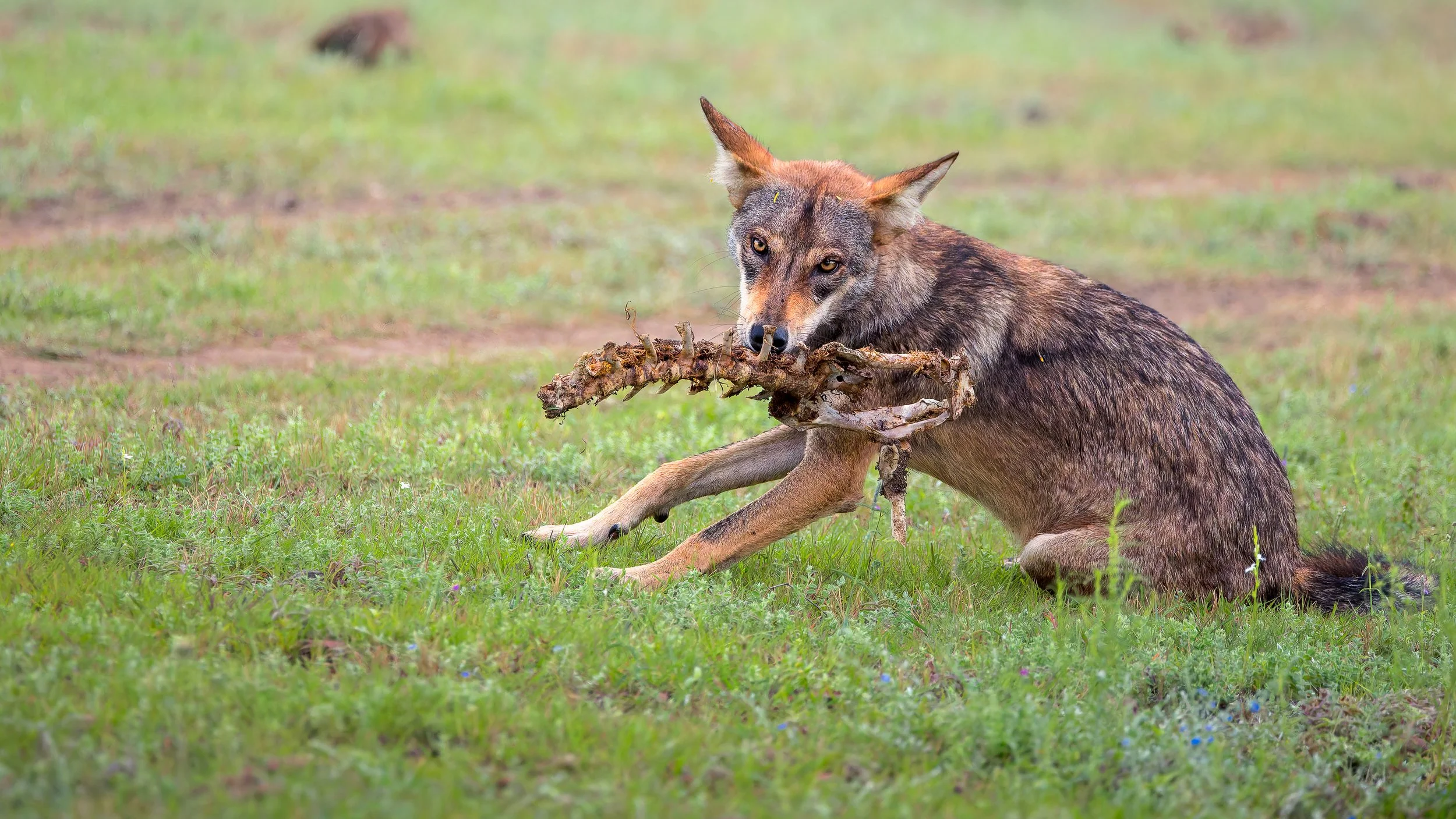
In November 2009, I was driving through Rollapadu, a grassland in Andhra Pradesh, looking for harriers. I thought I saw a jackal cross the road in the rear view mirror, so I drove back. I stepped out of the car to look for it - something shouldn’t have done in retrospect. I walked out of the road, and onto the tall grass, into which the jackal had disappeared. I was looking into the distance for a a silhouette.
To to my surprise, it was right in front of me, throwing a piercing stare through the grass.
And it was not a jackal.
Though the Indian wolf (Canis lupus) is the apex predator of the grassland, is it probably in more danger than it is a threat, with just about 3000 individuals across the country. The wolf needs grasslands and scrub - habitats that are labelled as ‘wastelands’. Only a small percentage of these habitats are protected. Even in protected grasslands, such as Rollapadu near Kurnool, or Katbanwadi near Pune, the home range of the wolves extends far beyond the areas earmarked for protection, bringing them in contact with livestock, people and feral dogs, all of which are a threat to their existence.
Indian Desert Fox
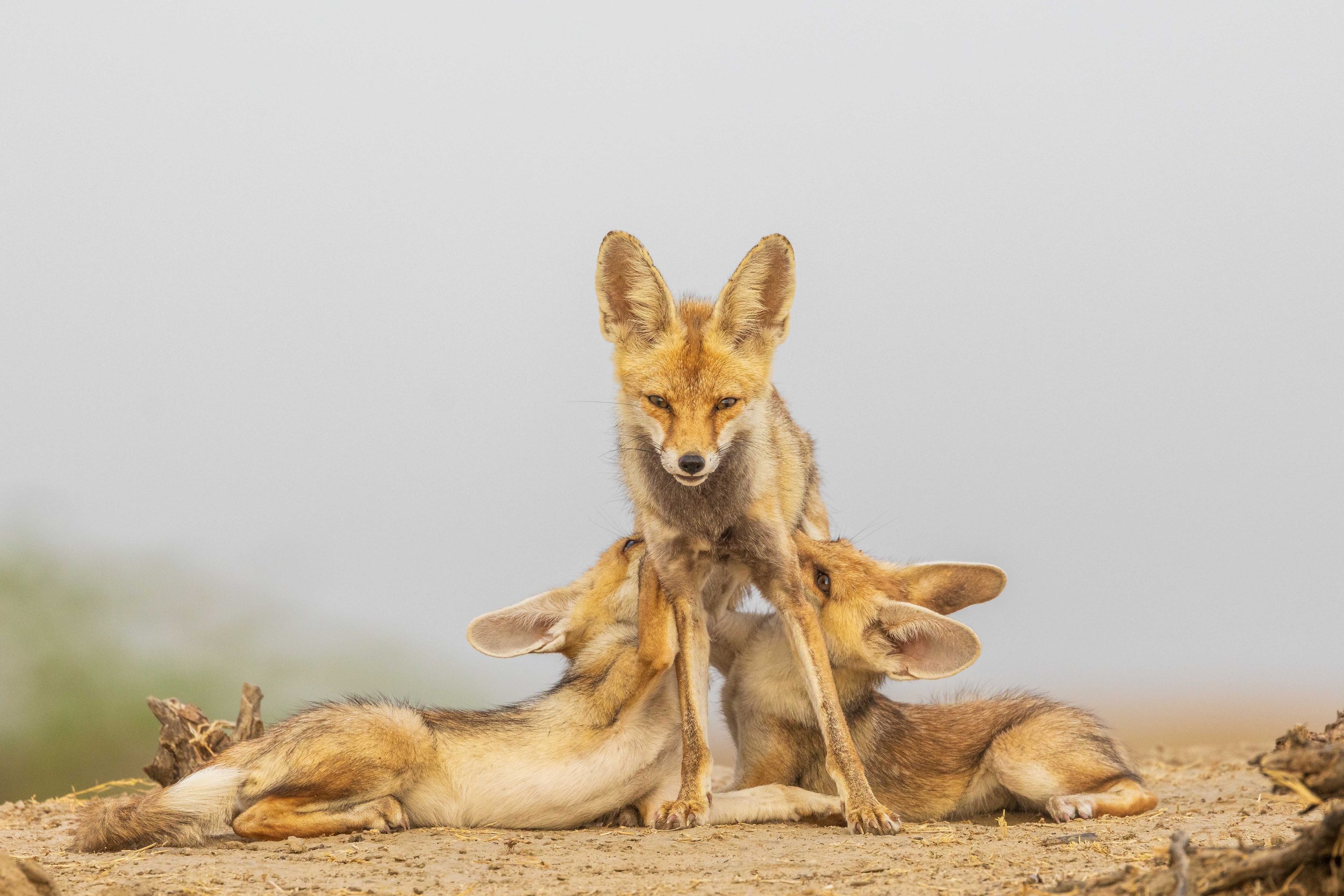
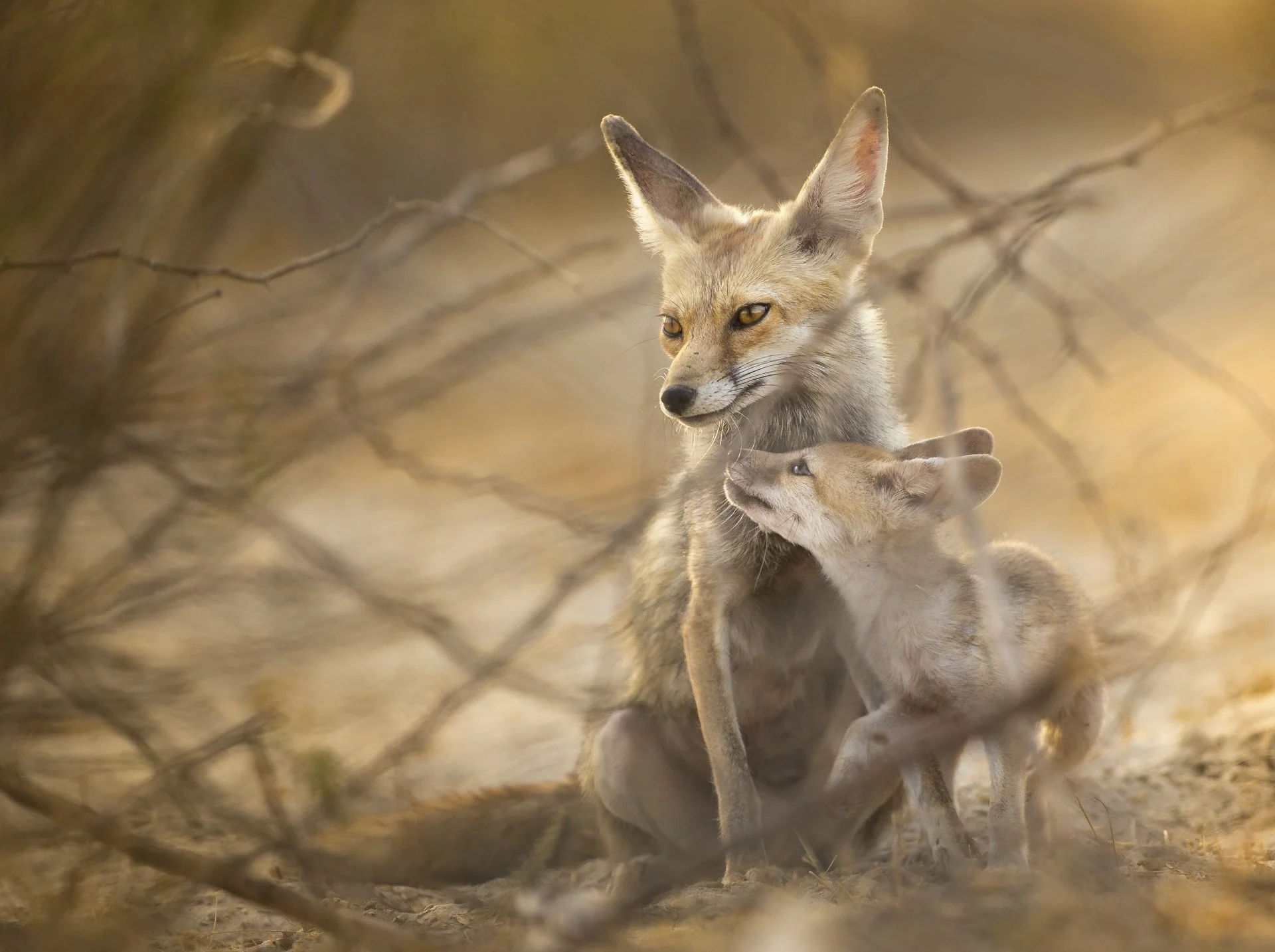
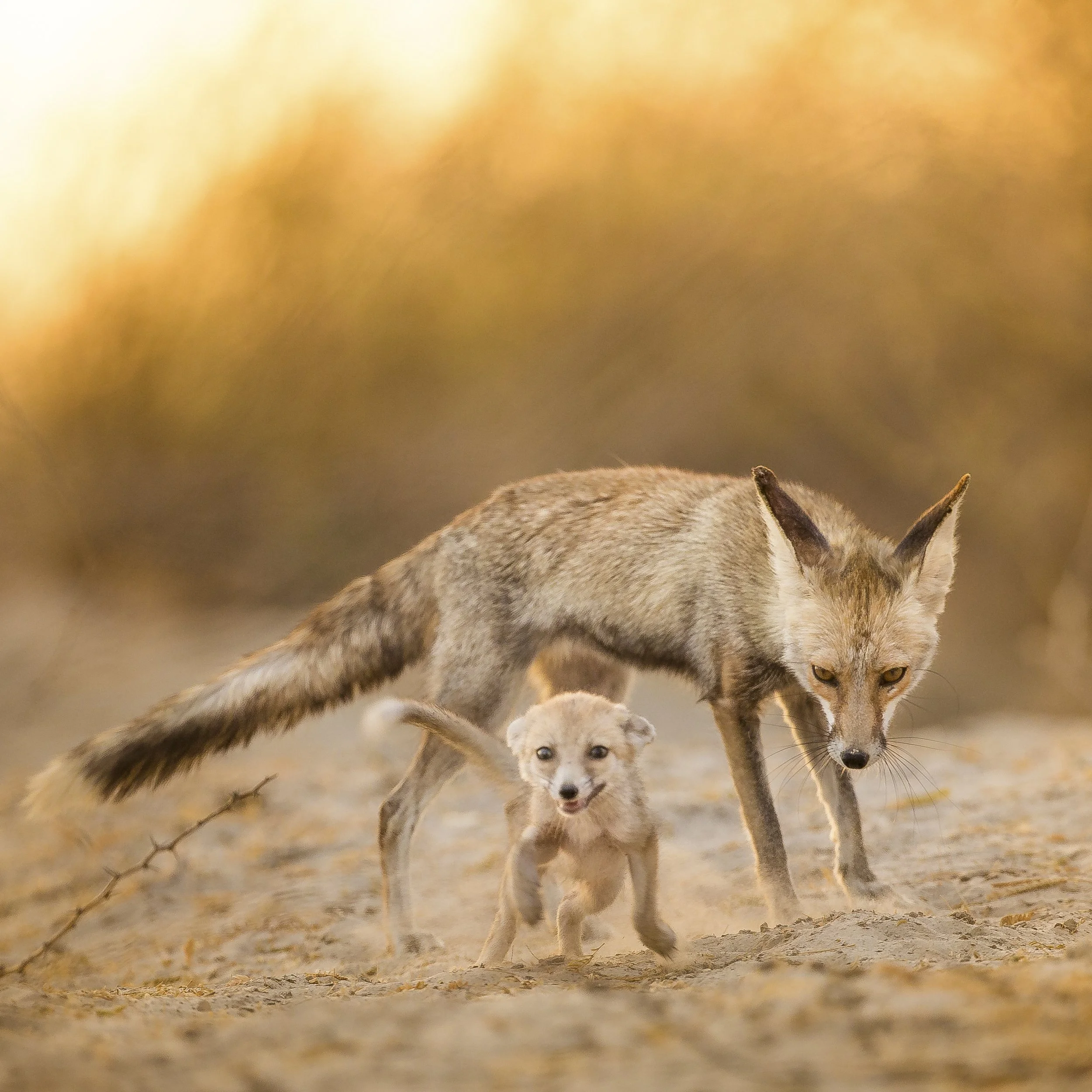
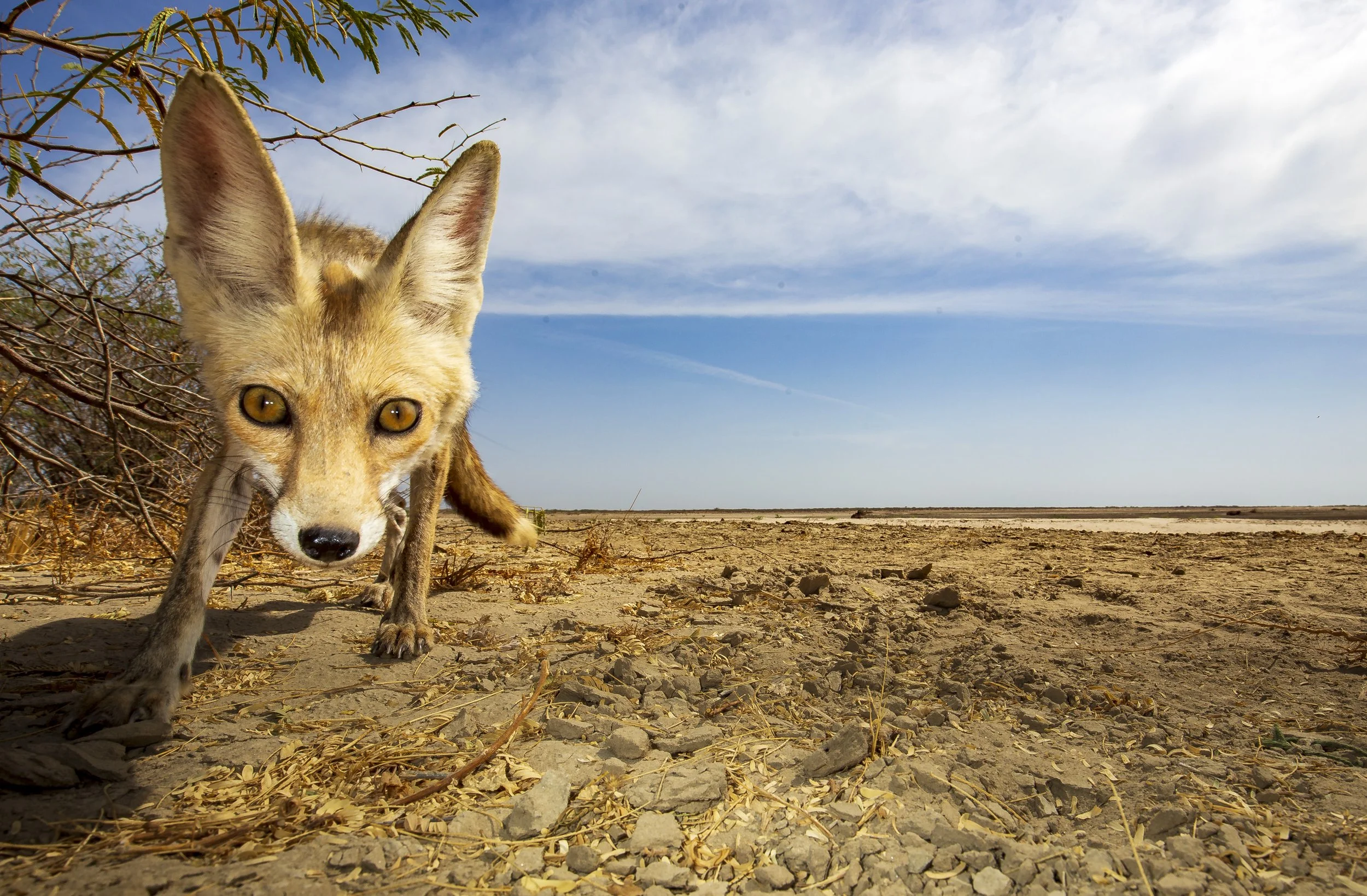
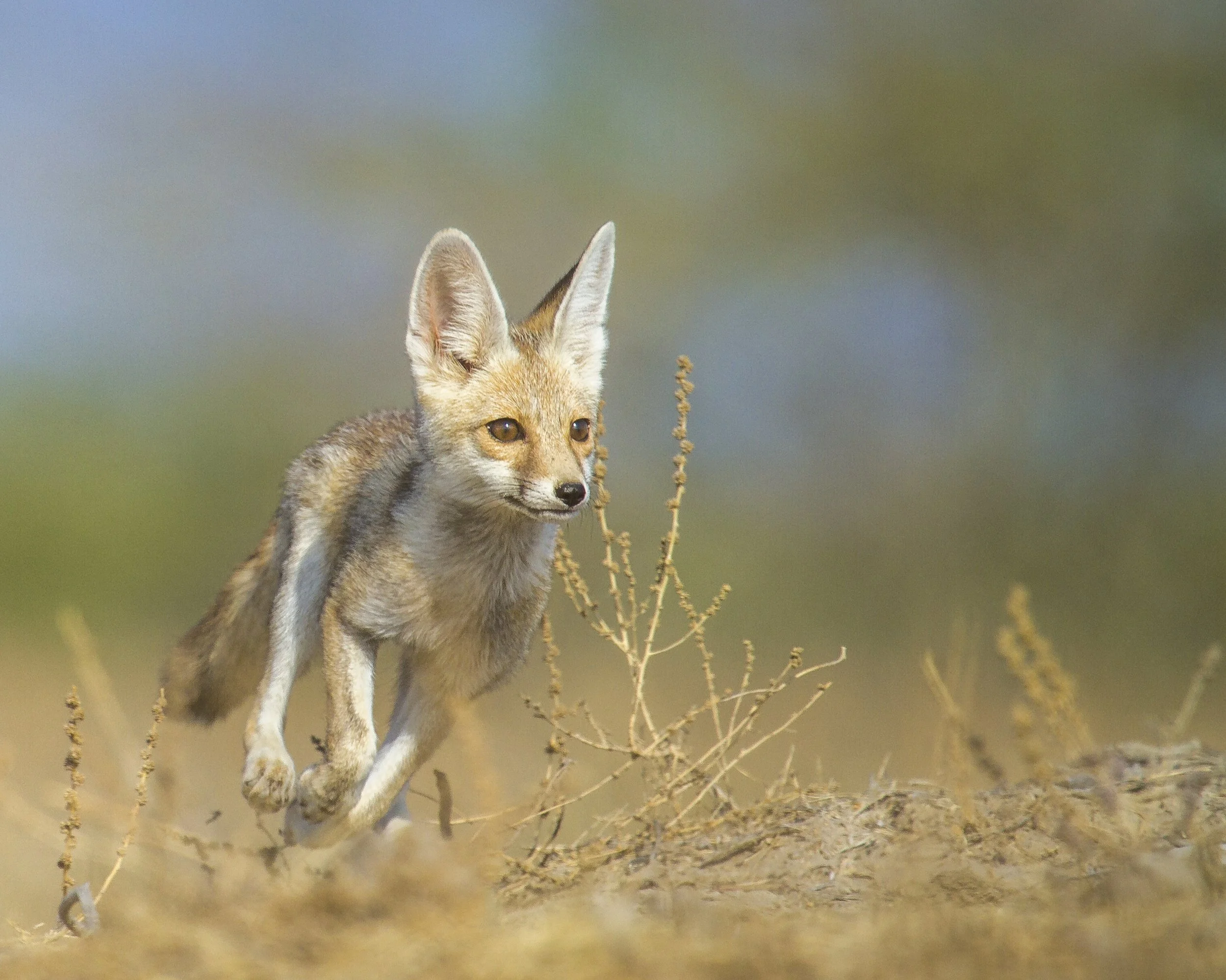
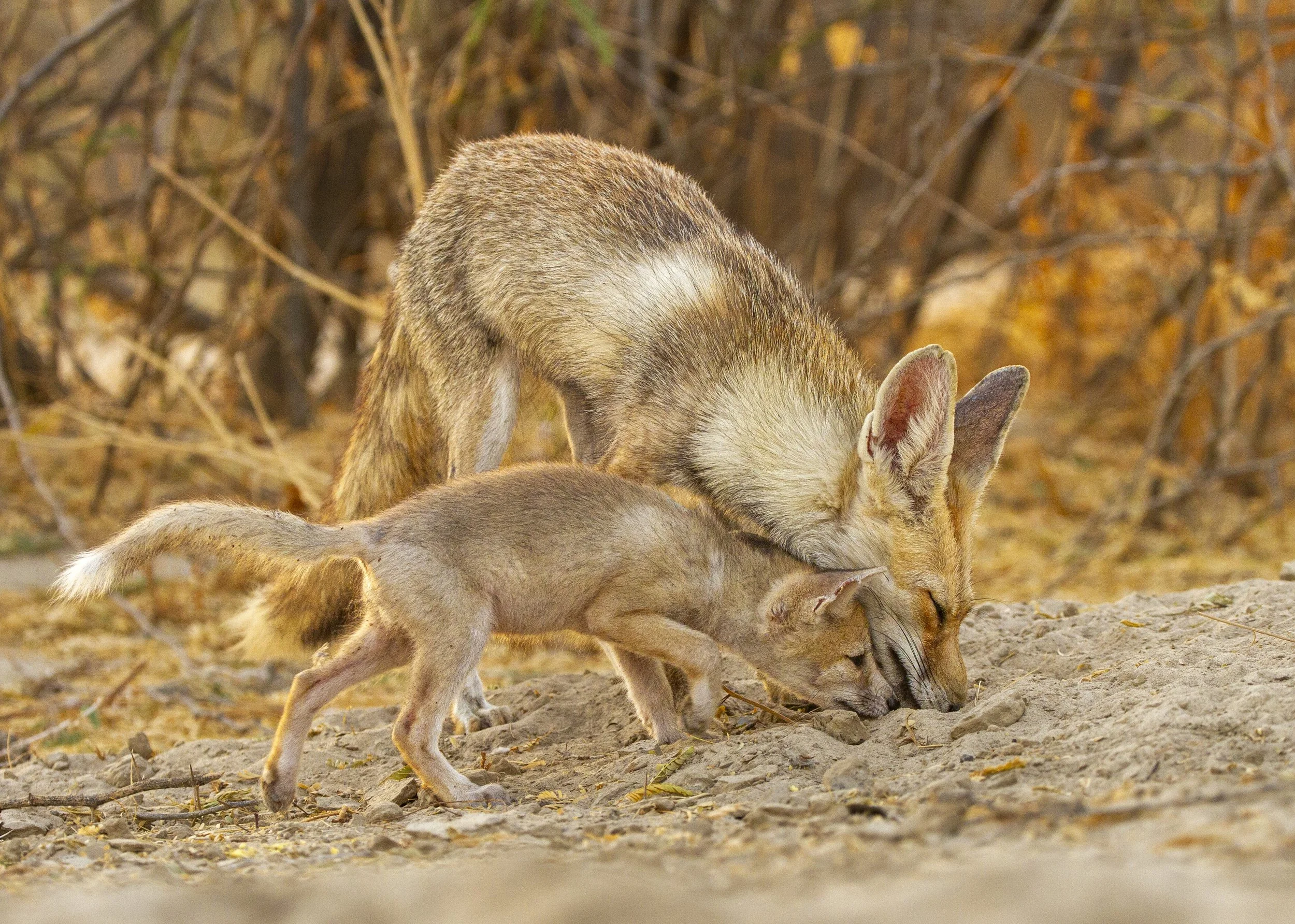
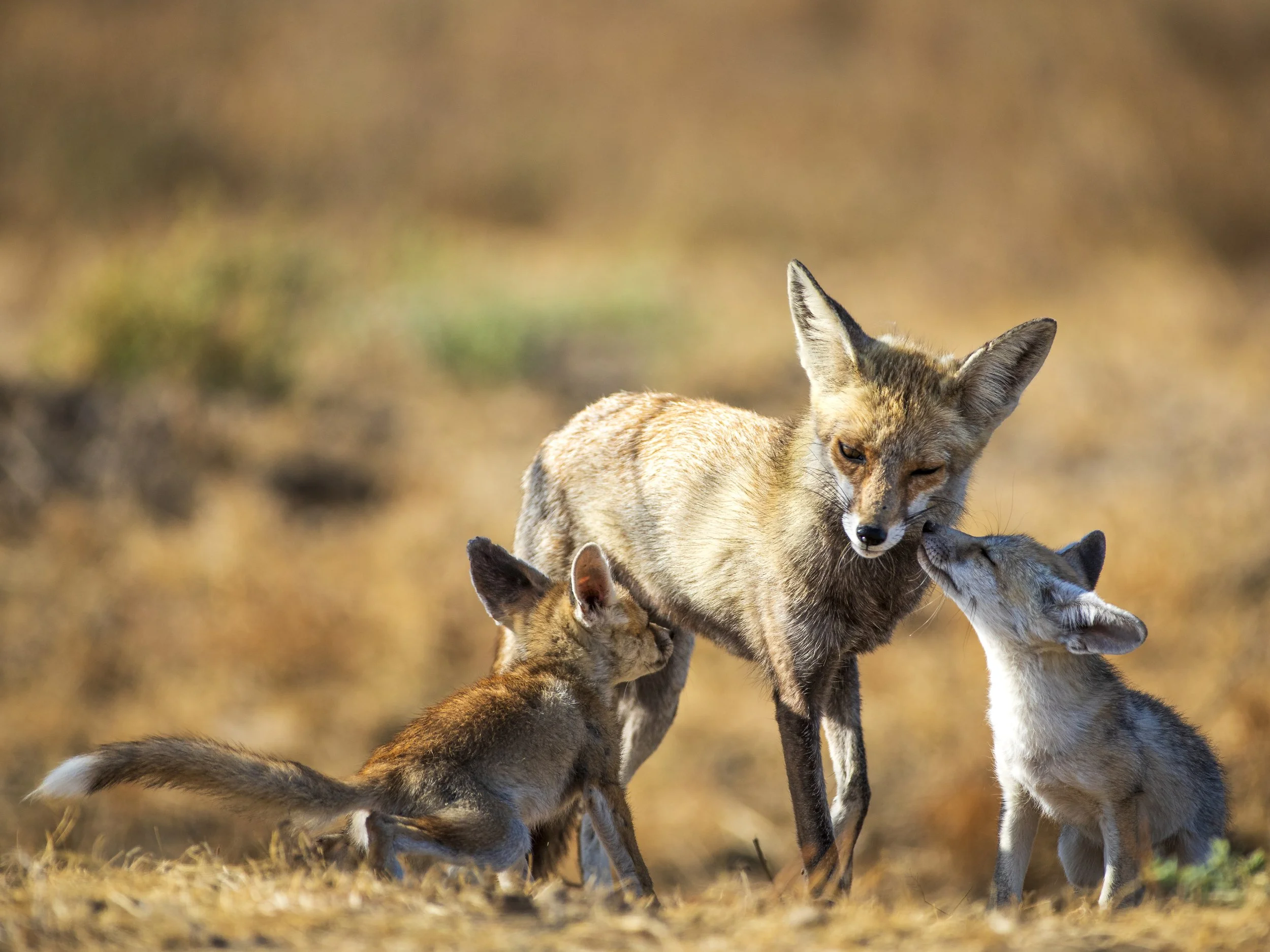
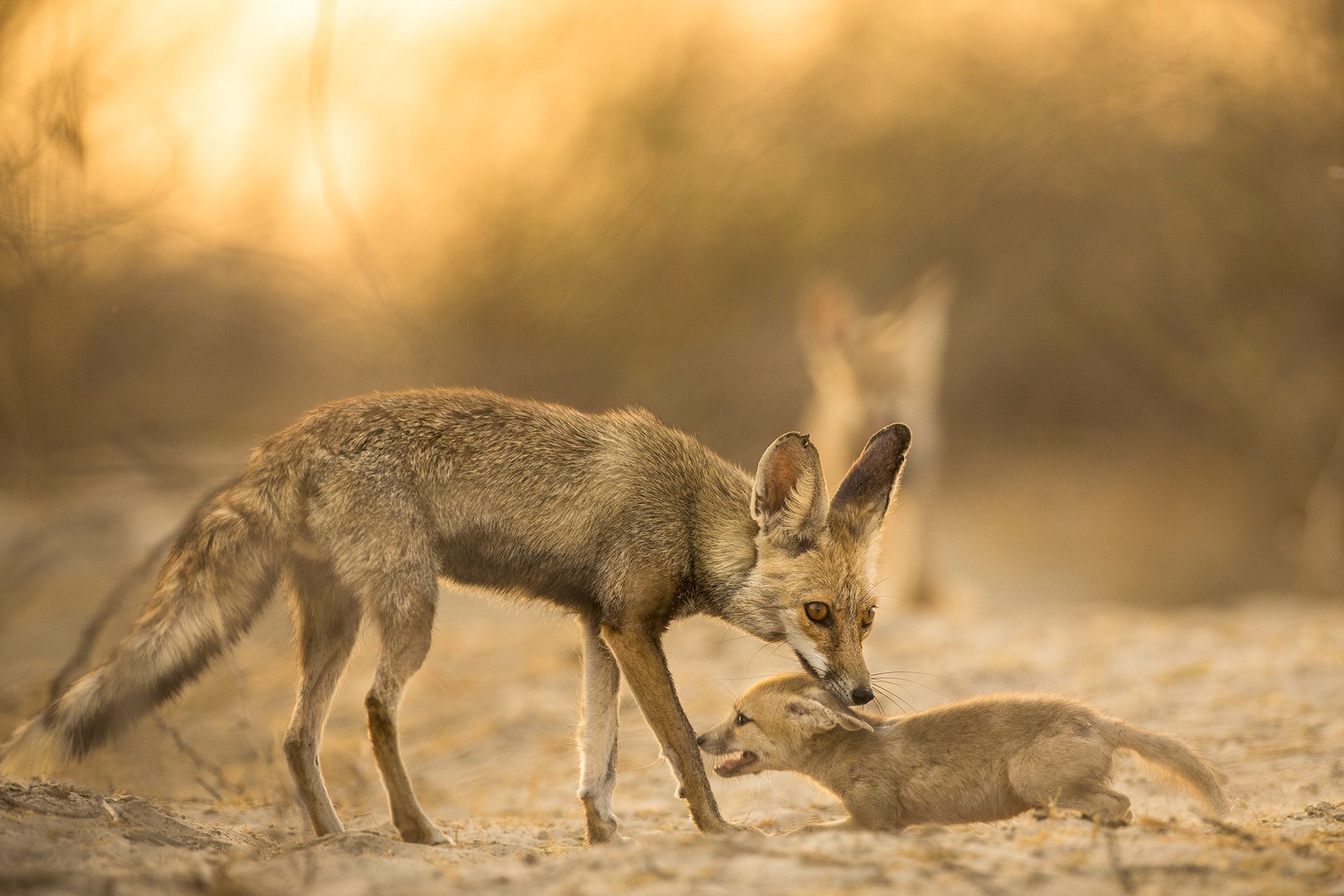
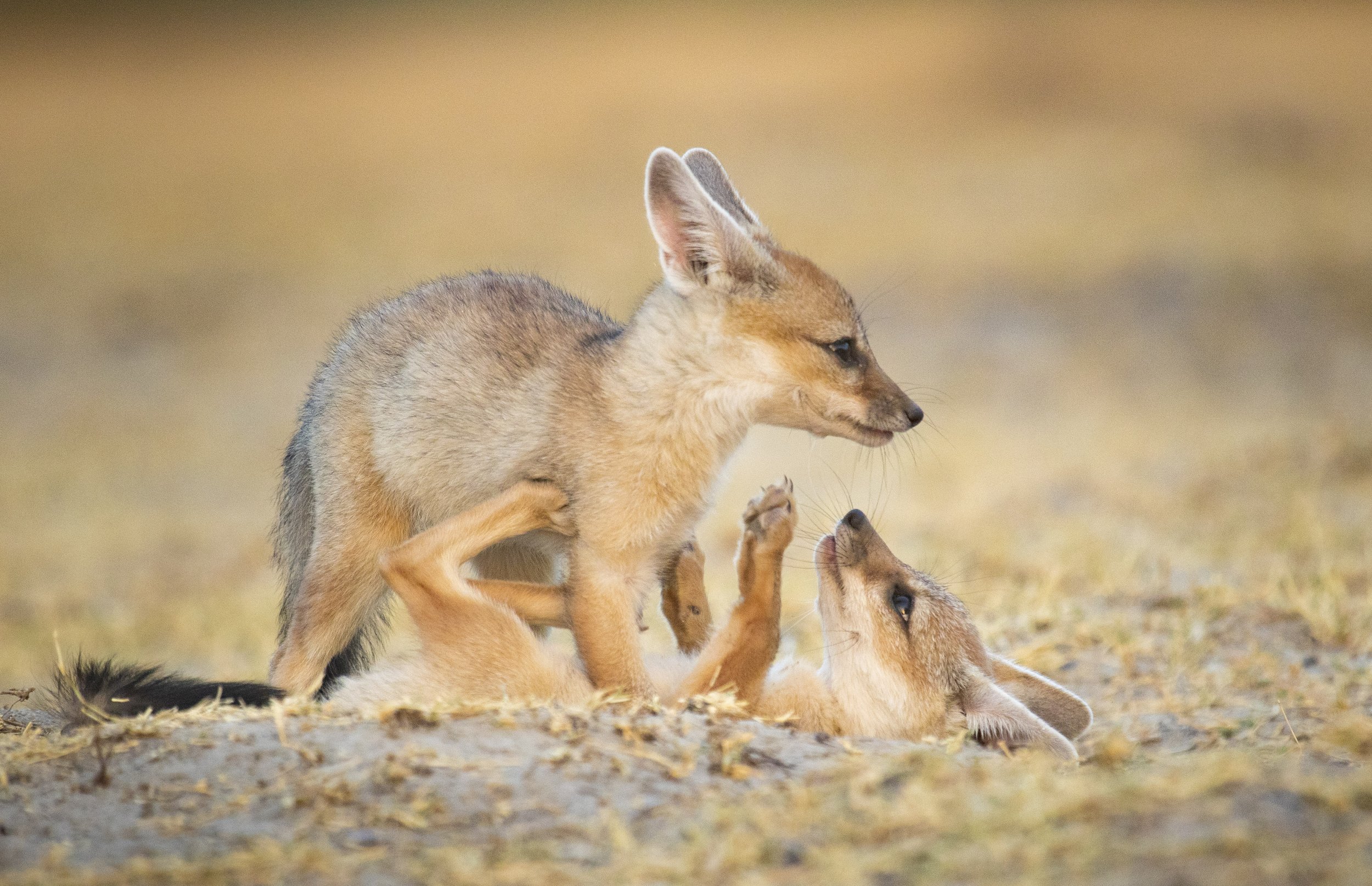
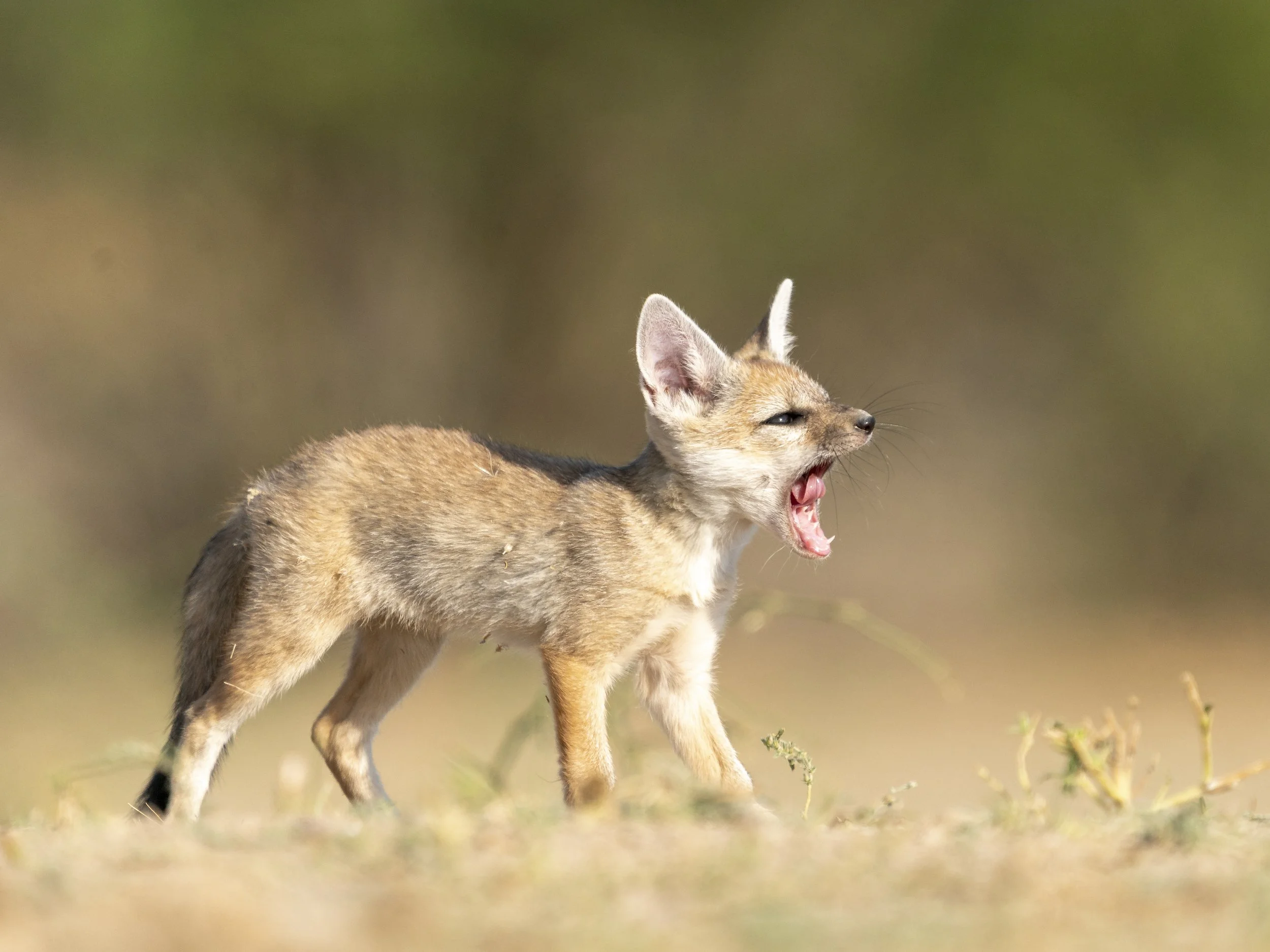
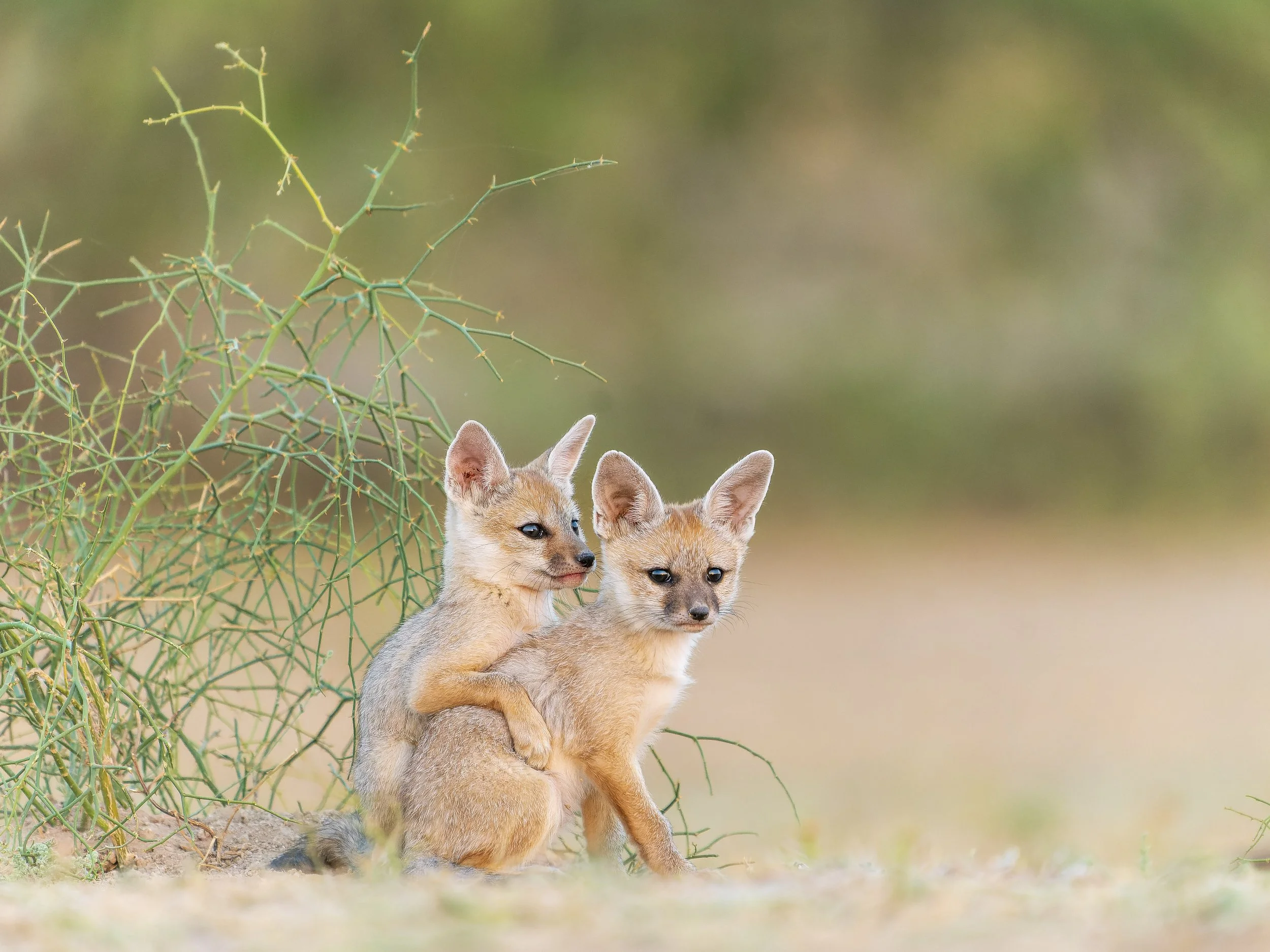
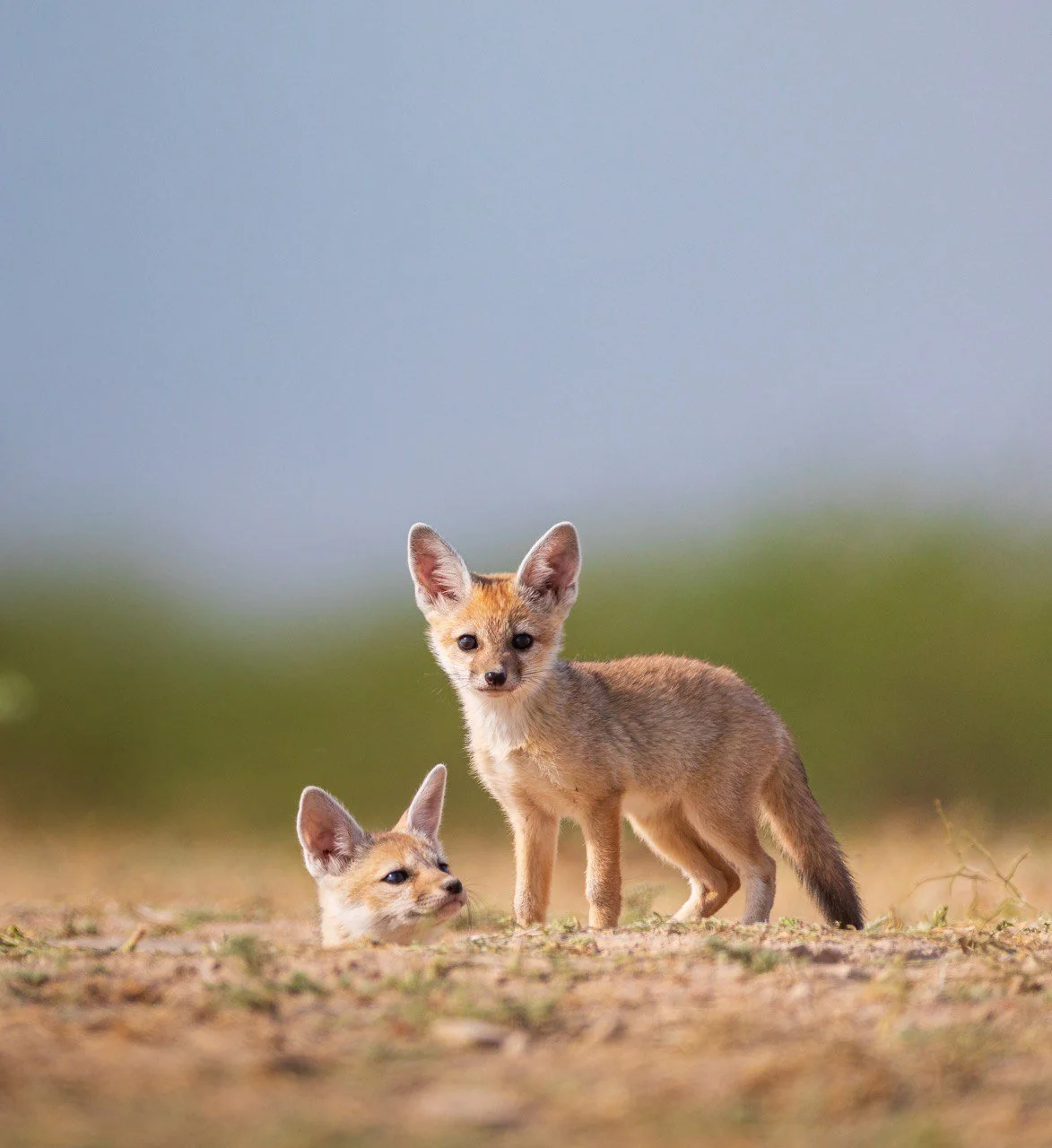
The Indian Desert Fox (Vulpes vulpes pusilla) is one of my favourite animals. I’ve been photographing them since 2013, mostly in Tal Chhapar and Bikaner in Rajasthan, and the Little Rann of Kutch in Gujarat. Their breeding is in January,and a pair will raise a small litter of pups that remain in the den for the first few weeks of life. Both parents may be involved at this stage, with the male bringing food back to the den. As the pups grow, they begin to emerge, play, and practice short hunts, learning to pounce on rodents, lizards, and other small prey. These early interactions—play, chasing, mock hunts—form the base of their behaviour as adults. Over time, they disperse and become solitary, coming together only briefly during the breeding season.
In these landscapes, the desert fox lives close to people. It often moves near settlements in search of water or food, and this overlap brings risk. Encounters with free-ranging dogs are common, and these often end badly for the fox, which is smaller and alone. Its dens are exposed, and pups are vulnerable to predators such as wolves, jackals, and hyenas. Despite this, the species continues to persist across a wide range, using what is available and adjusting to a landscape that is constantly in use.
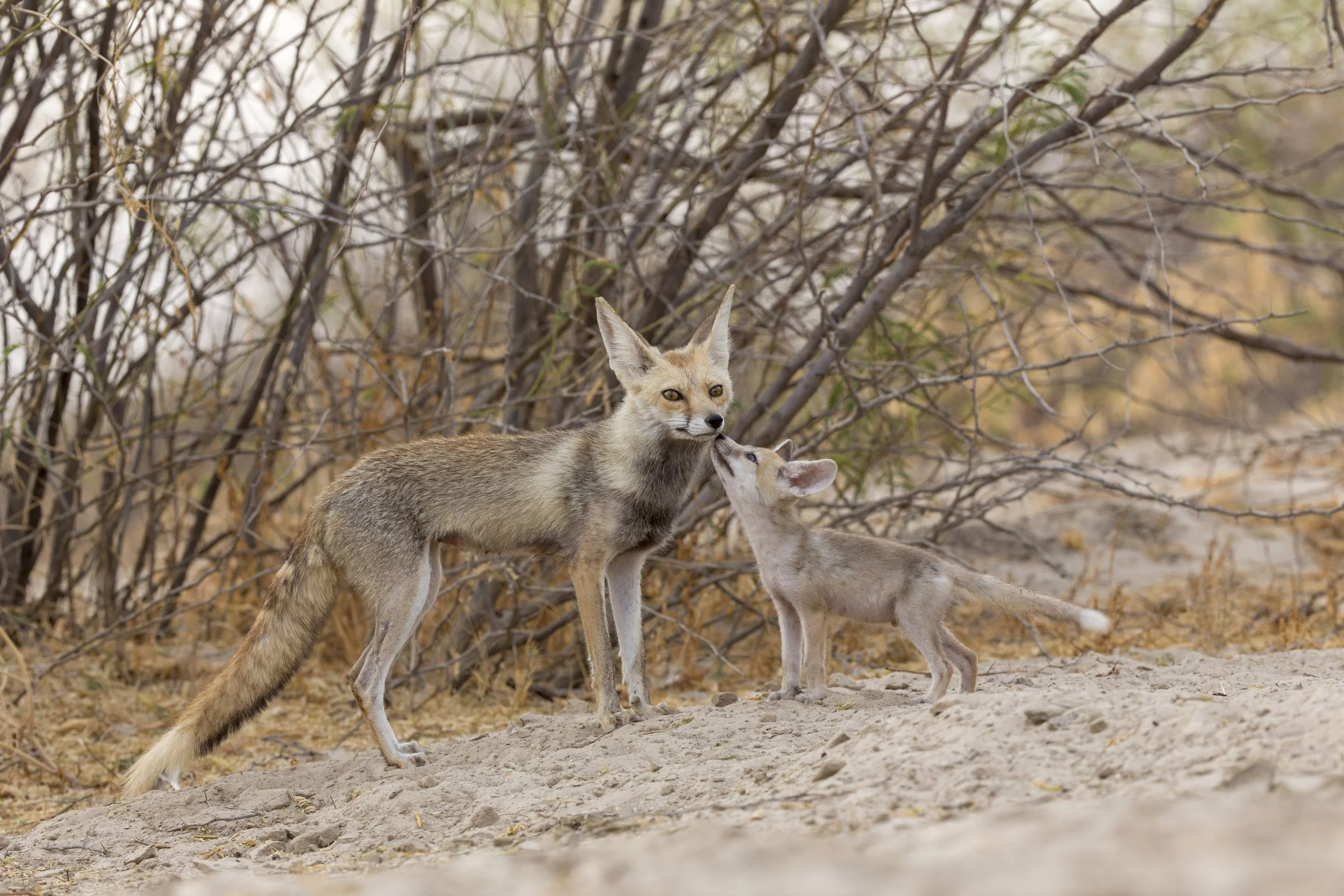
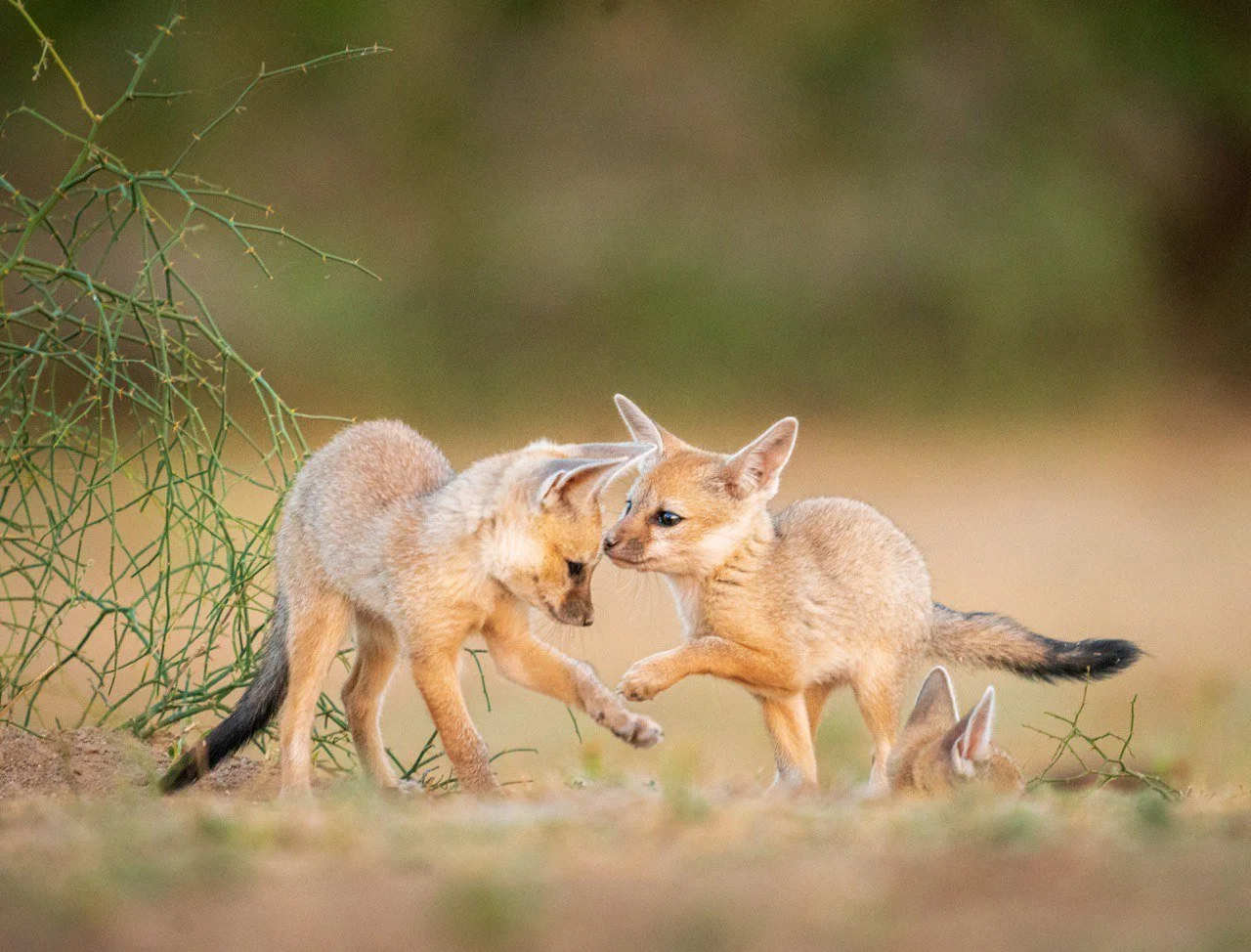
Indian fox
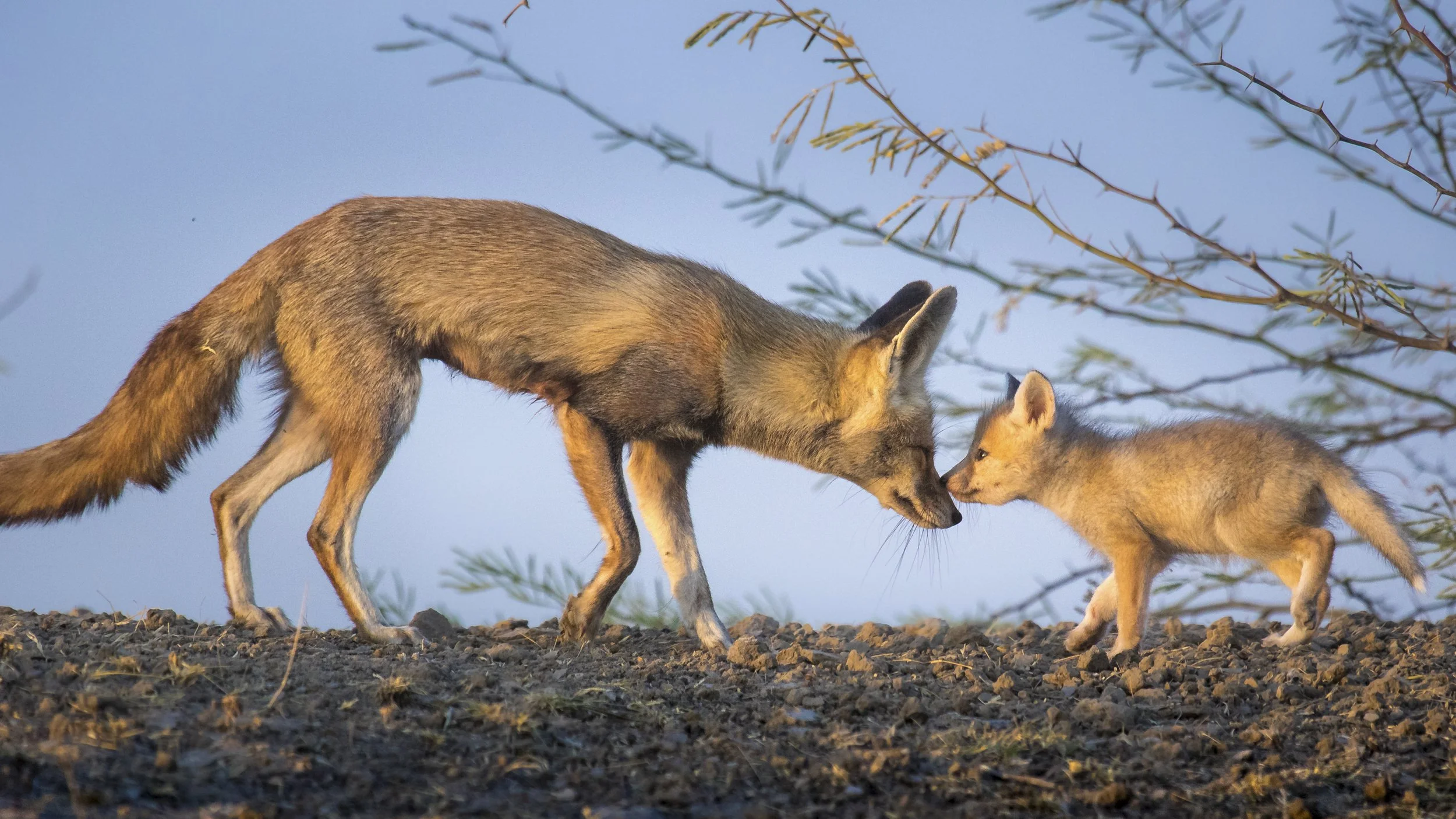
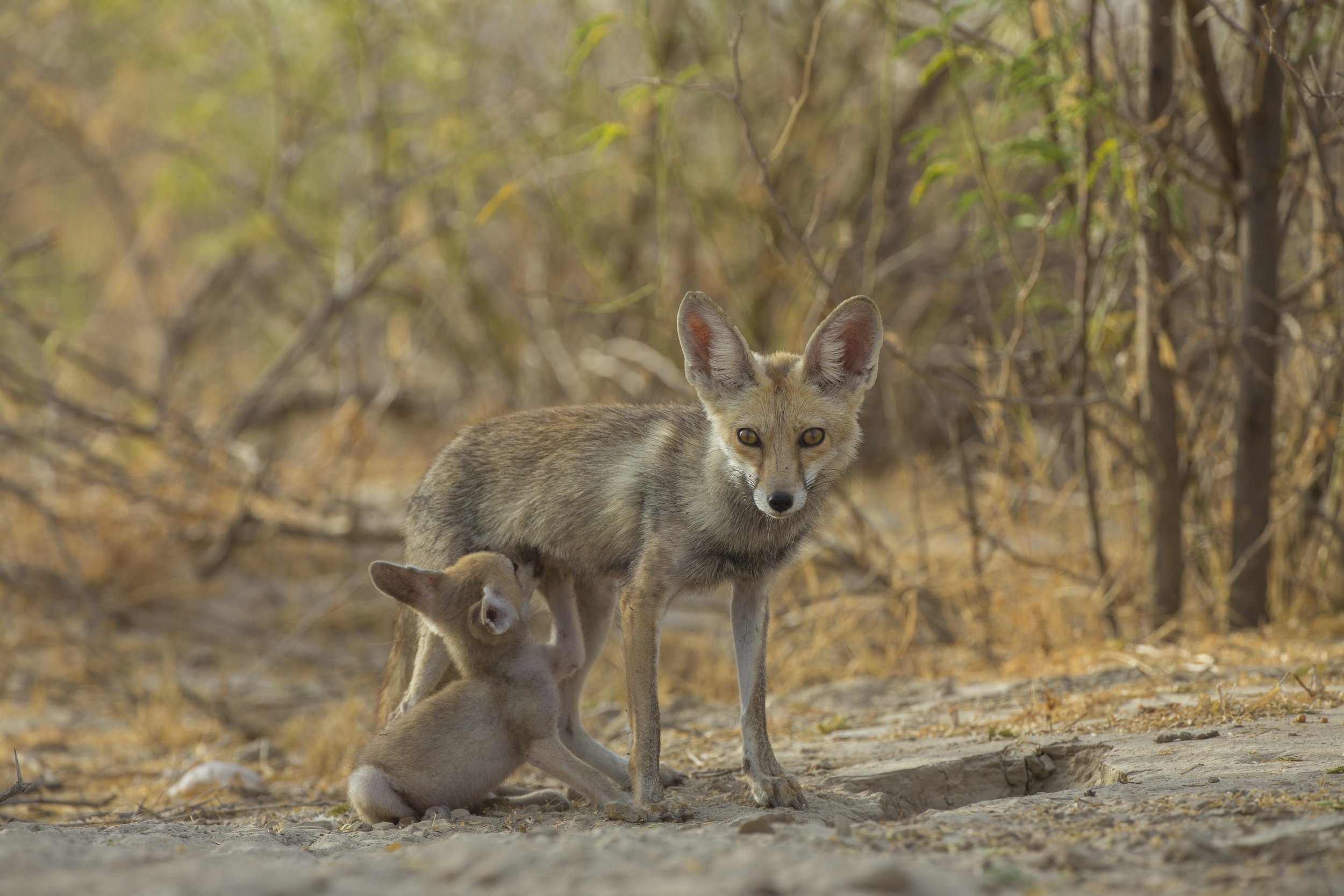
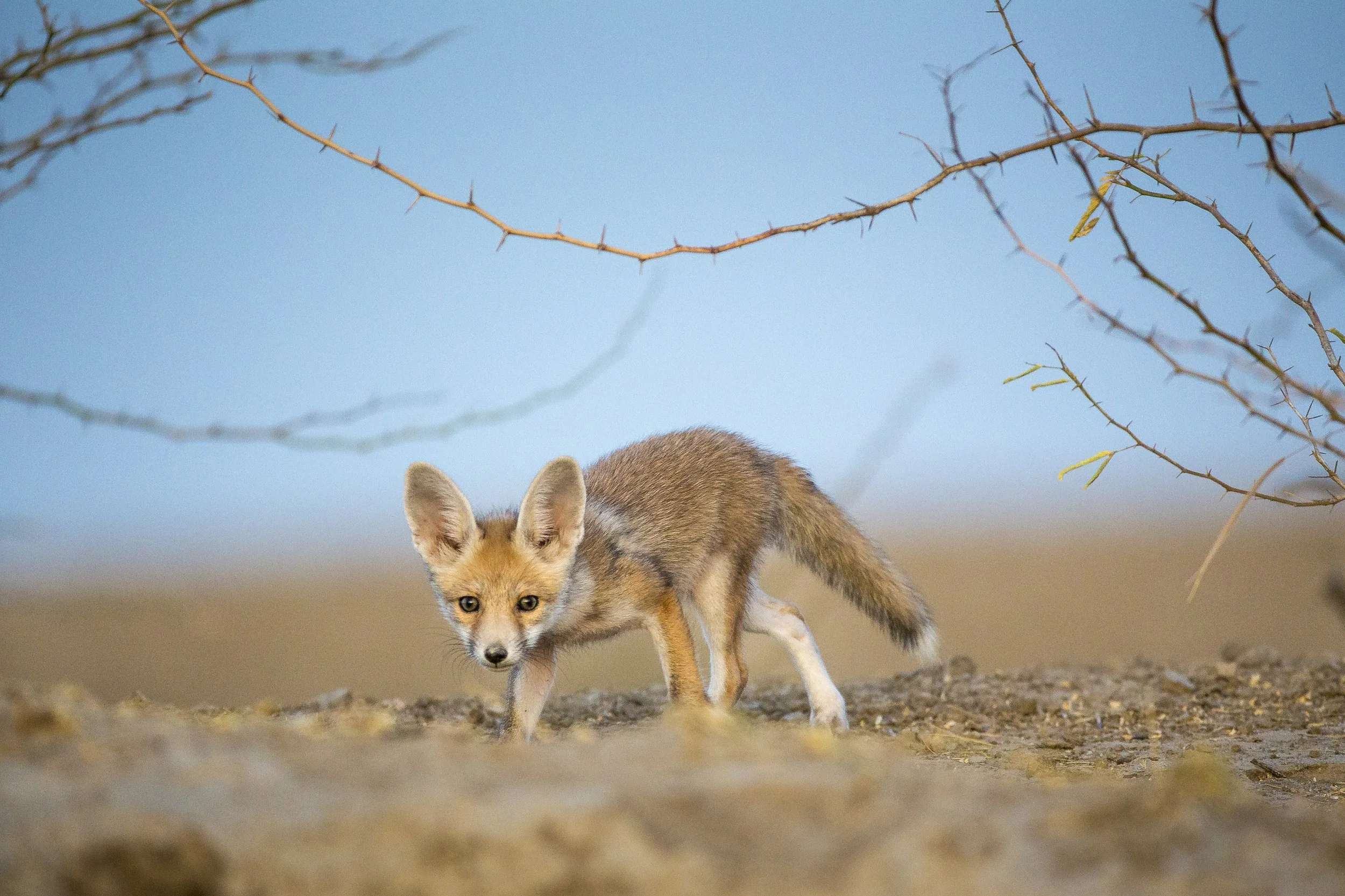
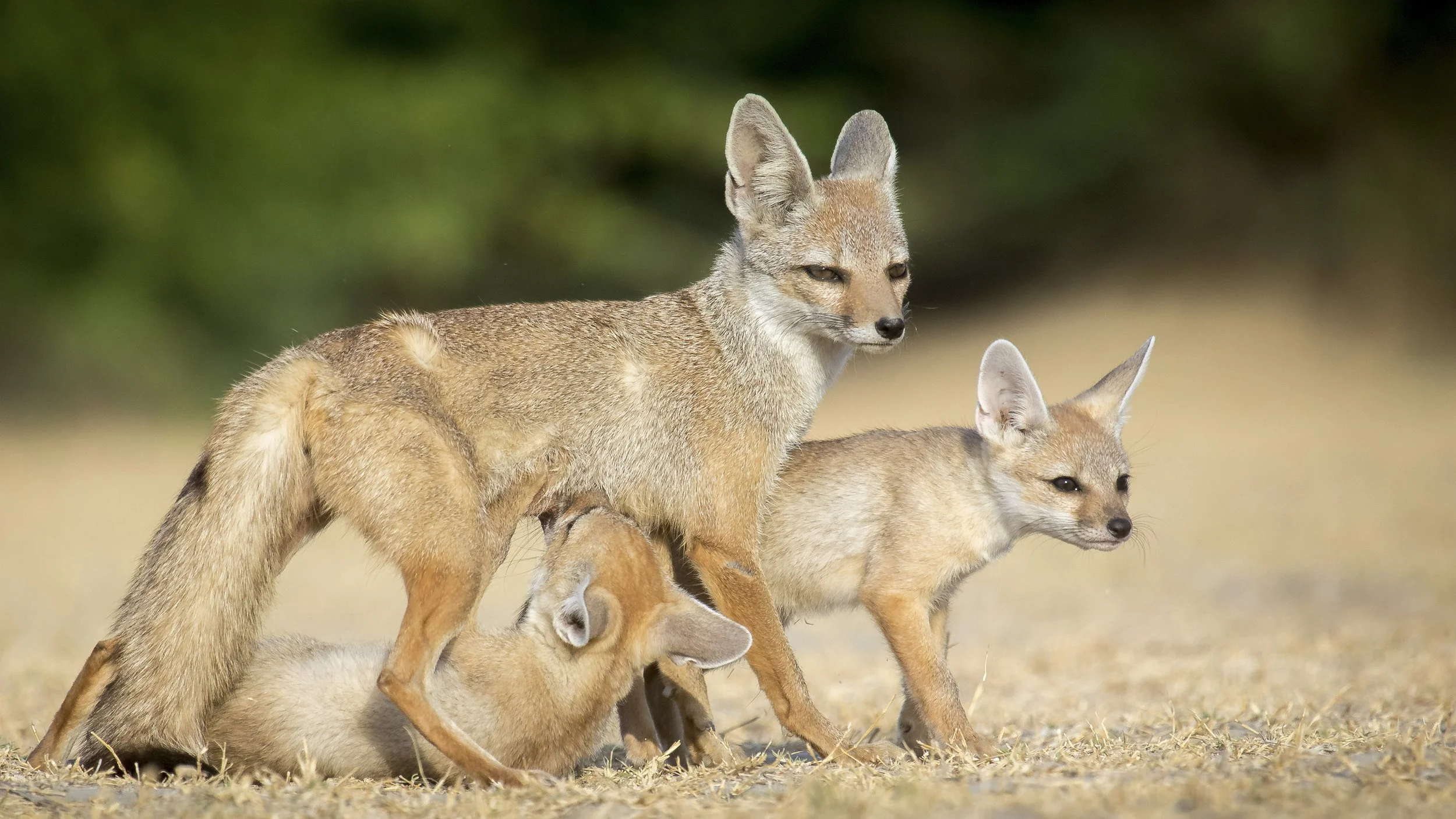
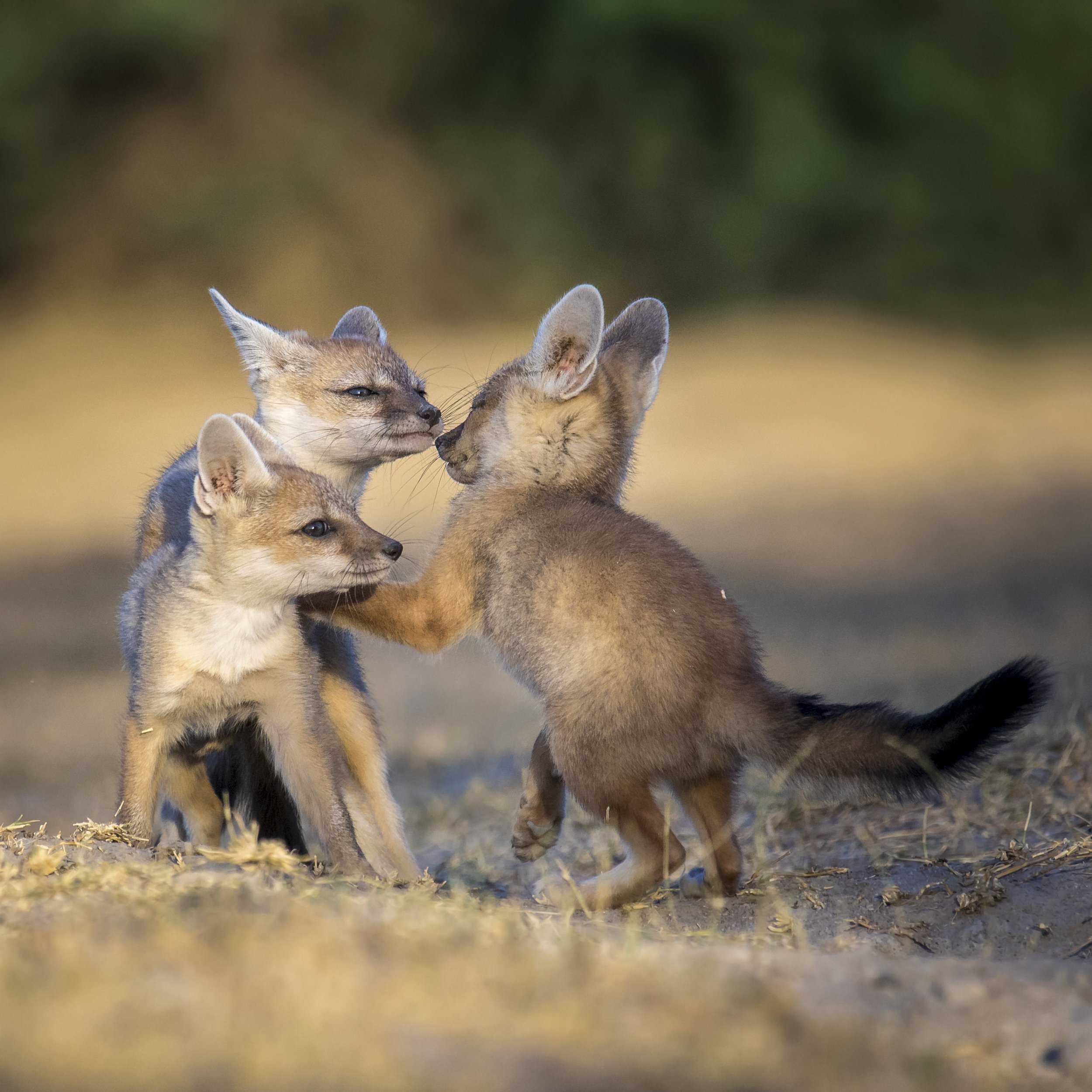
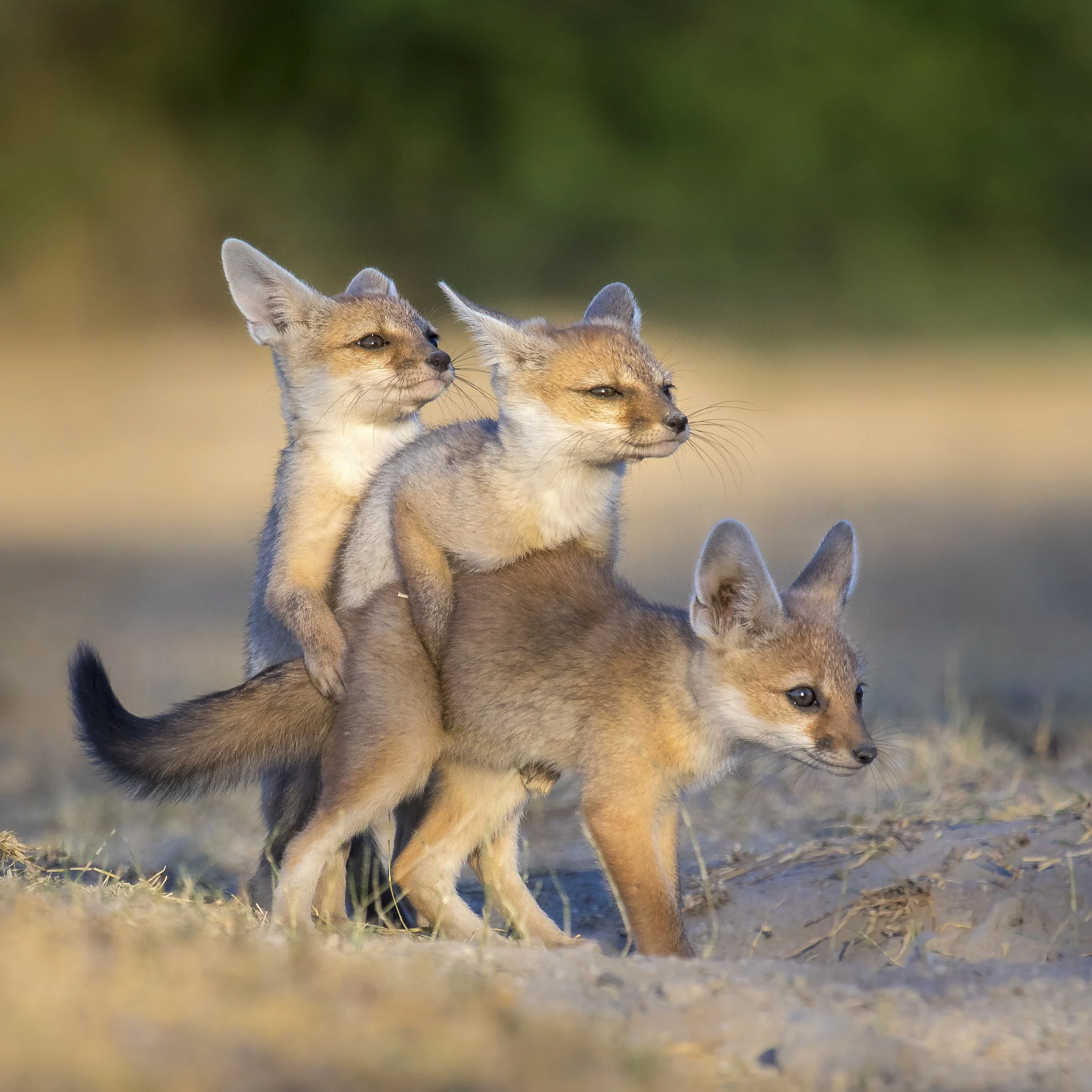
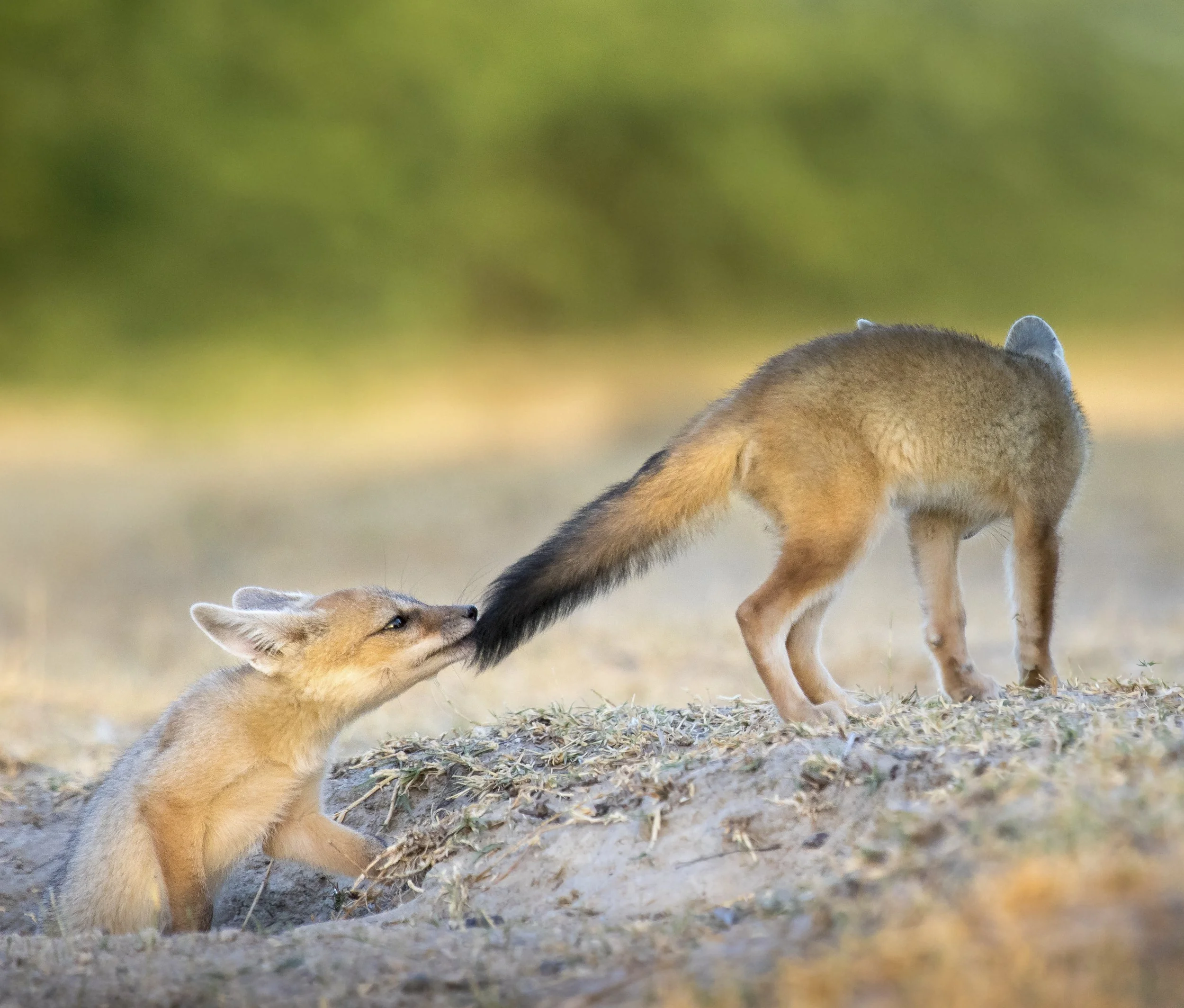
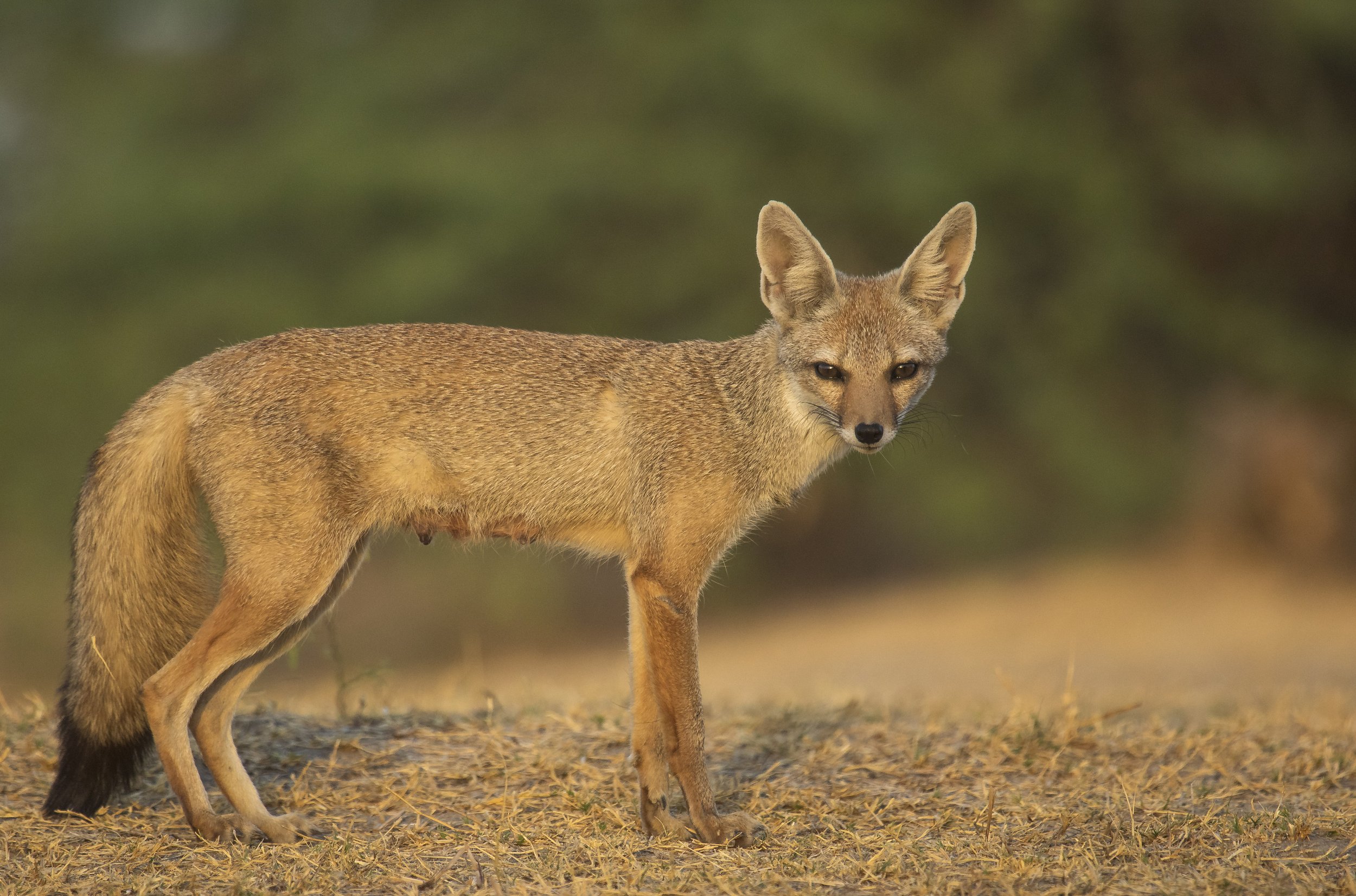
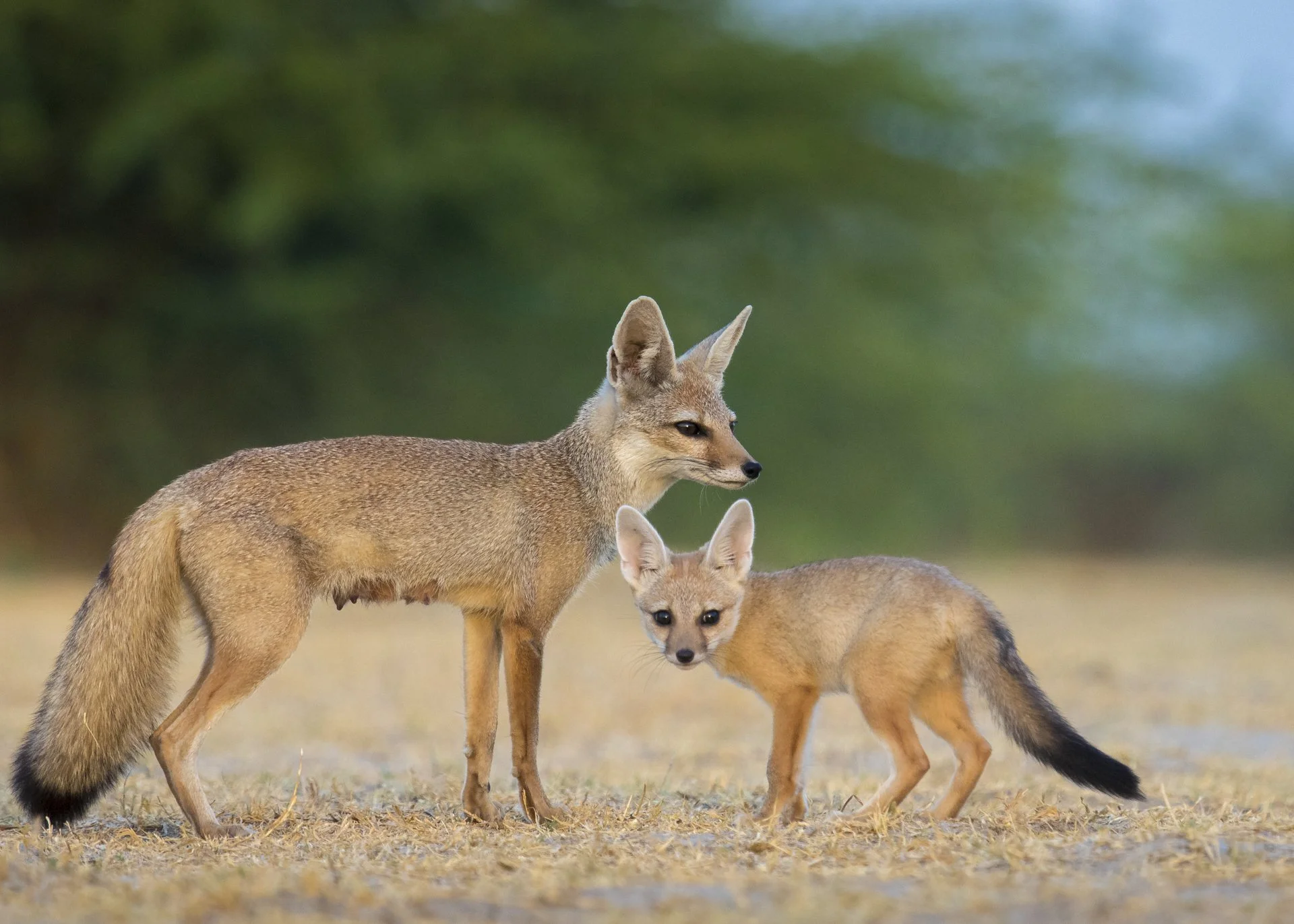
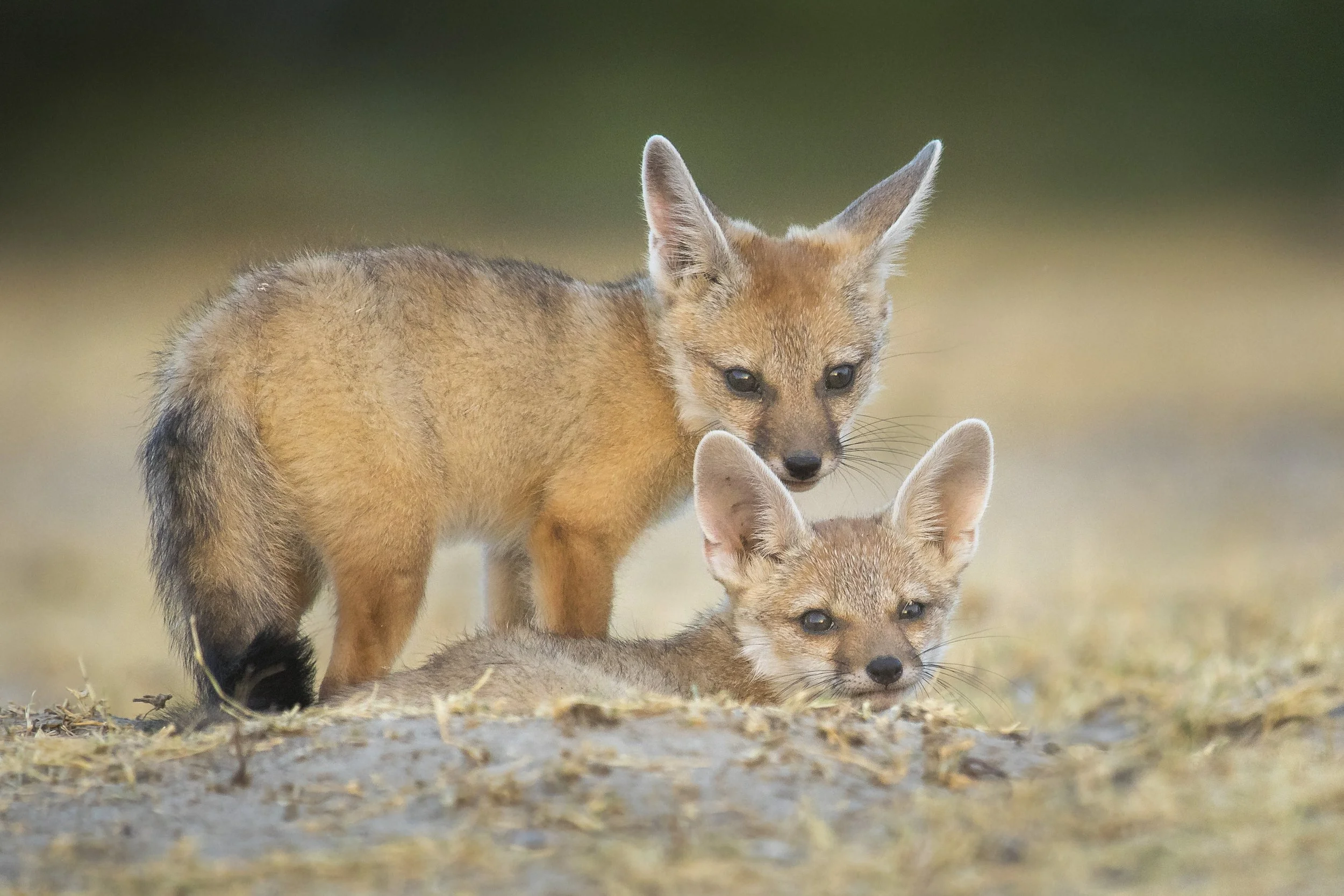
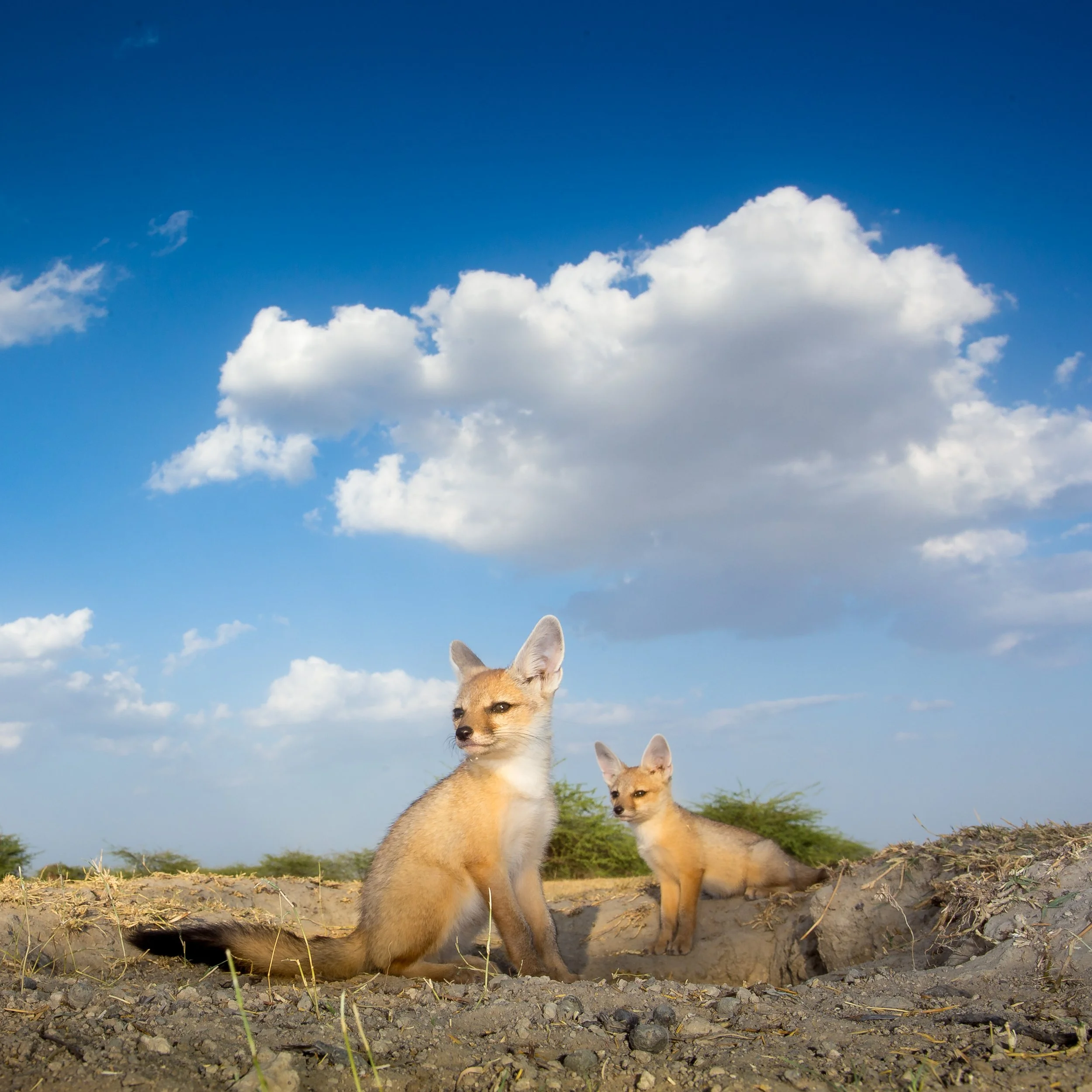
The Indian fox (Vulpes bengalensis) is a small canid found across the dry grasslands, scrublands, and semi-arid regions of the Indian subcontinent. This fox is mostly active at dawn and dusk, feeding on insects, rodents, small reptiles, birds, and fruit, depending on what is available. Much like the desert fox, it breeds in January. Pups start playing outside the den around mid-February, and by the end of March, they leave the den site and head off on their own. It faces similar threats to the desert fox, because it is also lives close to human settlements. I’ve seen these foxes burrow dens in agricultural fields. A cotton farmer from Telangana once told me that he tolerates foxes because they feed on rodents, but I don’t think all farmers, especially those growing vegetables and fruits share his view.
One easy way to tell the two foxes apart is the tail tip colour. Indian foxes have black tail tips and Indian desert foxes have white tail tips.
Birds of the scrub
its, minivets, creepers, rollers, ioras and others move through thorn, low trees and open patches, often going unnoticed beside the larger birds of these landscapes. Some are residents, staying through the year, while others shift with season or place.
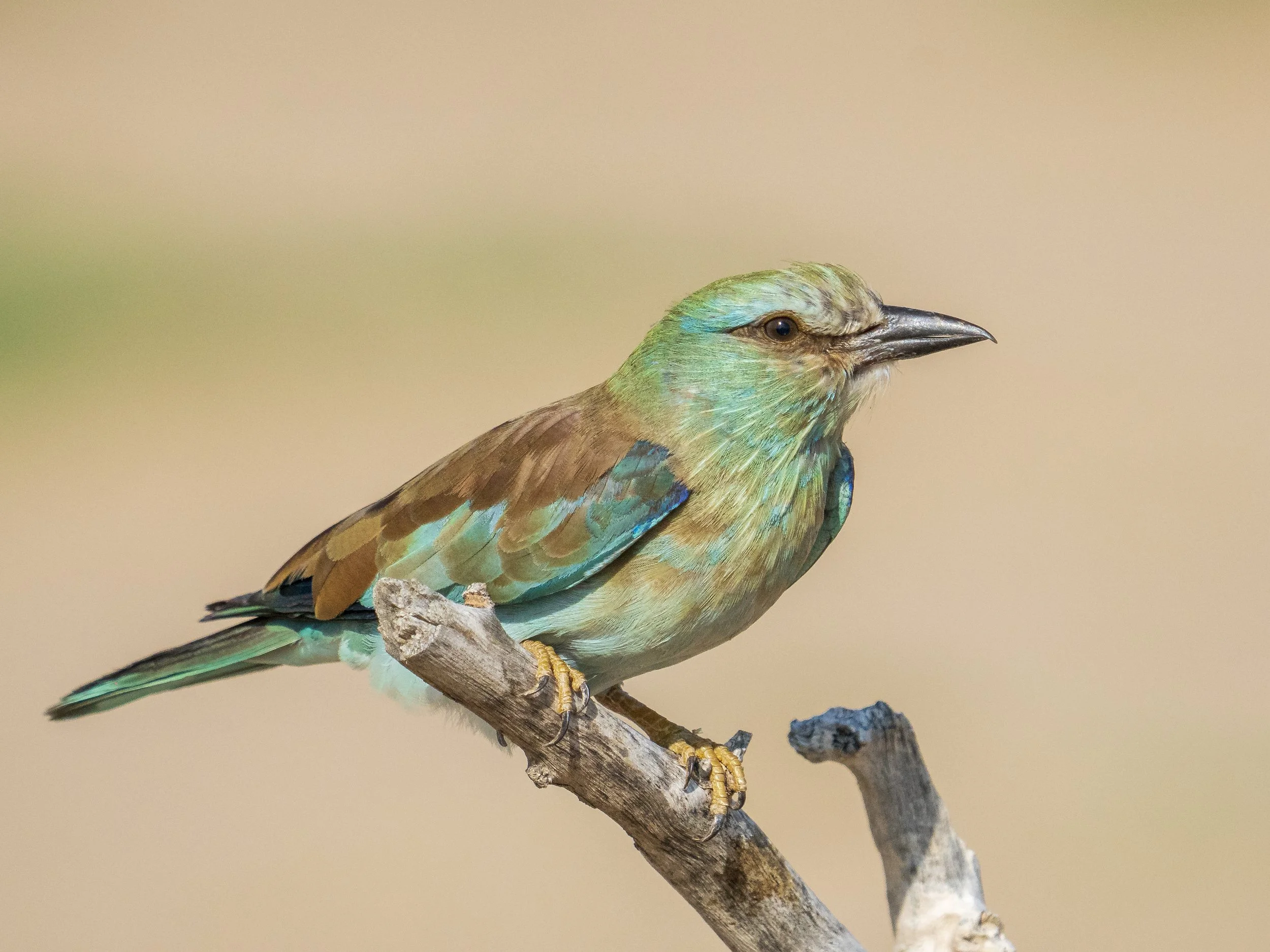
Eurasian roller
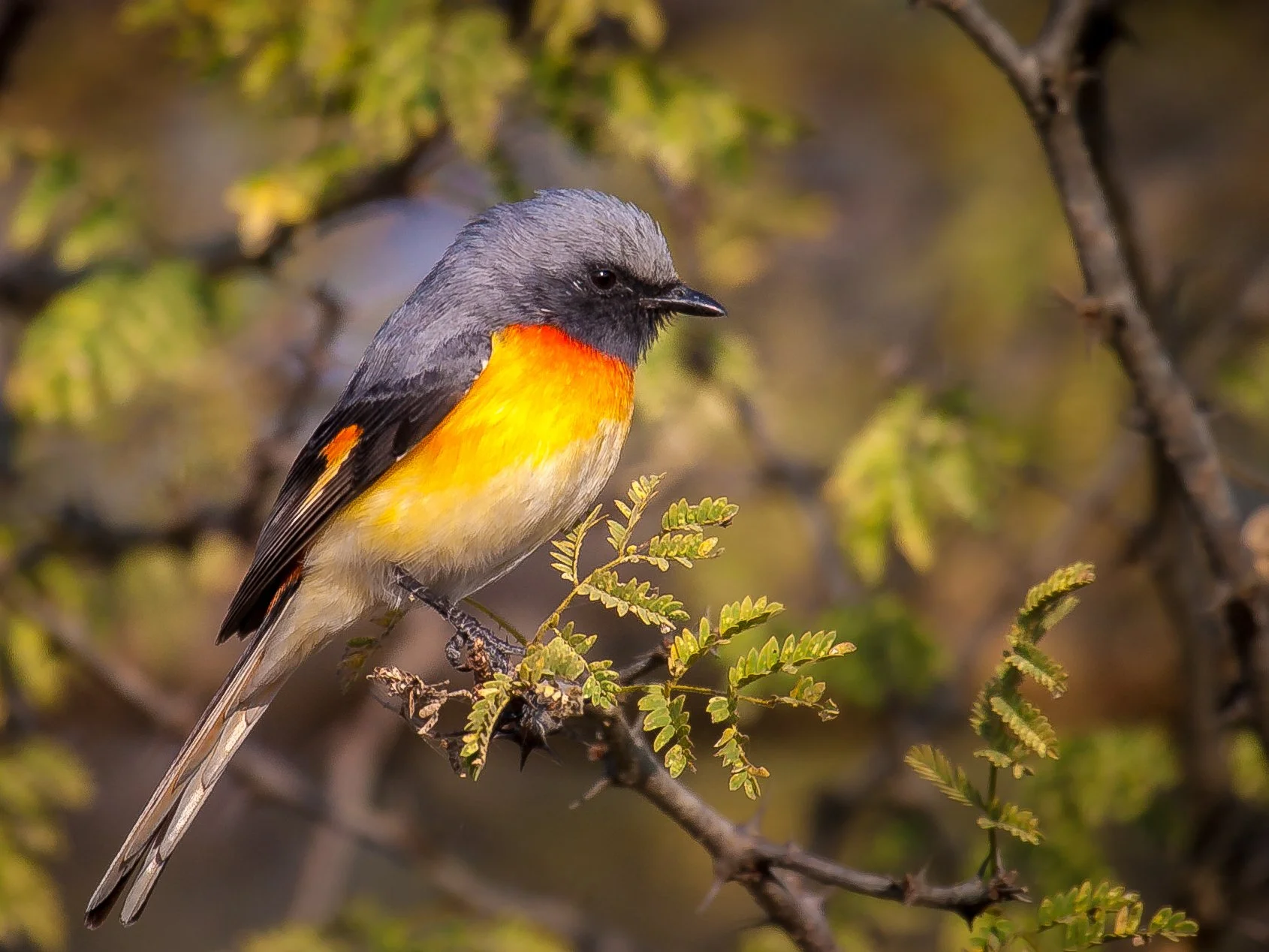
Small minivet
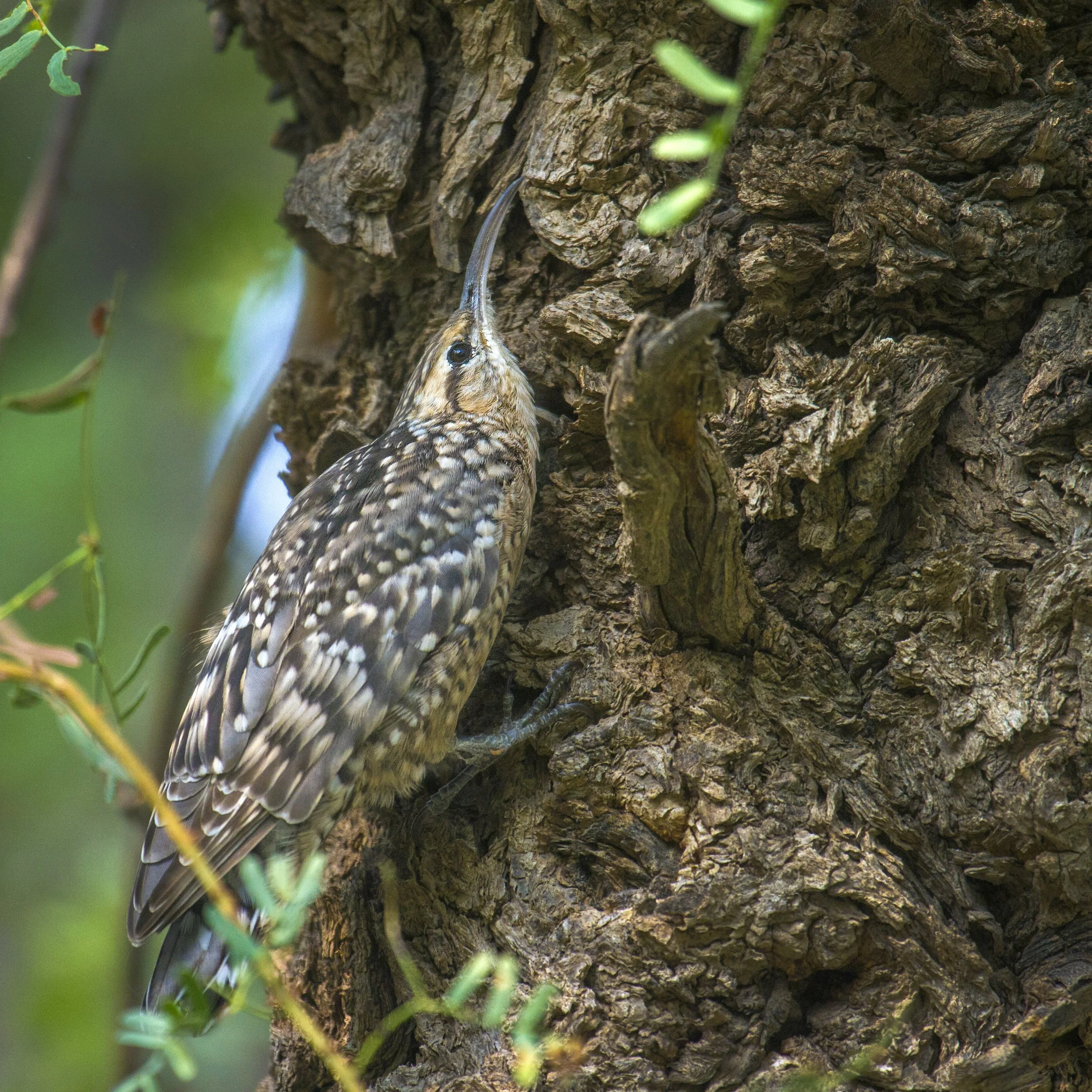
Spotted tree-creeper
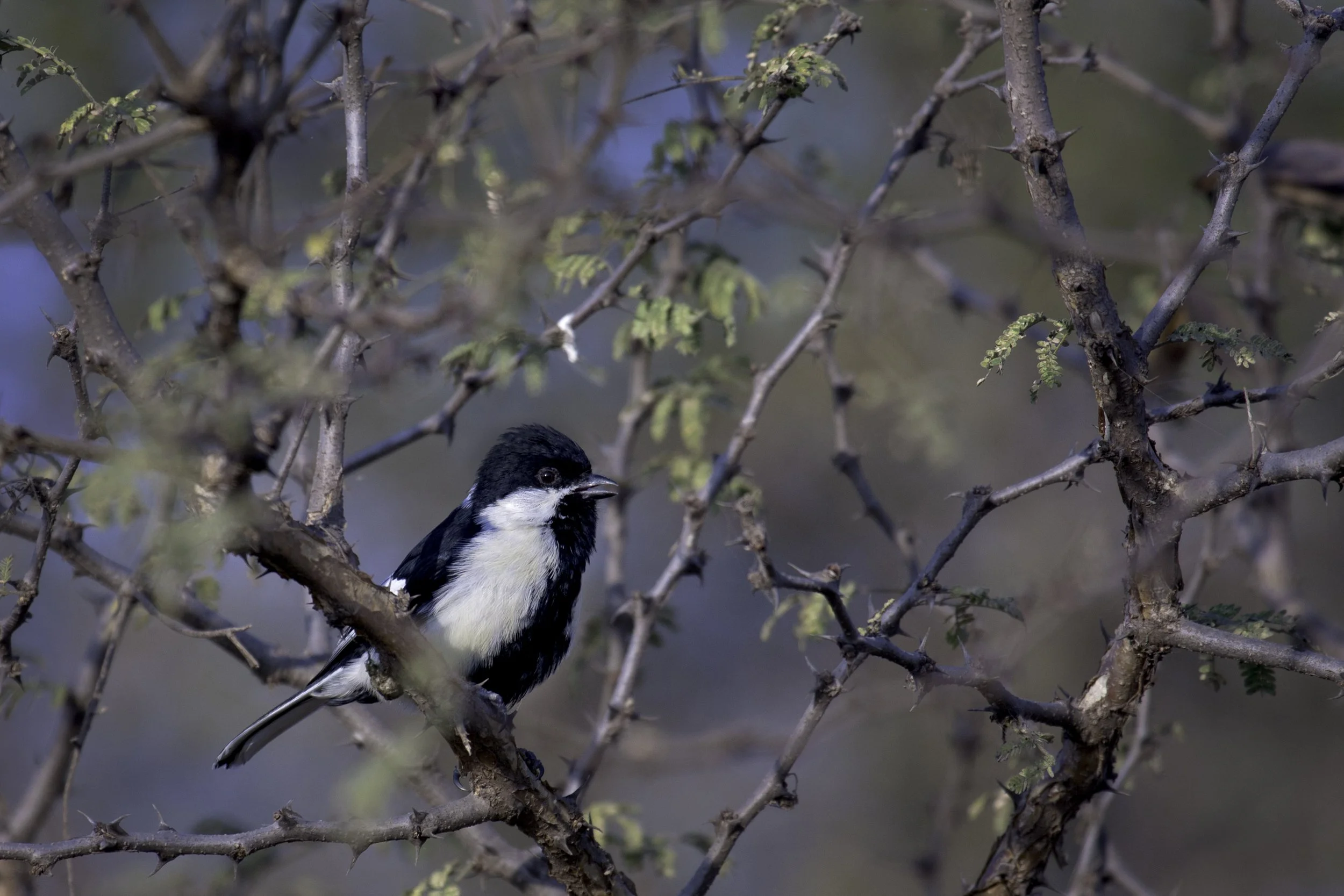
White-naped tit
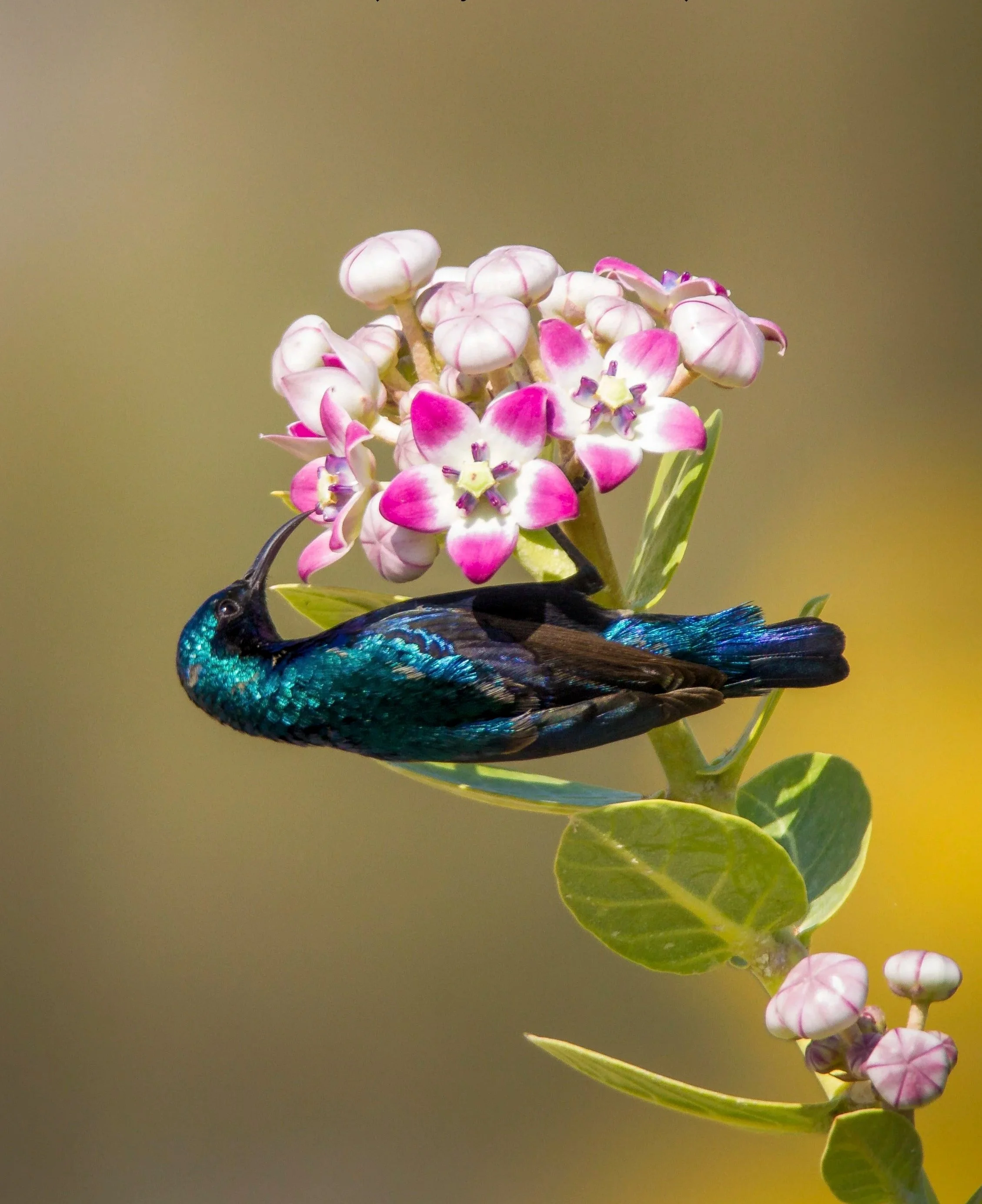
Purple sunbird
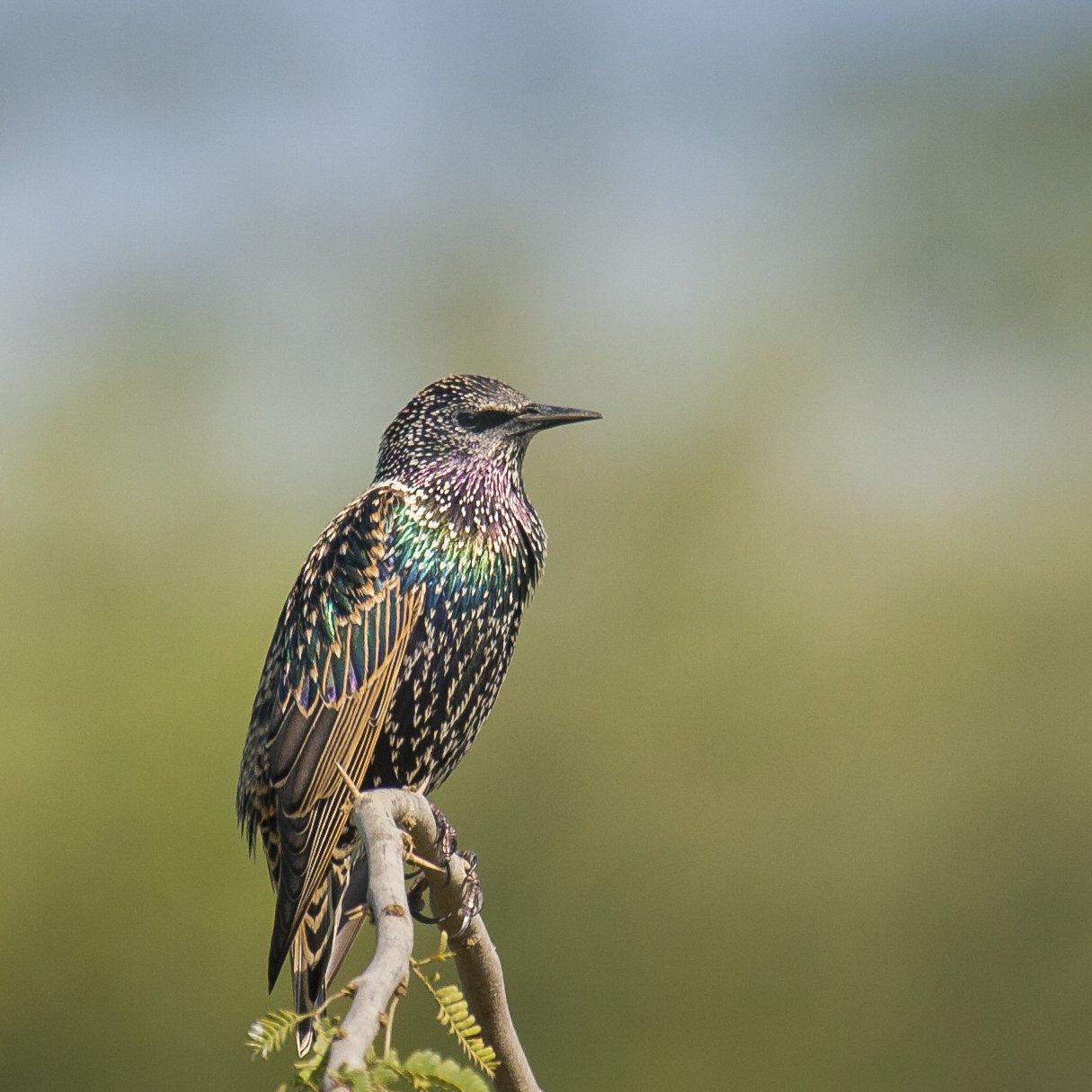
Common starling
The last few?
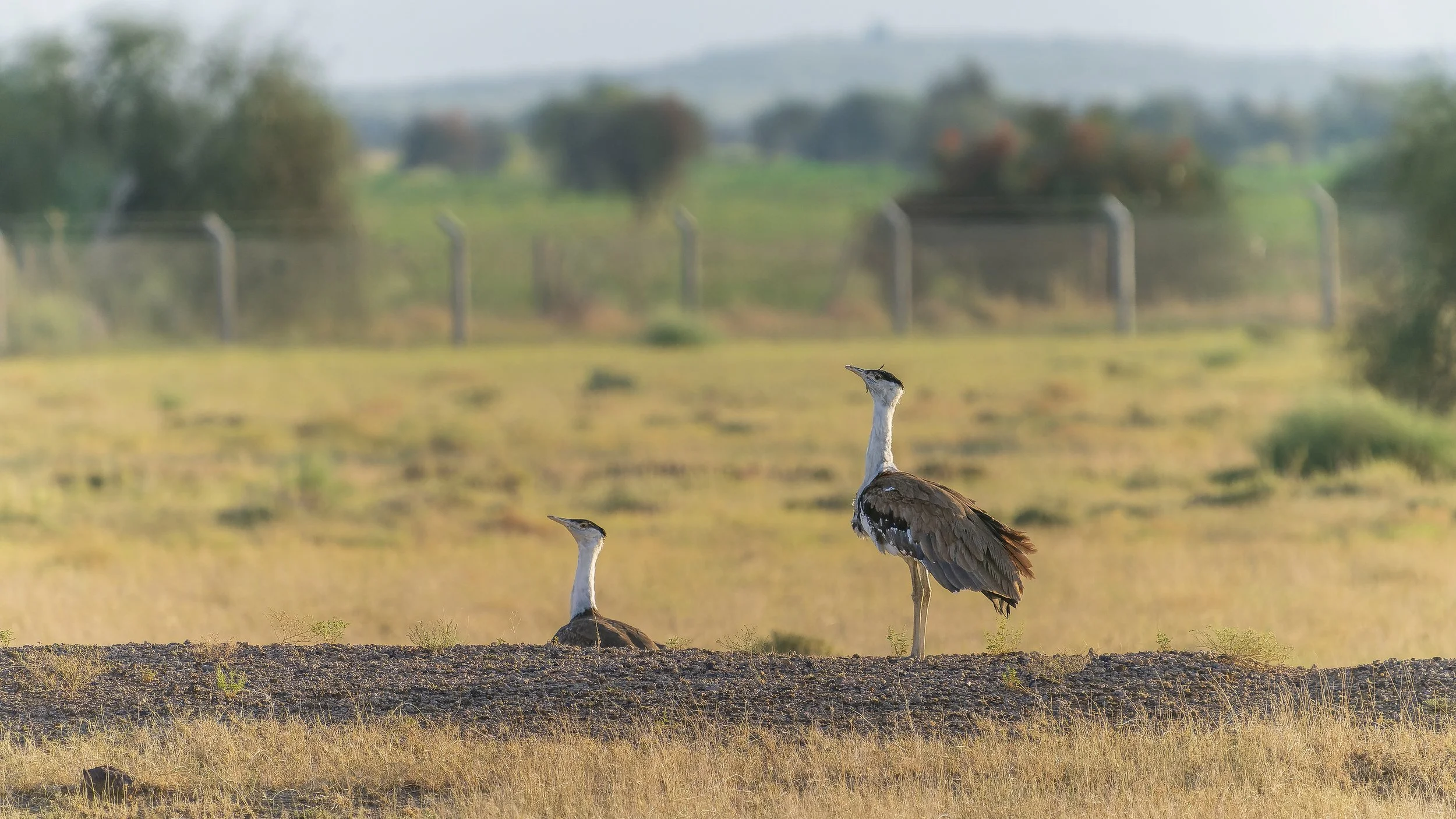
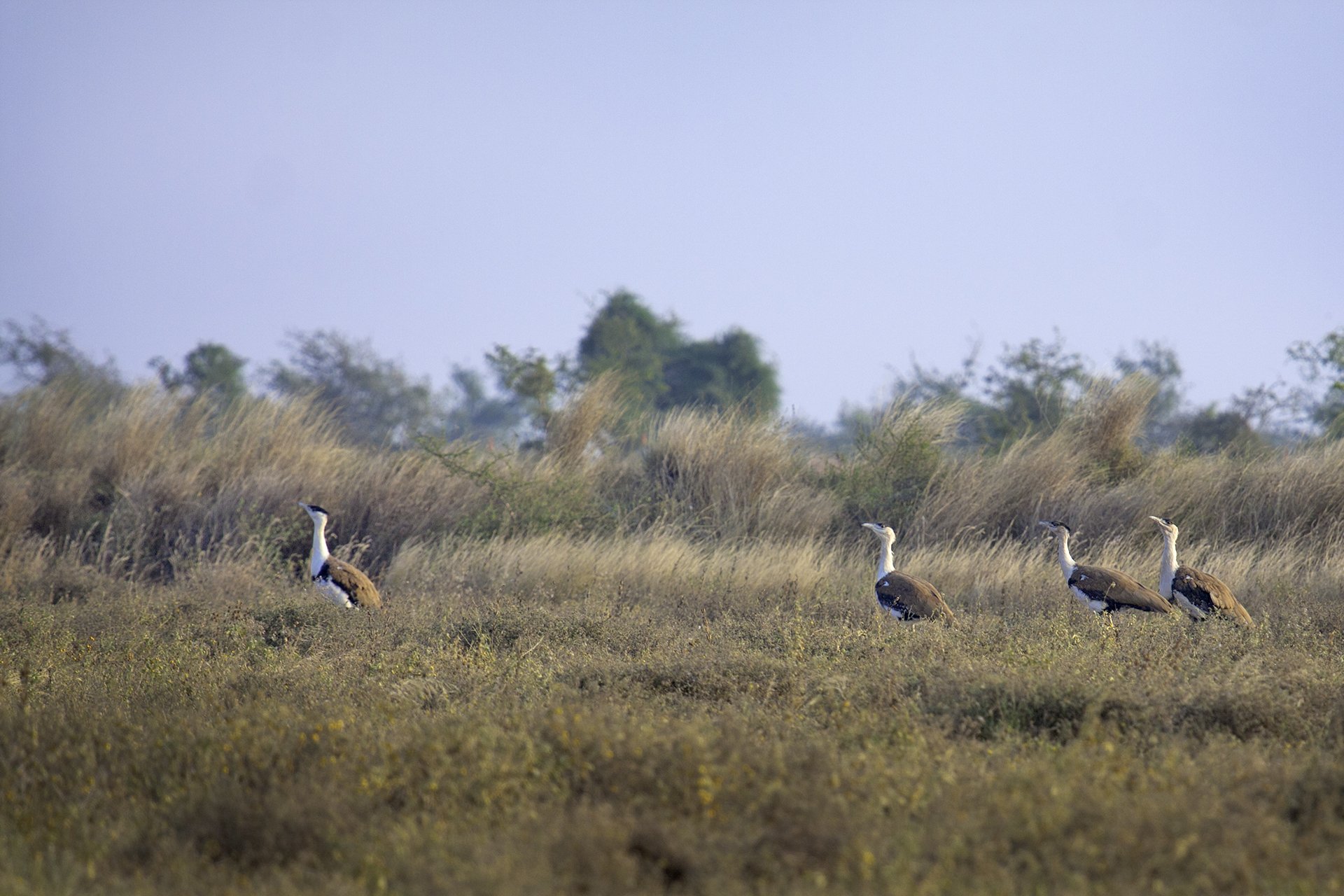
The Great Indian Bustard was once in the consideration to be the national bird of India, and in my opinion, it is flagship species of the grassland. It is now one of the rarest birds in India. The latest estimates, from around 2018, place the population at around 120–150 individuals. So how many birds exist in the wild today is anyone’s guess. The image below of two bustards is from Desert National Park, 2021—the last time I saw them.
The first time I saw a bustard was in 2009 at Rollapadu. The bustard I saw was the only bird reported from that area in 2009. I think it was also the last year a bustard was reported at Rollapadu. Since then, I’ve been to a number of grasslands in India where bustards once visited in large numbers—Sonkhaliya, Nannaj, Banni (Greater Rann of Kutch), and so on. The guides and naturalists there all tell the same story: the habitat is still good, but they’ve just stopped coming.
I think about my first bustard sighting—the last bird that came to Rollapadu often. It reminds me of a story we had in school, The Fog Horn by Ray Bradbury. A large, mysterious, dinosaur-like sea creature responds to a lighthouse foghorn, mistaking it for another one of its kind. One of the men in the story says this about the creature: Maybe it’s the last of its kind. I sort of think that’s true. Anyway, here come men on land and build this lighthouse, five years ago. And set up their Fog Horn and sound it and sound it out towards the place where you bury yourself in sleep and sea memories of a world where there were thousands like yourself, but now you’re alone, all alone in a world that’s not made for you, a world where you have to hide.
Every one of these places that had bustards probably also had one last bird for an entire season. How long did they call for another of their kind?
I wonder if I’ve seen my last bustard in the wild already.
Antelopes
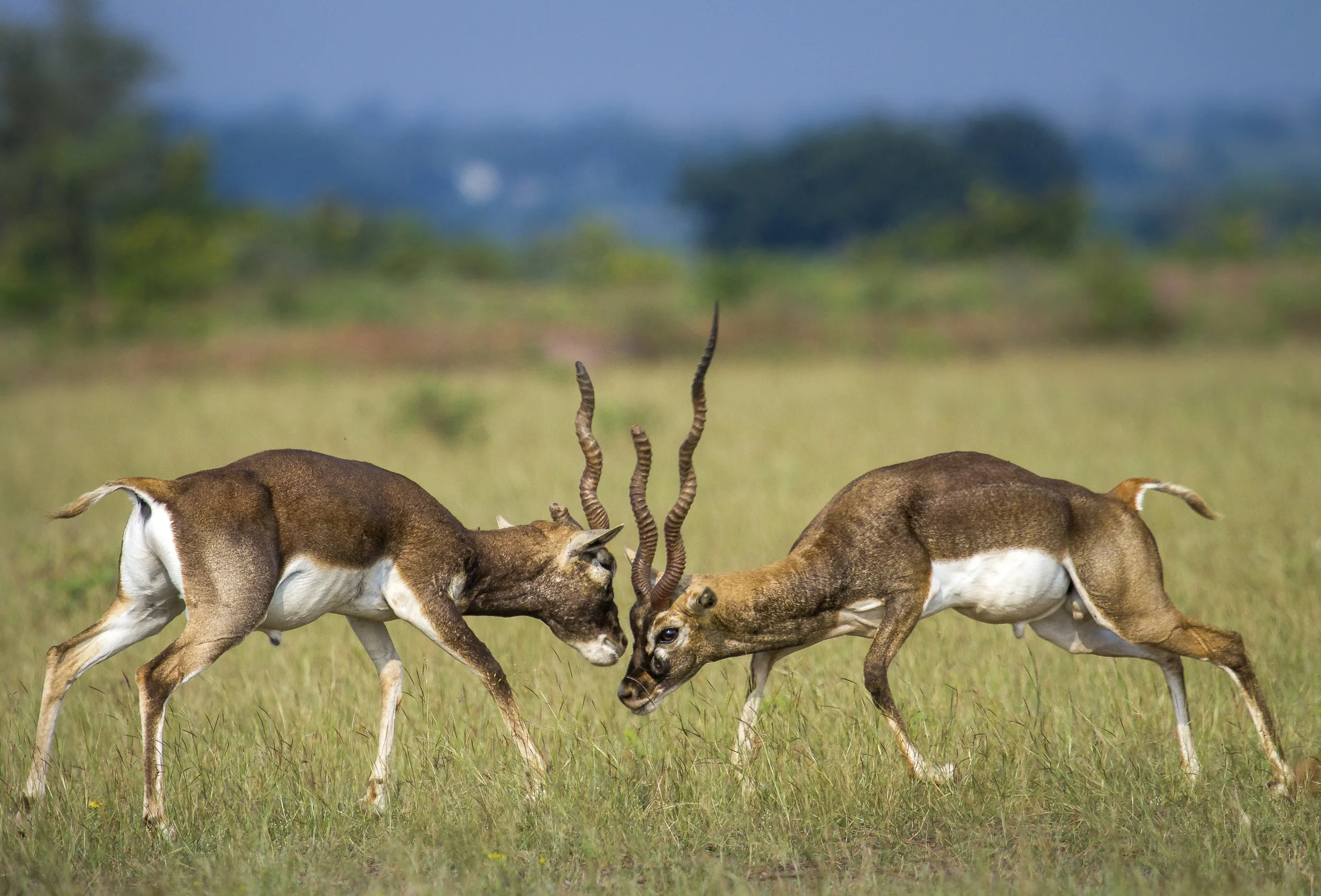
The grasslands of India are home to antelopes. Blackbucks are found across parts of northern, western and southern India, in protected grasslands and open plains. The Chinkara, or the Indian gazelle, occurs in drier regions, including the Thar Desert and semi-arid zones of northwest and central India. The Nilgai is more widespread, ranging across grasslands, scrub, and agricultural edges.
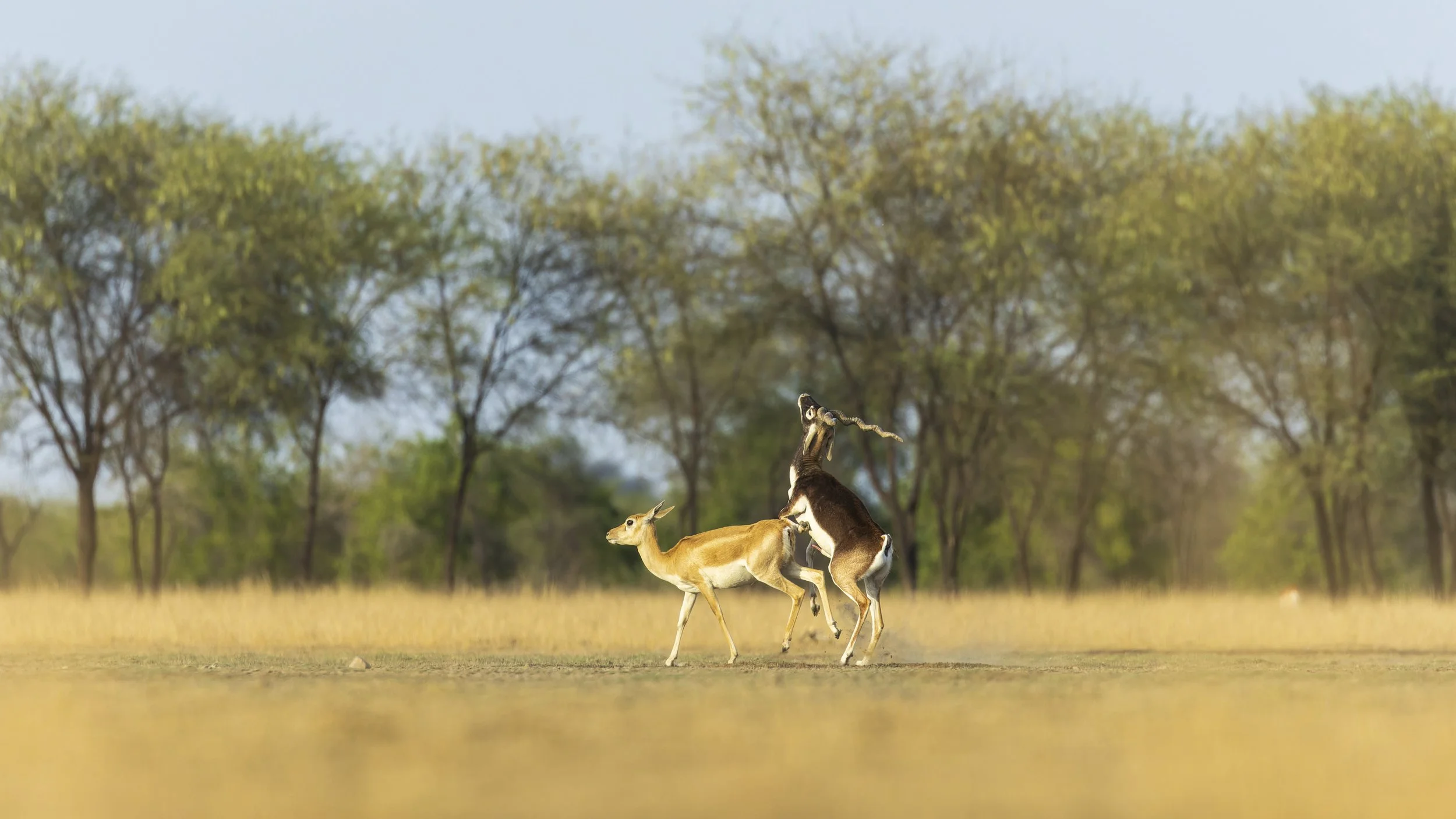
Blackbucks mating
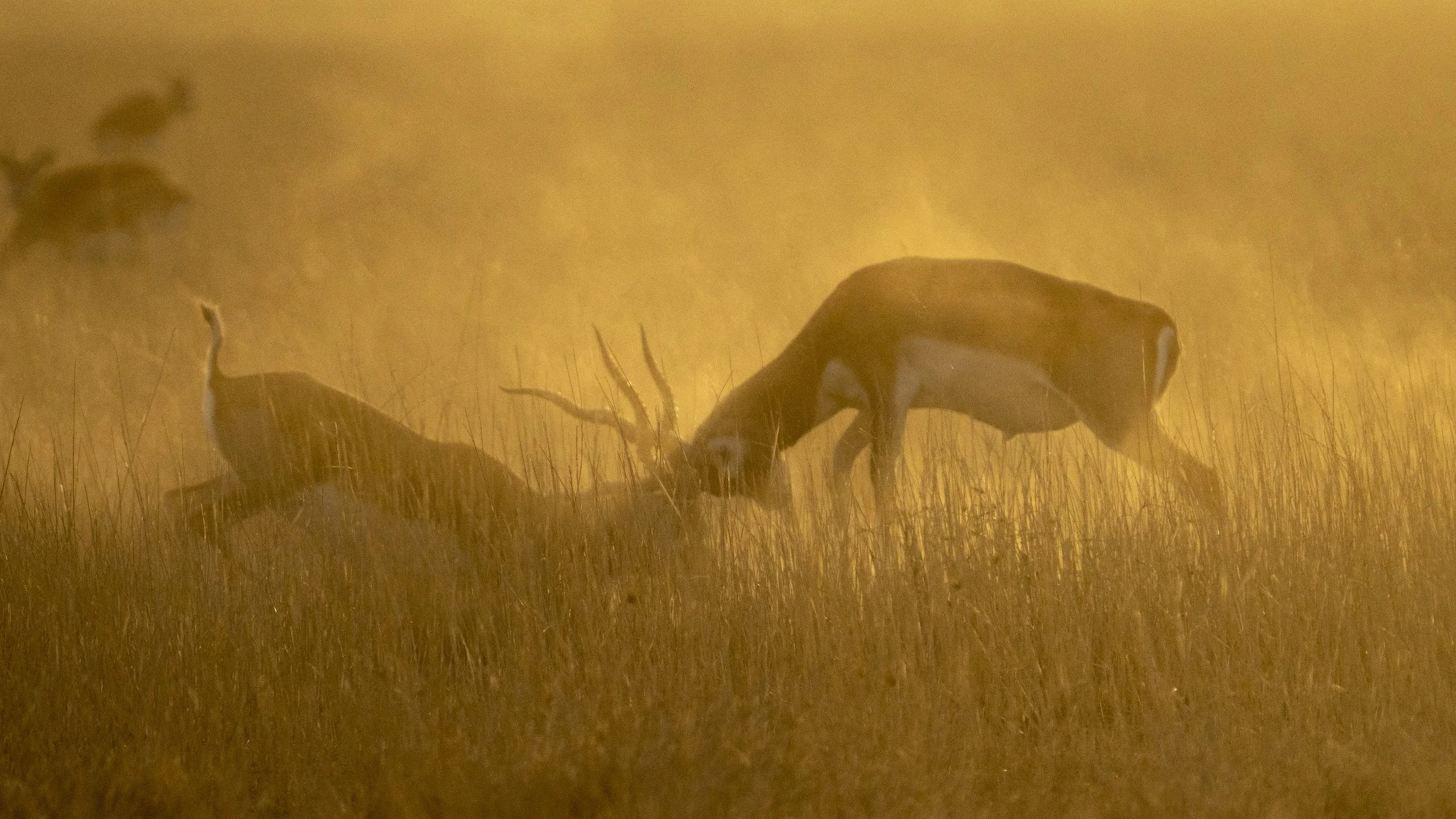
Blackbucks sparring
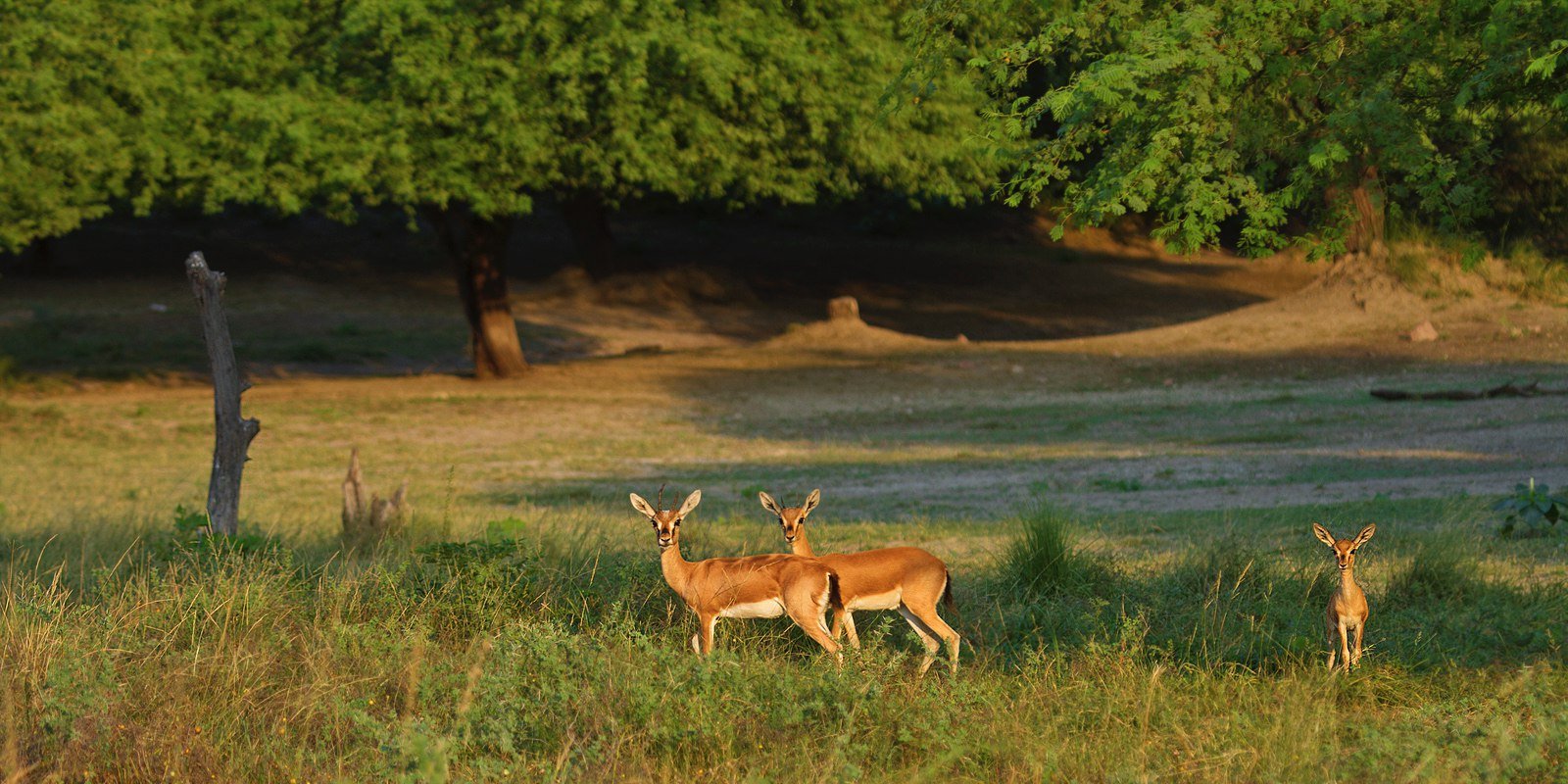
An Indian gazelle family
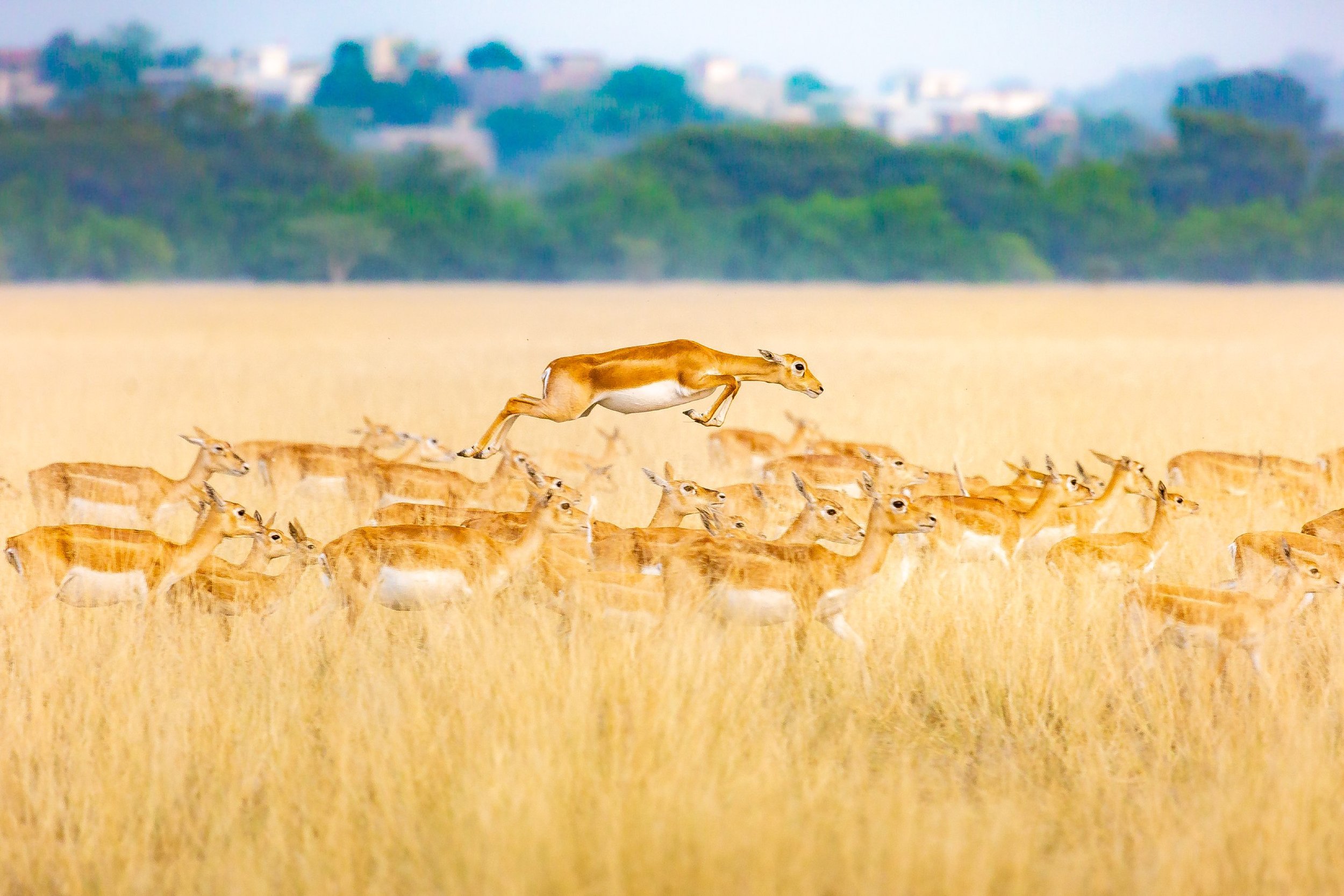
A female blackbuck herd
Challenge with proximity
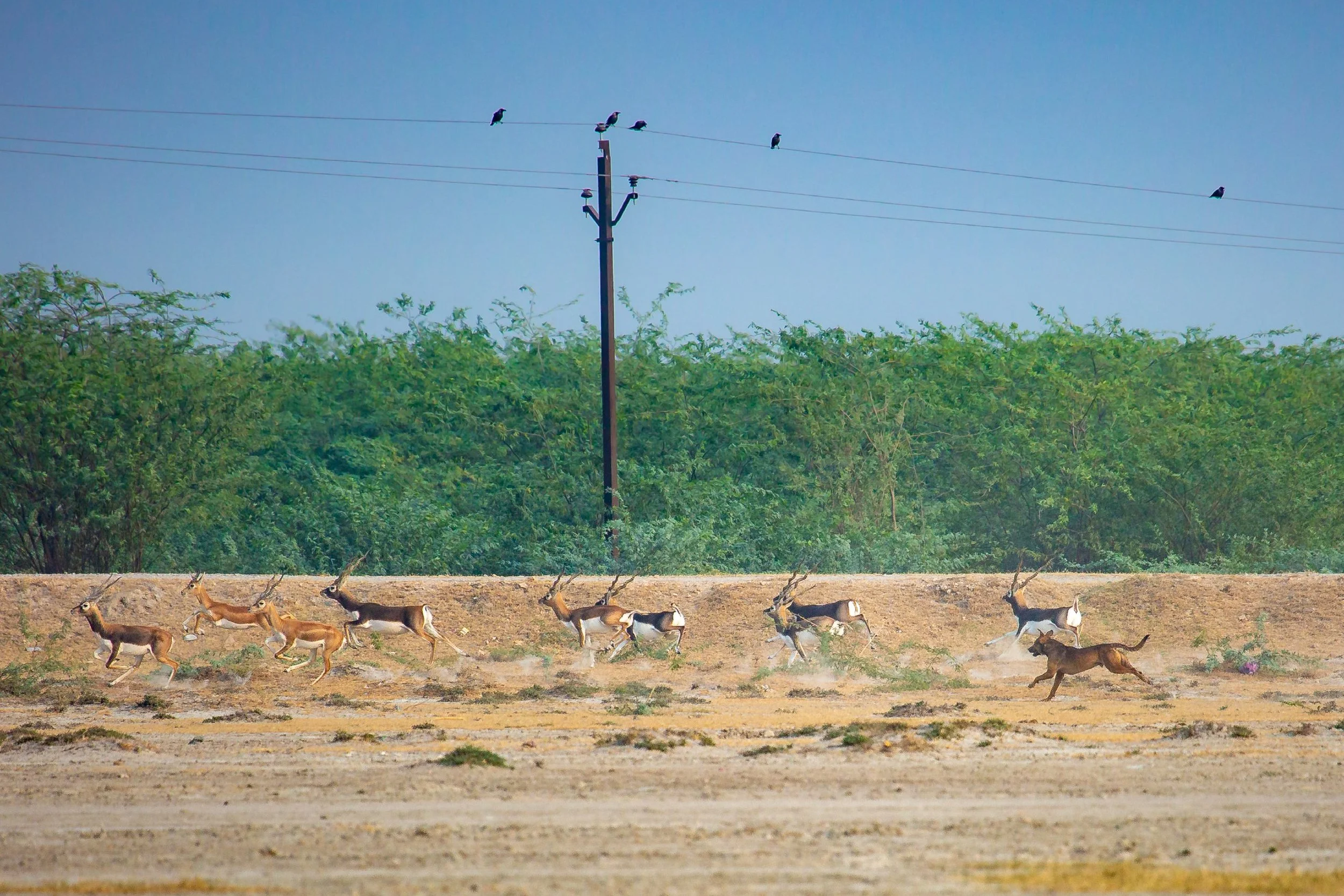
Grasslands are almost always at the edge of human settlement. And with human settlements come our best friend. As much as I love dogs, it hurts me to see them come in the way of a natural cycle. Be it by killing other wild animals for food, or by competing with predators for food, or by making other canids, such as the foxes and jackals that live here, more prone to disease. When ever I visit the Little Rann of Kutch to photograph fox pups, I hear about dogs killing a fox pup or two. Everytime I go to Tal Chhappar to photograph spiny tailed lizards, I find feral dogs and cats from the neighbouring village feasting on spiny tailed lizards. I’ve seen dogs chase and hunt down a blackbuck fawn at Rollapadu.
Natural balance, already so precarious, could do with a little less interference.
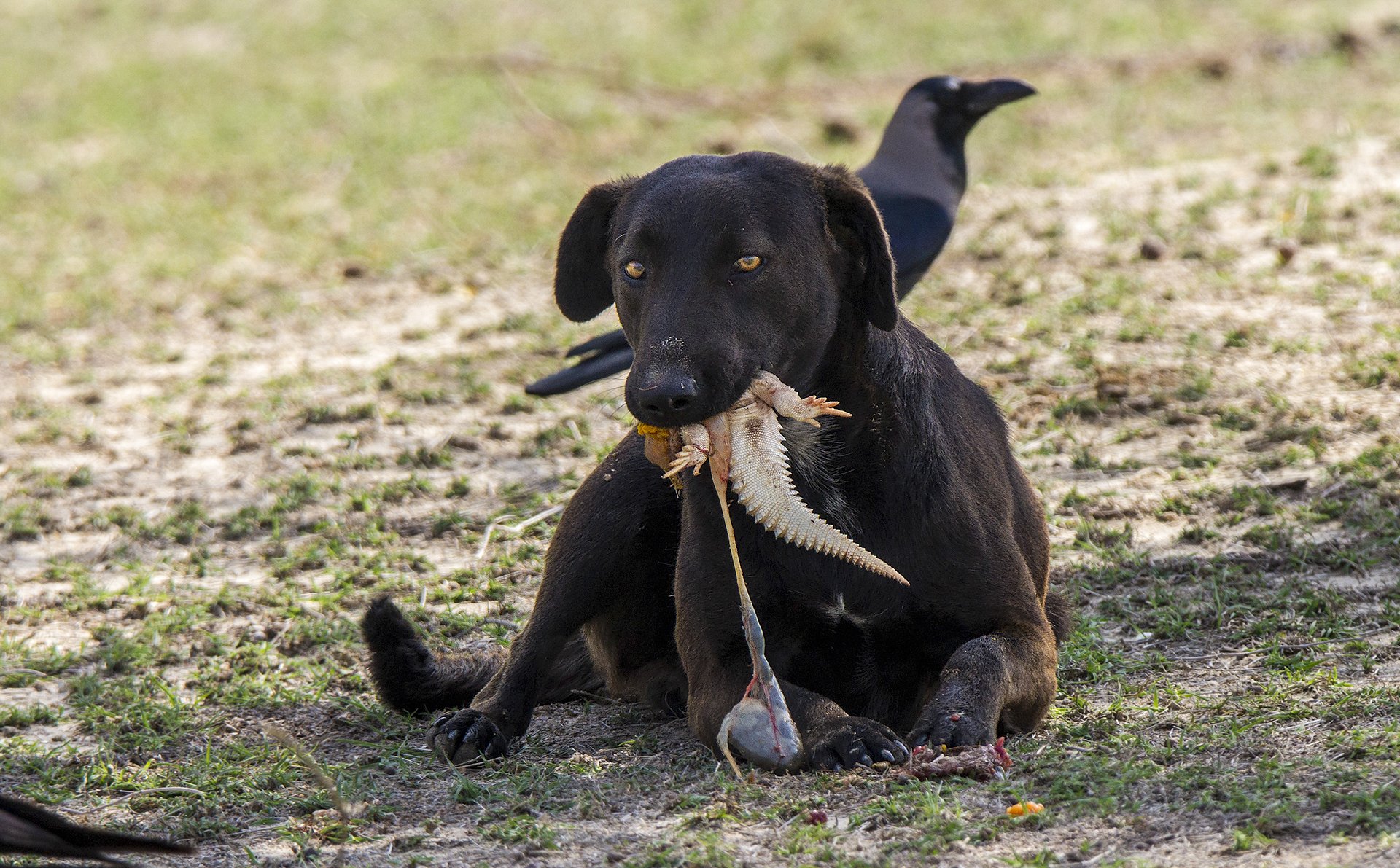
There are other challenges too, such as our inability to dispose plastic waste, the lack of protection for grasslands in general which make them prime lands for infrastructure, industry and real estate development, misplaced restoration which involve planting trees in a grassland, and human wildlife conflict. While I don’t understand some of these issues well, I think the proximity is a silver lining. People and animals are co-existing, and doing okay, even if it is in small pockets.